Latest episode
Escape - The Ring of Thoth - 1947
29:30|Escape was a CBS adventure anthology built around stories of suspense and high adventure. In this August 11, 1947 broadcast, Jack Webb stars in an adaptation of Arthur Conan Doyle’s “The Ring of Thoth.”
More episodes
View all episodes
The Whistler - Death Sees Double - 1944
29:32|Originally broadcast on November 20, 1944, “Death Sees Double” is a mystery from The Whistler. Lurene Tuttle portrays identical twins in a story of deception and a reversal of fate.The Whistler began in 1942 on the CBS West Coast network. Its unseen narrator led listeners through crime stories, revealing secrets the characters could not see for themselves.
Gunsmoke: The Photographer (May 6, 1956)
24:40|Originally broadcast on CBS on May 6, 1956, “The Photographer” follows a visiting photographer whose idea of the Old West creates trouble in Dodge City. William Conrad stars as Marshal Matt Dillon.Gunsmoke premiered on CBS radio in 1952. Its central characters included Chester, Kitty, and Doc Adams, played in the radio series by Parley Baer, Georgia Ellis, and Howard McNear.Recording: Old Time Radio Researchers Group, via Internet Archive: https://archive.org/details/OTRR_Gunsmoke_Singles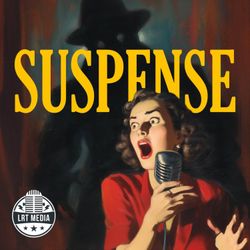
Suspense - Death Flies Blind - 1943
29:03|Suspense, which aired on CBS Radio from 1942 to 1962, stands as perhaps the greatest achievement in radio drama and the undisputed master of the thriller genre during broadcasting's golden age. Created and produced by William Spier, who insisted on exceptional production values and superior scripts, Suspense earned its reputation as "radio's outstanding theatre of thrills" through meticulous attention to detail and an unwavering commitment to quality that attracted Hollywood's biggest stars to its microphones. The series featured an extraordinary roster of performers including Cary Grant, Orson Welles, Jimmy Stewart, Rita Hayworth, Vincent Price, Peter Lorre, Agnes Moorehead, and countless others who jumped at the chance to appear on the program. Spier's innovative production methods, including keeping actors deliberately under-rehearsed to maintain tension and uncertainty, resulted in performances that crackled with nervous energy and authenticity. The show's signature opening, with its distinctive musical theme and the introduction by "The Man in Black," immediately established an atmosphere of impending doom and psychological unease. Unlike other mystery series that relied on detective work or supernatural elements, Suspense specialized in psychological terror, exploring the dark corners of human nature and the breaking points of ordinary people caught in extraordinary circumstances.The series distinguished itself through its sophisticated storytelling and diverse source material, adapting works by master writers including John Dickson Carr, Cornell Woolrich, Dashiell Hammett, and Edgar Allan Poe, while also featuring original scripts by radio's finest writers. Episodes like "Sorry, Wrong Number" starring Agnes Moorehead became cultural touchstones, demonstrating radio's unique power to create intimate, claustrophobic terror through sound alone. Suspense excelled at stories of paranoia, guilt, and moral ambiguity, often featuring protagonists who were neither entirely innocent nor completely guilty, trapped in situations where their own actions or psychological weaknesses led to their downfall. The show's production team, including composer Bernard Herrmann (who later scored Alfred Hitchcock's films) and sound effects artists who created some of radio's most memorable audio landscapes, elevated each episode into a carefully crafted work of art. With nearly 950 episodes produced over its twenty-year run, Suspense proved remarkably consistent in quality while constantly evolving to reflect changing social concerns and storytelling techniques. The series not only defined the radio thriller genre but also influenced film noir, television mysteries, and modern psychological thrillers, establishing narrative and atmospheric techniques that continue to influence entertainment media today. When Suspense finally ended in September 1962, radio historians marked it as the end of the Golden Age of Radio, recognizing that no subsequent program could match its combination of star power, production excellence, and pure storytelling brilliance that made it the crown jewel of American broadcasting.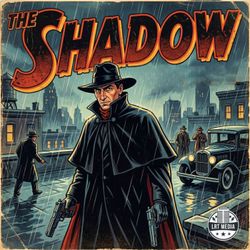
The Shadow - Death is an Art
23:22|"Who knows what evil lurks in the hearts of men? The Shadow knows!"This iconic opening line, followed by a sinister, echoing laugh, introduced audiences to a dark, atmospheric crime drama that helped lay the groundwork for the modern superhero genre. The series followed the adventures of Lamont Cranston, a wealthy young man-about-town who waged a secret war against murderers, mad scientists, and the criminal underworld as the vigilante known as "The Shadow.”Unlike standard detectives who relied solely on deduction, Cranston possessed a mysterious power learned in the Orient: the ability to "cloud men's minds" so they could not see him. Operating completely invisible to his enemies, he would use psychological warfare, trickery, and sheer terror to force criminals into confessing or turning on one another. He was joined in his crusade by his "constant companion," Margo Lane—the only person who knew his secret identity.The Shadow was a cultural phenomenon that transitioned across multiple forms of media, but its radio incarnation remains the most legendary. The character first appeared on radio on July 31, 1930, but the fully realized weekly drama starring Lamont Cranston premiered on September 26, 1937, on the Mutual Broadcasting System. It ran for an astonishing 17 years, ending on December 26, 1954. For much of its most popular run, the show was heavily sponsored by Blue Coal. The announcer would frequently pause the thrilling narrative to extol the virtues of heating your home with hard, anthracite coal.A 22-year-old Orson Welles was the first actor to play Lamont Cranston in the weekly drama, bringing a terrifying intensity to the role. When Welles left to pursue his own projects (including The War of the Worlds), he was replaced by actors like Bill Johnstone and, most notably, Bret Morrison, who played the character for over a decade. The role of Margo was originated by the legendary Agnes Moorehead (who frequently collaborated with Welles) and was later played by actresses like Marjorie Anderson and Grace Matthews.The Shadow actually began as nothing more than a creepy voice. In 1930, publisher Street & Smith launched a radio show called the Detective Story Hour purely to boost sales of their Detective Story Magazine. They created a sinister narrator named "The Shadow" to host it. The voice was so incredibly popular that listeners started going to newsstands asking for "that Shadow magazine." Realizing they had a hit, the publisher hired writer Walter B. Gibson to invent a backstory and write a pulp magazine specifically about the character.In the original pulp novels, The Shadow was a master of disguise who commanded a massive network of operatives. When adapting the show for radio, producers realized that an invisible protagonist operating alone made for terrible audio drama—he needed someone to talk to so the audience knew what was happening. Margo Lane was invented entirely out of necessity so Cranston had a sounding board. She was later integrated into the pulp magazines.In the earliest episodes of the Orson Welles era, The Shadow occasionally exhibited additional psychic abilities, such as minor telepathy or the power to project illusions. These were eventually phased out to focus strictly on his signature power of invisibility. Especially during the early radio years, The Shadow functioned as a slightly lighter anti-hero compared to his pulp magazine counterpart. While the magazine version frequently engaged in deadly shootouts, the radio version rarely killed directly, instead manipulating the villains into traps, confessions, or fatal mistakes of their own making.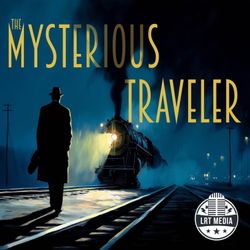
Mysterious Traveler - If You Believe - 1946
29:56|The Mysterious Traveler was a suspenseful anthology series. Every week featured a completely different story, running the gamut from straight crime and murder mysteries to supernatural horror and science fiction. The stories were bound together by the show's brilliant framing device: the titular "Mysterious Traveler," an enigmatic, faintly sinister man riding a passenger train. Every episode opened with the lonely, screeching whistle of an approaching locomotive and the rhythmic sound of wheels on the tracks. The Traveler would then introduce himself, inviting the listener to sit beside him and join him on "another journey into the strange and terrifying."The series debuted on the Mutual Broadcasting System on December 5, 1943, and enjoyed a massive, nearly decade-long run before ending on September 16, 1952. The show was the magnum opus of Robert Arthur Jr. and David Kogan, two writers who met in a Columbia University radio writing class. They wrote, directed, and produced the vast majority of the series themselves.The Traveler was voiced by Maurice Tarplin, whose smooth, echoing, and menacingly calm delivery became one of the most recognizable voices in radio. Because the characters changed every week, the show utilized a rotating "stock company" of elite New York radio actors to bring the stories to life, including prominent names like Agnes Moorehead, Jackson Beck, and Santos Ortega.The show was highly respected by its peers. It was nominated for the Mystery Writers of America's prestigious Edgar Award for "Best Radio Drama" in 1949 and 1951, before finally taking home the win in 1953 (awarded shortly after the program had ended). Despite its incredible popularity and an impressive output of approximately 370 episodes, fewer than 80 broadcasts are known to survive today. The vast majority of the series' audio is considered permanently lost to time.The Mysterious Traveler proved so popular that it branched into print. It spawned a digest-sized pulp magazine in 1951 and a comic book series published by Charlton Comics from 1956 to 1959. The comic is notable for featuring early illustration work by a young Steve Ditko, who would go on to co-create Spider-Man for Marvel. Arthur and Kogan essentially duplicated their own success by launching a sister program called The Strange Dr. Weird. To save time and resources, they took old Mysterious Traveler scripts, condensed them into 15-minute episodes, and hired the exact same host (Maurice Tarplin) to narrate them under a different name. Co-creator Robert Arthur Jr. would later transition to television, working as a writer and story editor for Alfred Hitchcock Presents. However, his most lasting cultural impact came in 1964 when he created the massively successful The Three Investigators young adult mystery book series.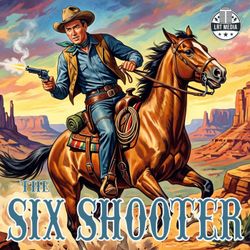
The Six Shooter - Audition Show - 1953
23:25|The Six Shooter follows the adventures of Britt Ponset, an easygoing, drifting cowboy and gunfighter navigating the final years of the Wild West. Described in the show's iconic opening narration as "angular and long-legged" with "sun-dyed brown" skin, Ponset is a wanderer who inevitably blunders into other people's troubles.While he is highly capable with his gray steel, mother-of-pearl-handled six-shooter, he is reluctant to use it. The series stands out among other Westerns of the era for its unique blend of tense drama and whimsical comedy. Ponset's adventures range from stopping outlaw gangs to getting involved in lighthearted, frontier-style adaptations of classic tales like Cinderella and A Christmas Carol.The Six Shooter was part of a wave of "adult Westerns" in the early 1950s that sought to tell more mature, character-driven stories on the radio. The series debuted on NBC on September 20, 1953, and ran for just one season of 39 episodes, concluding on June 24, 1954. The show was created and predominantly written by Frank Burt, who later wrote the script for Stewart's 1955 Western film, The Man from Laramie. Jack Johnstone, a prominent radio director, helmed the series. The haunting and memorable theme music, titled "Highland Lament," was composed by British film composer Charles Williams and arranged for the show by Basil Adlam.While Jimmy Stewart was the undisputed main draw, the show utilized a "stock company" of elite radio actors for supporting roles. This included Virginia Gregg, Parley Baer, Harry Bartell, and William Conrad. Because Conrad was concurrently starring as Marshal Matt Dillon on CBS's rival Western Gunsmoke, he sometimes went uncredited or used a pseudonym on The Six Shooter. Stewart brought a brilliant acting choice to the radio medium by using a tense, whispered narration during dramatic and dangerous scenes. Because radio relies entirely on audio, Stewart dropping his voice to a low whisper created an incredibly intimate, heightened sense of suspense for the listener.Unlike other radio lawmen of the era who regularly shot it out with bandits, Britt Ponset rarely shot to kill. Over the entire 39-episode run, he only killed two men directly, usually choosing instead to outsmart his adversaries or shoot the guns out of their hands.The show's short lifespan was largely due to a lack of long-term sponsorship. Liggett & Myers Tobacco Co. wanted to sponsor the program to sell Chesterfield cigarettes, but Stewart flatly refused the lucrative offer. He felt that endorsing cigarettes conflicted with his public image. After an early sponsorship by Coleman Heaters ended, NBC sustained the show out of pocket before finally canceling it.Stewart eventually revived the Britt Ponset character for television, appearing in two episodes of the anthology series General Electric Theater in 1957. However, he declined to commit to a weekly TV version of The Six Shooter because it would interfere with his booming film career. The TV adaptation was retooled, renamed The Restless Gun, and given to actor John Payne.