Share

This Sustainable Life
439: How to Fix Texas
Ep. 439
•
Here are the notes I read from for this episode
How to fix Texas
- Just got off conference call a Texas attendee couldn't attend because her power was out.
- There are helpless people suffering. I empathize with them and feel compassion. I support helping them.
- If we want to prevent future suffering, we have to look at systems. That's not ignoring present pain or loss. It's preventing future pain and loss.
- In that call, one person had been in touch with the Texas person. She told us of ice forming inside her house and other problems.
- The present attendees lamented each mention of a problem as if she were suffering some horrible hardship. For tens of thousands of years, humans have lived without power including in the cold, including sudden, unexpected cold.
- Is it not obvious that what we call technology and innovation has made us dependent, needy, and the opposite of resilient?
- I'll repeat that people in hospitals, homeless, elderly, and others have always needed extra help and they do today. Nothing of what I'm saying suggests neglecting them.
- But she also talked about our Texas friend tweeting. However spotty, she has the internet.
- Let's talk systems.
- NYTimes headline: A Glimpse of America’s Future: Climate Change Means Trouble for Power Grids: Systems are designed to handle spikes in demand, but the wild and unpredictable weather linked to global warming will very likely push grids beyond their limits.
- While the proximal reasons may be technical, the systemic cause is our dual focuses on meeting demand no matter what and growth but not focusing on resilience. The result is that when demand is always met, we grow (population and consumption) until we hit problems like this. Then we build more capacity.
- It costs a lot to go from 99.99% uptime to 99.999%, but we do it every time.
- The savings to go from 99.99% uptime to 99.9% is also huge. Most of the world does fine with under 99% and we could too if we built our systems and lives to handle power going down sometimes, even unpredictably. Hospitals, elderly, etc would need special treatment. The rest of us could reduce our needs and learn from how people lived all the time for hundreds of thousands of years.
- We'd save tons of money, live healthier, and pollute a lot less. We'd learn to treat nature with a bit more humility and respect.
- Listen to my episode on why I unplugged my fridge. I didn't do it because I expected my power savings would amount to anything divided by 7.8 billion.
- I did it because other cultures as well as humans for hundreds of thousands of years thrived without power. While some disasters, like Vesuvius erupting, we can't defend ourselves against, we can prepare for cold without polluting.
- My main results for unplugging my fridge? More delicious food from increasing my skills and experience preparing it. Saving money. Increasing my freedom, decreasing my neediness.
- Again, repeating my compassion for helpless people in pain now, whose rescue and support I support in the moment, I suggest seeing this weather as impetus to make your life more resilient, less needy, to support a power grid more resilient and less brittle but, and a culture not so entitled, spoiled, dependent and needy that its answer to everything is something polluting more, deepening that entitlement and being spoiled.
- If you can't live without power dropping for a few days even in terrible weather, and you aren't someone that lions would have eaten in previous eras, you're part of the problem. Fix yourself without drawing more power and polluting everyone else's world.
- If your society suffers from the only way it handles problems is to use more power, polluting more, leading to suffering from by people who aren't polluting so much, which for Americans means the entire rest of the world outside Saudi Arabia and its oil producing peers and maybe some insanely rich tax havens in the Caribbean, fix your society.
- Changing culture and systems begins with changing values. In this case from coddling, spoiling, externalizing costs, and ignoring others' suffering to resilience and freedom.
More episodes
View all episodes
862. 862: Andrew Levy: A role model for today: Robert Carter III freed more slaves than any other American
01:05:32||Ep. 862Regular readers of my blog know how important Robert Carter III has become to me as a role model. He inspires me. I believe this episode will inspire many of you.If you don't know who he is, you're in luck. Here is a post of mine with links to many resources on him: Resources on Robert Carter III. Probably the top thing to know about him is that he is the American who freed the most number of slaves before the thirteenth amendment.Actually, you're in better luck because the first two resources in that post are by today's guest, Andrew Levy. In this episode we talk about Carter, slavery, slave culture, changing culture, his relevance to today, his relevance to my work, and more. It was a pleasure to speak with the person most knowledgeable about him.Andrew shares more than knowledge. For example, he's thought about Carter and today. He asks why we don't remember him more and what that burying says about us.The Anti-Jefferson: Why Robert Carter III Freed His Slaves (And Why We Couldn’t Care Less), by Andrew Levy: This piece was a journal article in the spring 2001 issue of The American Scholar.The First Emancipator: Slavery, Religion, and the Quiet Revolution of Robert Carter, Andrew Levy’s bookI can't recommend these works enough for two reasons: First, Carter exhibits values and actions we can learn from. Second, Andrew covers the man from many angles, all useful. Plus his writing is engaging and readable.
861. 861: Cara Judea Alhadeff, part 1: Actually acting, the joys we feel, and the friction we face
01:02:07||Ep. 861A mutual friend introduced Cara and me. He knew we both were doing our best to live by our values in avoiding hurting others through pollution and depletion.On the face of it, our living situations look different. Her family converted a bus into a home. I disconnected my apartment from the electric grid. We share plenty more in the conversation.Our motivations are similar, which it didn't take us long to bond over. We also face similar misunderstanding and friction from society, especially people who purport to share our values of not hurting people (or wildlife) without consent. Also, people confuse themselves into thinking that because we do what we do, we don't do anything else.More importantly, we also discovered similar joys, rewards, and ways to keep acting.In this conversation, we talk about the joys and challenges of living by our values in a culture that claims to share those values but often rewards behavior that violates them. I don't get to talk to many people with similar situations so it was very refreshing. Feeling understood feels great. I hope you pick up on it.I hope you'll join us too.Cara's homepageHer intersectional nonprofit: Radical Art in ActionHer family's eco-art converted school bus home, using 100% reclaimed materials: The Love Bus: Beauty & Waste In the Face of Climate Crisis (youtube.com), creative, affordable housingS.O.U.L. (Shared Opportunity Used Local) Commons that supports mutual aid economies and gift economies through the local free store she and her partner created for their communityHer book, mentioned in our conversation: Zazu Dreams: Between the Scarab and the Dung Beetle, A Cautionary Fable for the Anthropocene Era: Her cross-cultural, climate justice-through-alternative economies (includes a traveling exhibition and animated film adaptation)
860. 860: Christopher Ryan, part 1: Civilized to Death
01:34:27||Ep. 860The predominant responses to the idea of polluting and depleting less include fears of reverting to the Stone Age, losing civilization, being invaded by aggressive opponents, dying at 30, dying from small cuts, and reverting to a past viewed as worse than today.My upcoming book describes why we feel those fears and why what we fear losing is exactly what we can expect to get more of. A key part of that pattern is that all those fears are false, based on misunderstanding humanity's past.Christopher Ryan's latest book, Civilized to Death, is the clearest, most comprehensive single work describing the past accurately. I spent years researching, learning from countless sources. The results were conclusive, but difficult to communicate. What could I say, "Read these dozens of academic papers and books and watch all these documentaries"?Chris researched more and compiled it more clearly, concisely, and readably than I could have dreamed to. Now I can say, "Read Civilized to Death."I mean it: Read Civilized to Death.Our conversation covers the highlights. It will help you see why you believe legitimizing myths fear changes that when you do them you will only wish you had done them earlier. Things about yourself, humanity, culture, and life will make sense that never did before.Chris's home pageHis books, including Civilized to Death
859. 859: Jack El-Hai: The Nazi, the Psychiatrist, Nuremberg, and Why to Find Humanity in Those We Call Monsters
55:04||Ep. 859How do you make sense of an entire society or nation violating its values? Consider Germany in the 1930s, in which a whole nation seemed to embrace Nazism.It's tempting to say they're all monsters, but how could over 50 million people change in a few years? Not genetics. They must have been no more or less human in 1940 as 1920.It's tempting to say that monsters took over and changed them. Many people thought so. At the end of World War II, a psychiatrist, Douglas Kelley, was sent to evaluate the highest level Nazis who had been captured and were to be tried in the Nuremberg trials. He believed that these leaders must have differed from most people. He wanted to find that difference in order to help prevent people with whatever traits he found from repeating what they did. He was deeply troubled to find no meaningful difference between them and normal results on his tests.Jack El-Hai told Kelley's story in his book The Nazi and the Psychiatrist, including interacting directly with Herman Göring, at one point the second highest ranking Nazi. In our conversation, Jack tells the highlights of his book. I discuss the relevance to polluting and depleting today, where everyone is contributing, violating our own values, but contributing to much more suffering and death than even the Holocaust.We also talk about the movie Nuremberg based on the book, including its stars, Russell Crowe and Rami Malek.Jack's home pageHis book page
858. 858: Beth Bailey, the great-grandmother influencer leading the cleaning of Mérida, Mexico
01:00:57||Ep. 858As a great-grandmother, Beth probably wouldn't describe herself as an influencer, but what else do you call it when videos of her go viral and prompt people to follow her?Longtime podcast listeners may remember episode 754: (Aunt) Trish Ellis and (Niece) Evelyn Wallace, part 1: Not Even Cancer Holds Her Back. We mentioned Beth, Evelyn’s mom and Trish’s sister. All three of them took the workshop. Beth and Evelyn also took my leadership and initiative courses that I offered to workshop alumni.Beth's initiative project was to pick up litter daily, but not just pick it up. She was inspired by an initiative she'd seen to restore pride in a community. For example, I pick up litter, but I just do it to clean where I walk. Her goal was bigger: to restore and inspire pride in where she lives, Mérida, Mexico. She planned things like a sign to invite favorable attention, what to wear, when to go out, how to talk to people.She's been picking up litter since. Then last month, at an alumni online lunch, she shared that someone secretly recorded her, posted the video, and by then the video had been seen over 1 million times. Plus, attention was leading to people joining her movement, opportunity to work with government, and more. I posted about it on my blog: Secret video of Beth picking up litter goes viral in Mexico.I invited her to share here. Listen for what happens when you persist.Beth's community page: Yo ❤ Mérida limpia. ¿Y tú?My post on her, linking to her videos and some media coverage: Secret video of Beth picking up litter goes viral in Mexico
857. 857: Kim Stanley Robinson: Science fiction writing and leadership
51:23||Ep. 857I met Stan in person at an event in Brooklyn. I had read Ministry for the Future a few years ago. He pointed out something I hadn't noticed since most people identify him as a science fiction writer. Ministry for the Future isn't exactly science fiction. He projects into the future, but he only includes plausible things---no flying cars or time travel.This practice invigorated my interest in his work. I also asked him how he handled water in New York 2140, since I knew it would have to be heavily polluted from sea level rise would flood landfills and cause their contents to disperse throughout the oceans. I enjoyed talking to him and invited him here.He has another identify besides as an author. He knows a lot about our environmental situation and attempts to address it. He's not an activist but more than an educator.I couldn't wait to engage with him on both identities. For him as an author, I found more to learn from him than I expected relevant to leadership, which I consider a performance art. As a writer, he has to create visions that readers accept and embrace. He has to express himself candidly but in a language the reader likes and feels engaged to continue. These points are relevant to leadership I asked him a bunch about the art and craft of writing from the perspective of someone wanting to improve his leadership.Naturally, we also talked about creativity regarding solutions.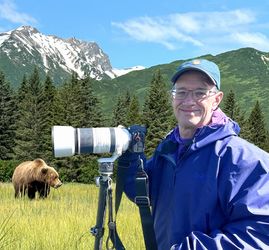
856. 856: David Jenkins, President of Conservatives for Responsible Stewardship
01:03:05||Ep. 856Most environmentalists that I know of consider themselves progressive or liberal. They propose solutions that increase regulation and grow government, often in the style of the New Deal. Their role models are generally also progressive and liberal. They present conservatives as opponents, even enemies, sometimes evil. They consider them interested in themselves and profit, not caring who suffers for it.Over and over, they say about conservatives, "They don't care." Meanwhile, they pollute as much as anyone. They fund future extraction, companies that extract and pollute, their politicians, and lobbyists promoting more.I don't think they actually talk to conservatives. They project their preconceptions onto them and treat them as straw men.David Jenkins helps lead a conservative group that promotes stewardship. I suspect many environmentalists would consider the combination impossible, wondering if it's a front group.What do you expect? Could conservative values promote decreasing pollution, depletion, plunder, and misappropriating nature?Listen and find out.Conservatives for Responsible Stewardship's web page
855. 855: Peter DeCarlo PhD: Shocking Cancer Alley research from the scientist who did it
01:05:37||Ep. 855That this country has a region called Cancer Alley is beyond tragic. We know we're causing it, not just the companies operating the polluting refineries and other industrial plants. All of us who buy their products are funding them.I wondered if it was fair to call the region Cancer Alley. Is the evidence clear enough, even if not for a court to award damages?Peter DeCarlo is a researcher at Johns Hopkins who did original research and answered definitively: Yes. In our conversation, he described what motivated him to this research, the research, interacting with residents of Cancer Alley, how it affects him, physically and emotionally, and why he keeps going. It turns out his motivation started long before the research.The conversation returns at the end to some parts of his life at the beginning. I hope it motivates some to act out of the potential for life fulfillment.Peter's faculty page at Johns HopkinsThe video of Peter produced by podcast guest Maya Lilly: Justice for Saint James
854. 854: John Perkins, part 2: New Book Preview: The Art of the Steal (and restoring American ideals)
44:06||Ep. 854John returns to describe his upcoming book The Art of the Steal: Trump and the Economic Hit Man Presidency, described as his best book of the Economic Hit Man series. I'm honored that he came to this podcast first.Longtime listeners and readers know how much of an impression Confessions of an Economic Hit Man made on me. Regular blog readers know from my descriptions of my upcoming book how much imperialism factors into it. John's book couldn't have come at a better time.Listen to this whole conversation. He starts by describing the new book, then puts it in context of how what he wrote about decades ago is happening more than ever, and by the US government on its own citizens. I think you'll feel as I do that I'd rather it weren't happening but since it is, I'd rather know than not know.I say to listen to the whole episode, especially if you're listening around the date I publish (July 3, 2026) because none of what he says or writes is complaining. He shares how everything he says and writes is to restore American ideals like liberty, freedom, equality, democracy, and national security. He states it better than I can.John's home pageHis page on his new book The Art of the Steal: Trump and the Economic Hit Man PresidencyHis blog