Share
This Sustainable Life
305: The greatest danger from covid-19 would be not learning from it
My notes that I read from for this episode:
Greatest danger is not to learn from it.
Starting story: Preparing to launch on 9/11. While nothing on scale of victims, first responders, and those who fought, but went from 8 digit to limbo. Within two years squeezed out. Gave up following Einstein and Newton to outdoor advertising that I didn't even like. Now no way forward, backward, or anything. Lost trust in people. Closer to mom and other entrepreneurs with similar disaster.
We feel everything shutting down. Huge unknown. Will things restart? How many will suffer? How many will die? What will happen to health care system? Have I bought enough to eat? Will I become infected? If so, how badly? Will I accidentally infect others?
Images of China, Italy, Korea show fuller shut down ahead.
Other nation's results show divide in effectiveness with if they faced SARS, MERS, and related situations.
Nothing compares with experience.
We've seen in America back-to-back 500-year storms, fires, and floods. My home of New York City has seen a hurricane, not nearly the country's severest.
We know more is to come.
We lack relevant leadership experience.
I don't see a silver lining to lower pollution if it comes through suffering and death.
If any silver lining -- that given predictions for generations that neglecting our humility to the environment by dominating instead of stewarding it would lead to sea level rise, unbreathable air, famine, pestilence, and more, we can expect more -- and however bad this problem, it may give us training for future disasters.
Our greatest danger in responding to covid is not to learn how to handle a population far beyond the Earth's ability to sustain or regenerate. Because we could learn what nations hit by SARS learned.
We've been fortunate enough so far to face mostly localized disasters at different times. Here is one of our first global ones. The US could come together to help victims of Katrina, Paradise CA fires, and so on.
We've helped foreign communities -- however imperfectly?
What will happen when two or three disasters happen? Four?
Today's answer is that we don't know and have no basis to answer.
But we could learn now. Not a silver lining for people in Italy or Iran and probably the US who are turned away from hospital care.
Nor did I know what I would do on September 12. The fallout had barely begun. My life is far better for what I learned over what comfort and convenience I lost.
Learned leadership and how to teach it, over a decade now. Students and clients apply it from the West Bank, to Silicon Valley, to the nation's least advantaged communities.
Five years ago began my journey to serious meaningful environmental action. It began simply, challenging myself to go a week buying no packaged food. Learned to cook from scratch, found delicious, faster, cheaper, more accessible (Saturday cooked in Bronx at invitation from single mom in food desert to show her community what I'd learned).
Mindset shift to expect acting on environmental values to improve life. So when I learned flying NY-LA r/t warmed the globe a year of driving, I challenged myself to go a year without flying.
March 23 begins my fifth year of what I expected deprivation, sacrifice, obligation, chore, but turned out joy, connection, and community.
I threw out my garbage once in 2019, 2018, 2017. Pure life improvement amid 90% reduction according to online calculators.
I've spoken to about 1,000 people on my podcast and life about not flying. About 998 said impossible.
Suddenly many not flying. It's always been a matter of motivation and imagination.
One flight brings you to distant loved one or job opportunity. Flying in general separates to where you have to fly. More flying means less time with family and less control over career and is a sign of privilege that letting go of improves life.
My mom texted me she couldn't see me last week. We don't know if my niece's Bat Mitzvah later this month will happen. Our family is closer, not more distant, despite the physical distance.
We can learn from this. It will get worse before it gets better. Maybe it will just be a worse flu season. It probably won't become like the 1918 flu coming off WWI or the Black Plague, but they danger isn't how sick you get, it's how society handles it.
Let's learn as much as we can.
More episodes
View all episodes
858. 858: Beth Bailey, the great-grandmother influencer leading the cleaning of Mérida, Mexico
01:00:57||Ep. 858As a great-grandmother, Beth probably wouldn't describe herself as an influencer, but what else do you call it when videos of her go viral and prompt people to follow her?Longtime podcast listeners may remember episode 754: (Aunt) Trish Ellis and (Niece) Evelyn Wallace, part 1: Not Even Cancer Holds Her Back. We mentioned Beth, Evelyn’s mom and Trish’s sister. All three of them took the workshop. Beth and Evelyn also took my leadership and initiative courses that I offered to workshop alumni.Beth's initiative project was to pick up litter daily, but not just pick it up. She was inspired by an initiative she'd seen to restore pride in a community. For example, I pick up litter, but I just do it to clean where I walk. Her goal was bigger: to restore and inspire pride in where she lives, Mérida, Mexico. She planned things like a sign to invite favorable attention, what to wear, when to go out, how to talk to people.She's been picking up litter since. Then last month, at an alumni online lunch, she shared that someone secretly recorded her, posted the video, and by then the video had been seen over 1 million times. Plus, attention was leading to people joining her movement, opportunity to work with government, and more. I posted about it on my blog: Secret video of Beth picking up litter goes viral in Mexico.I invited her to share here. Listen for what happens when you persist.Beth's community page: Yo ❤ Mérida limpia. ¿Y tú?My post on her, linking to her videos and some media coverage: Secret video of Beth picking up litter goes viral in Mexico
857. 857: Kim Stanley Robinson: Science fiction writing and leadership
51:23||Ep. 857I met Stan in person at an event in Brooklyn. I had read Ministry for the Future a few years ago. He pointed out something I hadn't noticed since most people identify him as a science fiction writer. Ministry for the Future isn't exactly science fiction. He projects into the future, but he only includes plausible things---no flying cars or time travel.This practice invigorated my interest in his work. I also asked him how he handled water in New York 2140, since I knew it would have to be heavily polluted from sea level rise would flood landfills and cause their contents to disperse throughout the oceans. I enjoyed talking to him and invited him here.He has another identify besides as an author. He knows a lot about our environmental situation and attempts to address it. He's not an activist but more than an educator.I couldn't wait to engage with him on both identities. For him as an author, I found more to learn from him than I expected relevant to leadership, which I consider a performance art. As a writer, he has to create visions that readers accept and embrace. He has to express himself candidly but in a language the reader likes and feels engaged to continue. These points are relevant to leadership I asked him a bunch about the art and craft of writing from the perspective of someone wanting to improve his leadership.Naturally, we also talked about creativity regarding solutions.
856. 856: David Jenkins, President of Conservatives for Responsible Stewardship
01:03:05||Ep. 856Most environmentalists that I know of consider themselves progressive or liberal. They propose solutions that increase regulation and grow government, often in the style of the New Deal. Their role models are generally also progressive and liberal. They present conservatives as opponents, even enemies, sometimes evil. They consider them interested in themselves and profit, not caring who suffers for it.Over and over, they say about conservatives, "They don't care." Meanwhile, they pollute as much as anyone. They fund future extraction, companies that extract and pollute, their politicians, and lobbyists promoting more.I don't think they actually talk to conservatives. They project their preconceptions onto them and treat them as straw men.David Jenkins helps lead a conservative group that promotes stewardship. I suspect many environmentalists would consider the combination impossible, wondering if it's a front group.What do you expect? Could conservative values promote decreasing pollution, depletion, plunder, and misappropriating nature?Listen and find out.Conservatives for Responsible Stewardship's web page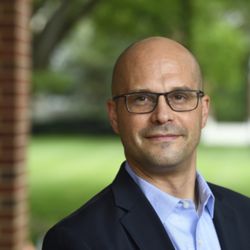
855. 855: Peter DeCarlo PhD: Shocking Cancer Alley research from the scientist who did it
01:05:37||Ep. 855That this country has a region called Cancer Alley is beyond tragic. We know we're causing it, not just the companies operating the polluting refineries and other industrial plants. All of us who buy their products are funding them.I wondered if it was fair to call the region Cancer Alley. Is the evidence clear enough, even if not for a court to award damages?Peter DeCarlo is a researcher at Johns Hopkins who did original research and answered definitively: Yes. In our conversation, he described what motivated him to this research, the research, interacting with residents of Cancer Alley, how it affects him, physically and emotionally, and why he keeps going. It turns out his motivation started long before the research.The conversation returns at the end to some parts of his life at the beginning. I hope it motivates some to act out of the potential for life fulfillment.Peter's faculty page at Johns HopkinsThe video of Peter produced by podcast guest Maya Lilly: Justice for Saint James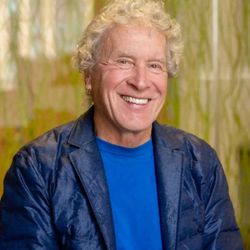
854. 854: John Perkins, part 2: New Book Preview: The Art of the Steal (and restoring American ideals)
44:06||Ep. 854John returns to describe his upcoming book The Art of the Steal: Trump and the Economic Hit Man Presidency, described as his best book of the Economic Hit Man series. I'm honored that he came to this podcast first.Longtime listeners and readers know how much of an impression Confessions of an Economic Hit Man made on me. Regular blog readers know from my descriptions of my upcoming book how much imperialism factors into it. John's book couldn't have come at a better time.Listen to this whole conversation. He starts by describing the new book, then puts it in context of how what he wrote about decades ago is happening more than ever, and by the US government on its own citizens. I think you'll feel as I do that I'd rather it weren't happening but since it is, I'd rather know than not know.I say to listen to the whole episode, especially if you're listening around the date I publish (July 3, 2026) because none of what he says or writes is complaining. He shares how everything he says and writes is to restore American ideals like liberty, freedom, equality, democracy, and national security. He states it better than I can.John's home pageHis page on his new book The Art of the Steal: Trump and the Economic Hit Man PresidencyHis blog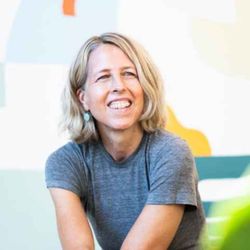
853. 853: Kate Williams: CEO, 1% for the Planet
01:20:54||Ep. 853I'd seen the "1% for the Planet" logo many times and figured it was an organization that helped, but I didn't think of how. The businessman in me wondered, shouldn't companies just lower prices 1% and let people donate what they want? Does one percent make much difference?Kate was passing through New York so we got to meet in person. In this recording, she answers these questions and more. She describes the organization more comprehensively, but briefly, 1% for the Planet organizes other organizations, some to donate, others to receive, and vets them.What interested me most was their long-term goal, which is cultural change, which fits with mine.Kate didn't found the organization, but as CEO has scaled the network to 110 countries and 65 industries, driving close to $1 billion in certified giving. She also shares her personal background that motivates her, which also interested me, since from the start of the conversation, her leadership experience and style emerge. Anyone who knows me knows I consider effective leadership one of the most important needs in reducing pollution and depletion.Kate's home page1% for the Planet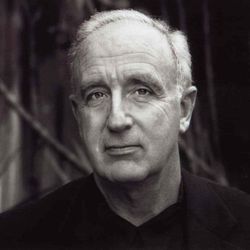
852. 852: Steven Pressfield, conversation 2: His new book, The Arcadian (and A Man at Arms)
58:17||Ep. 852It turns out Steven's readers split into two camps with little overlap. I figure most listeners belong to the War of Art camp. If you haven't read the book and want to live a better life, I recommend it, in the top few percent of recommendations. It's powerful, engaging, memorable, and short.The other camp reads his fiction books. His latest is The Arcadian, which stands alone but connects with his last book A Man at Arms. I read both and now belong to both camps, proudly. One goal of this conversation is to entice listeners to join both Pressfield camps too.This podcast is about leadership applied to sustainability, not just personal leadership and art. Just because I like his books doesn't mean his fiction is relevant to this podcast. I found one part delivered a powerful gut punch that I found relevant to our lives.Blog readers will have seen my post about that part after reading The Arcadian Wounded Warriors, by Steven Pressfield, and Ourselves. That part describes what happens to people when we are induced to violate our values. Steven and I talked about that section. He described it as the core of the book.The situation warriors face and must deal with is more concentrated than we do, but their ways of handling it are similar to how we do, despite our violations being more diffuse. We would help ourselves handle our lives by facing that we are violating our values, even if, like the warriors, society rewards us for it. Only by facing it can we resolve it. In our case, we can change our culture to stop corrupting us.We can learn a lot from Steven. Not many people sell millions of books. Many followers is a top sign of leadership.Steven's home pageHis booksHis weekly blogMy recent blog post about The Arcadian, about the section of the book we talked about it: Wounded Warriors, by Steven Pressfield, and Ourselves
851. 851: J. Eric Oliver: How to Know Yourself
01:09:02||Ep. 851This podcast is about leadership first and foremost, applied to sustainability. Most of the time when people hear or read "sustainability," that concept overrides everything else. They forget or don't notice else, but here, in this podcast it comes second. If you haven't developed the social and emotional skills to lead based on intrinsic motivation, if you try to convince, cajole, coerce, or seek compliance, you'll probably influence people to resist and oppose you and what you're promoting.I see Eric's book, How to Know Your Self (note the two words: "your" and "self") is a book on self awareness based on an interactive course on self awareness. I've never heard an experience leader suggest that lower self awareness helps and I've heard plenty say it does.Since we all pollute and deplete, which hurts people, we know we're violating our values, which tends to evoke emotions we don't like. We hide them from ourselves. We lower our self awareness. We could use tools to increase our self awareness.Eric's book delivers. We talk about how the book came to be, his course, how it differs from regular classes, and what people get out of it. I hope you listen, read the book, use it to increase your self awareness, and use that increase to lead yourself and others more effectively.Eric's home pageEric's page for How to Know Your SelfEric's faculty page at the University of ChicagoEric's podcast: Knowing
850. 850: AJ Harper, part 1: Write to change lives, including yours
01:12:00||Ep. 850Two core elements of leadership are effective communication and creating community. AJ has done both. I can attest from taking her writing workshop and participating in her author community since. I wrote the first draft of Sustainability Simplified in her workshop.I also valued the book she co-wrote with her writing partner and podcast guest Mike Michalowicz. As you'll hear in our conversation, their podcast is one of the only ones I've listened to every episode of.I've wanted to bring her on the podcast for a long time since I learned so much from her and value participating in her community so much. If you're here to build community to change culture, I believe you can learn from AJ's journey and building her community. I see them based on honesty, integrity, doing the reps, self-awareness, and the things that many people talk about but not all do. If I'm not too direct and blunt to say so, environmentalists in particular not only lack these leadership properties, many of them shun them.AJ's homepageHer writing workshop that I took and recommend