Share
This Sustainable Life
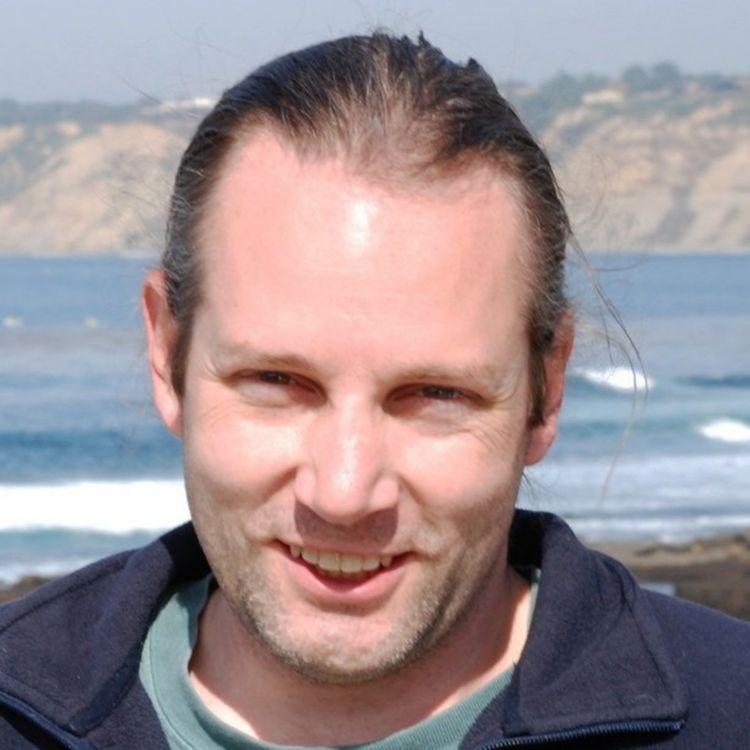
194: Tom Murphy, part 2: Author of one of the best sites on the internet
I've said it before and I'll say it again. Tom's Do The Math blog is one of the best site on internet. If you measure a site by how much it can improve a reader's life and human society, I challenge you to find one with greater potential. A couple peers include Low Tech magazine and Sustainable Energy Without the Hot Air, which is a book that you can download for free.
Tom makes the physics behind the environment and our interaction with it simple and accessible. If you don't like math, well, it's the language of nature, so it's important to understand what's happening in nature. But even so, the point of collecting data and calculating results isn't for the sake of the math. It's to get past it to get to your values and to act on them.
When W. Edwards Deming initially apparently contradictory statements make sense, you understand the point of taking data and calculating results. He said:
“Without data, you're just another person with an opinion.”
and
"Management by numerical goal is an attempt to manage without knowledge of what to do"
Doing the math frees you from confusion to enable talking meaningfully about what to do.
Regarding the environment, as long as people can think they can just switch to solar for everything that needs energy or that they can close some imaginary loop and recycle everything, they'll do things that lower Earth's ability to support life and human society. They'll feel confident and happy as they step on the gas, thinking it's the brake, driving toward a brick wall.
Nature is the perfect mathematician. It doesn't react to your feelings about waste or aspirations but what you actually do.
Tom's conclusions about solutions and admonitions against non-solutions point to what works. A path forward becomes obvious and simple when you understand the math and physics. You may not initially like it, but you can change what you like, as sure as most of us learned to like vegetables despite preferring ice cream as children.
The result is clarity and mental freedom. The challenge, knowing what works and doesn't, is seeing the madness of people acting without understanding these things.
The result is living by your values with confidence, not just hoping for the best. If anyone wonders where my views come from, it's analysis like Tom's. Also Low Tech Magazine, Limits to Growth, and Sustainability Without the Hot Air.
There's a lot science that I support and value, but find inaccessibly complex, even with a PhD in physics. Tom's work is accessible. People think the science is hard and scientists confusing. It doesn't have to be.
Tom's main conclusions point to reducing consumption as the most viable solution to our environmental problems. Without it nothing else works. You think you have a solution without reducing consumption? Read his blog. I bet he covered it and showed its limits.
My experience shows reducing consumption as improving most Americans' lives, at least the first 80% to 90% reduction. Missing from nearly every mainstream message I've heard but clear from Tom's life, my life, and a few others is that consuming less brings joy, meaning, purpose, community, and relationships along with cleaning our air, land, and water.
If you think reduction is an economic problem, read Tom's blog on his conversations with the economist because growth is a bigger problem.
Meanwhile human societies sustained for hundreds of thousands of years without growth. Our growth since Adam Smith has picked all the low hanging fruit, high hanging fruit, and now we're digging under the sea for every scrap of oil we can find and polluting everything for a few moments of forced smile.
Read Tom's blog and you learn we could create happiness, meaning, purpose, and community instead.
More episodes
View all episodes
851. 851: J. Eric Oliver: How to Know Yourself
01:09:02||Ep. 851This podcast is about leadership first and foremost, applied to sustainability. Most of the time when people hear or read "sustainability," that concept overrides everything else. They forget or don't notice else, but here, in this podcast it comes second. If you haven't developed the social and emotional skills to lead based on intrinsic motivation, if you try to convince, cajole, coerce, or seek compliance, you'll probably influence people to resist and oppose you and what you're promoting.I see Eric's book, How to Know Your Self (note the two words: "your" and "self") is a book on self awareness based on an interactive course on self awareness. I've never heard an experience leader suggest that lower self awareness helps and I've heard plenty say it does.Since we all pollute and deplete, which hurts people, we know we're violating our values, which tends to evoke emotions we don't like. We hide them from ourselves. We lower our self awareness. We could use tools to increase our self awareness.Eric's book delivers. We talk about how the book came to be, his course, how it differs from regular classes, and what people get out of it. I hope you listen, read the book, use it to increase your self awareness, and use that increase to lead yourself and others more effectively.Eric's home pageEric's page for How to Know Your SelfEric's faculty page at the University of ChicagoEric's podcast: Knowing
850. 850: AJ Harper, part 1: Write to change lives, including yours
01:12:00||Ep. 850Two core elements of leadership are effective communication and creating community. AJ has done both. I can attest from taking her writing workshop and participating in her author community since. I wrote the first draft of Sustainability Simplified in her workshop.I also valued the book she co-wrote with her writing partner and podcast guest Mike Michalowicz. As you'll hear in our conversation, their podcast is one of the only ones I've listened to every episode of.I've wanted to bring her on the podcast for a long time since I learned so much from her and value participating in her community so much. If you're here to build community to change culture, I believe you can learn from AJ's journey and building her community. I see them based on honesty, integrity, doing the reps, self-awareness, and the things that many people talk about but not all do. If I'm not too direct and blunt to say so, environmentalists in particular not only lack these leadership properties, many of them shun them.AJ's homepageHer writing workshop that I took and recommend
849. 849: Josh Bandoch, part 3: How to Get What You Want: Mastering the Art and Science of Persuasion
48:35||Ep. 849Josh Bandoch published a book on persuasion, influence, and leadership: How to Get What You Want: Mastering the Art and Science of Persuasion. I wish I'd had this book decades ago. It handles myths many people hold about persuasion that hold people back, then builds up the skills and theory to influence and persuade people effectively.It compiles many essential building blocks of persuasion and influence into one place.We talked about it at length in this episode. I recommend it, and would if I didn't know Josh B. In fact, our shared passion for learning, teaching, and coaching how to lead is a major piece of what connects us.From his book page:Life is about getting what you want. When you’re negotiating a salary, buying a house, or talking politics with your uncle at Thanksgiving dinner, you’re always after the best outcome.Learn from an expert how to get what you want in every situation—no matter who you’re talking to.Your ability to get what you want depends upon your ability to persuade. Unfortunately, the way most people approach persuasion has the opposite effect: we double down on our own perspective and cite tons of facts to make our point—or even try to strong-arm people into giving in. None of this is persuasive. In reality, it pushes people away from us, making it hard or even impossible to get what we want.Persuasion expert Joshua Bandoch has spent over a decade uncovering the secrets of persuasion. He’s mined psychology, neuroscience, economics, public policy, and history for cutting-edge techniques that actually work—and he’s used them in speeches written for senior government officials, national leaders, business executives, and dozens of his own talks to audiences around the world.How to Get What You Want combines Bandoch’s groundbreaking research with practical experience persuading at the highest levels to give you a fresh, surprisingly simple approach that will get you what you want and need when it matters by:Adopting the persuader's mindsetLearning proven techniques for making the most persuasive emotional and logical appealsUnlocking the secret formula for memorable and motivating storiesTapping into the power of tone, body language, and other subconscious signalsHow to Get What You Want teaches you how to navigate any political, professional, or personal situation more effectively to get optimal results each and every day.Josh's home pageHis book page
848. 848: Peter Simek, part 1: EarthX's CEO
49:57||Ep. 848I met Peter in person at a local (Manhattan) event that EarthX hosted for media people. I was invited for hosting this podcast.We spoke about leadership and sustainability. We focused on crossing political boundaries. We shared about our successes in these efforts, how important we consider such tactics and strategies, and how much that success is missing in the US.He invited me to participate in this year's conference, as you'll hear in our conversation. I wrote back that I don't fly, so I'd like to but transportation would be a challenge. I didn't say that I consider conferences that dozens to thousands of people fly to counterproductive because I didn't yet know enough about the conference or him, but I offered a few ways to make it work.You'll hear more in the conversation, but I suggested to him what I've suggested to a couple other conference organizers. If enough people who were flying might switch to a chartered bus, I could help that process.Tune in to hear our conversation on that topic. Also, you'll learn more about EarthX, Peter's relationship with EarthX and why they brought him on, and his start of the Spodek Method. As often happens, it seemed like it couldn't work until it did, and then he looked at his commitment with enthusiasm.Peter's home pageEarthX's pageFor its 2026 conference
847. 847: Tzeporah Berman: Ending Fossil Fuels by Treaty
47:42||Ep. 847I met Tzeporah at an event called Climate Week NYC last fall. She was nearly the only person there who spoke about decreasing and stopping extracting fossil fuels. I had to bring her here.Our conversation grew more compelling and interesting as we spoke. The early parts about energy sources besides fossil fuels you may have heard before, but give context.After she shares the realizations that prompted her to lead are what I valued. In particular, she exposes and clarifies how people have simply ignored fossil fuel production or extraction in favor of accounting methods and seeing if they can offset things but not decreasing extraction.She also talked about her strategy, which differs from Paris Agreement approaches and is based on how treaties on land mines and chemical weapons succeeded. She also shares some eye-popping statistics, like how much fossil fuels are used just to transport other fossil fuels, which is just over two-thirds.The bottom line is almost too simple to say, but it bears repeating: we have to stop extracting fossil fuels fast. Tzeporah is one of the few working on, undistracted by things that don't stop us from extracting them.The Fossil Fuel Treaty InitiativeHer TED talk: The bad math of the fossil fuel industryHer book: This Crazy Time: Living Our Environmental ChallengeHer Wikipedia page
846. 846: Gail Eisnitz: The Inside Story of a Life Investigating Factory Farms
01:00:13||Ep. 846Gail shares her investigations into meat industry practices, exploring how exorbitant slaughterhouse production line speeds in a consolidated slaughter industry affect animals as they are being handled and killed, and how the proliferation of massive factory farms impacts animals being raised in intensive confinement.She spent decades in the field documenting violations against farm animals and in the office preparing cases and writing about her investigations in articles and books. Her efforts to expose and prosecute animal abusers were often thwarted by network television producers and by law enforcement authorities. Producers considered her findings too disturbing. The law refused to prosecute abusers. Instead they provided cover for the meat industry---a billion-dollar industry.She gives an inside view behind the closed doors of U.S. slaughterhouses and factory farms. She also shared her challenges and successes in documenting and exposing the findings.As a memoir, Out of Sight has been described by reviewers as a “detective story” and a “page turner” that they “can’t put down," probably for her personal challenges related to her diagnosis with a rare medical visual condition she shares in our conversation.Gail's web pageThe Humane Farming AssociationHer most recent book: Out of Sight An Undercover Investigator's Fight for Animal Rights and Her Own SurvivalHer first book: Slaughterhouse The Shocking Story of Greed, Neglect, and Inhumane Treatment Inside the U.S. Meat Industry
845. 845: Sarah Goodyear and Doug Gordon: The War on Cars and Life After Cars
01:26:50||Ep. 845Doug and Sarah's podcastThe War on Cars is a podcast that delivers news and commentary on the latest developments in the worldwide fight to undo a century’s worth of damage wrought by the automobile, approaching the topic from all angles, from politics to pop culture. They release two regular episodes and one Patreon bonus episode per month.Doug and Sarah's BookCars ruin everything. That’s why we need Life After Cars.When the very first cars rolled off production lines, they were a technological marvel, predicted to make life easier and better for everyone; yet a hundred years later, that dream is running on empty.Instead of unbounded freedom, the never-ending proliferation of automobiles has delivered a host of costs, among them the demolition of our neighborhoods, towns, and cities to make way for car infrastructure; an epidemic of violent death; countless hours lost in traffic; isolation from our fellow human beings; and the ongoing destruction of the natural world.That’s why we need Life After Cars. Through historical records, revealing interviews, and unflinching statistics, Sarah Goodyear and Doug Gordon, hosts of the podcast The War on Cars, and former host Aaron Naparstek unpack the scale of damage that cars cause, the forces that have created our current crisis and are invested in perpetuating it, and the way that the fight for better transportation is deeply linked to the fight for a more equitable and just society.Life After Cars expands on the podcast with new interviews and original content—offering something for everyone, from longtime listeners familiar with the harms of car culture to those just beginning to imagine a world with fewer metal boxes zooming around.Cars as we know them today are unsustainable—but there is hope. Life After Cars will arm readers with the tools they need to implement real, transformative change, from simply raising awareness to taking a stand at public forums.It’s past time to radically rethink—and shrink—society’s collective relationship with the automobile.The podcast: The War on CarsThe book: Life After Cars
844. 844: Maya Lilly, part 1: Effective Storytelling and Producing The Years Project
01:35:59||Ep. 844Since I've seen Maya's work on the Years Project with people like executive producers James Cameron and Arnold Schwarzenegger, I was worried I might feel starstruck.Oh wait, she also worked with series creators Joel Bach and David Gelber (of 60 Minutes); chief science advisors podcast guest Joseph Romm and Heidi Cullen; and episode hosts including Cameron, Schwarzenegger, Harrison Ford, Ian Somerhalder, America Ferrera, David Letterman, Gisele Bündchen, Jack Black, Matt Damon, Jessica Alba, Sigourney Weaver.Oh, and the series won an Emmy for Outstanding Documentary or Nonfiction Series.She was engaging, informative, open, and fun. We laughed a bunch We talked about her passion for the art and practice of storytelling. You have to be true to the science, but you can't skimp on the story or take for granted it will work. We also talked about her background that brought her to this level.The Years ProjectIts YouTube pageMaya's curated climate listUPDATE: After we recorded, Maya noted that about halfway in, she said "Bread and Puppet theatre in San Francisco." The actual troop was The San Francisco Mime Troupe.
843. 843: Judith Enck, part 2: The Problem with Plastic (the Book)
28:43||Ep. 843Judith just published The Problem with Plastic: How We Can Save Ourselves and Our Planet Before It’s Too Late.I've read a lot about plastic and hosted many authors. I won't lie. Before starting the book, I thought I should read it because I knew her, but didn't expect much.Instead, I learned a lot new. I found it engaging and compelling. I recommend it.Yes, you'll learn things that are sobering, but you'd rather know than not know, especially things that affect your health and safety and your family's. It also guides you to how to respond, personally, socially, and politically. Judith cares and has experience.Start by listening to our conversation. Then read the book.The Problem with Plastic: How We Can Save Ourselves and Our Planet Before It’s Too LateWEBINAR with co-authors Judith Enck, Adam Mahoney, and Melissa Valliant, January 28, 2026