Latest episode
8. In-between_A conceptual vision for Järva
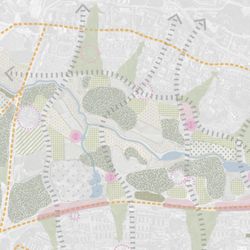
18:50||Season 1, Ep. 8What could the future of Järva look like? What is the probable, the plausible and the possible? In this podcast we will explore the concept of bottom-up initiatives connected to Järva. Three architecture students are meeting with Arash Sajadi and Sven Einarsson from Husby Arts & Crafts Association, to have a conversation about their work and role as a facilitator for human encounters in Husby. What can we learn from them? And how can we implement our new knowledges when making our vision for Järva? The podcast is made by students at KTH’s Masters Program in Architecture (Hannah Becker, Elina Lejerbäck, Saya Ebrahim), 2023.
More episodes
View all episodes
7. Greens from the Wedge
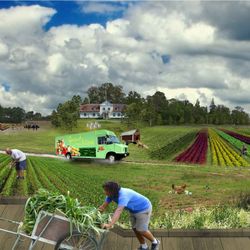
20:54||Season 1, Ep. 7In the future vision, we hope to make full use of the rich natural resources and historical and cultural heritage of Järvafältet to create a diverse area that combines farming, culture, education, and more social inclusion function in the suburban of Stockholm, meeting the needs of different target groups the farmland can provide food for the city, it also can provide employment and leisure for the surrounding residents, let people in the urban area get close to nature and farming, and at the same time allows more people to understand the history and culture of Järvafältet. In the south of the area, an open greenhouses area will be built to grow greenhouse vegetables. The area near the highway will be served as a mobile food market to provide fresh and convenient vegetables and transport the food to the city by bus. In the field, we hope to grow various crops, and build some mobile chicken coops etc. to provide a rich and varied farming experience for people. Furthermore, we hope that this area can host a variety of activities and meet the needs of different groups of people. For example, establish cooperation with schools to allow students to experience and learn history and agriculture. At the same time, we also hope to invite artists to enter the workshops in this area and create some artworks in the fields. Besides, walking paths will be built to link the area and make the whole area become a network that can be reached easily. At some key nodes, we want to create small squares where different people can meet and hold activities. Street signs will be set along the walking paths, so that different groups of people can find their way easily. On a larger scale, we want to connect the area with the surrounding city, such as Eggeby Gård and Järva Disc Golf Park. There will be an entrance set in the south to attract people to the site. In the short term the basic strategy is to make the most of the existing structures on the site and use movable temporary infrastructure, to ease the complicated procedures of government permission, and at the same time protect the ecology and nature of this area, using minimum intervention to achieve the maximum effect. Residents can jointly participate to create, operate and organize this area. It is hoped that this area can become a more dynamic and influential exemplary multicultural farm.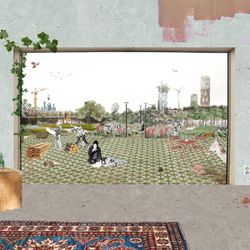
6. The cultural landscape of tomorrow
17:45||Season 1, Ep. 6Nestled in the centre of the nature reserve of Järvafältet is Eggeby Gård, the local folkets park, and its operations manager - Örjan Hultén. He speaks to us about the Jarva region and its demographic, its challenges, its positives and its great potential. Integral to Eggeby’s identity is its relation with the community, however, Örjan finds himself needing to overcome hurdles of physical and perceived distances as well as navigating the complex social issuesof the area.By investigating the site through different scales, we ask ourselves what are the needs of this folkets park for the future? How can both peoples and natures needs be catered for holistically? How can these needs be designed to future-proof itself against political, climatic and economic changes?Working in close contact with Örjan, we hope to create a proposal for the green wedge of Jarva, one that cements Eggeby Gård’s position as a community hub and as a folkets park of the future.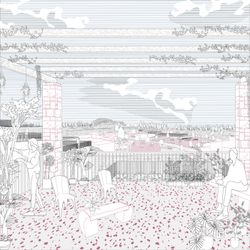
5. The stone resource: circularity and breaking barriers
22:55||Season 1, Ep. 57 million tons of stone are currently being blown out and extracted from tunnel projects around the Stockholm area. Förbifarten as well as metro line expansions are being excavated on a scale that has not been seen in the city since the 1950’s and 60’s construction of the metro system. Today, we have realized that those huge quantities of stone represent a precious and free resource that should not go wasted and that can effectively be put to use in the construction industry. Together with Luc Pagès, our actor from the Stockholm Traffic Office, Trafikkontoret, we will explore how the current model works, his role in pushing the topic forward and what some of the material’s potentials are within a circular building culture. We will also present our vision for a new neighborhood involving stone in Järva. So let’s jump right in and leave no stone unturned! In the podcast we mentioned a number of projects, here are the corresponding references:Artificial island in stone for Norra Djurgårdsstaden in Stockholm ( IN SWEDISH) https://www.svt.se/nyheter/lokalt/stockholm/har-skapas-en-ny-o-nar-norra-djurgardsstaden-vaxerInformation about Rinkebyterrassen (IN SWEDISH): https://vaxer.stockholm/projekt/bostadsomradet-rinkebyterrassen/Information about Tenstaterrassen (IN SWEDISH): https://vaxer.stockholm/projekt/bostader-pa-tenstaterrassen/Herzog & de Meuron’s Dominus Winery project in California: https://www.herzogdemeuron.com/projects/137-dominus-winery/IBAVI - Instituto Balear de la Vivienda - social housing institute in Mallorca, Spain and their work in the local and traditional marés sandstonehttps://www.architectural-review.com/buildings/social-housing-in-mallorca-spain-by-ibaviBelgian architects BC Architects & Materials work reusing earth from construction sites to produce rammed earth construction with a portfolio that spans both Europe and Africa:https://www.architectural-review.com/essays/degrowth/down-to-earth-earth-building-in-europe-and-africa-by-bc-architects-materials-studiesMusic: Order by ComaStudiohttps://pixabay.com/music/future-bass-order-99518/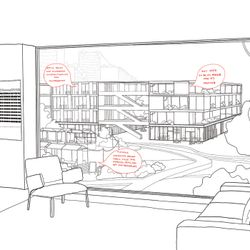
4. Rethinking Kista
17:59||Season 1, Ep. 4Following our first visit to Kista, it was evident that there is a disconnect between the different parts of Kista, both within and between the built and the natural environment. This was further brought up in our conversation with Bling and Kista Science city where the district was described as having a cold and a warm area, with a mental barrier between the two. The warm area, being the residential, feels accessible and familiar while the cold business hub seems empty and unwelcoming. Our vision for the future of Kista will bridge that gap, bringing more of the residents into the business hub, creating a more unified area with a stronger identity. The goal is to work off the quadruple helix model where academia, business, research, and residents can find a common ground and benefit equally from the city scape. By looking at the changes in office culture and what is expected and demanded from the spaces, they can no longer compete with working from home, especially after the Covid-19 pandemic. Working through a timeline our vision starts with activating the business hub by incorporating restaurants, bars, and music venues in the existing buildings that bring life to the area even after office hours. Alongside this we're creating new green corridors that link existing and new parks, creating a more fluid, comfortable and inviting way to walk through the district. In these green spaces we are also proposing temporary structures that can be outdoor cinemas, bars or meeting places for the different actors in Kista. By placing these in the “cold” area we are inviting more people in the community to go there. Looking more long term, we're imagining the future of office work taking place in a mix-use buildings where residential, work and play can co-exist. Since a lot of office buildings are unused today, they can be reused and reworked to make the area more attractive to live and work in. Both within and between these buildings new ecosystems arise and exiting meetings can take place where business, research and academia can collaborate and share recourses. Authorskarin wiman / berta meironaite / august achtman Guestsamir sebdani, bling startups / mikaela fänqvist, kista science city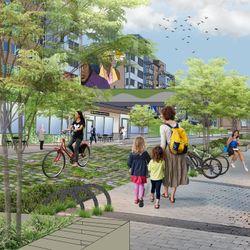
3. A connected green ecological infrastructure
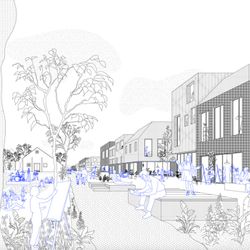
19:08||Season 1, Ep. 3Creating a well-connected social and ecological infrastructure in Järva, Sweden How do we face problems that occur in urban areas and how do we work with the potentials of the areas already existing? The suburbs around the Järva area outside of Stockholm have a head start when it comes to being close to nature. The four suburbs of Kista, Husby, Rinkeby and Tensta are located around the large Järva Wedge. It is a huge natural area that stretches from far out in the rural areas, into Stockholm, creating an ecological passway into and through the suburbs and the city. Even though nature is close to these areas it’s not always easily accessed. As three architecture students, Carolina Tideman, Mandong Zhu and Nadia Vidor from the university of KTH, Stockholm we asked the following questions. How to blur these borders, bring in more nature into the urban area and how we with ecological infrastructure can help minimize problems of rising urban temperatures as well as create social activation and raise feelings of safety. In this masters project we’re focusing on one of these suburbs, Rinkeby, to find solutions by strategic planning and visualization. Together with Eveliina Hafvenstein Säteri, an urban planner at Stockholms Stad, we’ve looked at the great aspects of the area, as well as the social and ecological issues currently faced by the region, to discuss what could be done to help counter these problems and find solutions. Here you’ll hear parts of our discussions as well as parts of our process.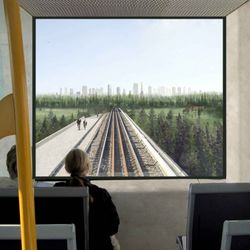
2. Nature first - the urban nature reserves of tomorrow
27:26||Season 1, Ep. 2Have beings of your kind ever pondered the vision that the humans held for the future of nature reserves, back in the year 2023? This podcast episode is a short documentary unfolding the evolution of human impact on the world we inhabit and their steps to conserve the natural wonders of Järvafältet, a community in Stockholm. This exploration was generated from a found interview record with landscape architect Desiree Johansson and memories of Arnaldur, Lisa and Adam, the inhabitants of this community. The narrative of the podcast is an imagined historical overlook of Järvafeltet’s recent history, by residents in the area in the year 2060.Authors Arnaldur Bragi Jakobsson, Adam Varga, Lisa MöllerMusic by P4LASH, Execore, LCMsound and Lesfm from Pixabay