Share
The Kingless Generation
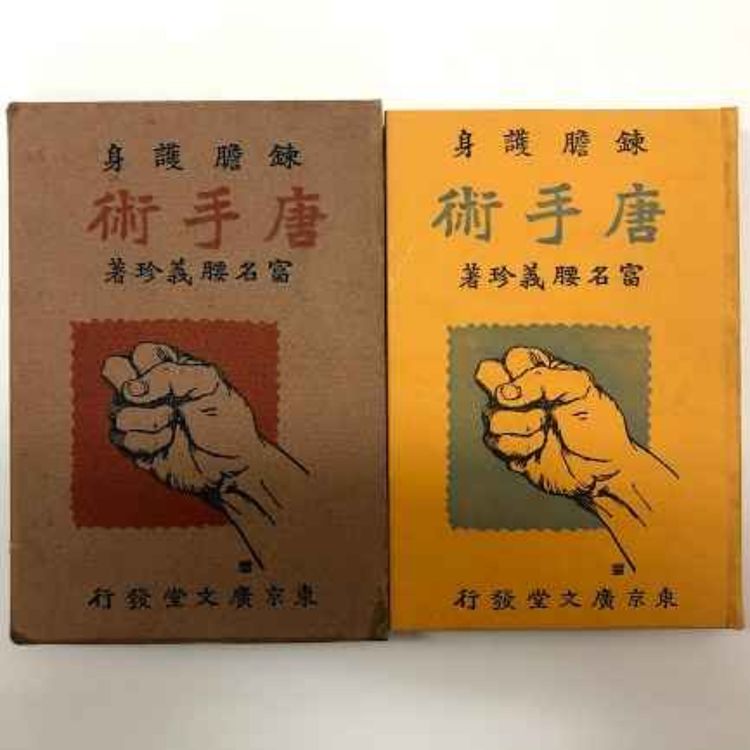
When Karate was a Weapon of the Colonized Working Class: The “China Hand Technique” in Japanese Proletarian Fiction
If you had a male-coded childhood at all recently in the Anglo-American world, you have felt the influence of the Soldier of Fortune culture of the 1980s, within which martial arts and other action films featuring Silvester Stallone, Chuck Norris, and Steven Seagal were prominent, and accompanied by dojos proliferating even in mid-sized American towns. But what you may not know is that, like the sushi boom around the same time period this shadow-reich version of the East Asian martial arts was quite deliberately seeded into the pop culture of the Reagan Era by a rogue’s gallery of all the usual WACL suspects: Moon Seonmyeong of the Unification Church, his high-ranking lieutenant Jhoon Rhee, Sasakawa Ryōichi—as well as Zionists like Menachem Golan and Haim Saban. Moreover, the hyper-individualism and hierarchicalism of this WACL school of karate, far from being inherent to the art, represents its co-optation and enlistment in a fight against its true roots in the struggles of the colonized and the working class in the Japanese Empire. In the proletarian fiction of 1920s Japan we find a little-known earlier chapter in the story of karate, when it was a new and exotic weapon, developed by Ryukyuan peasants under early-modern feudal and mercantile rule, and now wielded by Ryukyuan proletarians and the Korean and Japanese comrades to whom they taught it, to devastating effect against the bosses and their yakuza goons.
More episodes
View all episodes
83. Oriental Despotism comes w/ Occidental Colonization: Ibn Bakkār & Shams-al-Nahār in the Calcutta Ⅱ Nights (1839–42)
01:29:48||Ep. 83In addition to filling in more background knowledge from a scholarly article that I did find on this tale by Jamel Eddine Bencheikh, as well as some musings on the formation of the discipline of Anglophone Japan studies under the influence of Francophone Arabology, we explore this same tale in the nineteenth-century colonial-era British-Indian edition of the now much expanded and more textually baroque version known as Calcutta II. There, we find the first-person narrative interludes removed, or at least refocused away from the process of establishing a secure communication channel between the worker go-betweens, on behalf of the elite patrons. That process also becomes top-down rather than bottom-up, as the negotiation of the connection much more clearly follows an elite commission rather than arising on the initiative of the workers themselves. Meanwhile, textual change has obscured some storytelling choices we saw in the post-1450 version, sometimes strengthening the story but also often leaving loose ends dangling and vestigial inconsistencies that only make sense if we know what the passage used to say. In the way, the text of Calcutta II embodies the growth of oriental despotism or decadence precisely in the time of occidental colonization, both in its form and in its content.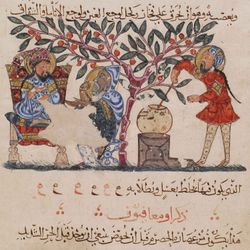
82. Truth and Testimony, Drugs and Attachment in Bourgeois-Revolutionary Baghdad [PREVIEW]: Re-Orienting Ibn Bakkār and Shams-al-Nahār in the Arabic manuscript of the 1,001 Nights
46:08||Ep. 82I dust off my Arabic for some weird scenes in Silk Road–era Baghdad: a story of drugs and ego death, deadly secrets and the workers who keep them. The only tragic love story in the Nights, the story of the Persian prince Ibn Bakkār and the courtesan Shams-al-Nahār also features, only in this earliest available Arabic manuscript tradition, a meta-narrative device whereby first-person interviews with certain characters—such as would be collected by a prosecutor as evidence for a trial—are interspersed throughout this story of elite parties, exotic drugs, and forbidden obsessions.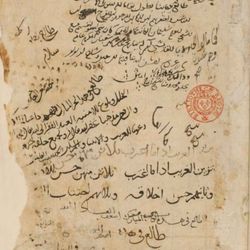
81. 1,001 Nights: A murdered ancestor to European Romance
01:05:29||Ep. 81One symptom of the neglect in Anglo-Zionist historiography of Arabic literature and culture—despite its role as the main heir to axial-age Mediterranean and Persian cultures and, as the western representative of the Afro-Asiatic merchant capitalist world system, key progenitor of “the West”—would be the neglect which the 1,001 Nights has suffered in literary scholarship. Everything I can find in English or Japanese is only interested in the impressions it left in the industrial-era European mind as a long-gone Other, but the fact is that we (finally) have a modern edition (by Muhsin Mahdi) and English translation (by Husain Haddawy) of the surviving (15th-c.) Arabic manuscript lineage which attests to the Nights as they were circulating before the rise of Europe—which modern economic history has shown to have occurred only after 1800. Nevertheless, I with my admittedly limited skills as a West-Asianist can find nary a comparative study of this text of the Nights in their prime with later developments and their European adaptations and distortions: only “post-colonial” (really covertly neo-colonial) navel-gazing exercises that reinscribe and eternalize the European gaze rather than casting it aside for the strange, two-hundred-year dream that it was, to look squarely at the genius of Arabic narrative and subjectivity in story that we see in the real roots and first rumblings of bourgeois revolution in West Eurasia.
80. Eranos 4 [PREVIEW]: It was us (all along)...
47:31||Ep. 80In anticipation of future outings on some of the more interesting figures we've met thus far, we bring our introductory series on the Eranos milieu to a close with a discussion of the final years, as one august old racket came to an end but was simultaneously demolitioned, flipped, spun off, and otherwise psycho-entrepreneurially aufgehoben into various other cultic milieux just as our current moment of cultic conquest of civil society began.
79. Eranos 3: Mircea Eliade, Mellon Fellow of Death, w/ Scott Ryan of the Dustlight Archives
01:20:23||Ep. 79
78. Eranos pᵗ 2 w/ Scott [PREVIEW]: Furio Jesi vs the Satanic-Orientalists
35:12||Ep. 78More ideological and world-historical groundwork, as we introduce, for me, the real hero of this story, the Jewish Italian Communist mythologist Furio Jesi (1941–1980), a rival to many in the Eranos crowd who critiqued their Aryo-heroic, Christian-Kabbalist, and I would say satanic-orientalist project from the outside. He got a professorship at the University of Palermo on sheer merit despite being a high school dropout, but then after moving his family to a country house for their safety after his organizing work got him in some heat during the Years of Lead, he died at age 39 when his water heater suddenly malfunctioned and gave him carbon monoxide poisoning in the night. Join me and Scott Ryan of the Dustlight Archives Podcast as we discover an important Kingless Generation ancestor.
77. Aether Whores: Eranos and the 20th-c liberal-bourgeois vanguard, w/ Scott of the Dustlight Archives
01:12:11||Ep. 77From 1933 to 1988, the liberal spiritualist wing of the trans-Atlantic bourgeoisie had something of a think tank for spiritual and cult technology and grand strategy in the yearly gatherings of philosophers, psychologists, and anthropologists like Carl Jung, Mircea Eliade, and Gershom Scholem, known as Eranos and organized by the wealthy socialite and occultist Olga Fröbe-Kapteyn at a lakeside resort in Switzerland. Jung disciple Gustav Heyer memorably called their activities there Aetherhurerei “aether whoredom”. I am joined by Scott Ryan of The Dustlight Archives Podcast for the opening episode of a series on this little-known but very important gathering which has deep links both with earlier modern “gnostic” and bourgeois-occult, satanic-orientalist secret society movements, contemporaneous developments like the Nazis as well as the proto-hippie youth movements of which Nazism was the shadow, and also NXIVM and other present-day developments of the same social and spiritual technologies of the ruling-class vanguard, which Scott is covering so brilliantly on his show.
76. (15)90s kids: Thomas Nashe [PREVIEW], A Son of the Silk Road in Merry Old England
44:27||Ep. 76We continue our study of Elizabethan England, which is often mistakenly treated as an origin point of bourgeois revolutionary culture but which I hope to show is actually an endpoint for the subjectivity of the “Sons of the Silk Road” of Arabic literature, whose literary, religious, cryptographic, and financial antics in the bazaars and marketplaces of West Eurasia, Africa, and the European Ummah, inspired imitators among the crusaders and (re)conquistadors of Spain and Italy and, through them, a strange little island nation called England. This time we savor the acerbic wit of Thomas Nashe, poet of the continental wanderers known as intelligencers and used to great effect by Elizabeth’s spymaster Francis Walsingham. In his iconic depiction of the intelligencer in his picaresque novel The Unfortunate Traveller, we recognise extensive overlap with the fellowship of the Sons of the Silk Road as depicted by the 10th-c travelling Arab poet Abū Dulaf al-Khazrajī in his Qaṣīda sāsāniyya.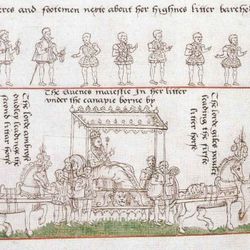
75. (15)90s Kids Know: Lizzie’s bois, overture
01:05:01||Ep. 75Building on our discussion of the Water Margin (the most important surviving versions dating to the 1590s), we go “back”—notice the scare quotes!—to what is usually at least passively assumed to be the source of the culture of capitalist modernity, merry aul England. What we will find, of course, is that we need to re-orient our view of the birth of modern capitalism along the lines long established by world historians like Janet Abu-Lughod, Andre Gunder Frank, Samir Amin, Emmanuel Wallerstein, Giovanni Arrighi, et al, because Europe was in fact a late-comer to industrial modernity, borrowing all the basic innovations necessary for capitalism from the Afro-Asiatic silk road powers: the Muslim world, India, and China. The same is true for the cultural superstructure of capitalism, as all the core elements of modern, novelistic, secular modernity can also be found first in Afro-Asiatic forms like the Arabic Maqama, the Arabian Nights, the vernacular epics of early modern India, and the Ming Dynasty novel. It was from here that “modern consciousness” spread to the North Mediterranean, and from there to the imaginary homeland of chivalry in the mind of a nascent “Europe”, Britannia. This time we outline the basic activities and characteristics of several lesser-known English writers of the 1590s, all of whom played important roles in the rise of state pageantry, venture capitalism, and intelligence agencies in that storied isle: this time we mainly discuss Christopher Marlowe, Thomas Nashe, and Anthony Munday.