Share
![cover art for Landback in Eurasia, 622 CE [PREVIEW]](https://open-images.acast.com/shows/60daf5ffba5f4f0012e7c022/1689747444427-d4cf3cbf8de12c935d6ff9b48b1b8e68.jpeg?height=750)
The Kingless Generation
Landback in Eurasia, 622 CE [PREVIEW]
How does an Indigenous-led movement rebuild in the wake of imperial decline? With the spectacular collapse of both Sassanian Persia and Byzantime Rome in 622 CE, a certain revolutionary communal movement led by masses of nomadic herders, merchants, and farmers, provides us with one of the greatest and earliest examples, albeit one poorly attested in surviving contemporaneous sources. We turn to recent historical-critical scholarship on the birth of this movement (often quite tendentious in ways we’re not so interested in) for hints about its genesis and growth. To keep me from perfectionism in the face of this daunting topic and to perform the conditions of pure orality in which this movement would have begun and spread, I record while walking through a midsummer Japanese mountain forest.
More episodes
View all episodes

73. Weebs of the Ages: Lafcadio Hearn, the “Brownie” who taught Japan to want whiteness
01:12:33||Ep. 73Living in Japan, the dominant image of Lafcadio Hearn is something like: he’s that white man who came to Japan and told us he believed in us—he knew we had it in us to become the honorary-white vassal of Anglo-America that we are today! A new TV drama on the national broadcaster NHK lavishes screen time on a klutzy Lafcadio adorably befuddled by Japanese culture, baffled by the Japanese language, and played by a blue-eyed English actor—which is especially interesting because the real Lafcadio was a brown man born of the last Crusade, or maybe the first color revolution: the Greek war of independence from Ottoman Turkey, which was sponsored by a rising British Empire. His mother, a true daughter of the Afro-Asiatic merchant capitalist world with relatives on every shore of the Mediterranean, got in trouble with his father’s English family for piercing little Lafcadio’s ears and putting hoops in them. I run through a collection of his writings in Cinncinnatti and New Orleans, where he lived on the Colored side of town (not entirely by choice) and dedicated himself to recording the lives and speculating on the hopes and possibilities of declassed, liquidated, and colonized peoples that Amerikkka has always burned for fuel. In the end, he was converted to a social-Darwinist libertarianism that left no room for sincere solidarity, and this casts his later embrace of a rising Japan in a different light.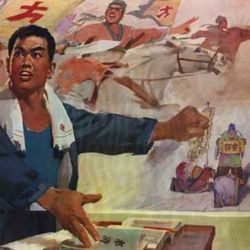
72. Organizing Bourgeois Revolution in East Eurasia [PREVIEW]: The Water Margin (水浒传) w/ River
33:59||Ep. 72First externally attested in 1524, the Ming-dynasty Chinese novel Water Margin collects legends about a band of merry men of genius who love righteousness, and who fight to stop a corrupt imperial bureaucracy from exploiting the people. However, the leader of these social bandits, Song Jiang, comes to see his mission in terms of a monarchist restorationism which is a common conservative reaction to capitalist upheaval in early modernity, known internationally by the Russian name “Good Tsar, Bad Boyars”—the breakdown of feudal order under market relations is blamed on the ministers around the monarch, while the monarch himself is seen as a pure, ideal figure who must only be rescued from corruption and he will save the world. Midway through the longer versions of the novel—there are countless versions with different political slants and (on the original prints) commentary on every page by various ideologues of the time—Song Jiang finally receives his longed-for imperial pardon, but now the heroes must join the imperial army as an elite unit fighting to put down rebellions much like their own across the country, as promises of elevation to the bureaucracy are deferred again and again. When (after the smartest of the heroes go back to the thug life) they finally receive their emoluments and sinecures and retire to their country villas, one by one they are poisoned by the bureaucrats with (as the narrator quasi-grudgingly admits) the full knowledge of the emperor. A final poignant scene caps the long debate throughout the novel between Song Jiang and his loyal and simple stalwart Iron Ox, who has argued throughout against Song Jiang’s monarchist fantasies and in favor of something like socialism and democracy. Giving the lie to Eurocentric ideas that revolution is alien to East Eurasia where “oriental despotism” prevails—in fact, the roots of modernity including the modern revolutionary tradition lie in the East—this novel had a tremendous influence on China’s thwarted bourgeois revolution, Japan’s successful bourgeois revolution (it, far more than the Kojiki or anything else, is the bible of the Japanese right wing and the foundation of Japanese monarchism), and a complicated legacy in China’s socialist revolution. In Red Star Over China, Mao is seen praising the Water Margin as an inspiration, but during the Great People’s Cultural Revolution he held it up as a “negative example” (反面教材), calling Song Jiang’s desire for a pardon “capitulationism” and equating it to the attitude of the capitalist roaders. So who was correct: Song Jiang or Iron Ox?
71. Organizational Proprioception w/ River
01:21:10||Ep. 71Seasoned organizer and noided leftist River from River to Reality joins us to share their theoretical concept of organizational proprioception: just as our nervous systems need to communicate well with all parts of our bodies in order to experience all the parts of our bodies as our own and have control and feedback signals flow back and forth unimpeded through our nervous systems—incidentally, scientists are finding that body parts other than our brains can even store memories (maybe even participate in thought!), and the total state of the whole nervous system may be the minimum unit that we can call a conscious entity—in the same way, political organizations on the left, where transparency and trust are of the essence, must conduct audits of local organs with member-decided questions. The lack of organizational proprioception can and does lead to organizations being encapsulated and misdirected, as they are in the many proxy wars of national liquidation that form the basis of the emerging necro-capitalist world system today: gangs and counter-gangs like ISIS and YPG shredded Syria and broke the back of regional resistance to Zionist aggression, and one would hate to see, for example, a CIA-encapsulated leftist militia emerge to fight ICE but end up only running cover for further controlled demolition of society for the workers and colonized peoples of Turtle Island—speaking purely hypothetically.
70. A Holiday Ramble in Hibiya Park [PREVIEW]
08:30||Ep. 70A quick, chatty, catch-up episode recorded in a park in central Tokyo.
69. Left=Noided, Noided=Left: w/ River (featuring Fire in the Minds of Men)
02:16:59||Ep. 69On this podcast I have often argued against the “anti-conspiracy left”, but now that everyone and your mom can’t help but be noided, the relevant question is no longer, “If you’re on the left, can you be noided?” but rather, “Since you’re noided, should you be on the left or the right?” To argue this question, I do a quick hate-read of the Bible of 20th-c anti-revolutionary ideology on the cusp of the End of History, Fire in the Minds of Men, by Ronald Reagan’s Librarian of Congress—followed by a wide-ranging conversation with the roaring River, of the must-listen podcast River to Reality. The final song my incompetent rendition of “Happy Paddle”, a song about going by canoe to a festival, composed by Casey James of the Musqueam nation.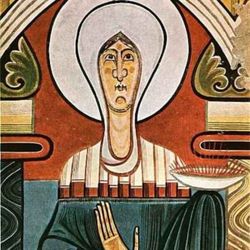
68. Britain is a Figment of the Crusader Imagination [PREVIEW]: King Arthur as Farang Mahdī
38:34||Ep. 68Much modern scholarship on King Arthur has revolved around the question of his historicity and origins, the recent greatest example being Higham’s magisterial 2018 survey of all the major theories—except the one that I advance here: Arthur was only one of many legendary chivalric heroes with whom continental Crusader and Reconquistador storytellers populated the North Atlantic archipelago, in their imaginations the spiritual homeland of a fictional Europe innocent of Semitic influences (both Muslim and Jewish). First, we run through all the major Arthurian theories—including the all-time banger whereby Arthur was a Croatian-Roman general who led nomadic Iranian horse-rider recruits to fight off the Angles and Saxons in the last days of Roman Britain—as exhaustively investigated by Higham. Then I state the obvious: that all the most distinctive features of the Arthur story appear for the first time in French chivalric romance (with many parallels in Spanish, Italian, and Catalonian stories featuring other characters) in the twelfth and thirteenth centuries, as the new Crusader concept of taking territory “back” from Muslims became the conceit of knightly adventure and conquest of “islands that the Emperor of Rome could not hold”, and the phenomenon of Crusaders bringing back relics from the holy land grew into legends like that of the Holy Grail. Finally, we explore one of foundational Japanese novelist Natsume Sōseki’s very first literary ventures, the Arthurian story “Kairokō” (“A Dirge”, 1905) and the modern, pseudo-modern, or hyper-modern twists and turns that it imposes on earlier Arthurian stories by Malory (1485) and Tennyson (1833), while trying to steer clear of allegedly un-civilized and un-modern predecessors in Edo-period kabuki and puppet theatre—which were perhaps in fact more authentically modern because rooted in Afro-Asiatic silk road capitalism.
67. Sisterfucker: Profound Desires of the Gods w/ Nathan, pt 3
02:12:06||Ep. 67In this final session, we put the proverbial big old boulder into the sweltering primordial pond with meditations on myths of brother-sister marriage and divorce from the Kojiki (712), the taboo on sibling incest in the mother-right kinship structures of Trobriand Islanders as seen in the anthropology of Malinowski and his debates with dogmatic Freudians in the 1930s, and finally the persistent postwar Japanese cultural theme of Japan as hotbed of incestuous “bed-creeping” (yobai), a feature which is either the dysgenic cause of the nation’s staunch patriarchy, persistent class rule, and gangsterismo (as in less helpful versions), or (as Nathan and I think) rather the effect of the mythopoetic comprador infestation of working-class movements and Indigenous resistance to dispossession which we have been discussing in this series.
66. The Birth of the Comprador Chief and the Defeat of the Secret Society [PREVIEW]: Profound Desires of the Gods w/ Nathan, part 2
45:10||Ep. 66This time we hit our stride, discussing the interplay of Indigenous state and deep state, chief and secret society, sometimes in resistance to colonization and sometimes in service of comprador opportunism—though as Nathan points out, which it might be in any given moment is worked out through a collective mythopoetic process.
65. A Yakuza Filmmaker Takes it Back to the Dawn of Time: Imamura Shōhei’s Profound Desire of the Gods, part 1
01:17:19||Ep. 65Nathan, AKA KUBARK Stare, @postcyborg on Twitter, an organizer of a film club in London which listeners should check out, joins me for a conversation about noided proletarian filmmaker Imamura Shōhei’s 1968 film Profound Desire of the Gods. Former Ozu disciple Imamura rejected the neat and clean nationalist family values of his early mentor to explore the deepest and most powerful forces slumbering fitfully at the bottom of fourth-reich Japanese society. Here he goes back to the “dawn of everything” (as he conceives of such things) to take up some prime paleo-parapolitical material—outcast shamans, tribal secret societies, masked death squads—so you know we have to check it out.