Latest episode
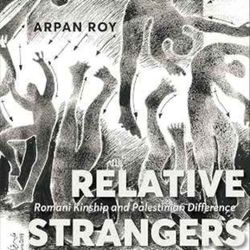
141. Romani Kinship and Palestinian Difference
54:48||Season 7, Ep. 141In this episode I interviewed Roy Arpan, the author of Relative Strangers, a great book shedding light on a neglected community of Jerusalem and Palestine: the Dom Romani. Examining how memory, intergenerational transmission, and kinship work together, Relative Strangers sheds light on Romani life in Palestine. Arpan Roy presents an ethnographic portrait of Dom Romani communities living between Palestine and Jordan, zooming in on everyday life in working-class neighborhoods, and under conditions of perpetual war and instability.The book focuses on how Doms are able to sustain ethnic difference through kinship, even when public performances of difference are no longer emphasized – a kind of alterity that is neither visible by obvious markers like race or religious difference, nor detected by the antennas of the state. Drawing on long-term ethnographic fieldwork in Jerusalem, Ramallah, and Amman, Roy makes a case for such alterity for Romani people and other groups in the region.
More episodes
View all episodes
140. Christian Zionism and the conquest of Jerusalem 1917
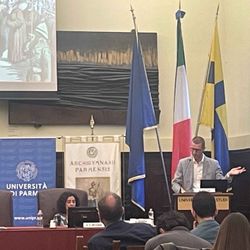
42:54||Season 7, Ep. 140Today I am recasting a talk I gave at the University of Parma in May 2026 discussing Christian Zionism. Thanks to the Universita' di Parma.Today we're diving into a topic that remains stubbornly relevant to understanding the modern Middle East: Christian Zionism. And I want to start by challenging a common assumption—that support for Israel among Western nations, particularly Britain historically and America today, is purely about geopolitics, oil, or strategic interests. That's only part of the story.The reality is that religious conviction—specifically Christian religious conviction—has been woven into Western policy toward Palestine for centuries, and its influence is far from over.When we think about the pivotal moments that shaped modern Palestine, the Balfour Declaration of November 1917 and the British capture of Jerusalem just weeks later immediately come to mind. But here's what often gets overlooked: these weren't just strategic military decisions. They emerged from deeply embedded religious imaginations—transnational evangelical networks spanning Britain and America, crusading rhetoric portraying the Palestine campaign as fulfilling medieval Christian ambitions, and movements like British Israelism that mystically connected Britain to biblical Israel.These networks created fundamental contradictions. Christian Zionists supported Jewish restoration to the Holy Land while simultaneously deploying crusading imagery that emphasized Christian dominance. They provided theological justification for Jewish return while seeing themselves as the true inheritors of biblical promises.And here's why this matters today: these religious networks didn't disappear with the British Empire. They transformed, they migrated across the Atlantic, and they continue to shape American evangelical support for Israel in ways that directly influence contemporary Middle Eastern politics.In this episode, I'll trace how these religious currents developed from seventeenth-century Puritan theology through to the First World War, examining how what we might call "Biblical Palestine"—an imaginary landscape conjured in European minds during the Middle Ages—was superimposed onto the actual landscape and people of Palestine, with consequences we're still grappling with today.Youtube Video https://www.youtube.com/watch?v=NYxwpJ_fJjE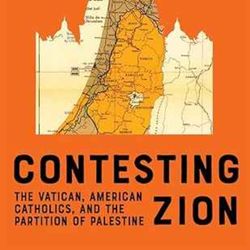
139. Contesting Zion: The Vatican, American Catholics, and the Partition of Palestine with Adrian Ciani
56:19||Season 7, Ep. 139In this episode my guest is Adrian Ciani author of Contesting Zion: the Vatican, American Catholics and the Partition of Palestine.The modern relationship between the Vatican and the State of Israel is rooted in a long history of hostility between Judaism and Roman Catholicism. Through the centuries, popes and theologians marginalized the Jewish people, assigning them collective guilt for the death of Jesus Christ and claiming that the sacred territory of Palestine was the true patrimony of the Roman Catholic Church. With the advent of political Zionism in the nineteenth century, Catholic fears of a Jewish-dominated Palestine were renewed.Contesting Zion examines the relationship between the Vatican and the Zionist movement from the Balfour Declaration in 1917 to the first decade of Israeli statehood. Adrian Ciani considers the transnational nature of Catholic responses to Zionism and the creation of Israel, with a focus on the Catholic Church in the United States. From the 1920s through the 1950s, American Catholic leaders became crucial intermediaries between Washington and the Vatican. Speaking as both loyal American citizens and devout Catholics, they were uniquely positioned to articulate the Vatican’s policy objectives to the American government, including on the future of Palestine. American Catholics were also instrumental in advocating the church’s Palestine policy at the United Nations, playing a central role in the Holy See’s attempts to shape the twentieth-century international order.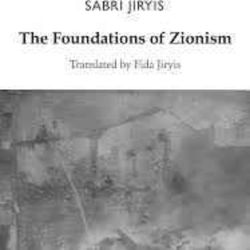
138. The Foundations of Zionism with Sabri and Fida Jiryis
54:43||Season 7, Ep. 138In this new 'wheneverly' format, today my guests are Sabri and Fida Jiryis, author and translator of The Foundations of Zionism.Translated into English for the first time since its original publication by the PLO's Palestine Research Center, this book extensively details the origins of Zionism and its development as an ideology and political project that has wrought havoc in the Middle East and beyond over the last century.The Foundations of Zionism chronicles this development from Zionism's early origins up to the establishment of the British mandate over Palestine in 1923, refuting many of the movement's own foundational myths - from its early relationship to the Palestinians to its exclusively religious character. Sabri Jiryis delves into Zionism's successive congresses and factional struggles, its early failures to settle in Palestine and the formation of armed militias, and its temporary alliances with the Ottoman Empire before the movement eventually secured support from Western colonial powers such as Britain. In a newly written conclusion, Jiryis reconsiders the Zionist project 100 years on from the Balfour Declaration and amid the ongoing genocide in Gaza.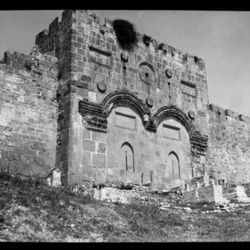
137. Photographing Biblical Modernity with Sary Zananiri
01:11:59||Season 7, Ep. 137In this first episode of 2026, the opener for season 7, I had the pleasure to interview my good friend and friend of the podcast Sary Zananiri about his latest book.This open access book offers the first in-depth appraisal of the photographic archive of Frank Scholten (1881–1942), a queer Dutch photographer and Catholic convert whose work in Palestine between 1921 and 1923 provides a remarkable lens on the intersecting dynamics of modernity, religion, colonialism, and visual culture. Drawing on over 26,000 photographs, it situates Scholten's work within transnational religious, colonial, and nationalist networks.Employing a relational methodology, Photographing Biblical Modernity treats photography not merely as visual documentation but as a site of layered cultural encounters shaped by the movements of people, ideas, and ideologies. It interrogates biblical visuality, the performance of indigeneity, intercommunal relations, and the gendered politics of labour and nationalism.Through interdisciplinary engagement with visual culture, Middle East studies, and gender theory, this book considers how Scholten's positionality offers insights into both the granular details of Palestinian society and broader macro-historical shifts during a period of profound transition.Rather than framing Palestine as a biblical relic, Scholten's photographs reveal a socially and politically complex society under early British Mandate rule. Ultimately, this book positions Scholten's archive as a vital historical source for understanding the layered and contested narratives that have defined Palestine's modern history.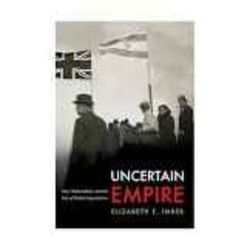
136. Uncertain Empire with Elizabeth Imber
01:09:02||Season 6, Ep. 136Following the British conquest of Ottoman Palestine, Jews across the British Empire—from Jerusalem to Johannesburg, London to Calcutta—found themselves at the heart of global Jewish political discourse. As these intellectuals, politicians, activists, and communal elites navigated shifting political landscapes, some envisioned Palestine as a British dominion, leveraging imperial power for Jewish state-building, while others fostered ties with anticolonial movements, contemplating independent national aspirations. Uncertain Empire considers this intricate interplay between British imperialism, Zionism, and anticolonial movements from the 1917 British conquest of Palestine to the establishment of the state of Israel in 1948.My guest highlights diverse and sometimes conflicting visions of Jewish political futures, offering detailed case studies of key figures including Chaim Arlosoroff, Moshe Shertok, Helen Bentwich, Rachel Ezra, and Hermann Kallenbach. She explores a "politics of uncertainty" in which Jews engaged with both imperial stability and the rise of anticolonial mobilization, when many were likewise forced to reconsider Palestine as a viable refuge and political solution.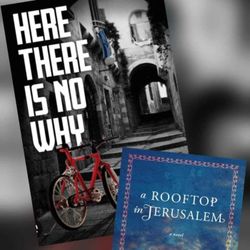
135. Fiction and Jerusalem with Michael Kinnamon and Philip Graubart
01:08:17||Season 6, Ep. 135Today I had the pleasure to interview two wonderful writers, Michael Kinnamon and Philip Graubart. Michael is the author of A Rooftop in Jerusalem: When Daniel Jacobs decides to spend his junior year abroad in Israel, he never dreams he'll fall in love with both Jerusalem's Old City and an Israeli woman, Shoshana. It's the year religion becomes a part of his identity, from the heights of a simple rooftop. A year he encounters the tragic complexity of the Israeli-Palestinian struggle. A year that begins a four-decade-long love affair, as complicated and heartbreaking as the political conflict with which it's intertwined. As Daniel moves through life-through marriage and divorce, career and travel-he returns periodically to Jerusalem, where his heart faithfully remains.Philip is the author of Here There is No Why: Did Chaim Lerner, acclaimed Israeli author and Holocaust survivor, kill himself in 1983, thirty-eight years after surviving Auschwitz? If so, was it traumatic memories finally catching up to him? Or despair over Holocaust denialism? Or ordinary, difficult health issues-an aching hip, a damaged knee? Or simply a deadly episode of depression?Enjoy the conversation.Or was it murder?In 2005, Judah Loeb, Lerner's former student and now a struggling American journalist and single father, travels to Jerusalem to investigate Lerner's death. He drags along his fifteen-year-old daughter, Hannah, and they team up with Charlie, Judah's former Hebrew University roommate, now a Jerusalem homicide detective. Their investigation takes them through the darker corners of the Israeli psyche, where they uncover secrets that threaten to destroy Lerner's reputation and alter Jewish history. While probing the mysteries of Israel's past, they encounter personal betrayal, heartbreak, and the fragile possibilities of forgiveness and redemption.