Share
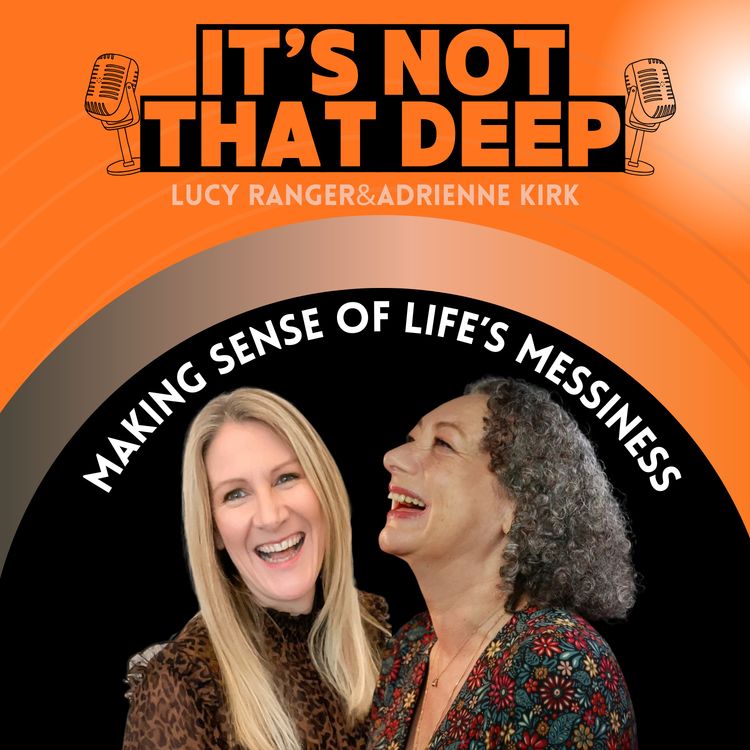
It's Not That Deep
Why do we believe the stories over the evidence?
In this episode, we explore the reasons behind why individuals often believe negative stories about themselves rather than the evidence of their accomplishments.
We discuss the impact of societal constructs on self-perception, the dangers of comparison, and the importance of accepting both strengths and weaknesses. The chat emphasises the role of vulnerability in self-acceptance and the need to challenge negative self-talk.
Ultimately, we want to encourage listeners to find joy in imperfection and embrace new experiences without fear of failure. We can only grow if we allow the possibility of failing and the learning that comes from that.
Takeaways
We often believe negative stories about ourselves over evidence.
Societal standards are arbitrary and can distort self-perception.
Comparison to others can undermine our self-worth.
Accepting our strengths is as important as acknowledging our weaknesses.
Vulnerability is key to self-acceptance and growth.
Negative self-talk can sabotage our enjoyment of life.
We should challenge the stories we tell ourselves.
Evidence-based thinking can help us assess our abilities more accurately.
Finding joy in imperfection is essential for personal growth.
Embracing new experiences can lead to unexpected joy.
Adrienne and Lucy can be contacted through their websites:
www.presenceofmind.life (Lucy)
www.adriennekirk.uk (Adrienne)
Find us at: www.adriennekirk.uk or www.presenceofmind.life
More episodes
View all episodes
107. Why are we affected by other people's emotional state?
33:50||Season 1, Ep. 107In this episode, we explore why we are so affected by others' emotional states. We discuss how childhood experiences shape our responses, how they may make us more porus to the feelings of others.We investigate practical ways to manage our emotional boundaries, to include ourselves in our beam of care, and to protect ourselves from merging with the feelings of others. This insightful conversation offers tools for understanding and protecting our emotional well-being in personal and professional relationships.Key TopicsImpact of childhood experiences on emotional responsesRole of mirror neurons in empathy and emotional contagionStrategies for managing emotional boundariesThe influence of neurodivergence on social interactionsPractical tips for staying present without being overwhelmed106. Why Do We Put Off the Hard Things?
33:25||Season 1, Ep. 106In this episode, we delve into the common challenge of avoiding difficult tasks, and we examine the emotional and practical barriers that keep us stuck. Often, when we find ourselves putting off getting on with the tricky things, we give ourselves a really hard time. However, it’s not as easy as just telling ourselves to get on with it! Being kind to ourselves helps us to recognise that our emotional capacity may be at breaking point. Once we can do that, we may be able to work out what one thing we might be possible to do, rather than thinking we need to complete the whole list.During this episode we share personal stories, psychological insights, and practical strategies to manage overwhelm and foster kindness towards ourselves.Tackling the hard things one step at a time with kindness towards yourself makes a significant difference. Resilience is built in small acts of compassion and realistic planning.Key topics:The complexity behind procrastinating on small but accumulative chores, like managing subscriptions or booking travel.How cognitive load and emotional capacity influence our ability to tackle tasks.We use the metaphor of a "bucket" to describe our mental capacity and how it's overwhelmed by stressors.The role of self-compassion and kindness in overcoming feelings of shame and failure.Practical strategies: breaking down tasks, scheduling focused time, and managing expectations.The impact of age, technology, and environmental factors on our capacity to do hard things.The importance of recognizing and sitting with discomfort rather than avoiding or resisting it.The power of incremental action—doing one thing at a time—and the mental shift from urgency to kindness.105. Why don't we let go of the past?
28:54||Season 1, Ep. 105In this episode, we explore the complex nature of letting go of the past, the importance of boundaries, trust, and self-compassion. We talk about the difference between forgiving and forgetting. This can be a tricky one as we think that we ‘ought’ to just let go of things. And sometimes that is not in our best interests. We explore whether and when it’s ok to put in boundaries to protect ourself. We also discuss what happens when we hold on to a sense of things being better in the past and how that can affect our relationship with our present life. We discuss practical ways to navigate emotional baggage, rebuild trust, and find balance between holding on and moving forward.Key topicsWhy we hold on to past hurts and memoriesThe role of the brain in emotional patternsBoundaries and trust in relationshipsThe difference between forgive and forgetPracticing self-compassion and acceptanceThe impact of nostalgia on present lifeTechniques for letting go and closureThe importance of perspective shift104. Why do we feel responsible for others' feelings?
32:22||Season 1, Ep. 104In this episode we explore why we often feel responsible for others' feelings, how boundaries influence our relationships, and discusses strategies for healthier communication and self-care, especially during times of change and grief.We can find it hard to stick to our boundaries because we don’t want to upset other people. This can lead us to feeling that our needs don’t count and we can become frustrated, sad or even angry.However, it can feel risky to change deeply ingrained habits - whether it’s saying no to family demands, setting limits on caring for others after grief, or navigating the complex dance of giving and receiving support. We don’t like to upset others. However we are responsible for our actions, but not how others respond to those actions. And this is important though difficult to remember when we are faced with the distress of others.And generally it’s not an either/or choice, we can take care of our own feelings and also the feelings of others.Key TopicsWhy we feel responsible for others' feelingsThe importance of boundaries in relationshipsCommunication strategies for boundary settingImpact of grief and life changes on boundariesSelf-care and emotional regulation103. Why do we get in our own way?
33:29||Season 1, Ep. 103In this episode we welcome a guest, Lou Collins, who shares her insights on how habits and patterns influence our behaviour. Lou helps women in business stop being their own biggest obstacle. With over 15 years of experience in behaviour change, including in substance use, she now works with the women who've done all the courses, know all the strategies, and are still stuck because the problem was never the strategy. It was the habits and patterns underneath it. Together we explore the science behind habits, the importance of awareness, and practical strategies for rewiring the brain to overcome self-sabotage and achieve personal growth.TakeawaysAwareness of habits is the first step to change.Not all patterns are the same; strategies must be personalised.Reward systems influence habit formation and change.Breaking habits involves rewiring neural pathways.Support and accountability are crucial for lasting changeLou Collins can be contacted here: https://www.instagram.com/theloucollinshttps://linktr.ee/loucollinscoaching102. Why do we find it hard to be honest?
30:01||Season 1, Ep. 102In this episode, we delve into the complex reasons behind our reluctance to tell the truth, from small everyday lies to avoiding pivotal conversations about mortality. We explore how avoidance impacts ourselves and others, the role of shame in our avoidance, and practical ways we can foster honesty in our relationships. We use personal examples to illustrate the impact of not being honest can have.We discuss how although honesty can be uncomfortable, often the relief and authenticity outweighs the temporary discomfort. We explore the idea that conversations we fear may be difficult can end up being the most transformative.Key Topics Covered:The emotional reactions and fears that lead to untruths and avoidanceExamples from personal experiences: missed events, hiding purchases, and the fear of letting others downThe deep connection between avoidance and shame, and how stories we tell ourselves reinforce thisThe role of familiarity and the unknown in avoiding difficult conversationsThe impact of avoiding honesty on mental health and human connectionStrategies for practicing honest communication and overcoming fearThe importance of having difficult conversations about mortality and practical preparationsHow misaligned perceptions of honesty and avoidance affect our relationships with family, friends, and clients in professional settings101. Why don't all therapeutic approaches suit everyone?
36:43||Season 1, Ep. 101In this episode, we welcomed a guest, Sassy Smith, who is the founder of Aphantasia Academy and author of Unseen Minds - A Therapist's Guide to Multisensory Aphantasia and Invisible Cognitive Differences The episode delves into the fascinating world of cognitive differences, exploring how unique mental experiences like aphantasia, endophasia and SDAM shape our perception of reality. By understanding these variations, therapists can tailor their approaches to better meet the needs of their clients, and clients are able to articulate their experiences more easily.Lucy (who has aphantasia) and Sassy share personal insights, Adrienne adds a therapeutic perspective and all three of us discuss professional strategies that highlight the importance of recognising and validating individual cognitive profiles. This episode is a must-listen for anyone interested in enhancing therapeutic practices and fostering a deeper understanding of the human mind, and also anyone currently undergoing therapy.Sassy has generously offered a gift to listeners with codes that give discounts off her brilliant resources.FOUNDATIONS50 gives listeners a £50 discount for the Aphantasia Foundations course and NOTTHATDEEP gives a £100 discount for the Aphantasia Therapist training. Unseen Minds: A Therapist's Guide to Multisensory Aphantasia and Invisible Cognitive Differences -https://www.amazon.com/Unseen-Minds-Therapists-Multisensory-Differences/dp/1036970612Aphantasia Academy - https://www.aphantasiaacademy.com Sassy Smith on Facebook - https://www.facebook.com/SassySmithSassy Smith on Instagram - https://www.instagram.com/aphantasia_academy/ Free CBT Masterclass on Aphantasia - https://www.aphantasiacoach.com/CBTMasterclassAdrienne and Lucy can be contacted through their websites:www.presenceofmind.life (Lucy)www.adriennekirk.uk (Adrienne)100. Why do we want things to be pleasant?
31:17||Season 1, Ep. 100In this, our 100th episode, we explore the very human tendency to desire pleasant experiences and the impact this wanting has on our well-being. It’s natural, of course, to delight in the pleasant, it only becomes a problem when we start to crave for things to be more pleasant and thereby end up increasing our own suffering. We discuss the impact of trying to push away unpleasant feelings, and even diminishing our pleasant times by being sad that they will end! To offset this we delve into mindfulness, emotional regulation, and how acceptance of impermanence can lead to greater peace.TakeawaysWanting things to be pleasant can increase suffering when they are notMindfulness helps in noticing subtle mood shifts and choosing responsesThoughts significantly influence feelings and can be challengedAcceptance of impermanence allows for greater peace and enjoyment of the presentSmall, neutral moments can be sources of steady happinessAdrienne and Lucy can be contacted through their websites:www.presenceofmind.life (Lucy)www.adriennekirk.uk (Adrienne)99. Why do we hold on to a bad mood?
30:17||Season 1, Ep. 99In this episode we explore why we hold onto bad moods. We discuss the psychological mechanisms behind it, and practical strategies to let go. We explore the role of thoughts, perceptions of injustice, and the importance of awareness and calming techniques.TakeawaysHolding onto a bad mood often stems from perceived injustice or unfairness.Our stress response system complicates quick emotional release.Pattern recognition and confirmatory bias reinforce bad moods.Awareness and mindfulness are key to recognizing and releasing bad moods.Adrienne and Lucy can be contacted through their websites:www.presenceofmind.life (Lucy)www.adriennekirk.uk (Adrienne)