Share
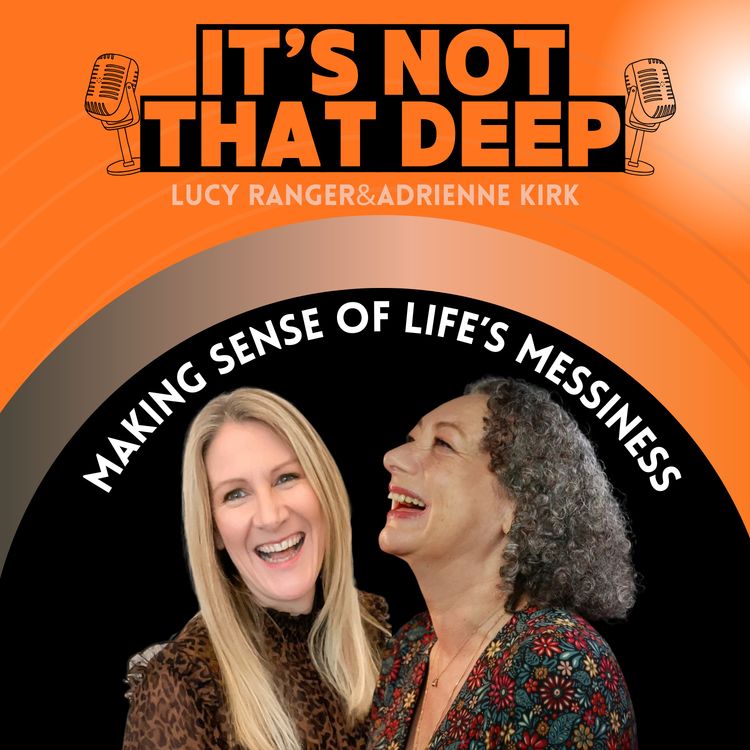
It's Not That Deep
Why are we always in a rush?
In this episode, we discuss our personal experiences of rushing, how that feels in our bodies (not pleasant!) and the consequences of always being in a rush – being clumsy, dropping things, forgetting what we are doing, all that stuff!
It’s not all or nothing, sometimes ‘drive mode’ is very much where we need to be, rather than in ‘rest and digest' or 'soothing' mode. So really noticing when each system is activated, when they are helpful, and when we could mindfully and carefully do one thing at a time is really helpful.
We explore the benefits of noticing how rushing feels in our bodies, and how that can give us some control over the choices that we are making.
Adrienne and Lucy can be contacted through their websites:
www.presenceofmind.life (Lucy)
www.adriennekirk.uk (Adrienne)
Find us at: www.adriennekirk.uk or www.presenceofmind.life
More episodes
View all episodes

98. Why are we obsessed with looking young?
30:21||Season 1, Ep. 98In this episode, we explore the societal obsession with youth and beauty, and challenge the cultural narratives that equate ageing with loss and irrelevance. We discuss how perceptions of ageing influence women’s self-image, societal expectations, and the impacts of social media and media portrayal on how we view ourselves and others.We explore the possibility of appreciating the experiences that come with age rather than dismissing them because they come wrapped in an older body.Key Topics:The societal pressure on women of a certain age to look young and the cultural obsession with reversing ageingHow ageing and appearance are perceived as signs of experience and wisdom versus signs of declineThe influence of social media and advertising in shaping beauty standards and age-related insecuritiesThe gendered differences in societal expectations around ageing, especially in relationships and partner selectionThe rise of preventative Botox amongst young people to delay wrinklesThe societal narrative that values youth over experience, wisdom, and inner characterThe impact of materialism and external possessions on perceived self-worth and attractivenessThe concept of growing old gracefully versus the desire to maintain a youthful exteriorThe psychological effects of societal standards on self-esteem, self-worth, and ageingThe importance of redefining beauty and ageing to honour experience and wisdom over superficial standardsAdrienne and Lucy can be contacted through their websites:www.presenceofmind.life (Lucy)www.adriennekirk.uk (Adrienne)97. Why do we believe the stories over the evidence?
31:32||Season 1, Ep. 97In this episode, we explore the reasons behind why individuals often believe negative stories about themselves rather than the evidence of their accomplishments. We discuss the impact of societal constructs on self-perception, the dangers of comparison, and the importance of accepting both strengths and weaknesses. The chat emphasises the role of vulnerability in self-acceptance and the need to challenge negative self-talk. Ultimately, we want to encourage listeners to find joy in imperfection and embrace new experiences without fear of failure. We can only grow if we allow the possibility of failing and the learning that comes from that.TakeawaysWe often believe negative stories about ourselves over evidence.Societal standards are arbitrary and can distort self-perception.Comparison to others can undermine our self-worth.Accepting our strengths is as important as acknowledging our weaknesses.Vulnerability is key to self-acceptance and growth.Negative self-talk can sabotage our enjoyment of life.We should challenge the stories we tell ourselves.Evidence-based thinking can help us assess our abilities more accurately.Finding joy in imperfection is essential for personal growth.Embracing new experiences can lead to unexpected joy.Adrienne and Lucy can be contacted through their websites:www.presenceofmind.life (Lucy)www.adriennekirk.uk (Adrienne)96. Why are we so focused on the end result?
30:57||Season 1, Ep. 96In this episode, we explore how much enjoyment we miss if we are only focused on the end product. It is so important to focus on the process rather than the end result in various aspects of life as there is so much pleasure to be got from the journey! We discuss how mindfulness and engagement in activities can enhance enjoyment and fulfilment, emphasising the need to be present and savour each moment.Our conversation also touches on the significance of experiential learning and the joy found in mundane experiences, ultimately advocating for a shift in perspective towards appreciating the journey of life.TakeawaysWe often rush through life, focusing on the end result.Enjoying the process can lead to greater fulfilment.Mindfulness enhances our engagement in activities.Striving for perfection can detract from enjoyment.Being present allows us to savour experiences.Life's joy can be found in mundane moments.Experiential learning is more valuable than outcomes.Grief reflects the love we had for someone.We should not define ourselves by our achievements.Life happens in the present, not in future expectations.Adrienne and Lucy can be contacted through their websites:www.presenceofmind.life (Lucy)www.adriennekirk.uk (Adrienne)95. Why don't we say what we mean?
30:48||Season 1, Ep. 95In this episode, we delve into the complexities of communication, particularly focusing on why people often fail to express their true thoughts and feelings. We explore various reasons for this behaviour, such as the fear of upsetting others or the desire to be liked. Our conversation highlights the tension between honesty and kindness, emphasizing that while it’s important to be truthful, it’s equally crucial to consider the feelings of others. We discuss the challenges of navigating these conversations, especially in personal relationships, and the importance of finding a balance between being clear and being considerate.We also touch on the concept of 'mind reading' in relationships, where individuals expect their partners or friends to understand their feelings without explicit communication. we stress the significance of clarity in communication and the need for practice in having difficult conversations. As usual, we conclude with practical advice on how to approach these discussions, including the importance of timing and the potential benefits of being honest while remaining kind.TakeawaysWe often avoid saying what we mean due to fear of upsetting others.Finding a balance between honesty and kindness is crucial.Mind reading in relationships can lead to misunderstandings.Clear communication can prevent unnecessary conflict.Practicing assertiveness in small matters can build confidence for bigger conversations.Adrienne and Lucy can be contacted through their websites:www.presenceofmind.life (Lucy)www.adriennekirk.uk (Adrienne)94. Why do we see things as black or white?
30:47||Season 1, Ep. 94In this episode, we explore the tendency we all have to perceive situations in black and white terms, often overlooking the nuanced middle ground. This is a natural process, our brains are hard-wired to keep us safe and a part of that is to categorise things as safe or unsafe. We discuss how this thinking can lead to unrealistic expectations, particularly in relationships and personal experiences, and how we can work to pull ourselves back to the messy middle. Our conversation emphasises the importance of emotional regulation, effective communication, and the need to lower expectations to find balance, ease and happiness in life.TakeawaysWe have a tendency to see things in extremes.Our brains categorise experiences to keep us safe.Judgment stems from a need for survival.Catastrophising can ruin otherwise good days.Expectations can lead to disappointment during holidays.Communication is key in relationships.Self-care is not selfish; it's necessary.Emotional regulation helps in avoiding black and white thinking.Finding the middle ground is essential for happiness.Lowering expectations can lead to greater satisfaction.Adrienne and Lucy can be contacted through their websites:www.presenceofmind.life (Lucy)www.adriennekirk.uk (Adrienne)93. Why don't we feel like a grown up?
28:54||Season 1, Ep. 93In this episode, we explore the complexities of feeling grown up, whether we feel different than we did when we were younger, the impact of our inner child, and the cultural perceptions of ageing, particularly for women. We discuss the challenges of defining ourselves beyond societal labels, the responsibilities of adulthood, and the generational differences in perceptions of growing up. We also emphasise the importance of embracing eccentricities and finding joy in ageing while navigating the messinesses of grown-up life.TakeawaysMany people feel they haven't changed much since their twenties.The inner child often feels neglected in adulthood.Cultural expectations can pressure women regarding ageing.Ageing is often associated with loss of freedom and increased responsibility.Generational differences affect perceptions of adulthood.Maintaining friendships across generations can help to blur age boundaries.Embracing eccentricities can lead to a more fulfilling life.Defining oneself beyond societal roles is challenging but necessary.The fear of ageing often stems from societal pressures.Finding joy in ageing requires a shift in perspective.Adrienne and Lucy can be contacted through their websites:www.presenceofmind.life (Lucy)www.adriennekirk.uk (Adrienne)92. Why do we think we know best?
31:54||Season 1, Ep. 92In this conversation, we explore the theme of why we often believe our way of thinking is superior to others'. We discuss everyday examples of perceived efficiency, the comfort of familiarity, and the challenges of accepting different perspectives.We are always changing, evolving our beliefs, thoughts and the way in which we do things and engage with the world and other people. And can we allow that we therefore might change our minds completely on something, and can that be okay.This conversation emphasises the importance of flexibility in our beliefs and the value of learning from others, especially younger generations. We also touch on the role of science in shaping our opinions and the necessity of being open to new information.Takeaways:We often believe our way is the best way.Everyday examples highlight our perceptions of efficiency.Understanding different perspectives can enhance relationships.Familiarity provides comfort but can hinder growth.Change can be uncomfortable but is necessary for learning.Flexibility in beliefs allows for personal growth.Younger generations can teach us valuable lessons.Science evolves, and so should our beliefs.Being open and curious fosters better communication.Navigating relationships requires understanding and acceptance.Adrienne and Lucy can be contacted through their websites:www.presenceofmind.life (Lucy)www.adriennekirk.uk (Adrienne)91. Why do we find it easier to help others rather than ourselves?
29:26||Season 1, Ep. 91In this episode we explored why it seems so much easier to find a solution to other peoples problems that it is our own. We discuss the importance of self-compassion and mindfulness and getting a bigger picture perspective, particularly in challenging situations. We reflected on the tendency we have to hold ourselves to a much higher standard than we do for others, that we are less likely to show ourselves understanding and compassion.We emphasised the need to reflect on the advice we would give to others, particularly those we love, and apply it to ourselves. We talked about giving ourselves a moment of stillness and presence rather than seeking immediate solutions. Trust that self-support and solutions will emerge from a soothed system, rather than the hard time we give ourselves when we are in fight or flight mode!TakeawaysCan we think about what advice would we give to others we care about?Can we apply that advice to ourselves.In difficult times, we often need compassion, not solutions.Taking a moment to breathe can be beneficial.Mindfulness helps us to just be in the moment.It's important to reflect on our feelings.We often bombard ourselves with solutions when we need support.Self-compassion is crucial during tough times.Being present can help alleviate stress.We should treat ourselves with the same kindness we offer others.Adrienne and Lucy can be contacted through their websites:www.presenceofmind.life (Lucy)www.adriennekirk.uk (Adrienne)90. Why do we view some emotions as negative?
30:47||Season 1, Ep. 90In this episode we explore why we view some emotions as negative. It is natural to categorise our feelings as good or bad; wrong or right. The negative ones we experience feel unpleasant and so we have a tendency to push them away.We consider the importance of facing these emotions and starting to see them as unpleasant rather than bad or negative. All our feelings are data or information about our current state, so it can be helpful to develop a curiosity about them and what they are telling us about ourselves. We emphasise the need to manage difficult emotions rather than suppressing them, highlighting the impact of avoidance on mental health.Takeaways:When faced with unpleasant emotions, we often seek distractions.Substance abuse and busyness can be unhealthy coping mechanisms.Avoiding difficult emotions can lead to negative consequences.It's important to face and manage our emotions directly.Suppressing feelings can result in them resurfacing later.Healthy emotional management is crucial for mental well-being.Understanding our emotional responses can lead to better coping strategies.Emotional tolerance is a skill that can be developed.Facing emotions can lead to personal growth and resilience.Support systems can aid in managing difficult feelings.Adrienne and Lucy can be contacted through their websites:www.presenceofmind.life (Lucy)www.adriennekirk.uk (Adrienne)