Share
It Was What It Was : The Football History Podcast
Jan Åge Fjørtoft, on Norway + England's Nadir
Welcome back to It Was What It Was, the football history podcast. Today co-hosts Jonathan Wilson and Rob Draper are joined by a very special returning guest - Jan Fjørtoft! In this episode, we will explore Norway’s remarkable rise in the early 1990s and their famous 2–0 win over Graham Taylor’s England in 1993. Fjørtoft explains how Egil “Drillo” Olsen took a previously struggling national team and built belief through a disciplined, direct style, carefully defined roles, and detailed match analysis using hand-written stats and video. The episode breaks down the key tactical choices that unsettled England, revisits both Norway goals, and follows the qualifier run that took Norway to their first World Cup since 1938. Norway will return to the World Cup this summer for the first time since 1998. This episode will be followed by a three part special on Graham Taylor.
01:12 Norway before the rise
04:09 Olsen arrives and stirs
06:47 Direct football philosophy
14:31 Stats and analysis
20:05 Defined roles and system
23:40 Beating England
28:12 Tactical switch
31:33 Gascoigne fitness factor
32:50 Olsen’s Selection Mind Games
37:20 Two Goals Breakdown
42:41 Road to USA 94 Sealed
45:45 Poland Night and Wild Celebrations
48:46 Heroes Welcome in Norway
52:04 World Cup Heat Prep Fiasco
59:59 Egil Olsen Legacy
More episodes
View all episodes
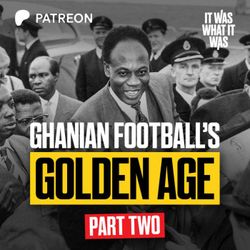
173. Ghanaian's Football Golden Age: Part Two
57:18||Season 1, Ep. 173Rob Draper and Jonathan Wilson examine Kwame Nkrumah’s state-backed club Real Republicans and why it became widely unpopular despite winning trophies, after being created by taking top players from existing clubs without compensation and reinforcing regional and ethnic tensions, particularly in Ashanti. They track criticism in the Evening News and Ashanti Pioneer, Kotoko’s protests, and the club’s lack of public support even at its peak. The episode argues the project nonetheless helped the Black Stars by building cohesion, highlighted by a 3–3 draw with Real Madrid in 1962 and Ghana’s AFCON triumphs in 1963 and 1965 under C.K. Gyamfi, with key players drawn from Republicans. The discussion then links football to Nkrumah’s growing authoritarianism, economic strain from cocoa price swings, and his 1966 CIA-backed coup, after which Real Republicans were dissolved, while Ghana’s club and national successes continued briefly before declining with reduced state support.00:00 Why Fans Reject Republicans01:33 Nkrumah Builds a Model Club05:09 Player Raids Spark Backlash09:05 Trophies Without Love16:32 Politics and Regional Resentment21:34 Cocoa Prices and Ashanti Nationalism25:41 Break and Reset26:07 Golden Era for Black Stars26:55 Real Madrid Draw and FIFA Fight29:24 World Cup Qualifiers Reality Check30:12 FIFA Spots Ghana32:08 Real Republicans Core33:18 Baba Yara Tragedy34:00 1963 AFCON Triumph36:03 Ethiopia Tangent41:10 1965 AFCON Away Win43:38 Ghana Legacy Debate45:37 Nkrumah Turns Authoritarian50:27 Coup Ends Era51:37 Aftermath and Wrap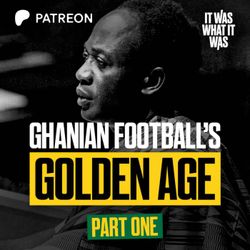
172. Ghanaian's Football Golden Age: Part One
50:21||Season 1, Ep. 172Rob Draper and Jonathan Wilson discuss how Kwame Nkrumah used football to build Ghana’s national identity and promote Pan-African unity after independence (1957) and becoming a republic (1960). They trace Ghana’s colonial background as the Gold Coast, Nkrumah’s education and political radicalization in London and the US, his leadership of the CPP, and the push to independence amid postwar unrest and cocoa blight riots. Nkrumah backed football as a tool for unity, sponsoring the Nkrumah Gold Cup and founding the African Club Championships (Osagyefo Cup), a precursor to today’s African Champions League. The episode then profiles Ghana star C.K. Gyamfi (“Magic Feet”), his rise through local clubs, a 1951 UK tour, and a breakthrough spell at Fortuna Düsseldorf in 1960 before returning to play for Ghana.00:00 Nkrumah and Football Nationhood03:04 Ghana Under Empire04:53 Nkrumah Abroad and Ideas06:38 London Debates and Mentors12:33 Return and Rising Unrest15:15 CPP and Road to Independence18:43 Republic and Cult of Leader20:05 Sport as National Unity23:11 Pan African Tournaments Begin25:30 Gold Cup Wins and Wider Wave26:53 Osagyefo Cup Club Vision27:13 Osagyefo Cup Origins27:58 First African Club Final28:17 Unity Through Football30:01 Ghana Golden Era Focus31:07 Meet CK Gyamfi33:14 Early Life And Clubs35:00 Mysterious Dwarves Tangent38:41 Kotoko And UK Tour41:55 Germany With Fortuna48:06 Called Back To Ghana49:31 Part One Wrap Up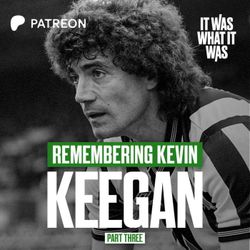
171. Remembering Kevin Keegan: Part Three
01:01:19||Season 1, Ep. 171Jonathan Wilson and Rob Draper conclude their three-part series on Kevin Keegan by tracing his managerial career and the idealism behind his “why not?” philosophy. They cover his post-playing retreat in Marbella, a 1991 roadside attack that sparked unfounded rumours, and his surprise return to rescue near-bankrupt Newcastle in 1992 despite having barely watched football. Keegan’s early chaos, promotion to the Premier League, and “entertainers” era are explored, including the Andy Cole sale and his famous address to angry fans. The episode revisits the 1995–96 title collapse, his exit amid Newcastle’s flotation plans, spells at Fulham and England, a steadier period at Manchester City, and a final, acrimonious Newcastle return under Mike Ashley, ending with reflections on his legacy and farewell tour.00:00 Dreamers Welcome01:39 Marbella Escape02:49 Celebrity Golf Circuit04:52 M25 Attack Rumors08:10 Lightbulb Moment09:34 Sir John Hall Calls14:02 Return of the King17:03 Unprepared New Boss20:29 Great Escape Finale22:13 Promotion Blueprint24:53 Entertainers Era26:32 Newcastle Goldfish Bowl28:41 Keegan in the City30:22 Keegan Tea Reception32:14 Andy Cole Fallout33:24 Calming The Mob36:31 Title Charge Collapse39:03 Shearer And Glory41:43 Flotation Clash Exit44:52 Fulham And England Call47:24 Poisoned Chalice England52:56 City Comeback Era55:36 Third Newcastle Breakdown58:54 Final Farewell Legacy
170. Remembering Kevin Keegan: Part Two
58:05||Season 1, Ep. 170Jonathan Wilson and Rob Draper continue their Kevin Keegan series, following his 1977 move from Liverpool to Hamburg for a far higher salary and the difficult start marked by teammate resentment, managerial upheaval, a humiliating Super Cup loss at Anfield, and an eight-week ban after he struck a defender in a friendly at Lübeck. They chart his turnaround under Branko Zebec as Hamburg win the Bundesliga in 1978–79, Keegan becomes a German celebrity, learns the language, and wins the Ballon d’Or twice, before turning down Juventus and returning to England with an underwhelming Southampton spell and a breakdown with Lawrie McMenemy. The episode also covers Keegan’s burdened England captaincy amid missed World Cups, including a beating by Yugoslav police, threats in Belfast, Euro 1980, and injury-hit World Cup 1982, before his high-profile move to Second Division Newcastle, the lift he gives the city, and his retirement after a sobering FA Cup loss to Liverpool.00:00 Keegan Cashes In01:06 Hamburg Move Explained01:39 The Bubble Perm Era03:40 Frosty Dressing Room06:36 Lübeck Punch Up09:46 Backlash and Doubts10:58 Turning Point Return12:01 Zebec Sparks Revival14:03 Pop Star in Germany17:20 Ballon d'Or Debate21:12 European Cup Heartbreak23:14 Shock Southampton Switch25:07 Saints Reality Check27:22 Keegan Takes Criticism Personally28:27 England Captain Burden30:38 Poland Wembley Heartbreak31:47 Belgrade Police Beating34:20 Euro 1980 Chaos35:38 Thatcher Photo Fallout36:51 IRA Threats Belfast40:28 World Cup 1982 Injury43:50 Newcastle Homecoming Move46:52 Robson Drops Keegan49:31 Keegan Lifts Newcastle55:12 Lawrenson Moment Retirement55:54 Helicopter Farewell Wrap
169. Remembering Kevin Keegan: Part One
59:32||Season 1, Ep. 169*The full three-part series is available on Patreon now*Jonathan Wilson and Rob Draper pay tribute to Kevin Keegan, who died in July aged 75, reflecting on his rare charisma, self-awareness, and ability to connect with people, as well as his status as the only British player to win the Ballon d’Or twice. They trace his working-class upbringing in Armthorpe near Doncaster, his family’s mining and Labour roots, and formative influences like Sister Mary Oliver, who encouraged his football. The episode follows Keegan’s unlikely early path—rejected by Doncaster and Coventry, starting at Scunthorpe—through his move to Liverpool under Bill Shankly, where his fitness, motivation, and partnership with John Toshack helped drive major success, alongside growing fame via endorsements and Superstars. They end with Keegan’s decision to leave as Liverpool approach European glory.00:00 Tribute to Keegan01:09 Charisma and Kindness06:19 Roots in Doncaster09:14 Mining Heritage15:22 School and Sweetheart22:21 Rejected Then Spotted24:28 Scunthorpe Breakthrough28:18 Move to Liverpool30:03 Negotiating His Worth33:34 Late Arrival Debut35:22 Toshack Partnership35:47 Sweat Box Fitness37:10 Telepathy Test Hoax40:12 Shankly Mind Games41:46 Celebrity Endorsements47:26 Superstars Bike Crash49:48 Trophies And Turning Point54:44 Shankly Leaves Fallout57:34 European Peak Exit Plan
168. Total Football: Glory, Fracture and the 1974 World Cup | Part Four
52:22||Season 1, Ep. 168The fourth and final episode in Jonathan Wilson and Rob Draper's Total Football series explores Ajax’s remarkable success under Stefan Kovacs and the Netherlands’ unforgettable 1974 World Cup campaign.Kovacs inherited Rinus Michels’ European champions but allowed the side’s fluid, player-led style to evolve. Ajax continued to win major honours, including two European Cups, but growing player power and Johan Cruyff’s influence created tensions beneath the success. As internal divisions deepened, Kovacs left, Cruyff departed for Barcelona, and Ajax’s golden era began to unravel.Enter the 1974 World Cup. Despite a difficult qualification process and a squad shaped by rivalries, Michels and Cruyff assembled a side that thrilled the world. They swept past Argentina, overcame Brazil in a fiercely contested encounter, and brought Total Football to its global peak.But in the final against hosts West Germany, an early lead was not enough. Off-pitch distractions, overconfidence and German resilience contributed to a famous 2–1 defeat.The Dutch did not lift the World Cup, but their legacy was greater than a single trophy: Total Football transformed how the modern game is played.
167. Total Football: Cruyff, Ajax and the Golden Years | Part Three
57:02||Season 1, Ep. 167In part three of our Total Football series, Jonathan Wilson and Rob Draper arrive at Ajax’s golden age.They explore Johan Cruyff’s development: the precocious teenager shaped by Ajax, Vic Buckingham and Rinus Michels; a player whose extraordinary understanding of space, timing and tactics made him the ultimate expression of individuality within a system.The episode unpicks how Ajax’s 4-3-3 worked in practice. Positional rotations, an aggressive offside trap, collective pressing and the instinctive relationships built through years of playing together.Jonathan also examines the uncomfortable questions around fitness, sports science and alleged stimulant use in the era, before charting Ajax’s first European Cup triumph in 1971 and the arrival of Ștefan Kovács after Michels’ departure for Barcelona.This is the story of how a brilliant group of players, led by Cruyff, turned a tactical idea into the most influential team in European football.You can listen to all the Total Football episodes early right now, here on Patreon. Enjoy.
Franco Baresi Tribute: Jamie Carragher on Milan's Maestro
18:02|*You can listen to the full episode on our Patreon*Rob Draper hosts a bonus edition of It Was What It Was with Jamie Carragher stepping in to pay tribute to the late great Franco Baresi .Carragher explains why Baresi’s name is passed down through generations, calls him the greatest defender he’s ever seen, and hails Sacchi’s AC Milan as the greatest team until Guardiola’s Barcelona, with Baresi and Maldini central to a back four that revolutionised modern football through pressing, a high line and the shift away from the sweeper system.They discuss Baresi’s unique blend of sweeper elegance and aggressive defending in a back four, his extraordinary return from a knee injury for the 1994 World Cup final against Romario, and how his football brain overcame a lack of height. Carragher also shares meeting Baresi at a Milan derby and showing his signed Baresi shirts.
166. Total Football: Ideas, Architecture and the Feyenoord Breakthrough | Part Two
55:29||Season 1, Ep. 166In part two of our Total Football series, Jonathan and Rob explore the ideas behind football’s great tactical revolution.From the structuralist architecture and social change of 1960s Amsterdam to Johan Cruyff’s place within a collective system, they trace how a new way of thinking shaped the Dutch game.But it's not all Ajax. Focus shifts to Rotterdam and Feyenoord: Ernst Happel’s 4-3-3, their landmark 1970 European Cup win, and the overlooked tactical breakthrough that helped pave the way for Ajax and Cruyff.Want to listen to the whole Total Football series now? Sign up to our Patreon for full access.