Share
It Was What It Was : The Football History Podcast
Remembering Kevin Keegan: Part Three
Jonathan Wilson and Rob Draper conclude their three-part series on Kevin Keegan by tracing his managerial career and the idealism behind his “why not?” philosophy. They cover his post-playing retreat in Marbella, a 1991 roadside attack that sparked unfounded rumours, and his surprise return to rescue near-bankrupt Newcastle in 1992 despite having barely watched football. Keegan’s early chaos, promotion to the Premier League, and “entertainers” era are explored, including the Andy Cole sale and his famous address to angry fans. The episode revisits the 1995–96 title collapse, his exit amid Newcastle’s flotation plans, spells at Fulham and England, a steadier period at Manchester City, and a final, acrimonious Newcastle return under Mike Ashley, ending with reflections on his legacy and farewell tour.
00:00 Dreamers Welcome
01:39 Marbella Escape
02:49 Celebrity Golf Circuit
04:52 M25 Attack Rumors
08:10 Lightbulb Moment
09:34 Sir John Hall Calls
14:02 Return of the King
17:03 Unprepared New Boss
20:29 Great Escape Finale
22:13 Promotion Blueprint
24:53 Entertainers Era
26:32 Newcastle Goldfish Bowl
28:41 Keegan in the City
30:22 Keegan Tea Reception
32:14 Andy Cole Fallout
33:24 Calming The Mob
36:31 Title Charge Collapse
39:03 Shearer And Glory
41:43 Flotation Clash Exit
44:52 Fulham And England Call
47:24 Poisoned Chalice England
52:56 City Comeback Era
55:36 Third Newcastle Breakdown
58:54 Final Farewell Legacy
More episodes
View all episodes
177. Arsène Wenger Part 4: Arsenal's 1998 Double, French Football’s Rise, and Changing English Football
57:04||Season 1, Ep. 177Jonathan Wilson and Rob Draper conclude their series on Arsène Wenger’s arrival in English football by focusing on his first full season at Arsenal (1997-98), when early doubts, draws, and a UEFA Cup exit gave way to a transformative run to the league and FA Cup double. They discuss how Wenger blended George Graham’s defensive core with signings like Petit and Overmars, and how his pioneering approach to nutrition, recovery, psychology, and scouting created a decisive late-season fitness edge—highlighted by the 1-0 win at Old Trafford that ignited a near-flawless finish. The episode relives the title-clinching 4-0 over Everton capped by Tony Adams’ iconic goal, reflects on Gary Neville’s view of the ’98 side as Arsenal’s toughest, and argues Wenger’s broader legacy in accelerating sports science, data, recruitment, and acceptance of foreign managers in the Premier League.00:00 Wenger’s Defining Year00:25 Setting the 97-98 Focus02:14 New Signings Take Shape03:28 Sizing Up the Rivals05:48 Pints and Culture Clash07:04 Sports Science Revolution08:34 Psychology and Red to Blue12:17 Scouting and Club Foundations15:55 France Ascendant and Clairefontaine19:28 Family Life and Early Stumbles24:42 Neville on the 98 Arsenal26:48 Bergkamp Magic and the Unbeaten Run28:11 Relentless Run In30:08 Old Trafford Turning Point34:36 Title Clincher Everton35:29 Adams and Bould Magic38:40 Wenger Emotion Legacy40:55 Cup Final Newcastle45:05 World Cup Echoes46:12 Changing English Football51:27 Foreign Manager Boom55:08 Wrap Up and Thanks
176. Arsène Wenger Part 3: Dein’s Dinner Party, Japan, and the ‘Arsène Who?’ Arrival
55:49||Season 1, Ep. 176Jonathan Wilson and Rob Draper continue their Arsène Wenger series by tracing how David Dein first bonded with Wenger—via an improvised London dinner party and charades—before maintaining contact through Monaco, Antibes meetings, and mailed Arsenal VHS tapes and faxes. They cover Wenger’s post-Monaco move to Nagoya Grampus Eight, early struggles and a key interpreter change, then a turnaround to major success, which Wenger credits for reshaping his coaching and lifestyle ideas. The episode explains how Arsenal’s board eventually traveled to Japan in 1996 to recruit him amid post-Rioch chaos, public skepticism (“Arsène Who?”), and a club culture marked by drinking and addiction revelations. They discuss early dietary and training changes, Wenger retaining the famed back line, and his first signings—Vieira, Garde, and Anelka—plus the November 1996 rumour storm and Arsenal’s strong finish that set up the 1997-98 squad.00:00 Charades With Wenger00:34 Podcast Setup And Mystery Match02:40 Arsenal As Gentlemen Club05:09 Dinner Party First Impression10:29 Arsene For Arsenal Premonition11:35 Dein Keeps In Touch15:05 Bayern Offer And Sacking17:05 Japan Move And Early Struggles20:23 Interpreter Switch Turning Point23:27 Nagoya Success And Lessons25:18 Secret Japan Courtship26:20 Rioch Sacked Chaos28:05 Arsene Who Backlash33:09 Dressing Room Crisis36:31 Broccoli Diet Revolution41:42 Vieira Proves Them Wrong43:32 Rumors Tabloid Mob48:12 Anelka Arrival Momentum51:22 Cool Britannia Parallels55:05 Wrap Up Next Episode
175. Arsène Wenger Part 2: Cannes, Nancy and Monaco; ‘Invisible Training’ and a Title
52:36||Season 1, Ep. 175Jonathan Wilson and Rob Draper continue their Arsène Wenger series by tracing his leap from youth coaching at Strasbourg to assistant work under Jean-Marc Guillet at Cannes, where his scouting and relentless workload stood out, before taking his first major job at Nancy with Aldo Platini as director. They discuss Wenger’s early innovations—psychologists, stretching, diet, massage and “invisible training”—and his severity, detail-obsession and frugality, alongside the loneliness and intensity he describes after defeats. Despite Nancy’s limited means and eventual relegation, Wenger earned the Monaco job in 1987, where the glamorous setting contrasted with his ascetic focus. With signings like Glenn Hoddle and Mark Hateley, he introduced advanced recovery and professionalism, won Ligue 1 in 1988, and later built teams featuring Claude Puel, while developing talents such as George Weah, Lilian Thuram and Emmanuel Petit, amid disillusionment about French football’s corruption.00:00 Hoddle Meets Modern Training00:47 Wenger Series Returns01:37 Cannes Assistant Breakthrough02:50 Motorway Scouting Story04:08 Workaholic Coaching Routine05:27 First Team Taste of Power06:37 Nancy Job and Platini Link08:03 Invisible Training Revolution12:21 Youth Development and Frugality15:09 Severity and Dark Obsession19:49 Monaco Move and Glamour23:23 Royals and Monaco Memories25:46 Why Hoddle and Hateley Fit26:54 Hateley Meets Wenger27:46 Hoddle Hijacked From PSG30:17 Training Revolution In Monaco33:28 Beer Smoking And Culture Clash34:46 Tactics And Touchline Temper38:00 Monaco Glory And Marseille Shadow43:17 Annie And Private Life44:48 Weah Thuram Petit Talent Spotting49:03 Highbury Encounter With Dein52:31 Next Episode And Wrap
174. Arsene Wenger Part 1: Alsace Roots, Obsession & The First Break
52:21||Season 1, Ep. 174Jonathan Wilson and Rob Draper begin a four-part series marking 30 years since Arsène Wenger’s arrival at Arsenal, framing him—alongside David Dein—as a key catalyst for the Premier League’s shift toward foreign managers, multicultural squads, and modern nutrition and sports science. They trace Wenger’s roots in rural, war-scarred Alsace on the French-German border: his parents’ hard-working life, his father’s forced Nazi conscription, the Catholic village culture, and Wenger’s intense, self-aware obsession with football. The episode explores how he learned the game through unsupervised street football and bistro conversations, a serious illness at 14, and his desire to escape village life. Wenger’s breakthrough came at 19 after being spotted in a heavy defeat and joining Mutzig, leading to university studies in Strasbourg, a stint learning English in Cambridge, a squad role in Strasbourg’s 1979 title win, and an early move into coaching—already using a psychiatrist with youth players.00:00 Wenger Obsession Intro01:23 Why Wenger Changed England03:41 Alsace War Shadow07:30 Village Roots and Work Ethic10:49 French Football Culture Explained16:18 Street Football and Brother Guy18:59 Faith Philosophy and Le Professor24:32 Illness Growth and Escape27:19 Bistro Lessons La Croix d'Or28:53 Wine and Bistro Roots29:37 Bar Talk and Escape30:09 Football Dreams in Dittlingen33:00 Mutzig Breakthrough34:13 Max Hild Mentor36:44 Dancing and Philosophy39:55 University and Class Divide42:10 Strasbourg Squad Years43:29 Cambridge English Leap46:47 Coaching Begins at Strasbourg47:31 Total Football Influences50:11 Holistic Coaching Mindset51:30 Wrap Up and Next Episode
173. Ghanaian's Football Golden Age: Part Two
57:18||Season 1, Ep. 173Rob Draper and Jonathan Wilson examine Kwame Nkrumah’s state-backed club Real Republicans and why it became widely unpopular despite winning trophies, after being created by taking top players from existing clubs without compensation and reinforcing regional and ethnic tensions, particularly in Ashanti. They track criticism in the Evening News and Ashanti Pioneer, Kotoko’s protests, and the club’s lack of public support even at its peak. The episode argues the project nonetheless helped the Black Stars by building cohesion, highlighted by a 3–3 draw with Real Madrid in 1962 and Ghana’s AFCON triumphs in 1963 and 1965 under C.K. Gyamfi, with key players drawn from Republicans. The discussion then links football to Nkrumah’s growing authoritarianism, economic strain from cocoa price swings, and his 1966 CIA-backed coup, after which Real Republicans were dissolved, while Ghana’s club and national successes continued briefly before declining with reduced state support.00:00 Why Fans Reject Republicans01:33 Nkrumah Builds a Model Club05:09 Player Raids Spark Backlash09:05 Trophies Without Love16:32 Politics and Regional Resentment21:34 Cocoa Prices and Ashanti Nationalism25:41 Break and Reset26:07 Golden Era for Black Stars26:55 Real Madrid Draw and FIFA Fight29:24 World Cup Qualifiers Reality Check30:12 FIFA Spots Ghana32:08 Real Republicans Core33:18 Baba Yara Tragedy34:00 1963 AFCON Triumph36:03 Ethiopia Tangent41:10 1965 AFCON Away Win43:38 Ghana Legacy Debate45:37 Nkrumah Turns Authoritarian50:27 Coup Ends Era51:37 Aftermath and Wrap
172. Ghanaian's Football Golden Age: Part One
50:21||Season 1, Ep. 172Rob Draper and Jonathan Wilson discuss how Kwame Nkrumah used football to build Ghana’s national identity and promote Pan-African unity after independence (1957) and becoming a republic (1960). They trace Ghana’s colonial background as the Gold Coast, Nkrumah’s education and political radicalization in London and the US, his leadership of the CPP, and the push to independence amid postwar unrest and cocoa blight riots. Nkrumah backed football as a tool for unity, sponsoring the Nkrumah Gold Cup and founding the African Club Championships (Osagyefo Cup), a precursor to today’s African Champions League. The episode then profiles Ghana star C.K. Gyamfi (“Magic Feet”), his rise through local clubs, a 1951 UK tour, and a breakthrough spell at Fortuna Düsseldorf in 1960 before returning to play for Ghana.00:00 Nkrumah and Football Nationhood03:04 Ghana Under Empire04:53 Nkrumah Abroad and Ideas06:38 London Debates and Mentors12:33 Return and Rising Unrest15:15 CPP and Road to Independence18:43 Republic and Cult of Leader20:05 Sport as National Unity23:11 Pan African Tournaments Begin25:30 Gold Cup Wins and Wider Wave26:53 Osagyefo Cup Club Vision27:13 Osagyefo Cup Origins27:58 First African Club Final28:17 Unity Through Football30:01 Ghana Golden Era Focus31:07 Meet CK Gyamfi33:14 Early Life And Clubs35:00 Mysterious Dwarves Tangent38:41 Kotoko And UK Tour41:55 Germany With Fortuna48:06 Called Back To Ghana49:31 Part One Wrap Up
170. Remembering Kevin Keegan: Part Two
58:05||Season 1, Ep. 170Jonathan Wilson and Rob Draper continue their Kevin Keegan series, following his 1977 move from Liverpool to Hamburg for a far higher salary and the difficult start marked by teammate resentment, managerial upheaval, a humiliating Super Cup loss at Anfield, and an eight-week ban after he struck a defender in a friendly at Lübeck. They chart his turnaround under Branko Zebec as Hamburg win the Bundesliga in 1978–79, Keegan becomes a German celebrity, learns the language, and wins the Ballon d’Or twice, before turning down Juventus and returning to England with an underwhelming Southampton spell and a breakdown with Lawrie McMenemy. The episode also covers Keegan’s burdened England captaincy amid missed World Cups, including a beating by Yugoslav police, threats in Belfast, Euro 1980, and injury-hit World Cup 1982, before his high-profile move to Second Division Newcastle, the lift he gives the city, and his retirement after a sobering FA Cup loss to Liverpool.00:00 Keegan Cashes In01:06 Hamburg Move Explained01:39 The Bubble Perm Era03:40 Frosty Dressing Room06:36 Lübeck Punch Up09:46 Backlash and Doubts10:58 Turning Point Return12:01 Zebec Sparks Revival14:03 Pop Star in Germany17:20 Ballon d'Or Debate21:12 European Cup Heartbreak23:14 Shock Southampton Switch25:07 Saints Reality Check27:22 Keegan Takes Criticism Personally28:27 England Captain Burden30:38 Poland Wembley Heartbreak31:47 Belgrade Police Beating34:20 Euro 1980 Chaos35:38 Thatcher Photo Fallout36:51 IRA Threats Belfast40:28 World Cup 1982 Injury43:50 Newcastle Homecoming Move46:52 Robson Drops Keegan49:31 Keegan Lifts Newcastle55:12 Lawrenson Moment Retirement55:54 Helicopter Farewell Wrap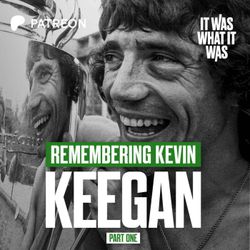
169. Remembering Kevin Keegan: Part One
59:32||Season 1, Ep. 169*The full three-part series is available on Patreon now*Jonathan Wilson and Rob Draper pay tribute to Kevin Keegan, who died in July aged 75, reflecting on his rare charisma, self-awareness, and ability to connect with people, as well as his status as the only British player to win the Ballon d’Or twice. They trace his working-class upbringing in Armthorpe near Doncaster, his family’s mining and Labour roots, and formative influences like Sister Mary Oliver, who encouraged his football. The episode follows Keegan’s unlikely early path—rejected by Doncaster and Coventry, starting at Scunthorpe—through his move to Liverpool under Bill Shankly, where his fitness, motivation, and partnership with John Toshack helped drive major success, alongside growing fame via endorsements and Superstars. They end with Keegan’s decision to leave as Liverpool approach European glory.00:00 Tribute to Keegan01:09 Charisma and Kindness06:19 Roots in Doncaster09:14 Mining Heritage15:22 School and Sweetheart22:21 Rejected Then Spotted24:28 Scunthorpe Breakthrough28:18 Move to Liverpool30:03 Negotiating His Worth33:34 Late Arrival Debut35:22 Toshack Partnership35:47 Sweat Box Fitness37:10 Telepathy Test Hoax40:12 Shankly Mind Games41:46 Celebrity Endorsements47:26 Superstars Bike Crash49:48 Trophies And Turning Point54:44 Shankly Leaves Fallout57:34 European Peak Exit Plan