Share
The IR thinker
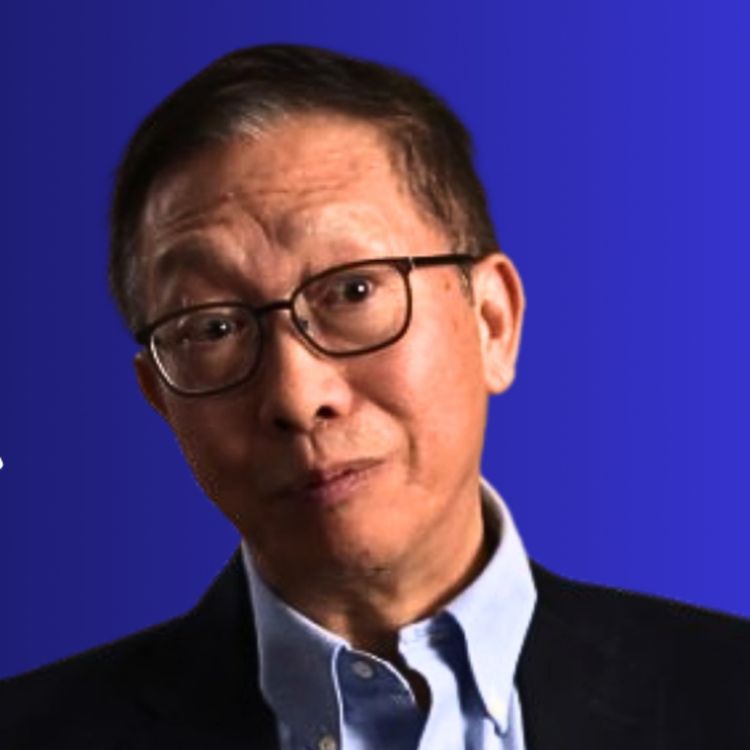
China's Institutional Genes - Chenggang Xu | 2025 Episode 26
This episode of The IR thinker features Professor Chenggang Xu on the conceptual and empirical foundations of his book Institutional Genes: Origins of China’s Institutions and Totalitarianism. The conversation unpacks what he means by “institutions” and “institutional genes”, how this framework helps to open the black box of political change, and why certain systems prove remarkably resilient over time. We explore the notion of “stemness”, the contrasts between imperial China and European monarchies, and how specific “genes” in the Russian system shaped Bolshevism. Professor Xu then traces Mao’s fusion of Marxism with the legacy of Qin Shi Huang, the institutional differences between Soviet and Chinese communism, and whether contemporary China should be understood as totalitarian or authoritarian. The discussion closes by examining tyrannical incentive structures, the risks of Soviet-style stagnation, and how the institutional genes framework can be extended beyond domestic politics to foreign policy and other domains of global governance.
Professor Chenggang Xu is a Senior Research Scholar at the Stanford Center on China’s Economy and Institutions (SCCEI) and a Visiting Fellow at the Hoover Institution. A leading scholar of institutional economics, political economy and the Chinese political–economic system, he is widely known for developing the concept of regionally decentralised authoritarianism and, more recently, for his work on institutional genes and the historical roots of Chinese totalitarianism. His research is extensively cited in both academic and policy circles, and he has been awarded the China Economics Prize and the Sun Yefang Economics Prize in recognition of his contribution to the study of institutions, development and authoritarian governance.
Publications:
The fundamental institutions of China’s reforms and development
Incentives, information, and organizational form
Industrial clustering, income and inequality in rural China
Clustering, growth and inequality in China
Content
00:00 - Introduction
01:45 - Why this book? The story behind ‘Institutional Genes’
06:34 - Defining ‘institution’ in the institutional genes framework
10:45 - Opening the black box: How institutional genes explain political change
16:29 - The concept of ‘stemness’ explained
20:01 - Imperial China vs European monarchies: Why China was more autocratic
28:28 - The three Russian genes that created Bolshevism
33:43 - Mao’s fusion: Marx plus Qin Shi Huang
38:58 - Soviet vs Chinese communism: Key institutional differences
42:23 - Totalitarian or authoritarian? Defining modern China
48:35 - Tyrannical incentive-compatibility: How totalitarian systems motivate
53:01 - Will China face Soviet-style economic stagnation?
58:52 - Applying institutional genes to foreign policy
01:03:16 - Beyond domestic politics: Where else can we apply this framework?
More episodes
View all episodes

6. Understanding China-Russia Relations - Philip Snow | Ep. 6 (2026)
49:53||Season 2026, Ep. 6This episode features a conversation with the historian Philip Snow on the evolution of relations between Russia and China. Drawing on archival research, the discussion traces the relationship from the early border settlements at Nerchinsk and Kyakhta to contemporary geopolitical and economic cooperation, highlighting how frontier regions such as Manchuria, Mongolia, and Xinjiang have shaped interaction between the two powers.The interview examines key turning points, including the Sino-Soviet split, as well as structural constraints (geography, distance, and technology) that have historically limited escalation along the border. It also explores post-Soviet asymmetries, energy interdependence, and projects such as Power of Siberia 2.Finally, the conversation considers the implications of contemporary Sino-Russian alignment, addressing their views on multipolar order, persistent frictions in the Russian Far East, and China’s potential capacity to lead globally without Russia.Philip SnowPhilip Snow has been travelling in Russia and China since the 1960s, and has spent nearly two decades researching what is arguably the most consequential bailateral relationship of our era.Selected Publications:Snow, P. (1989). The star raft: China’s encounter with Africa. Cornell University Press.Snow, P. (2003). The Fall of Hong Kong: Britain, China, and the Japanese occupation. Yale University Press.Snow, P. (2023). China and Russia: Four Centuries of conflict and Concord. Yale University Press.Content00:00 – Introduction01:10 – Archival Research and Interpreting Russian–Chinese Narratives06:21 – Nerchinsk and Kyakhta: Origins of Long-Term Stability10:46 – Manchuria, Mongolia, and Xinjiang as Strategic Pivot Zones14:18 – Mongolia’s Role in Sino-Russian Relations14:51 – Structural Constraints on Escalation and Major War18:51 – The Role of Distance and Technology in Military Encounters19:28 – Manchuria and the Historical Foundations of Chinese Strategic Mistrust24:17 – The Sino-Soviet Split and the Limits of Ideological Alliances27:05 – Energy Interdependence and Post-Soviet Asymmetry31:20 – Power of Siberia 2: Economic Logic and Geopolitical Stakes32:12 – Why Sino-Russian Decision-Making Is Often Slow32:40 – Surface Alignment vs Structural Frictions in the Russian Far East39:54 – Sino-Russian Alignment in Opposition to the West42:45 – Do Russia and China Share a Vision of Multipolar Order?45:44 – China’s Capacity to Lead Without Russia46:45 – Critiquing Philip Snow’s Interpretation48:21 – How to Study China and Russia More Effectively
5. The Changing World Order - Mark N. Katz | Ep. 5 (2026)
58:23||Season 2026, Ep. 5This interview with Professor Mark N. Katz explores one of the central debates in contemporary international relations: the transition from unipolarity to a more complex multipolar world. Drawing on historical cases and current geopolitical developments, the discussion examines whether multipolarity is truly the global norm, how great powers are defined, and what the post-Cold War “unipolar moment” tells us about today’s shifting balance of power.The conversation also addresses the rise of emerging actors such as BRICS, the strategic behaviour of smaller states, and the evolving role of alliances, norms, and regional rivalries—from the Middle East to the Global South. Ultimately, it offers a nuanced assessment of whether a multipolar world necessarily produces a stable and coherent international order, and highlights key research questions shaping the future of global politics.Mark N. KatzMark N. Katz is Professor Emeritus of Government and Politics at George Mason University’s Schar School of Policy and Government, where he taught from 1988 until his retirement in 2024. A specialist in Russian foreign policy, great-power competition, and the international politics of the Middle East, his research has long focused on Soviet and Russian engagement with the developing world and revolutionary movements in international politics. Publications:Personal BlogAmerican Foreign Policy: Can the U.S. Get Out of a Difficult Situation?The Multipolar World Is Nothing New: Why the Return of Many Powers Does Not Mean the Birth of a New OrderThe Soviet Roots of Putin’s Foreign Policy Toward the Middle EastThe Third World in Soviet Military ThoughtThe USSR and Marxist Revolutions in the Third WorldContent00:00 – Introduction02:03 – Is Multipolarity the Historical Norm?04:08 – The Liberal Order During the Cold War04:53 – What Makes a Country a Great Power?09:36 – Understanding the Unipolar Moment12:19 – When Did Unipolarity End?15:41 – 9/11, Terrorism and the Limits of Polarity Theory21:51 – The Sino–Soviet Split and a Brief Tripolar World25:26 – BRICS and the Rise of Multipolarity27:25 – Multipolar World vs Multipolar Order30:27 – Global South Views on Multipolarity33:15 – How Small States Play Great Powers Against Each Other38:00 – If China Dominates...41:25 – Do Alliances Limit a Country’s Power Ambitions?43:45 – Iran, Saudi Arabia and Israel in a Multipolar Middle East47:06 – What the Arab Spring Reveals About Multipolarity50:49 – Do International Norms Still Matter?53:12 – Key Research Questions on the Future of Multipolarity
4. Catalonia's Pursuit of Self-government - Marc Sanjaume-Calvet | Ep. 4 (2026)
50:54||Season 2026, Ep. 4In this interview, political scientist Marc Sanjaume‑Calvet examines the constitutional status of Catalonia, the distribution of powers within the Spanish state, and the evolving debates surrounding Catalan autonomy and identity. The discussion also explores Catalonia’s external action, from its relations with the European Union and international organisations to the constraints imposed by Spanish constitutional law, including the legacy of the 2017 referendum and Article 155.Marc Sanjaume-CalvetMarc Sanjaume-Calvet is Associate Professor of Political Science at Pompeu Fabra University. He has also served as an advisor at the Self-Government Studies Institute, a research centre linked to the Government of Catalonia. His work sits at the crossroads of federalism, self-determination, and territorial conflict, with broader interests in national and ethnic conflicts. Publications:Asymmetry as a Device for Equal Recognition and Reasonable Accommodation of Majority and Minority Nations. A Country Study on Constitutional Asymmetry in SpainThe Political Use of de facto Referendums of Independence The Case of CataloniaDefensive Federalism: Protecting Territorial Minorities from the "Tyranny of the Majority"The Exodus That Never Was? An Empirical Analysis on Territorial Conflict and Foot-VotingThe Politics of Independence Referendums: Never Mind the BallotsContent00:00 – Introduction01:50 – Constitutional Status of Catalonia05:21 – Identity and Demography in Catalonia08:15 – Distribution of Competences11:46 – The Future of Catalan Autonomy16:10 – “Unity of Foreign Action” in Spanish Constitutional Law and Its Constraints on Regional Diplomacy21:04 – Coordination and Tension between Catalonia’s External Action and Spain’s Ministry of Foreign Affairs23:39 – Catalonia and the European Union29:40 – International Agreements and Catalonia’s Network of External Delegations33:53 – Catalonia’s Interaction with International Organisations and Multilateral Forums37:51 – The 2017 Independence Referendum and Article 15544:21 – Emerging Research Agendas in the Study of Catalonia’s Autonomy
3. The New Constructivism - David McCourt | Ep. 3 (2026)
01:10:24||Season 2026, Ep. 3In this episode, Professor McCourt unpacks the foundations of New Constructivism: where it came from, what it demands of researchers, and where it's heading. From the theory/method distinction to the practice and relational turns, from C. Wright Mills to Multiple Correspondence Analysis, this is a wide-ranging conversation about how social science can move beyond positivist inheritances without losing analytical rigor. We also explore New Constructivism's blind spots, its uneven development across the US and Europe. David McCourtDavid McCourt is a Professor in the Department of Sociology at the University of California, Davis, where he teaches sociological and international theory. His research sits at the intersection of political sociology and international relations, with a focus on the social foundations of state action in world politics. Empirically, his work centres on the foreign policies of the United Kingdom, the United States, and the European Union. Theoretically, he usually draws on constructivist, practice-based, and relational approaches to examine how states define and enact their roles on the international stage.Publications:Constructivism’s Contemporary Crisis and the Challenge of ReflexivityPractice Theory and Relationalism as the New ConstructivismDomestic Contestation Over Foreign Policy, Role-based and Otherwise: Three Cautionary CasesThe New Constructivism in International Relations TheoryThe End of Engagement: America’s China and Russia Experts and U.S. Strategy Since 1989The Dragon Defined: How Washington, Canberra, and London Reimagined ChinaContent00:00 - Introduction02:37 - Core Principles of New Constructivism19:24 - Is the Theory/Method Distinction Itself a Positivist Inheritance?24:00 - Methodology vs. Methods: The Root of Constructivist Misreadings33:33 - Constructivism as Classic Social Analysis: The C. Wright Mills Connection37:25 - Broadening the Methodological Repertoire Without Fetishising Technique41:27 - What Must Stay Constant as Constructivism Evolves?46:14 - Multiple Correspondence Analysis (MCA) as a Constructivist Tool52:15 - The Practice Turn and Relational Turn in New Constructivism57:23 - Diverging Trajectories: New Constructivism in the US and Europe01:00:43 - New Constructivism, Global South Scholarship, and Postcolonialism01:05:11 - The Weakest Link: Where New Constructivism Falls Short01:07:54 - The Limits of New Constructivism: Where It Should Not Be Applied
2. New Zealand's Geopolitics - Reuben Steff | Ep. 2 (2026)
01:06:08||Season 2026, Ep. 2In this episode, together with Dr Reuben Steff, we explore how New Zealand’s geographic isolation, colonial legacies, and small-state status have shaped a distinctive strategic culture; one that combines alliance cooperation with a persistent commitment to autonomy, non-nuclear norms, and multilateralism.Reuben SteffReuben Steff is a Senior Lecturer at Mendel University in Brno whose scholarship engages some of the most pressing questions in contemporary international relations and security. His research spans the implications of artificial intelligence for the global balance of power, the interaction between nuclear deterrence theory and ballistic missile defence within the security dilemma, New Zealand and United States foreign policy, and the dynamics of great-power competition between the United States and China. Publications:New Zealand’s Geopolitics and the US-China Competition‘Our region is now a strategic theatre’: New Zealand’s balancing response to ChinaThe strategic case for New Zealand to join AUKUS Pillar 2US Foreign Policy in the Age of Trump: Drivers, Strategy and TacticsEmerging Technologies and International Security: Machines, the State, and WarExamining the immanent dilemma of small states in the Asia-Pacific: The strategic triangle between New Zealand, the US and ChinaHard Balancing in the Age of American Unipolarity: The Russian Response to US Ballistic Missile Defense during the Bush Administration (2001–2008)Content00:00 – Introduction: Conceptualising New Zealand’s Strategic Posture02:03 – Geographic Isolation and the Evolution of New Zealand’s Strategic Culture13:56 – From the South Pacific to the Indo-Pacific: Regional Order and Strategic Repositioning18:06 – The Treaty of Waitangi and Its Implications for External Partnerships21:47 – Strategic Autonomy, Nuclear-Free Norms, and the AUKUS Question30:44 – Domestic Debates on Nuclear Policy and National Identity34:21 – ANZUS (1951) in Contemporary Perspective: Alliance Politics and Strategic Recalibration36:25 – Trans-Tasman Relations: Convergence, Friction, and Structural Asymmetry40:38 – Economic Interdependence with China and Security Alignment with Western Partners45:22 – Engagement with India and ASEAN: Diversification and Indo-Pacific Strategy49:23 – The European Union and New Zealand: Trade, Norms, and Strategic Convergence53:54 – Hedging in Practice: Small-State Strategy Amid Great-Power Competition56:34 – The War in Ukraine and Its Implications for New Zealand’s Foreign Policy01:01:11 – Multilateralism, Liberal Order, and China’s Parallel Institutional Architecture
1. Decolonising Norms in IR - Charlotte Epstein | Ep. 1 (2026)
53:10||Season 2026, Ep. 1In this episode, Professor Charlotte Epstein reflects on how postcolonial perspectives reshape the study of norms in international relations, challenging conventional accounts of diffusion, compliance, and legitimacy. The conversation explores colonial inheritances embedded in contemporary normative orders, while examining positionality, experience, and the epistemological stakes of critical scholarship.Charlotte EpsteinCharlotte Epstein is Professor at Tokyo College, University of Tokyo, where her work examines how language and political power have jointly constituted the modern international order.Publications:The power of words in international relations: Birth of an anti-whaling discourseWho speaks? Discourse, the subject and the study of identity in international politicsConstructivism or the eternal return of universals in International Relations. Why returning to language is vital to prolonging the owl’s flightThe postcolonial perspective: an introductionAgainst international relations norms: Postcolonial perspectivesBirth of the state: The place of the body in crafting modern politicsContent00:00 – Introduction01:42 – Colonialism and Postcolonialism: Conceptual Clarifications04:08 – Rationale for Employing Postcolonial Perspectives07:22 – Postcoloniality as Positionality Beyond Historical Periodisation12:29 – Studying Norm Diffusion and Compliance Beyond Coercion22:50 – Why Norms Reveal Colonial Inheritances More Sharply than Concepts27:53 – From Norms as Practices to Norms as Epistemological Categories32:25 – Situated Perspectives, Critical Authority, and the Risk of Relativism35:42 – The Role of Experience in Postcolonial Norm Research39:26 – Key Sources on the Concept of Experience43:02 – ‘Norming’ and ‘Re-Norming’ in a Foucauldian Perspective47:54 – The Ambivalences of Research Success50:39 – Principal Challenges in Postcolonial Approaches to Norms
31. Transformative Realism - Marc Saxer | 2025 Episode 31
40:52||Season 2025, Ep. 31In this episode, we sit down with political analyst Marc Saxer to explore his theory of Transformative Realism and why he believes we’re living through a profound systemic crisis. From the erosion of international norms to the urgent need for reimagined statecraft, Marc offers a compelling framework for understanding the forces reshaping our world and what political leadership must look like in response.Marc SaxerMarc Saxer is a political analyst, strategist, and writer with two decades of experience in international relations. He heads the Asia Pacific office of the Friedrich-Ebert-Shtiftung and convenes the Asia Strategic Foresight Group.Publications:Transformative Realism: How to overcome the system crisisGeopolitical Conflict in the Wolf World: Great Power Competition and the Illiberal Revolt against the Liberal OrderContent00:00 - Introduction01:38 - Understanding Transformative Realism04:50 - Defining Systemic Crisis07:39 - Marc’s Most Compelling Crisis Case Study15:08 - The Erosion of International Norms and Rules18:24 - Recognizing the Signs of Systemic Crisis20:18 - The Role of Agency in Transformative Realism28:18 - Reimagining Statecraft and Political Leadership33:44 - The Crisis in Modern Statecraft Education
30. India's Diplomacy - Vineet Thakur | 2025 Episode 30
01:00:38||Season 2025, Ep. 30In this episode, Vineet Thakur unpacks the historical and intellectual foundations of Indian diplomacy. We discuss classical strategic traditions, civilisational and colonial legacies, caste and elite networks in diplomatic culture, non-alignment and strategic autonomy, neighbourhood diplomacy, and India’s contemporary practice of multi-alignment amid shifting great-power rivalries.Vineet ThakurVineet Thakur is a University Lecturer in International Relations at the Institute for History, Leiden University. He received his doctorate from Jawaharlal Nehru University, New Delhi, in 2014 and has held academic positions and fellowships across India, South Africa, and the United Kingdom. His professional experience includes teaching appointments at Ambedkar University Delhi, the University of Johannesburg, and the School of Oriental and African Studies, following which he joined Leiden University in 2017. He has been a fellow at the University of Cambridge, the Netherlands Institute for Advanced Study, and Rhodes University.His research is situated in postcolonial international relations, with a particular focus on the politics of knowledge, disciplinary hierarchies, and the global intellectual history of International Relations, especially in the Indian context.Publications:V.S. Srinivasa Sastri: A Liberal LifeIndia’s First Diplomat: V.S. Srinivasa Sastri and the Making of Liberal InternationalismPostscripts on Independence: Foreign Policy Discourses in India and South AfricaContent00:00 – Introduction and Framing of India’s Diplomatic Trajectories02:03 – Mandala Theory and Kautilya’s Arthashastra as Lenses for Contemporary Regional Policy05:10 – Intellectual and Historical Inspirations Behind India’s Diplomatic Traditions06:32 – Civilisational State Narratives Versus Colonial Administrative Foundations of Indian Diplomacy10:53 – Social Stratification and the Influence of Caste Networks on Diplomatic Recruitment and Culture22:12 – Nehruvian Idealism and Non-Alignment as Strategy: Autonomy, Hedging, and Principled Neutrality27:55 – Overlooked and Marginalised Practices in India’s Cold War Diplomatic History30:30 – The Strategic Logic and Practical Outcomes of the “Neighbourhood First” Diplomatic Doctrine35:18 – Structural Constraints and Policy Stalemate in India–Pakistan Diplomatic Engagement37:34 – China’s Strategic Shadow and Its Effects on India’s Diplomatic Posture Towards Pakistan39:08 – India’s Diplomatic Approach to Tibet in Historical and Contemporary Perspective43:29 – Multi-Alignment as Strategy: Balancing Great Powers in India’s Contemporary Foreign Policy47:45 – The Absence of a Permanent United Nations Security Council Seat and Its Diplomatic Consequences51:15 – India–Africa Relations and the Underdeveloped Economic Dimension of South–South Diplomacy54:21 – Hindu Nationalism and Its Influence on the Ideational Foundations of Indian Diplomacy58:24 – Neglected Themes and Under-Researched Domains in the Study of Indian Foreign Policy*** at 10:29, there is a missing word ‘overstated’
29. Bulgaria's Energy Security - Martin Vladimirov | 2025 Episode 29
45:05||Season 2025, Ep. 29In this episode, Martin Vladimirov unpacks Bulgaria’s evolving energy landscape in the aftermath of the war in Ukraine. We discuss shifts in the country’s energy mix, offshore wind prospects in the Black Sea, the strategic role of gas pipelines and interconnectors, and the future of key assets such as the Chiren gas storage facility, the Maritsa Iztok lignite complex, and potential new nuclear reactors.Martin VladimirovMartin Vladimirov is Director of the Energy and Climate Program at the Center for the Study of Democracy (CSD), where his work focuses on European and Balkan energy security, energy transition pathways, and the geopolitical dimensions of Russian and Chinese economic influence. He has extensive experience as an energy analyst for The Oil and Gas Year, contributing in-depth reports on Kazakhstan, Azerbaijan, and Saudi Arabia, and has consulted for international oil companies across the GCC and MENA regions. Martin is also an affiliated expert with the European Geopolitical Forum in Brussels and previously worked as an energy and economic analyst for CEE Market Watch, covering Iran and Central Asia.Publications: Managing Assets Under OFAC SanctionsEnergy and Climate Security in Europe: From Crisis Response to Structural TransformationThe Kremlin Playbook in Mexico: Asymmetric InfluenceThe Imperative to Weaken the Kremlin’s War Economy: What the West Can DoClosing the backdoor: The new TurkStream is here. Can the West stop it?Content00:00 – Introduction01:38 – Bulgaria’s Evolving Energy Mix after the War in Ukraine09:07 – Exploring Bulgaria’s Offshore Wind Potential12:45 – Strategic Energy Pipelines Crossing Bulgaria17:16 – Bulgaria’s Relationship with Gazprom and Gas Contracts24:14 – The Greece–Bulgaria Gas Interconnector (IGB)27:05 – Alexandroupolis LNG Terminal and Regional Gas Connectivity28:53 – The Role of Chiren Underground Gas Storage34:31 – The Future of the Maritsa Iztok Lignite Power Complex40:50 – Assessing the Feasibility of Two New Nuclear Reactors