Share
The IR thinker
British Journal of Politics and International Relations - Jack Holland | Ep. 7 (2026)
Today, we are hosting an episode that provides an opportunity to present a research journal together with its editor. The aim is not only to introduce the journal, but also to offer a critical assessment of suitable venues for publishing research articles. In this context, we turn our attention to the British Journal of Politics and International Relations (BJPIR).
Impact Factor: 3.4 / 5-Year Impact Factor: 3.4
Indexed: Scopus / Web of Science
First Decision: 6 days
Acceptance Rate: 18.7%
14th out of 169 journals in the field of International Relations and 36th out of 322 in Political Science
(Source: https://essl.leeds.ac.uk/education-social-sciences-law/news/article/2242/bjpir-celebrates-rise-in-impact-factor-and-25th-anniversary)
The journal is a leading peer-reviewed academic journal in the fields of political science and international relations. Established in 1999 and published by SAGE Publications on behalf of the Political Studies Association, it has developed a strong international reputation for high-quality scholarship.
The journal has six editors, all of whom are based at the University of Leeds in the United Kingdom. Today, we are speaking with one of them, Professor of Global Security Challenges at the University of Leeds, Jack Holland.
Jack Holland also serves as Pro-Dean for Research and Innovation in the Faculty of Social Sciences. His research focuses on United States, United Kingdom, and Australian foreign and security policy. He is an expert on AUKUS, for example, he has been invited as a witness to the House of Commons Foreign Affairs Select Committee, and he regularly provides media commentary for British and international news organisations.
Content
00:00 - Introduction
02:24 - The Journal’s Intellectual DNA
04:05 - Political Science vs International Relations: Balance in Published Research
05:24 - From Political Studies Association Flagship to Global Journal: Institutional Influence
08:31 - Political Studies Association
09:47 - Editorial Limits: Is There a Maximum Number of Articles per Issue?
11:36 - Maintaining Coherence in a Broad-Scope Journal
12:48 - Editorial Board: Selection, Roles, and Responsibilities
16:25 - University of Leeds: The Journal’s Institutional Connection
18:08 - Methodological Pluralism: Supporting Underrepresented Scholars
21:04 - Current Intellectual Trends in Submissions
22:53 - Undersubmitted Topics: Areas the Journal Wants More Of
24:13 - AI, Frameworks, and Consulting: Reality Behind Publishing Claims
26:15 - Common Author Mistakes in Journal Submissions
31:00 - Encouraging Junior Scholars to Submit
33:51 - Global South Scholars and Barriers
36:13 - Editorial Lessons: Decisions Seen Differently Today
38:22 - Suggesting Reviewers: Should Authors Do It?
39:39 - Future Vision for the Journal
More episodes
View all episodes

15. Poland's New Strategic Culture - Piotr Pietrzak | Ep. 15 (2026)
01:06:39||Season 2026, Ep. 15As American power recedes and European unity fractures, Poland finds itself at the centre of one of the most consequential geopolitical transformations of our time. Dr Piotr Pietrzak joins us to trace Poland's journey from historical insecurity to strategic confidence. Can Poland sustain great-power aspirations without overreaching? Piotr PietrzakPiotr Pietrzak is co-founder of In Statu Nascendi Think Tank, a non-partisan and independent institution bringing together scholars from a wide range of disciplines. It is devoted to rigorous inquiry into contemporary conflict and political philosophy, and to generating actionable ideas on geoeconomic, political, and socio-economic matters.A scholar, ontologist, and author, Dr Pietrzak is particularly known for bringing a rigorous pragmatic perspective to international relations theory, conflict management, and geopolitics. His work consistently bridges theoretical inquiry and real-world application, making it relevant to both academic and policy audiences.Publications:On the Idea of Humanitarian Intervention: A New Compartmentalization of IR TheoriesExploring the implications of local and regional conflictsThe Changing Conceptual Landscape of the Russian War in Ukraine (2014-Present) and Syria (2011-Present)The Russia ‒ Ukraine War and the Renaissance of IR RealismGeopolitical rivalries and strategic competition across EurasiaStrengthening international relations through transformative theory and practiceThe Sikorski–Tusk doctrine underpinning Poland's new strategic culture and its response to the Russia–Ukraine WarContent00:00 - Introduction01:20 - Reimagining International Relations: An Ontology “In Statu Nascendi”04:09 - The Giedroyc-Mieroszewski Doctrine07:17 - The Brzezinski Doctrine11:02 - The Sikorski–Tusk Doctrine18:13 - Regional Power or Strategic Frontline State? Poland’s Post-2022 Autonomy24:43 - Between Brussels and Washington: Balancing Pro-European and Pro-American Orientations29:35 - Ukraine as a Strategic Beneficiary of the War32:18 - Beyond Solidarity: The Future of Polish-Ukrainian Relations36:32 - China and the New Geometry of Polish Geopolitics40:28 - What Would G7 Membership Mean for Poland?46:04 - Democratic Values, Diaspora Networks, and Poland’s Emerging Leadership Role50:24 - From Historical Insecurity to Strategic Confidence: The Evolution of Polish Strategic Culture54:01 - Ambition versus Overstretch: Can Poland Sustain Great-Power Aspirations (American power declines, European unity weakens, and Ukraine remains unstable)01:00:10 - Poland and Russia: Is Stable Coexistence Possible?01:02:57 - The Most Underresearched Questions in Polish Geopolitics
14. African Agency in Climate Governance - Carl Death | Ep. 14 (2026)
01:11:58||Season 2026, Ep. 14This episode explores African agency in global climate governance, moving beyond narratives that portray African states solely as vulnerable recipients of climate policy. Drawing on debates in International Relations, environmental politics, and African climate futures, Dr Carl Death examines how African actors negotiate, contest, and reimagine climate governance across local, continental, and global arenas. Carl DeathCarl Death is a Senior Lecturer in International Political Economy at the University of Manchester. His research focuses on environmental politics in Africa, with a particular interest in critical and postcolonial approaches. Publications:The Green Economy in South Africa: Global Discourses and Local PoliticsFour Discourses of the Green Economy in the Global SouthGreen States in Africa: Beyond the Usual SuspectsAfricanfuturist Socio‐Climatic Imaginaries and Nnedi Okorafor’s Wild NecropoliticsClimate Fiction, Climate Theory: Decolonising Imaginations of Global FuturesUnfamiliar Families and Disturbing Climate FuturesNarrating Transitions to Low Carbon Futures: The Role of Long-Term Strategies in Fossil Fuel Producing Emerging EconomiesAfrican Climate FuturesContent00:00 – Introduction02:30 – African agency in global climate governance: realities versus stereotypes10:21 – Writing climate transition differently: fiction as method13:32 – Universal models and African political economies18:04 – Pan-Africanism and coordination in climate governance23:25 – Key actors in Africa’s climate and energy transition27:19 – Climate fiction and African agency: insights from fifteen authors32:49 – Selection and context of African climate fiction38:37 – Postcolonial, feminist, and queer perspectives on African climate futures43:47 – Ecopolitical imaginaries explained48:01 – Beyond limited case studies in African climate scholarship54:51 – Challenges in writing the book58:51 – Local politics and environmental governance01:02:25 – Civil society and grassroots climate action01:08:59 – Under-researched areas in African climate politics
13. Contemporary Security Policy - Myriam Dunn Cavelty & Nicole Jenne | Ep. 13 (2026)
01:06:06||Season 2026, Ep. 13Today, it is a real pleasure to speak with the editorial team of Contemporary Security Policy, one of the most influential journals in the field of international security studies. Previously, known as Arms Control (1980 - 1993). Since its founding in 1980, the journal has played a central role in shaping discussions on armed conflict, intervention, strategic change, and global security governance.Impact Factor: 5.0 / 5-Year Impact Factor: 4.6Indexed: Scopus / Web of Science First Decision: 5 daysAcceptance Rate: 11%Major fields of concern include:- War and armed conflict- Peacekeeping- Conflict resolution- Arms control and disarmament- Defense policy- Strategic culture- International institutionsThe journal is currently led by three co-editors:- Myriam Dunn Cavelty- Nicole Jenne- Yf RejkersTwo of them are with us today: Professor Myriam Dunn Cavelty is a leading scholar of cyber security, risk politics, and the governance of emerging technologies, based at ETH Zürich.Associate Professor Nicole Jenne is an expert on Latin American security, civil–military relations, and regional responses to transnational threats at Pontifical Catholic University of Chile, also a visiting scholar at David Rockefeller Center for Latin American Studies, Harvard University.Content00:00 — Introduction01:52 — The Journal’s Mission: Change and Continuity04:24 — The Intellectual DNA of CSP06:22 — Managing Breadth: Coherence Across Security Studies09:49 — Evaluating Innovative and Experimental Submissions11:56 — What Counts as ‘Policy’ in Contemporary Security Policy?14:23 — Borderline Cases: When Policy Relevance Is Unclear19:54 — Methodological Pluralism and Editorial Tensions22:46 — Qualitative or Quantitative? CSP’s Methodological Orientation25:02 — Major Intellectual Trends in Recent Submissions26:41 — Desired Growth Areas: Topics the Journal Wants More Of28:20 — Attracting Strong Manuscripts: Editorial Strategies and Outreach33:03 — The Role of AI in Academic Submissions42:49 — The Most Common Mistakes in Manuscript Submission44:10 — Fairness, Bias, and Delay: The Realities of Peer Review47:49 — Should Authors Recommend Potential Reviewers?49:41 — Supporting Junior Scholars and Academics Facing Structural Disadvantage53:24 — The Bernard Brodie Prize56:54 — Publication Strategy: Controlling Volume and Maintaining Quality58:47 — What an Editorial Board Actually Does01:02:11 — Editorial Priorities and a Final Message to Scholars
12. Problems of Post-Communism - Dmitry Gorenburg | Ep. 12 (2026)
01:03:57||Season 2026, Ep. 12Problems of Post-Communism is a long-standing peer-reviewed academic journal that examines political, economic, security, and international developments in post-communist societies. First established in 1952 under the title Problems of Communism, the journal was originally published by the United States Information Agency and adopted its current name in 1992 to reflect the profound transformations following the end of the Cold War.Journal's homepage: https://www.tandfonline.com/journals/mppc20Editorial Board: https://www.tandfonline.com/journals/mppc20/about-this-journal#editorial-boardImpact Factor: 2.0 / 5-Year Impact Factor: 2.2Indexed: Scopus / Web of Science First Decision: 112 daysAcceptance Rate: 28%The current editor-in-chief is Dmitry P. Gorenburg, a political scientist and senior researcher at CNA, who oversees the journal’s editorial direction and its engagement with contemporary debates on the politics and international relations of post-communist countries.Dr. Gorenburg is also a Harvard Davis Center associate and previously served as executive director of the American Association for the Advancement of Slavic Studies (now the Association for Slavic, East European, and Eurasian Studies, or ASEEES). His scholarship focuses on Russian military reform, Russian foreign policy, and security dynamics in the former Soviet Union, as well as questions of ethnic politics and identity in Russia. BLOG: Russian Military ReformContent00:00 – Introduction01:53 – Evolution of the Journal’s Mission After the Collapse of Communism05:20 – The Intellectual “DNA” of Problems of Post-Communism06:43 – Maintaining Intellectual Coherence Across a Broad Research Scope09:19 – The Role of International Relations in the Journal’s Scope: Thematic vs Territorial Focus10:26 – Disciplinary Balance: Comparative Politics, International Relations, and Area Studies11:07 – Major Intellectual Trends in Post-Communist Studies Over the Past Decade14:22 – Democratic Backsliding, Illiberalism, and the Impact of Russia’s Invasion of Ukraine on Research Agendas18:21 – Russian Scholars in Exile and Scholars Working Inside Russia21:05 – Underexplored Topics in Post-Communist Studies22:22 – Annual Publication Volume and the Pressure to Publish More26:31 – Preferred Research Methods and Methodological Approaches29:30 – The Most Common Mistakes in Manuscript Submissions40:51 – Ensuring Fairness and Efficiency in the Peer Review Process43:32 – Editorial Innovations that Improved Journal Quality and Consistency44:45 – The Role and Selection of the Editorial Board46:19 – Publishing Challenges for Scholars from Central Asia and the Post-Soviet Region52:30 – Growing Global Interest in Post-Communist Studies53:13 – Should Authors Suggest Potential Reviewers?55:14 – What Makes a Successful Article in Problems of Post-Communism59:25 – The Future Vision for the Journal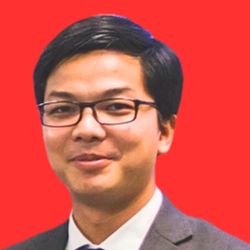
11. Myanmar - Geopolitics & Security - Wai Yan Phyo Naing | Ep. 11 (2026)
01:04:40||Season 2026, Ep. 11Myanmar occupies a unique position in contemporary international affairs, where the legacies of post-independence neutralism, decades of military rule, and a fractured post-coup order converge to produce one of the most complex foreign policy environments in the Indo-Pacific.Dr Naing is a visiting scholar at the Institute of Modern History, Academia Sinica, under the Taiwan Fellowship Program. At the moment, he is focusing on modern Myanmar’s domestic politics, democratisation, and international relations, with particular attention to Myanmar–Russia and Myanmar–China relations and their implications for regional security, political development, and social change.In this role, he conducts independent and collaborative research drawing on archival materials, historical documents, and qualitative sources. His current project, “Insights from Taiwan’s Democratisation: Implications for Upcoming Reform Processes in Myanmar,” examines how Taiwan’s experience of democratisation can inform prospective political reforms in Myanmar.Publications:Northern Myanmar Poses a Challenge to China’s Critical Minerals StrategyThe Dilemma of Sino-Myanmar Relations: The Case of Myitsone Hydropower Dam ProjectContent00:00 – Introduction02:19 – Neutralism, Military Isolation, and the Origins of Myanmar’s Strategic Hedging09:16 – Structural Drivers of the Contemporary Myanmar Political Crisis16:53 – The Influence of China and India on Myanmar’s Foreign Policy Orientation26:00 – The National Unity Government and the Fragmentation of Political Authority33:12 – Border Governance, Insurgency, and Security Dynamics in Myanmar’s Frontier Regions48:43 – Russia’s Role in Myanmar’s Strategic and Military Relations01:00:35 – ASEAN’s Five-Point Consensus and the Limits of the Non-Interference Principle
10. Biopolitics - Sergei Prozorov | Ep. 10 (2026)
01:07:47||Season 2026, Ep. 10In this episode, I speak with Professor Sergei Prozorov about biopolitics, one of the most provocative frameworks in contemporary political theory, and how it reshapes our understanding of power, life, and death across IR, philosophy, and Soviet studies. From Foucault to Mbembe to Stalin, this is a conversation that cuts to the heart of how modern states govern human existence.Sergei Prozorov is Professor of Political Science, Faculty of Humanities and Social Sciences, University of Jyväskylä, Finland. His research interests include contemporary political theory, continental philosophy, biopolitics, democracy and totalitarianism. Sergei’s work is positioned at the intersection of political philosophy, IR theory, and Soviet and post-Soviet studies, with sustained engagement with the thought of Michel Foucault, Giorgio Agamben, and Roberto Esposito.During 2010–2015, Prozorov held the Academy of Finland Research Fellowship with the project Biopolitics of Stalinism. During 2015–2019, he served as Principal Investigator of the Academy of Finland project Biopolitics and Democracy in Global Governance. Prozorov's work has accumulated over 2,800 citations on Google Scholar Google Scholar, reflecting his standing as one of the leading theorists of biopolitics in the international field. Peer assessments situate him among the most philosophically sophisticated scholars working at the intersection of IR and continental theory. His work represents one of the most ambitious re-articulations of the ontological and ethical foundations of universalism in contemporary political theory.Prozorov's latest book is Poses of the World, the third volume in his Void Universalism trilogy.Foucault, Freedom and SovereigntyAgamben and Politics: A Critical IntroductionThe Biopolitics of Stalinism: Ideology and Life in Soviet SocialismFoucault and Agamben on Augustine, Paradise and the Politics of Human NatureWhen did biopolitics begin? Actuality and potentiality in historical eventsBiopolitics After Truth: Knowledge, Power and Democratic LifeChapters00:00 — Introduction02:55 — Conceptualising Biopolitics09:05 — Actors and Agents in Biopolitics12:39 — Biopolitics and Mainstream Approaches in Political Science and IR18:20 — Biopolitics and Sovereignty: Engaging with Agamben26:16 — Biopolitics and Necropolitics: Mbembe’s Intervention31:05 — Studying Biopolitics Empirically: Approaches and Challenges33:06 — Researching Biopolitics: Professor Prozorov’s Preferred Methods38:58 — Common Pitfalls in Biopolitics Research: Advice for Early-Career Scholars41:53 — Biopolitics Beyond the West45:21 — The Motivation and Goals Behind Biopolitics of Stalinism (book)50:30 — Soviet Ideology Through the Lens of Biopolitics01:00:59 — Biopolitical Investment or Propaganda in the Soviet Project?01:03:39 — Professor Prozorov’s Upcoming Research and Future Directions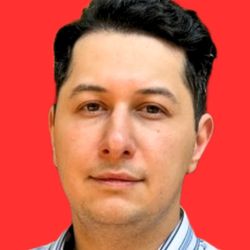
9. Russian Soft Power in Africa, Asia & the Middle East - Vladimir Liparteliani | Ep. 9 (2026)
01:00:50||Season 2026, Ep. 9How does a country under heavy sanctions continue to win influence across Africa, the Middle East, and Asia? In this episode, Vladimir Liparteliani unpacks the full machinery of Russian soft power — from RT and Sputnik to educational diplomacy, cultural outreach, and religious projection.Vladimir Liparteliani is an associate fellow at the School of Modern Languages and Cultures, Durham University. As a scholar of international relations, he focuses on soft power and international power competition in the post-Soviet space.Selected Publications:Soft Power Competition Between Russia and the West: Contesting Georgian National Identity, 1991–2024The Art of Subtle Influence: Russian Soft Power and Georgia’s Conservative TurnContent00:00 — Introduction01:37 — Conceptualising Russian Soft Power: Beyond Nye’s Classical Framework05:58 — Russian Scholarly Perspectives on Soft Power07:10 — Soft Power, Strategic Communication, and Influence Operations in Russian Foreign Policy08:42 — Strategic Ambiguity: The ‘Blurriness’ of Russian Soft Power09:23 — Great Power Identity and the Logic of Russian Soft Power11:53 — Soviet Legacies and Their Influence on Contemporary Russian Soft Power14:21 — International Broadcasting as Soft Power: RT and Sputnik18:22 — Narratives and Messaging in RT and Sputnik Content20:52 — Global Accessibility and Restrictions on RT and Sputnik23:02 — Educational Diplomacy in Russian Foreign Policy26:22 — Education as a Soft Power Instrument28:41 — The Experience of International Students in Russia30:22 — Cultural Diplomacy and the Projection of Russian Culture34:13 — Global Reception and Participation in Russian Cultural Initiatives36:54 — The Russian Orthodox Church and Religious Soft Power41:15 — Narrative Effectiveness and Audience Reception in Russian Soft Power43:52 — The Interaction of Soft and Hard Power in Russian Strategy46:49 — Soft Power within Russia’s Military and Security Agenda49:09 — Adapting Russian Soft Power to New Political Realities51:50 — The Impact of Sanctions on Russian Soft Power Adaptation54:31 — Opportunities and Constraints for Russian Soft Power in Africa, the Middle East, and Asia57:27 — Research Motivation: Studying Russian Soft Power
8. South Africa's Nuclear Energy - Kelvin Kemm Final | Ep. 8 (2026)
01:08:46||Season 2026, Ep. 8South Africa has been involved in nuclear development for more than 75 years. In 1948, the Atomic Energy Act established the Atomic Energy Board (AEB) — only two years after the United States created its own Atomic Energy Commission. South Africa's first nuclear research reactor, SAFARI-1, went critical in 1965, and the country's first large nuclear power station, Koeberg, came online in 1984.In February 2010, the South African government announced it would stop funding the Pebble Bed Modular Reactor (PBMR) programme. Over US$1.3 billion had been invested in the project since 1993, making its cancellation one of the most consequential decisions in South African energy history.But the technology did not disappear. A group of nuclear engineers and scientists pressed on independently, channelling the PBMR's intellectual legacy into a new design: the HTMR-100, an advanced Generation IV helium-cooled reactor. That effort eventually gave rise to Stratek Global, and it is an honour to speak with its Chairman and CEO, Dr Kelvin Kemm.Kelvin KemmDr Kelvin Kemm is a nuclear physicist and Chairman of Stratek Global, based in Pretoria, South Africa. He is the former Chairman of the South African Nuclear Energy Corporation (Necsa) and has been involved in South Africa's small modular reactor programme since its inception — a journey spanning more than two decades.Dr Kemm has briefed the US Senate and Congress in Washington DC, and is a sought-after international speaker on nuclear energy, technology, and strategic development, having addressed audiences across Africa, Europe, Asia, and the United States.Above all, he brings over 25 years of hands-on experience building small modular reactor technology from the ground up — making him one of the most knowledgeable voices in the field today.Content00:00 – Introduction and Overview of the Discussion02:49 – Historical Development of Nuclear Reactor Technology in South Africa17:29 – Eskom’s Operational and Financial Challenges: Assessing the Crisis23:32 – Koeberg Nuclear Power Station: Operational Performance, Modernisation, and Life Extension27:12 – Nuclear Fuel Procurement and Supply Chains for Koeberg31:43 – Radioactive Waste Management at Koeberg Nuclear Power Station36:04 – Development Status of South Africa’s HTMR-100 Small Modular Reactor39:03 – HTMR-100 Reactor Concept: Design Principles, Mobility, and Scale43:32 – Advanced Fuel Architecture of the HTMR-100 Reactor47:58 – International Cooperation in Deploying HTMR-100 Nuclear Power Plants51:09 – Nuclear Science and Engineering Education in South Africa: Training the Next Generation55:09 – The Geopolitics of Nuclear Energy57:49 – Debates and Critiques of Renewable Energy Policy in South Africa01:03:10 – Pan-African Institutional Support for Nuclear Energy Development in Africa