Share
Irish History Podcast
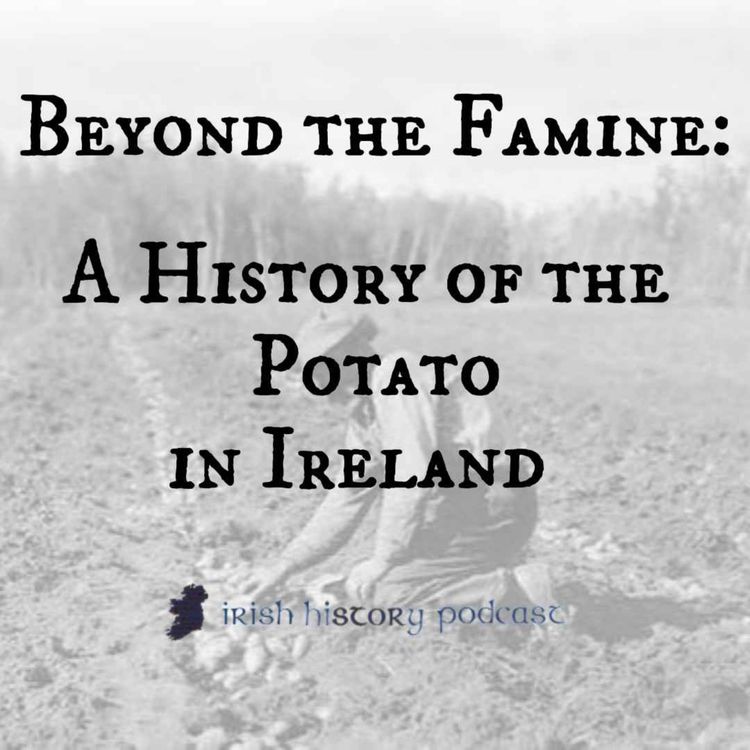
Beyond the Famine: A History of the Potato in Ireland
•
Throughout history, bread has consistently been one of the most popular foods across the world. For two centuries, Ireland was an exception.
Indeed, by the early 19th century, some communities in the west of Ireland had lost all knowledge of how to bake bread.
This was down to the remarkable history of the potato in Ireland.
Our ancestors had an insatiable appetite for spuds. In this podcast, I explore the history of the potato in Ireland beyond the Famine. Beginning back in the 16th century, I chronicle our enduring love of the humble potato!
More episodes
View all episodes
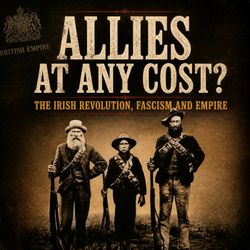
From White Settlers to Fascists: The IRA’s Troubling Allies
39:23|Irish republicans had many natural allies during the War of Independence. Irish communities in the United States offered vital support, while revolutionaries in India and Egypt were also fighting for freedom from the British Empire. But the search for allies also led Irish republicans into far more complicated territory.Across the British Empire, they courted support not from colonised peoples, but from European settlers and their descendants in Australia, New Zealand, Canada and South Africa, many of them with Irish roots. In Europe, they looked to the Vatican, despite the Catholic Church’s long-standing suspicion of republicanism and revolution. Most controversially, Irish republicans also sought contact with Benito Mussolini, who was on his way to becoming Europe’s first fascist dictatorIn this final episode of Brothers in Pain, Dr Brian Hanley explores the uncomfortable history of Irish republican alliances abroad. From South Africa to the Papacy and fascist Italy, this episode asks why Irish revolutionaries sought support in such unlikely places, what they gained, and what these choices reveal about the Irish Revolution, empire and the wider world after the First World War.This is the final episode of Brothers in Pain a groundbreaking Global history of the Irish War of Independence by Dr Brian HanleyWritten, Researched & Narrated by Dr Brian Hanley.Check out Brian's publications here https://www.tcd.ie/history/staff/brian-hanley.phpProducer: Fin DwyerSound: Kate DunleaNote from Brian :In researching these episodes I have been indebted to the work of the following scholars;Anna Lively, Sam McGrath, Bruce Nelson, John Belchem, Terry Dunne, David Brundage, Niamh Coffey, Gerard Shannon, Maurice Casey, Kelly Anne Reynolds, Chris McNickle, Joe Doyle, Liz Gillis, FM Carroll, Patrick Mannion, Jimmy Yann, Niall Cullen, Pádraig Óg Ó Ruairc, Keith Jeffrey, Arthur Mitchell, John Borgonovo, Kate O’Malley, Michael Doorley, Robin Adams, Kevin Kenny, Fearghal McGarry, Catherine M. Burns, Síobhra Aiken, Patrick J. Mahony, Darragh Gannon, Matthew Pratt Guterl and James R. Barrett.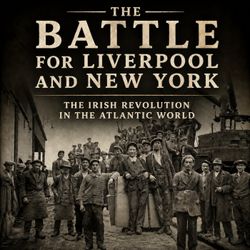
The Battle for Liverpool and New York: The Irish Revolution in the Atlantic World
39:00|Liverpool and New York haunt the story of Irish independence in a way few other places do. Though separated by more than 5,000 kilometres of ocean, both ports were part of a wider Atlantic world in which Ireland occupied a central place.By the 1920s Liverpool and New York were among the most Irish cities on the planet. Both had been transformed by generations of Irish migration and in both cities Irish politics shaped everyday life.During the War of Independence, these communities became crucial to the republican movement. Money, weapons, propaganda and people moved through the ports, while IRA networks operated on both sides of the Atlantic. But this was not simply a story of support for Irish independence. In Liverpool and New York, Irish politics were fiercely contested.Supporters of the Republic organised, fundraised and agitated, while opponents of independence also made their voices heard. Anti-Irish politics, loyalism, class tensions and divisions within the diaspora all shaped how the conflict was understood abroad.In this episode of Brothers in Pain, Dr Brian Hanley explores the role of Liverpool and New York in the Irish War of Independence, revealing how two great port cities helped shape the revolution, and how Ireland’s struggle in turn reshaped politics across the Atlantic world.This is the second last episode of Brothers in Pain a groundbreaking Global history of the Irish War of Independence by Dr Brian HanleyWritten, Researched & Narrated by Dr Brian Hanley. Check out Brian's publications here https://www.tcd.ie/history/staff/brian-hanley.phpProducer: Fin DwyerSound: Kate DunleaNote from Brian :In researching these episodes I have been indebted to the work of the following scholars;Anna Lively, Sam McGrath, Bruce Nelson, John Belchem, Terry Dunne, David Brundage, Niamh Coffey, Gerard Shannon, Maurice Casey, Kelly Anne Reynolds, Chris McNickle, Joe Doyle, Liz Gillis, FM Carroll, Patrick Mannion, Jimmy Yann, Niall Cullen, Pádraig Óg Ó Ruairc, Keith Jeffrey, Arthur Mitchell, John Borgonovo, Kate O’Malley, Michael Doorley, Robin Adams, Kevin Kenny, Fearghal McGarry, Catherine M. Burns, Síobhra Aiken, Patrick J. Mahony, Darragh Gannon, Matthew Pratt Guterl and James R. Barrett.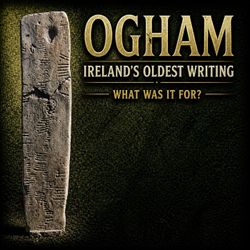
Ogham: The Mystery of Ireland’s Oldest Writing
36:31|Ogham is Ireland’s oldest known writing system, dating back more than 1,500 years. If you have ever seen strange lines carved along the edge of an old stone, you may have been looking at ogham.But what did those marks mean? Who carved them? Were they gravestones, boundary markers, family claims to lands or something else entirely?In this episode, I speak with ogham expert Dr Nora White about how this ancient writing system worked, where it came from and what it reveals about early Ireland. These short inscriptions preserve some of the earliest evidence of the Irish language, along with names, ancestors, territories and hints of a society changing through migration, Christianity and contact with Britain and the wider world.Ogham may look simple, but it opens a window onto one of the most fascinating and mysterious periods in Irish history.Support the show www.patreon.com/irishpodcastDr Nora White is a postdoctoral researcher in the Department of Early Irish at Maynooth University. Sheis currently leading a Research Ireland-funded project: Early Medieval Irish Scripts on Stone(EMISoS). She previously worked on the Ogham in 3D project at the Dublin Institute for AdvancedStudies and subsequently (2021-2025) on the joint Maynooth University and University of GlasgowOG(H)AM project (https://ogham.glasgow.ac.uk/).Digital corpus (in progress) of ogham in Ireland and Britain: https://ogham.celt.dias.ie/listSound by Kate Dunlea
Taking the War to England: The IRA in Britain
33:57|'We are doing this because you are doing it in Ireland'.These were the words of an IRA volunteer in Manchester explaining attacks in Britain during the Irish War of Independence.During the conflict, Britain and particularly England became a major battlefield. Britain was not only geographically close to Ireland, it was also home to large Irish communities in many major cities. Between 1919 and 1922, the IRA made sustained efforts to bring the conflict across the Irish Sea, carrying out hundreds of attacks, most of them in England.This forgotten front of the war included major attacks on the Liverpool docks, the targeting of Black and Tans in Britain and several high-profile incidents, most notably the killing of the British field marshal Sir Henry Wilson.The war also consumed and divided British politics in a way few other issues did until Brexit nearly a century later. Political parties, trade unions and communities were split over what should happen in Ireland, while massive and sometimes violent demonstrations swept across Britain.In this episode of Brothers in Pain, a global history of the Irish Revolution, Dr Brian Hanley explores the IRA’s campaign in Britain and how the wider question of Irish independence dominated British politics at the time.This is the eight episode in the Brothers in Pain Series a groundbreaking Global history of the Irish War of Independence by Dr Brian HanleyWritten, Researched & Narrated by Dr Brian Hanley. Check out Brian's publications here https://www.tcd.ie/history/staff/brian-hanley.phpProducer: Fin DwyerSound: Kate DunleaNote from Brian :In researching these episodes I have been indebted to the work of the following scholars;Anna Lively, Sam McGrath, Bruce Nelson, John Belchem, Terry Dunne, David Brundage, Niamh Coffey, Gerard Shannon, Maurice Casey, Kelly Anne Reynolds, Chris McNickle, Joe Doyle, Liz Gillis, FM Carroll, Patrick Mannion, Jimmy Yann, Niall Cullen, Pádraig Óg Ó Ruairc, Keith Jeffrey, Arthur Mitchell, John Borgonovo, Kate O’Malley, Michael Doorley, Robin Adams, Kevin Kenny, Fearghal McGarry, Catherine M. Burns, Síobhra Aiken, Patrick J. Mahony, Darragh Gannon, Matthew Pratt Guterl and James R. Barrett.
A Conspiracy of Fear & Silence: The Maamtrasna Murders
01:00:09|In August 1882, a brutal mass murder in a remote valley in the west of Ireland shocked the world. At Maamtrasna, a family, the Joyces, were attacked in their home. The victims ranged from a teenage girl to an 80-year-old woman. The police quickly suspected that the killers had been neighbours and even relatives of the Joyce family. However, a motive was elusive. As wider Irish society was shocked by the killings, injustice was followed by injustice.Indeed, the trials would soon overshadow the crime itself, unfolding into one of the most infamous miscarriages of justice in the legal history of Ireland or the UK. In this episode, Margaret Kelleher joins me to explore this intriguing case. We dig into the dark events that unfolded in Maamtrasna in the summer of 1882 and examine why an innocent man, Myles Joyce, was sent to the gallows after a trial conducted entirely in English, a language he could neither speak nor understand.The episode reveals what we know happened in Maamtrasna on that fateful night and how perjury and a rush to convict rather than find genuine justice lay at the heart of this intriguing case. This is the story of how a brutal murder in an isolated mountain community ended up having massive political implications, leaving a legacy that continues to reverberate today.Support the show: Patreon.com/irishpodcastMargaret's book The Maamtrasna Murders: Language, Life and Death in Nineteenth-Century Ireland is available here https://www.ucdpress.ie/page/detail/the-maamtrasna-murders/?k=9781910820421My guest is Margaret Kelleher, Professor and Chair of Anglo-Irish Literature and Drama at University College Dublin (research profile: https://people.ucd.ie/margaret.o.kelleher). She is a board member of the Museum of Literature Ireland (https://moli.ie/) and a member of the Royal Irish Academy. Her latest book, Mary and Padraic Colum: Lives and the Dream, is forthcoming from UCD Press in the Autumn of this year. Her monograph Maamtrasna Murders: Language, Life and Death in Nineteenth-Century Ireland (UCD Press, 2018) was awarded the Michael J. Durkan Prize for Books in Language and Culture by the American Conference for Irish Studies in 2019, and in 2020 was shortlisted for the Michel Déon Prize. She was Cullman Center Fellow at New York Public Library from 2022-2023 and Parnell Fellow in Irish Studies at Magdalene College, Cambridge from 2023-2024. Sound by Kate Dunlea
Daily Life in the Middle Ages: Worse Than You Think [Listener Favourite]
38:49|A recent hospital visit means there is no new episode this week, but it reminded me of this classic from early 2024! Tune in to find out more How difficult was life in the Middle Ages? This is something archaeologists and historians have debated for decades. In recent years, new techniques, including genetic analysis, have given us new insights into the lives of our distant ancestors in the Medieval Era. Their findings are unsettling. Life in the Middle Ages was far more difficult than we imagine.My guest in this episode is Prof. Eileen Murphy from Queen's University Belfast. Eileen has recently published groundbreaking research on daily life in early medieval Ireland, based on her analysis of human remains excavated in Co. Roscommon. In this podcast, she answers all your questions on what life was like.Eileen shares her discoveries on how people survived in a hard and difficult world. It's not for the faint of heart.This episode is not suitable for children.Our interview is based on the book "The Forgotten Cemetery: Excavations at Ranelagh, Co. Roscommon," available for free at https://www.tii.ie/technical-services/archaeology/publications/tii-heritage/.Eileen is the deputy head of the School of Built & Natural Heritage at Queen's University Belfast: https://www.qub.ac.uk/schools/NBE/.Sound by Kate Dunlea
Dublin Port Has Seen It All: 1,200 Years of History.
45:49|Dublin is famous for its Georgian squares, medieval cathedral, castle and revolutionary history. But the cornerstone of Dublin's history is undoubtedly the port.Nearly 1,200 years ago, the Vikings established a settlement on the banks of the Liffey, and from that moment, Dublin's fate was tied to the sea. The port became the gateway where Ireland met the wider world. Ships carried goods, armies, ideas and people in and out of the city, connecting Dublin to Britain, Scandinavia, the Mediterranean and the far reaches of empire.But Dublin Port's history is far more than commerce. It witnessed slavery and trade, military occupation and revolution, famine and emigration, labour struggles and war. It was also shaped by a centuries-long battle against nature itself. Sandbanks, silting and storms forced generations of engineers to reshape the coastline with quays, docks, lighthouses and massive sea walls, creating one of Ireland's most remarkable engineering achievements.In this episode, recorded on the Great South Wall, I speak with historian Lar Joye, Heritage Director at Dublin Port, to explore the extraordinary 1,200-year history of Dublin Port. From Viking traders and Norman conquerors to famine emigrants and dock workers this is the story of a place that has witnessed every major turning point in Irish history.Sound by Kate Dunlea.My guest Lar Joye has served as Port Heritage Director at Dublin Port since 2017, where he cares for the 300-year-old Port Archive and leads projects that reconnect the working port with the city through heritage, culture and public access. Before joining Dublin Port, he worked as a film archivist and as Curator of Irish Military History at the National Museum of Ireland, where he led the team behind the award-winning "Soldiers and Chiefs" exhibition on the Irish soldier at home and abroad from 1550 to the present.He is a well-known lecturer and media contributor on topics ranging from the history of Dublin Port and its dockers to Irish soldiers in the British Army and the First World War, and he played a significant role in the Decade of Commemorations between 2012 and 2018. At Dublin Port he has initiated projects such as the Dublin Port Memory and Story oral history project and the development of new walking routes and cultural spaces, illustrating how archives, place and community stories can be brought together for contemporary audiences.Programme of Events for 2026 Events - Dublin PortBus tours of the port: Behind the Scenes Tours are Open - Dublin PortDistributed Museum - Dublin Port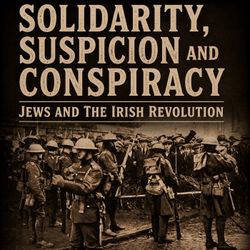
Solidarity, Suspicion and Conspiracy: Jews and the Irish Revolution
28:36|As the Irish Revolution broke out, Europe was gripped by political upheaval, fear of revolution, and rising antisemitism. In conservative and right-wing circles, the so-called “Jewish Question” loomed large. Claims that Jews were secretly fomenting revolution across the world became increasingly common, feeding conspiracy theories that shaped how many people interpreted events from Russia to Ireland.In this episode of Brothers in Pain, Dr Brian Hanley explores how these ideas influenced perceptions of the Irish Revolution. Leading British figures repeatedly claimed that Jews were secretly behind unrest in Ireland, reflecting the wider antisemitic beliefs circulating in British and European politics at the time.But the story was far more complex than conspiracy and prejudice. Jewish communities in Ireland and across the world responded to the Irish Revolution in different ways. Some Jewish figures, including Michael Noyek and Robert Briscoe, became prominent Irish republicans. Others were more cautious, concerned by political instability, violence, and antisemitism within parts of Irish nationalist politics.Brian also examines the uncomfortable reality that some leading Irish nationalist figures, including John Devoy and Arthur Griffith expressed antisemitic views. The result was a complicated history, shaped by solidarity, suspicion and racism.This is the seventh episode in the Brothers in Pain Series a groundbreaking Global history of the Irish War of Independence by Dr Brian HanleyWritten, Researched & Narrated by Dr Brian Hanley. Check out Brian's publications here https://www.tcd.ie/history/staff/brian-hanley.phpProducer: Fin DwyerSound: Kate DunleaNote from Brian :In researching these episodes I have been indebted to the work of the following scholars;Anna Lively, Sam McGrath, Bruce Nelson, John Belchem, Terry Dunne, David Brundage, Niamh Coffey, Gerard Shannon, Maurice Casey, Kelly Anne Reynolds, Chris McNickle, Joe Doyle, Liz Gillis, FM Carroll, Patrick Mannion, Jimmy Yann, Niall Cullen, Pádraig Óg Ó Ruairc, Keith Jeffrey, Arthur Mitchell, John Borgonovo, Kate O’Malley, Michael Doorley, Robin Adams, Kevin Kenny, Fearghal McGarry, Catherine M. Burns, Síobhra Aiken, Patrick J. Mahony, Darragh Gannon, Matthew Pratt Guterl and James R. Barrett.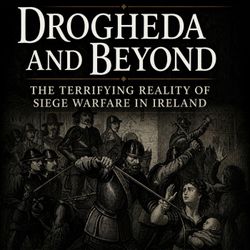
Drogheda & Beyond: The Terrifying Reality of Siege Warfare in Ireland
44:19|Between 1641 and 1653, Ireland was engulfed by devastating war. It was a period of extraordinary violence, famine and social collapse. The death toll was staggering. As many as 25% of the population may have perished.At the heart of this conflict was siege warfare. Across Ireland, towns, castles, forts and fortified houses came under attack. Some were taken by storm, while others were blockaded until starvation and disease did their work. Defenders faced cannon fire, tunnelling, psychological warfare and the terrifying prospect of what might happen if the walls were breached. Meanwhile, thousands of civilians had no escape and suffered appallingly. In this episode, I’m joined by historian Padraig Lenihan to explore the brutal reality of siege warfare in 17th-century Ireland. We look at why these conflicts were so destructive, how sieges were fought, and why warfare in Ireland was often more violent than in Britain during the same period. We also examine the infamous massacre at Drogheda, placing it in the wider context of the wars in Ireland and Britain, and asking whether it was exceptional or part of a broader pattern of violence.You can get Padraig’s book, Siege Warfare in Ireland, 1641-1653 which offers a fascinating insight into one of the darkest periods in Irish history: https://www.fourcourtspress.ie/books/2025/siege-in-ireland-1641-53Sound: Kate DunleaRequest: My guest on the last episode, James Doherty, is looking for photographs of Irish Army soldiers in Kilkenny Castle during the Emergency. If you have any information, please get in touch at info@irishhistorypodcast.ie