Share
Invst Guru
Rice Waste to Plastic-Free Packaging: Bas Bale of Ecologic Circle
Every year across Southeast Asia, rice farmers burn roughly 200 million tons of leftover straw. Not because they want to, but because a single match is cheaper than the equipment needed to till it under. The smoke fills the air for weeks, the fires scorch the soil into dependence on chemical inputs, and the farmers doing the burning are often deep in debt. A recent study found that more than half of Thai farmers will never pay off what they owe.
Bas Bale looked at that waste stream and saw a supply chain.
In this episode, Bas, co-founder of Ecologic Circle, walks through how his company turns rice straw into sustainable food packaging, and why the business only works because of a farmer base almost nobody can replicate. His co-founder, Arvin, runs the largest organic Jasmine rice supply operation in the world, with roughly 2,000 farmers and 25 agronomists. Those relationships took years to build. They are also, Bas argues, the real moat, because the molding technology itself is not rocket science.
The result is a first: certified organic packaging. Bas explains how they convinced the certifiers that if one twentieth of the rice plant qualifies as organic, the other nineteen twentieths should too. That certification lets Ecologic Circle command a 20 to 25 percent premium and sell a complete story to organic food brands, a market north of 300 billion dollars growing at 10 to 15 percent a year.
We also get into the parts most founder interviews skip. What the money is actually for. Bas is raising 500,000 dollars for a pilot molding plant, two units producing about 300 tons a year, with the molds already in development and the machinery already identified. Behind that sits a 5 million dollar round targeted within two years to reach 30 tons of raw material per day, scaling to 60 and then 120.
And the risks. The EU rewrites its packaging regulations in 2027, which means adapting the technology and financing that adaptation on someone else's timeline. US tariffs could shift overnight. Sugar cane fiber competitors already have economies of scale and could drop prices. The voluntary carbon credit market has crashed.
WHAT YOU WILL LEARN
How a circular business model creates four revenue streams from one waste input: pulp, molded packaging, organic fertilizer, and biochar
Why government plastic bans and burning fines keep failing, and what actually changes farmer behavior
How to build trust with 2,000 smallholder farmers when contract farming has a reputation for broken promises across Asia and Africa
Why the paper industry is dirtier than most people assume
How plastic phase-outs in Thailand and France are opening a market window right now
Where the defensible advantage lives when your core technology can be copied
CHAPTERS
00:38 Who is Bas Bale and what is Ecologic Circle
01:33 Rice waste to packaging, explained simply
02:29 2,000 organic farmers and Thailand's farm debt crisis
04:02 From Africa to Thailand: Bas's background
05:03 Finding the circular value in a waste stream
07:11 How you get farmers to trust you and adopt
09:45 Why farmers burn: seasons, roots, and a single match
11:24 Government bans, fines, and why enforcement fails
13:21 The three products: pulp, packaging, fertilizer
15:01 Biochar, byproducts, and multiple income streams
15:59 Plastic phase-outs in Thailand and France
17:49 Molding tech, coatings, PFAS, and meat trays
18:28 First in the world: certified organic packaging
20:20 The 500K raise and what it actually funds
23:07 Next phase: 30 tons a day and a 5M round
23:45 The biggest threats: EU 2027, tariffs, and scale players
26:14 Where the moat really is
27:42 Carbon credits and the voluntary market crash
29:19 The ten year vision: 200 tons a day
LINKS
Ecologic Circle: https://ecologic-circle.com
All episodes: https://preipohype.com/podcasts
YouTube: https://www.youtube.com/channel/UCsLUZkyDl5m-EhOWyWEUiaw
Pre-IPO Hype is hosted by Jeff "Fuzzy" Wenzel. Founders raising capital, building real things, and solving problems worth solving.
More episodes
View all episodes
146. One Ingredient, 1,003 Stores, Zero Outside Money | Jackson Jones, Farm to Pet
32:30||Season 1, Ep. 146Most food brands grow by adding. Jackson Jones grew by taking things out.He was working at Berkshire Hathaway, sitting between Duracell and the Marmon Group, when a friend got him thinking about dog treats. So he carried a KitchenAid down to his basement, ground up some chicken breast, dehydrated it, and handed the result to his dog Rooney. No fillers, no preservatives, no cans. One ingredient.About six years later, Farm to Pet is a single-ingredient dog and cat treat manufacturer, stocked in 1,003 retail stores, operating from one consolidated Chicago facility, fully bootstrapped, and profitable in 2026.The product logic holds up. One pound of chicken breast shrinks to about a third of a pound, and what survives is protein density and crunch. The same formula applies to chicken, turkey, beef, and wild-caught Lake Erie walleye, which means a two-year shelf life and no reformulation. It also means that when a dog reacts, you know exactly which ingredient did it. That is why the sensitive-stomach crowd sticks around and why the subscriptions work.Jackson is candid about the parts founders usually skip. Farm to Pet was production-constrained for the better part of a year: seven days of production, six night shifts, maxed out on floor space and the building's electrical capacity. He could not chase new stores, because he could not make more. Four locations so far, five if you count the basement.Building on one ingredient also concentrates the risk. Bird flu pushed chicken and turkey up. Beef is still brutal. He chose to eat the margin rather than raise prices on subscribers, and he explains why.He runs independent retail, Amazon, and direct-to-consumer subscription at once, with no distributors by design. Instagram and the direct brand did the outbound work: retailers found him. That is how a company reaches a thousand doors without a wholesale team.And he is raising on StartEngine right now. Reg CF, first time through, after deciding he did not want to raise at all. He walks through why crowdfunding beat a strategic check, why bankers look at two years of tax returns and pass, and why he wants customers on the cap table instead of a professional investor base.The metric he says to follow: lifetime value, currently $130 and climbing, driven by subscriptions rather than one-time ad clicks.CONNECTFarm to Pet: https://farmtopettreats.com Invest on StartEngine: https://www.startengine.com/offering/farmtopet Instagram: https://www.instagram.com/farmtopetDisclaimer: For informational and educational purposes only. This is not investment, legal, or tax advice, and it is not an offer to sell or a solicitation to buy any security. Any Reg CF offering may only be made through the company's official Form C and offering page filed with the SEC on a registered funding portal. Review those materials, including all risk factors, before investing. Early stage investing is illiquid and carries a high risk of total loss. All metrics, projections and figures discussed are the speaker's own numbers and are not guarantees of future results. Past performance does not indicate future results.
145. Green, Gray or Red: A Traffic Light for the Stock Market | Sean Tepper, Tykr
25:26||Season 1, Ep. 145Most people open a brokerage account and then freeze. Every blog and analyst says something different, and the default move is to guess or hand your money to someone else.Sean Tepper lived that. He started investing around 2010, made some money, lost some money, and hit the pause button in 2015 before it got expensive. Then he went looking for what Warren Buffett and Charlie Munger were actually doing, and concluded they were not picking stocks on feel. They were starting with math.So he built the math into a spreadsheet, tested it privately for five years rather than five weeks, and turned it into Tykr: a platform that rates stocks like a traffic light. Green means on sale, gray means watch, red means overpriced. Duolingo style lessons sit underneath it, because the goal is not to hand someone a signal, it is to make them an investor who does not need one.And he is raising. About $600K in on roughly a $1.3M target, running on WeFunder, funded largely by the same retail investors who already pay for the product. He walks through why he chose angels over VCs, why he intends to keep 100 percent control, and the Kohler and Costco story behind his plan to reach a million subscribers.TIMESTAMPS00:00 Intro: the red light00:25 The 90 second pitch: Tykr, 13,000 customers, 50 countries01:16 Origin story: 20 years in tech and the 2015 pause button02:17 Phil Town, Buffett and Munger, and the math behind value investing02:43 Five years of testing before writing a single line of code03:13 Motley Fool, Seeking Alpha, Simply Wall St and a thin field03:41 A year to build, live in 202004:09 Bring customers into the build early (lessons from GE and Kohler)04:58 Broker connections and the point of activation06:10 Why not be a wealth manager or a broker? Choosing the wide moat07:06 Only five or six reliable analytics platforms exist worldwide08:16 The biggest surprise after 1,000 customer calls: it was never returns09:04 Confidence is the product, education is the delivery09:59 Where ChatGPT, Claude and TikTok gurus actually fit10:28 Open source calculations and the guy who quit trying to rebuild them11:19 The one thing AI cannot do: sync your broker (Benzinga, Nov 2025)12:29 Protecting IP: $10,000 with a patent firm and why he walked away13:26 Hiring a second firm to audit for the publisher exclusion14:48 Why WeFunder: the partner who said "your customers will invest in you"15:44 Use of funds and the three SaaS metrics that make every dollar work16:57 The customer: 18 to 65, 70/30 male to female, 50 percent US18:38 Sports betting, prediction markets, and why he sees them as a feeder20:01 Fundraising status: $600K raised, $1.3M target, cash flow positive next20:59 The Kohler playbook: $15 million of product through Costco in one day21:40 Affiliates as the growth engine, and the road to 1 million subscribers22:13 Bootstrapper to fundraiser: how the founder role has to change22:52 Angels over VCs, keeping 100 percent control, and smart money24:26 What keeps him up at night, and the six week breaking point25:22 Hiring an affiliate agency and getting work off his plate26:14 Where to start: tykr.com, 30 day free trial, $15 a month or $99 a yearCONNECTTykr, 30 day free trial: https://tykr.com Invest in Tykr on WeFunder: https://wefunder.com/tykrDisclaimer: For informational and educational purposes only. This is not investment, legal, or tax advice, and it is not an offer to sell or a solicitation to buy any security. Any Reg CF offering may only be made through the company's official Form C and offering page filed with the SEC on a registered funding portal. Review those materials, including all risk factors, before investing. Early stage investing is illiquid and carries a high risk of total loss. All returns, metrics, projections and valuation figures discussed are the speaker's own numbers or illustrative examples and are not guarantees of future results. Past performance does not indicate future results.
143. The Gatorade for Your Eyes: An Optometrist Builds a Drink for Screen Time | Dr. Roger Wu, The Eye Drink
24:28||Season 1, Ep. 143Every eye doctor in America tells patients to take AREDS2 vitamins for their eyes. Dr. Roger Wu tracked how many of his own patients actually did it and found the number was under 10 percent. Meanwhile, the same people were drinking Gatorade, energy drinks, and probiotic sodas without being asked twice.So he built the vitamin into a beverage instead.Dr. Wu is an optometrist with two practices in Southern California and the founder of 20/20, maker of The Eye Drink, a ready-to-drink functional beverage formulated for eye health and aimed at anyone spending two or more hours a day on a screen. So, everyone.He walks Jeff through the entire build. The formulation labs that told him copper, zinc, and omega-3 could never taste like anything, several of which wanted $50,000 up front just to attempt it. The co-packers who refused to run oil-based ingredients through their equipment. The fight with his lab over sugar that started at zero, ran through about 30 prototypes, and settled at 5 grams of pure cane. And the study he ran inside his own practice, measuring macular pigment in 72 patients at baseline and again at 90 days, then re-running the whole thing because the improvement looked too good the first time.The business side is just as candid. He launched at the biggest eye care conference in the country in September 2025, then pivoted in February out of the optometry channel and into retail after beverage industry people told him the doctor route would take years. Samples are now with Sprouts and Bristol Farms, an Amazon reseller came inbound, and he is raising a bridge round: a Reg CF on Mr. Crowd and a Reg D for accredited investors ahead of a Series A, with most of it going to marketing.The last stretch is the part that will stay with you. A seven-year-old with dry eye. Presbyopia showing up in people's early thirties instead of their mid-forties. What he calls a coming tsunami of eye problems, and why he thinks nobody outside the industry sees it yet.TIMESTAMPS00:00 Intro 00:27 Meet Dr. Roger Wu 01:04 What The Eye Drink is 02:30 A 10-year-old idea 03:22 The AREDS2 compliance problem 04:19 Cold calling formulation labs 04:50 "They thought I was crazy" 05:17 The sugar fight 06:56 Finding a co packer 07:28 Launching in Vegas 07:55 The pivot to retail 08:24 Sprouts and Bristol Farms 08:53 "The Gatorade for the eyes" 09:10 Calling the FDA himself 10:54 Creating a 12th category 11:28 Gamers, creators, programmers 12:02 Electrolytes and hydration 12:47 Winning Southern California first 13:57 Why shipping dictates strategy 14:35 The Reg CF and the Reg D 14:55 Where the money goes 16:02 Will optometrists stock it? 16:47 Inside the 72-patient study 17:26 Drink versus pill 17:39 The subscription model 18:45 How much to drink 19:18 The day trader on five monitors 20:00 36-month shelf life 20:34 $535K from angel investors 21:10 Dry eye and macular damage 21:50 A 7-year-old with dry eye 23:15 Speaking at NASA 23:50 Presbyopia at 30 24:10 "A tsunami is coming" 24:36 Where to buy and how to investCONNECTThe Eye Drink, buy or subscribe: https://theeyedrink.com Reg CF investment: Mr. Crowd, https://www.mrcrowd.com Reg D and accredited investors: Sean Ellis, Moody CapitalDisclaimer: For informational purposes only. This is not an offer to sell or a solicitation to buy any security. Any Reg CF offering may only be made through the company's official Form C and offering page filed with the SEC on a registered funding portal, and any Reg D offering only through its official documents to eligible investors. Review those materials, including all risk factors, before investing. Early stage investing is illiquid and carries a high risk of total loss. Product statements reflect the speaker's own experience and observations, have not been evaluated by the FDA, and this product is not intended to diagnose, treat, cure, or prevent any disease. Nothing here is medical, investment, legal, or tax advice.
142. The Uneven Coin Flip
35:16||Season 1, Ep. 142Twenty years ago, if you had pitched a national massage chain, everyone would have laughed. There is now one on every corner, and the people who invested early made a fortune. Frank Muller believes luxury men's grooming is that exact trade today.Frank spent 40 years in capital markets: investment management at Morgan Stanley, running capital markets at an international real estate company, then chief strategy officer at a family office. Now he is CEO of Hammer & Nails Texas and founder of Summit View Texas, a private equity platform built so passive investors can own a portfolio of shops instead of buying themselves a job.Frank walks through the framework he uses on every deal, which he calls the "uneven coin flip." It starts with a shift in consumer spending big enough to clear three standard deviations, so you know it is a real secular trend and not a fad. Then he looks for a total absence of national competition, a position at the affluent end of the market, and a labor inefficiency he can exploit the way Chick-fil-A and In-N-Out did in fast food.He also gets into the mechanics most investors never hear. Why franchisors collecting royalties on gross revenue are structurally misaligned with franchisees who care about EBITDA. Why a single shop throwing off $200,000 might trade at an 8x while a portfolio doing $5 million trades at a 12x. How a membership model with waiting lists, tiers, and four staff relationships per member creates recurring revenue that institutional buyers pay up for. And why the triangle of Austin, Houston, and Dallas contains the entire national economy, letting him diversify employment risk the way you would build a mortgage-backed portfolio.TIMESTAMPS00:00 Intro 00:27 Meet Frank Muller 01:07 Wall Street to men's grooming 01:55 The "uneven coin flip" 03:09 No national luxury player 04:06 The Massage Envy lesson 05:03 Sell Mercedes, not IKEA 05:28 The Chick-fil-A labor playbook 08:36 Franchisor vs. franchisee 09:43 Buy a fund, not a job 10:51 The multiplier effect 12:18 PE comes for franchises 13:15 The 100-shop milestone 14:36 The three-year outlook 15:33 Secret shoppers 19:55 "Remasculation" 21:25 A private member club 23:29 Waiting lists 25:12 Membership tiers 26:12 Site selection 29:21 Why landlords call 30:52 Why Texas 32:55 Wall Street moves south 35:01 How to reach Frank 37:43 Closing thoughtsCONNECT WITH FRANKFrank Muller: frank.muller@hntexas.com Investor Relations: investor.relations@hntexas.comDisclaimer: For informational purposes only. This is not an offer to sell or a solicitation to buy any security. Any investment may only be made through the official offering documents, which you should review in full, including all risk factors. Private investments are illiquid, carry substantial risk including total loss of capital, and may be limited to accredited investors. All figures and projections discussed are the speaker's own estimates and are not guarantees of future results. Nothing here is investment, legal, or tax advice.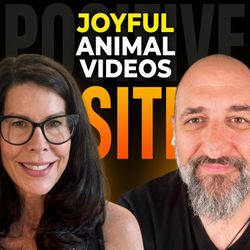
141. Give Joy, Get Joy: How Fureelz Is Building the TikTok for Animal Lovers — with Ashley Quincey
21:50||Season 1, Ep. 141What if your social feed had zero politics, zero toxicity, and 100% joyful animal videos? That's exactly what Ashley Quincey, CEO and founder of Fureelz, is building. In this episode, Ashley shares how a mix of dinner-party conversations about social media's dark side and her own habit of sending animal memes to friends sparked the idea for a short-form video platform dedicated entirely to animals — with charitable giving built right in.Since launching its MVP in April, Fureelz has been featured in Forbes, scaled to 81 countries, and partnered with PetSmart Charities and Best Friends Animal Society so users can donate directly in the app — with 100% of donations currently going straight to the charities. Now Fureelz has opened a regulated crowdfunding (Reg CF) round so its community of animal lovers can own a piece of the platform they're helping build.Episode Highlights🐾 The origin story — how social media toxicity and animal memes led Ashley to build Fureelz✅ Safety-first moderation — AI screens every video before it posts, not after🤖 AI-generated content policy — why authenticity matters and AI videos must be labeled💝 Fureelz Giving — in-app donations to PetSmart Charities and Best Friends Animal Society, with 100% passing through to charities💰 The business model — advertising, brand challenges, sponsorships, live shopping, marketplace, and in-app purchases📈 A $644B opportunity — the massive and growing global pet economy🎯 Building lean — why customer advisory boards beat building every feature👥 Creators & "Packs" — dedicated creator communities and Facebook-group-style packs coming soon🚀 Why Reg CF — democratizing investment so the community can join the journey, accredited or notLinksDownload the app (iOS & Android) and learn more: Fureelz.com (F-U-R-E-E-L-Z)Interested in investing? Click the Invest tab at Fureelz.comRegulation CF Disclaimer: Fureelz is conducting a Regulation Crowdfunding (Reg CF) offering under Section 4(a)(6) of the Securities Act of 1933. This podcast episode is for informational purposes only and does not constitute an offer to sell or a solicitation of an offer to buy any securities. Any offer of securities is made solely through the offering materials available on the registered funding portal hosting the offering, which investors should review carefully — including the Form C filed with the U.S. Securities and Exchange Commission (SEC) — before investing. Investing in early-stage companies involves significant risk, including illiquidity, lack of dividends, and the possible loss of your entire investment. Past performance is not indicative of future results, and no statements in this episode should be interpreted as investment, legal, or tax advice. Forward-looking statements reflect current expectations and are subject to risks and uncertainties that could cause actual results to differ materially.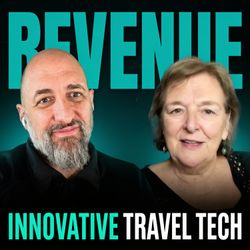
140. The $7M Moat: Chickie Fitzgerald on Why AI Can't Crack Travel Tech
28:04||Season 1, Ep. 140Every company sells to people who travel — but almost none of them sell travel. That gap is where revenue quietly leaks out, and it's what Chickie Fitzgerald built Solutionz to capture.Host Jeff sits down with Chickie — on her 13th startup — to unpack how Solutionz plugs into the systems people already use (CRMs, calendars, event platforms, even healthcare and winery sites), so when a user is inspired to book a hotel or trip, they never leave to do it. One integration, multiplied across thousands of clients and travelers.Chickie breaks down the "do you want fries with that?" adjacency model, why the business works like an ATM (you make money when the product is used, not when it's plugged in), and how ~$7M invested and 40 years of expertise create a moat rivals can't replicate. She makes the contrarian case that AI can't master her industry — and that the founder is not the best salesperson.She also opens up about funding: $622K from friends and family, a $1.2M Reg CF crowdfunding raise, a planned $5M round, and an impact model that donates 10%–50% of gross revenue to each client's charity of choice. Her thesis: companies that give more make more.Highlights(01:48) The revenue leak nobody sees(02:48) Three verticals: CRM, event tech, and a hidden one in healthcare(04:27) How one webinar pulled in Verizon, Oracle, IBM & HP execs(05:30) Building a $7M, 40-year moat(07:00) Why AI can't win: it can find a hotel, but can't book it(11:50) The ATM principle and upside-down SaaS revenue share(13:01) The McDonald's "fries with that" lesson(16:30) Debunking the founder-as-salesperson myth(17:36) Slicing Pie equity and why every exec is a cash investor(19:42) The Reg CF reality: SEC hoops, audit costs, $1.2M then $5M(26:21) "Giving is like gravity" — the impact model(28:45) Where to start: Solutionz.com/investors and the Smart SnapshotLinksSolutionz: https://www.solutionz.comInvestor page: https://www.solutionz.com/investorsYouTube: https://youtu.be/a5SsgniM7G8DisclaimerThis podcast is for informational purposes only and is not an offer to sell or solicitation to buy securities. Any Reg CF offering may only be made through Solutionz's official Form C and offering page filed with the SEC and hosted on a registered funding portal — read those materials, including all risk factors, before investing. Early-stage investing carries a high risk of total loss and is highly illiquid. Projections, margins, and forward-looking statements reflect the speaker's assumptions and are not guarantees of future results. Nothing here is investment, legal, or tax advice; consult your own advisers before investing.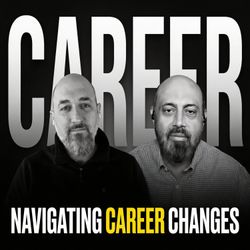
139. From Corporate Servant to Startup Founder: Dr. Deepak Bhootra on Sales Coaching, Career Resilience & Raising on Wefunder
37:20||Season 1, Ep. 139What happens when a 34-year corporate veteran watches his sons repeat the same workplace struggles he faced decades earlier — and decides to build the solution? That's exactly where Dr. Deepak Bhootra found himself, and Rise Up At Work was born.In this episode of Invst Guru, Jeff "Fuzzy" Wenzel sits down with Dr. Deepak to unpack the broken employer-employee contract, why 35% of salespeople leave the sales function by age 35, and how his push-pull coaching framework helps workers make smarter career decisions — instead of reactive ones.Dr. Deepak also gets candid about the equity crowdfunding raise he's running on Wefunder, why he designed his investment tiers around "do good" outcomes, and what he told the first three angels who rejected him to his face.Whether you're a retail investor exploring early-stage opportunities or a professional wondering if you're leaving your job for the right reasons — this one's for you.🔑 TOPICS COVERED:Why the employer-employee contract has devolved over 30 yearsThe push-pull framework for career transition decisionsSales longevity & mental health in high-pressure rolesBuilding a coaching platform for the overlooked 21–29 age groupAI's impact on sales professionals and career developmentHow Dr. Deepak is raising on Wefunder and what investors should knowThe "do good" thesis behind Rise Up At Work📈 INVEST IN RISE UP AT WORK: https://wefunder.com/riseupatwork🔗 CONNECT WITH DR. DEEPAK: LinkedIn: linkedin.com/in/deepakbhootra🎙️ MORE EPISODES: invst.guru/This episode is for informational purposes only and does not constitute investment advice. Equity crowdfunding investments involve risk, including the possible loss of capital. Please review all offering materials carefully before investing.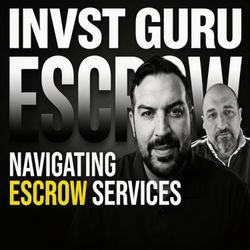
138. The Part of Your Capital Raise Nobody Talks About
21:19||Season 1, Ep. 138Most founders focus on the pitch deck, the platform, and the marketing — but there's a critical piece of the capital raise puzzle they often overlook: escrow. Jeff "Fuzzy" Wenzel sits down with Ernesto Maldonado, SVP & Head of the Escrow and Legal Vertical at Enterprise Bank and Trust, to pull back the curtain on the infrastructure that keeps capital raises protected, compliant, and clean.Ernesto has 23 years of banking experience — 10 of them deep in the specialty escrow space — and he's seen it all: smooth raises, failed raises, and everything in between. If you're a founder raising capital through Reg CF, Reg A+, or a private placement, this episode is essential listening.In this episode:00:00 – High-stakes podcasting & Ernesto's background in banking02:40 – Common threads after 23 years across community banks and big institutions03:10 – Lessons from the Irvine Chamber of Commerce & ground-level entrepreneurship04:12 – What most people don't know about third-party escrow services05:15 – When to bring in an escrow agent (hint: earlier than you think)07:01 – Where business owners trip up most during capital raises08:06 – Reg CF vs. Reg D vs. Reg A+: what's changing and what's surging09:03 – Interest rates, credit conditions, and their impact on capital formation11:00 – Which sectors are hot right now (and which are feeling the pressure)12:11 – Why some raises fail at the finish line — and how a good banker helps13:41 – Building trust with first-time capital raisers14:30 – Every industry Enterprise Bank works with (some surprises in here)16:29 – The biggest financial blind spots in small and mid-sized businesses17:29 – How to prepare for an M&A acquisition 3–5 years out18:43 – How AI and fintech are reshaping the banking and escrow world19:53 – Community banks vs. regional banks vs. big nationals: who wins?21:25 – One piece of financial advice every small business owner needs to hear🔗 Connect with Ernesto Maldonado:Website: https://www.enterprisebank.com/business/legal-professionalsLinkedIn: https://www.linkedin.com/in/ernesto-maldonado-1003283b/🎙️ Subscribe to Invst Guru:Spotify | Apple Podcasts | https://invst.guru📩 Stay in the loop: https://invst-guru.beehiiv.com#equitycrowdfunding #CapitalRaising #RegCF #Escrow #StartupFunding #SmallBusiness #EscrowServices #EnterpriseBankAndTrust #InvstGuru #Fintech #MergersAndAcquisitions #StartupInvesting #FuzzyWenzel