Share
Invst Guru
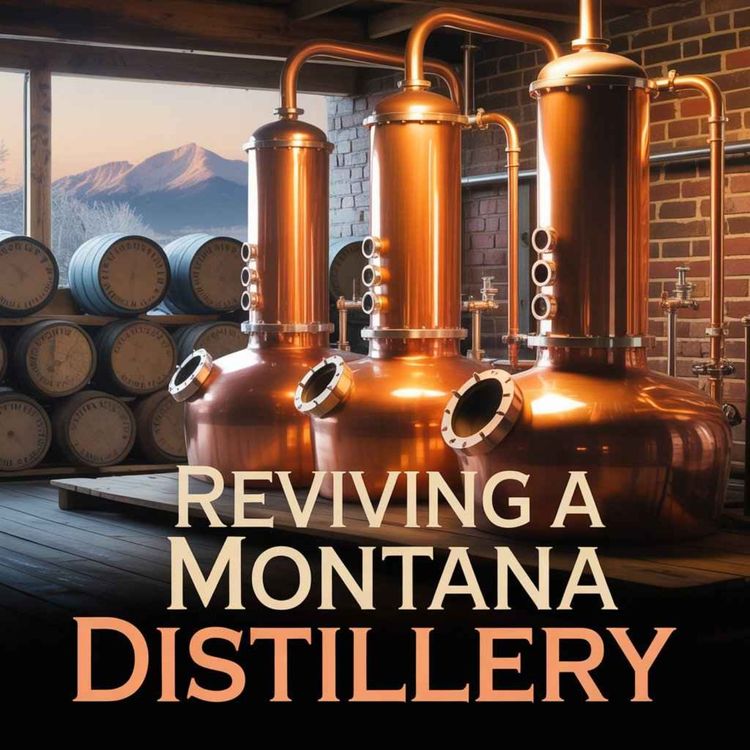
From Real Estate to Rum: Reviving a Montana Distillery
Buying a distressed property is one thing. Buying a distressed distillery is something else entirely.
In this episode of Invst Guru, host Jeff “Fuzzy” Wenzel sits down with Justin Meccia, owner of Hidden Lake Grill & Distillery, to discuss how he acquired one of Montana’s oldest distilleries and is now rebuilding it from the ground up.
Justin shares how he purchased the assets of Whitefish Handcrafted Spirits, inherited award-winning recipes like the orange clove infused rum, and is transitioning the company into a house-of-brands strategy designed to scale beyond Montana. He explains the challenges of operating in a control state, navigating alcohol regulations, and expanding distribution across state lines while maintaining quality and production standards.
The conversation also covers:
• The realities of owning and operating a micro-distillery.
• Why rebranding matters for national distribution?
• Montana’s unique alcohol laws and regulatory hurdles.
• Managing seasonality in a tourist-driven market.
• The opportunity in zero-proof and alcohol-free alternatives.
• Expanding with a food truck and satellite location strategy.
• How crowdfunding supports small business growth?
• What retail investors should consider in hospitality and spirits?
This episode is for founders, operators, hospitality professionals, and investors interested in craft spirits, small business turnarounds, and brand expansion.
More episodes
View all episodes
134. Navigating Federal Policy Chaos in Clean Energy ft. Steve Chan, Enterprise Energy
28:38||Season 1, Ep. 134What does it take to build a clean energy company when federal policy feels like a moving target? Steve Chan, COO and co-founder of Enterprise Energy, has a front-row seat to that chaos — and a surprisingly clear-eyed plan for navigating it.In this episode, Steve walks Jeff "Fuzzy" Wenzel through the full lifecycle of community solar and battery storage development: how they identify and lease land from farmers, navigate local permitting with utilities and county authorities, and manage 20 active projects across different stages of development — all with a 7-person team.Steve shares the origin story behind Enterprise Energy — built by three co-founders who cut their teeth at New Energy Equity before spinning out to run their own shop in the Minnesota and Illinois markets they know cold. He breaks down the mechanics of the developer "flip" model versus building and holding, why the Climatize crowdfunding platform became a key tool for smoothing out lumpy development cash flow, and what the One Big Beautiful Bill actually did (and didn't do) to their business model.Then he gets candid: federal policy chaos is the thing that keeps him up at night. But he also explains why Enterprise Energy is positioned in a rare "sweet spot" — the 1–5MW community-scale DG market where the Investment Tax Credit is still intact through 2029 — and why Illinois' newly passed Clean and Reliable Grid Act is creating a real opening for battery storage developers right now.Enterprise Energy is actively raising funds for their Batteries for Chicagoland portfolio on Climatize, offering 10% annual interest over a 3-year term. The campaign has a $440,900 goal and a $550,750 maximum raise.👉 Learn more and invest: https://web.climatize.earth/project/00041 🌐 enterpriseenergy.com 🎙️ Full episode and show notes: https://invst.guru/
132. Floating Luxury: How Arkhaus Is Turning Waterways Into the World's Next Great Resorts
32:16||Season 1, Ep. 132What happens when a former investment banker looks at Miami's waterfront and decides the real opportunity isn't on land — it's on the water? You get Arkhaus, one of the most visually stunning and conceptually bold startups in the hospitality space today.Sam Payrovi, co-founder and CEO of Arkhaus, joins Jeff "Fuzzy" Wenzel on Invst Guru to walk through the full story — from a rooftop social club in Miami's Faena District, to acquiring a solar-electric yacht builder, to designing a global network of overwater villa resorts with Pininfarina and Lyman-Morse.These aren't houseboats. They're 2,200 square foot self-lifting platforms — part luxury villa, part electric yacht — that elevate out of the water, connect modularly, and can be deployed anywhere from Biscayne Bay to the Maldives to Monaco for a Formula One hospitality build.In this episode, Sam and Jeff dig into:— What a "villa yacht" actually is and why the category is just getting started — How EV battery technology unlocked the electric boating revolution — The double-dip business model: margin on every boat sold, recurring revenue on every resort night — Why the resort model is dramatically more scalable than the social club model — Regulatory nuances that actually make recreational vessels easier to deploy fast — Expansion markets: Miami, the Florida Keys, Dubai, Singapore, Mykonos, Bali, and beyond — The moment their boat builder went under — and why Sam chose to acquire instead of quit — A live Wefunder raise at a $25M valuation and what milestones will trigger the next institutional roundSam is the kind of founder who fights until his feet are in concrete. This conversation will make you see every coastline, bay, and lake a little differently.🎯 Invest in Arkhaus → wefunder.com/arkhausInvst Guru is hosted by Jeff "Fuzzy" Wenzel. New episodes feature founders and executives raising capital through equity crowdfunding on platforms like Wefunder, Netcapital, StartEngine, and more. Not financial advice. Equity crowdfunding investments carry risk.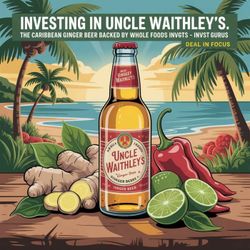
128. Investing in Uncle Waithley's: The Caribbean Ginger Beer Backed by Whole Foods
52:33||Season 1, Ep. 128Welcome back to the podcast! Today, we are taking a deep dive into Uncle Waithley's Beverage Company, a brand that is elevating the adult non-alcoholic beverage market with authentic Caribbean flavors and artisanal craftsmanship.As the beverage industry sees a massive shift toward "sober-curious" and alcohol-alternative lifestyles, Uncle Waithley's is filling the gap for a complex, culturally authentic drink. Founded by Yale-educated serial entrepreneur and renowned mixologist Karl Franz Williams, the company is built on the legacy of his grandfather, a ginger farmer from St. Vincent.Their flagship product, "Vincy Brew," isn't your average mass-market soda. It’s a small-batch, fermented ginger beer crafted with a proprietary blend of Peruvian organic ginger, turmeric, lime, mineral water, and the natural heat of Scotch Bonnet peppers. This unique heat mimics the "bite" of a spirit, making it perfect as both a standalone drink and a sophisticated cocktail mixer.Key topics we cover in this episode:Massive Market Traction: How Uncle Waithley's sold over 400,000 bottles in less than four years.The Whole Foods Catalyst: Why Whole Foods Market made a rare equity investment in the brand, and how the company plans to expand into 227 Whole Foods stores by 2025.Massive Distribution Networks: Their selection for UNFI’s exclusive UpNext program, opening potential access to over 30,000 retail accounts nationwide.The Investment Opportunity: Details on their current Regulation Crowdfunding raise on Wefunder, offering a Simple Agreement for Future Equity (SAFE) with a $10.8M valuation cap to fund inventory, marketing, and key sales hires.The Bear Case: The intense competition in the consumer packaged goods (CPG) space, supply chain risks associated with sourcing specialized ingredients like Scotch Bonnet peppers, and the challenges of scaling.Are you ready to "Spice Up Your Vibe"? Tune in to hear the full breakdown of the business model, the growth projections, and the potential exit opportunities for this rising star in the craft beverage space.Disclaimer: Investments in private companies are highly speculative, illiquid, and involve a high degree of risk, including the possible loss of your entire investment. This podcast is for informational purposes only and does not constitute investment advice. Please review the company’s official Form C and Regulation Crowdfunding offering materials on Wefunder before making any investment decisions.
130. Doing Well by Doing Good: How Andrew Tyree Turned Sober Living Homes Into a Scalable Real Estate Business
20:45||Season 1, Ep. 130What if your next real estate investment didn't just cash flow — it changed lives?Jeff "Fuzzy" Wenzel sits down with Andrew Tyree, co-founder of Gracious Wellsprings, a women's sober living company based in West Los Angeles that's quietly becoming one of the most compelling impact investment stories in the recovery housing space.Andrew didn't start with a grand plan. He was a real estate agent who stumbled into a community meetup for sober living operators, found a like-minded business partner in Michael, and the two bootstrapped their way from zero to five homes — generating $6,000–$8,000 per unit in monthly cash flow — in under two years.But what really makes this story different? The outpatient programs are now calling them. Gracious Wellsprings has built such a reputation for running professional, structured, well-managed homes that recovery programs across greater LA are actively asking them to open new locations and promising to fill them with clients on day one.Now, Andrew and Michael are opening up their first outside investor round to fuel a goal of reaching 25 homes within 18 months — and the campaign launched to early commitments in its very first week.In This Episode, We Cover:Why Andrew passed on Airbnb and Section 8 before landing on sober livingThe economics of sober living: leasing model, ROI, and per-unit cash flowHow they picked West LA as their target market (spoiler: it's the #1 recovery city in the U.S.)The pivot from men's homes to an all-women's model — and why it made all the differenceWhat it's like to manage a business with deeply human, unpredictable variablesHow they went from 100% referral-dependent to building organic inbound demandWhy they voluntarily pursued state licensing and NARR certification when they didn't have toAndrew's vision: 5x growth, nonprofit status, and a new model for recovery housing nationwideWhy This Matters: Sober living is one of the most misunderstood and underserved sectors in both real estate and healthcare. Andrew and Michael are proving that when you run these homes like a real business — with systems, accountability, and genuine care — the demand is virtually limitless.If you're an investor looking for cash flow with community impact, or someone in the recovery space trying to understand how housing fits into the treatment continuum, this episode is for you.🔗 View the Gracious Wellsprings Investment Campaign: https://invest.fundinghope.com/offering/graciouswellsprings/details🌐 Company Website: graciouswellsprings.com 📧 Contact Andrew: andrew@graciouswellsprings.comThis podcast is for informational purposes only and does not constitute financial or investment advice. Please conduct your own due diligence.
131. Nobody Should Have to Live Like This
20:45||Season 1, Ep. 131When Nadia Tedeschi was working as a nursing assistant, a patient looked up at her through tears and said, "Nobody should have to live like this." That moment sent her to her garage — and eventually to the forefront of one of the most overlooked problems in modern healthcare.Nadia is the founder of Mylo Medical, a startup on a mission to replace the bedpan — a device that hasn't been reinvented in over 400 years — with a smarter, more dignified solution. The Mylo Pan features an inflatable design for patient comfort, a biodegradable drawstring bag system for infection control, and a reusable base that dramatically reduces waste. Simple. Obvious. Overdue.In this episode, Nadia and Jeff dig into the real business of building a medical device startup from scratch — the regulations, the IP strategy, the go-to-market hurdles, and the fundraising path less traveled. Nadia also opens up about what keeps her up at night, the moment a trade show attendee tried to buy a prototype held together with a shoelace, and why she believes the bedpan has gone untouched for so long simply because nobody talks about it.In this episode:Why hospital-acquired infections (HAIs) are costing the healthcare system billions — and how a better bedpan is part of the solutionThe inflatable, biodegradable design behind the Mylo Pan and its patent-pending cinch-and-seal mechanismFDA Class I registration, QMS compliance, and what the regulatory path actually looks like for a device like thisHow Nadia is targeting distributors, GPOs, and chief nursing officers to drive hospital adoptionWhy she chose equity crowdfunding over traditional medtech funding routes — and what she's building beyond just capitalThe milestones between here and full-scale commercial launchLessons from a solo founder who turned a moment of human empathy into a scalable businessMylo Medical is currently raising on Netcapital.🔗 View the campaign: https://netcapital.com/companies/mylo-medical🌐 Learn more: https://www.mylomedicalsupplies.com/If this episode resonated with you, share it with someone in healthcare, someone who invests in early-stage companies, or anyone who believes the best startups are born from the problems we're all too uncomfortable to talk about.
127. Betting Against the Cloud: Why Peer-to-Peer is the Future of Video Production
32:44||Season 1, Ep. 127What if the cloud isn't the answer?That's the bold bet Michael Cioni is making. With over 25 years in the film and television industry — and credits on blockbusters like Avatar, Gone Girl, and Pirates of the Caribbean — Michael has spent his career being the person willing to take the punches to usher in technology that Hollywood wasn't ready for. Now he's doing it again.In this episode of Invst Guru, Michael breaks down why he walked away from a career at Adobe to found Strada, a peer-to-peer file sharing platform built specifically for video professionals. The problem is deceptively simple: camera files are getting bigger, internet speeds aren't keeping up, and cloud storage costs are spiraling out of control. Strada's solution? Skip the cloud entirely — and let collaborators access your files directly from your local hard drive, anywhere in the world, in real time.We get into the origin story, the pivots, the patents, and the philosophy behind building a company completely in public. Michael also shares why the next wave of AI analytics won't live in the cloud — and why that changes everything about the cost of creative technology.In this episode, we cover:Why the cloud works great for Netflix and Instagram — but fails video professionalsHow Strada works like "Napster for professional video" with 25 years of security built inWhy right-clicking a folder on your desktop could replace Dropbox entirelyThe "build in public" approach and how user feedback is shaping Strada's 18-month roadmapWhy data privacy and cloud distrust are opening a massive new marketWhat's coming in 2027 — AI analytics that run on your own hardware, nearly for freeWhether you're a filmmaker, content creator, post-production editor, or an investor looking at where the media tech industry is heading, this conversation will change the way you think about how creative files move around the world.🌐 Learn more: strada.tech 📺 Watch Strada build in public: Search "Strada Tech" on YouTube 💼 Invest in Strada: wefunder.com/stradaInvst Guru is the podcast for investors and entrepreneurs who want to go beyond the pitch deck and get inside the minds of the founders building tomorrow's companies.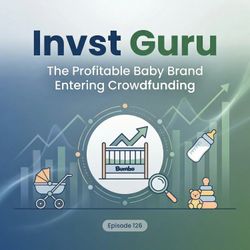
126. Bumbo: The Profitable Baby Brand Entering Crowdfunding
37:58||Season 1, Ep. 126This episode examines Bumbo Distribution USA, the company behind the well-known Bumbo Floor Seat and a growing portfolio of infant seating and safety products.Unlike many startup crowdfunding stories, Bumbo operates as an established consumer brand with national retail distribution. Products already appear in Target, Walmart, and Amazon stores across the United States.The company reported about $7.84 million in annual revenue and $738,040 in net income in its latest fiscal year. Management now focuses on margin improvement through direct-to-consumer sales and stronger Amazon partnerships while maintaining relationships with major retail chains.The discussion explores:• How Bumbo built a durable brand in the competitive juvenile products market• Why distribution through large retailers drives most revenue• The strategy behind expanding direct sales channels• Financial realities, including $4.49 million in short-term debt• The structure of the current StartEngine crowdfunding offeringListeners gain a balanced perspective on a rare profile in equity crowdfunding. A profitable consumer brand with an established retail presence now invites the public into its next growth phase.If you follow startup investing, consumer brands, or equity crowdfunding, this episode offers a grounded look at a company that is optimizing an existing business rather than building one from scratch.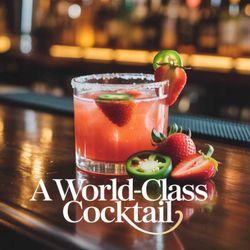
125. Bottling a World-Class Cocktail Experience
29:17||Season 1, Ep. 125Most ready-to-drink cocktails taste great on the label and disappointing in the glass.In this episode of Invst Guru, host Jeff “Fuzzy” Wenzel sits down with Larry, co-founder of World’s Best Cocktail, to talk about turning a passion sparked by Netflix’s Drink Masters into a quality-first consumer brand. After testing nearly 100 pre-made cocktails and finding most of them undrinkable, Larry partnered with a world-class mixologist to recreate the magic of a handcrafted cocktail, starting with a spicy strawberry house margarita that refuses to compromise flavor during scaling. But this isn’t just about alcohol.This conversation explores:• Why most RTD cocktails lose quality during production?• The challenge of scaling handcrafted recipes.• A “drink better, not more” philosophy.• Designing bottles that capture meaningful moments.• Building brand through experience, not excess.• Direct-to-consumer launch strategy.• Why crowdfunding can democratize early-stage investing?• What retail investors should evaluate before investing in CPG?Larry also shares why separating passion from financial analysis is critical when investing even in a product you love. This episode is ideal for founders, CPG entrepreneurs, spirits brands, and retail investors looking at the premium ready-to-drink market.