Share
Invst Guru
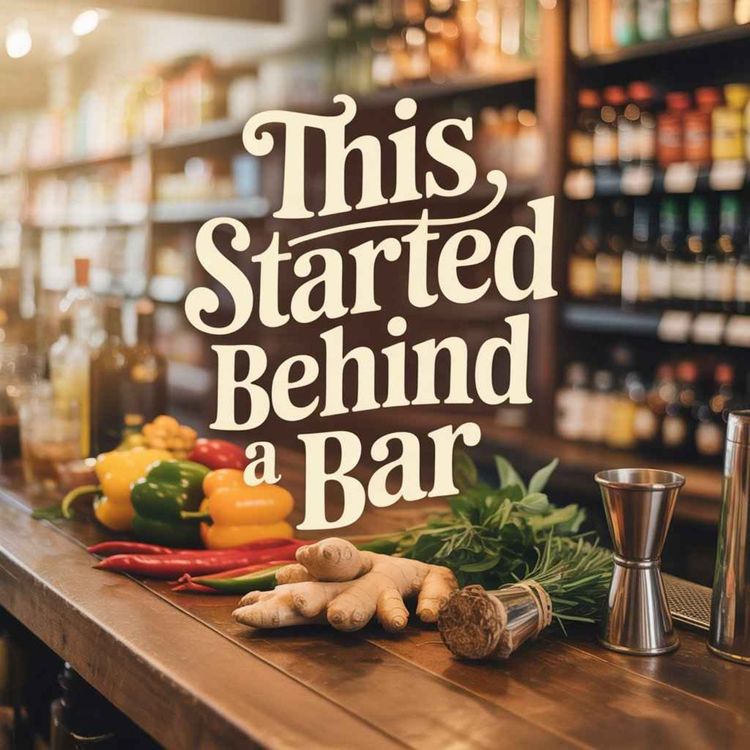
From Bar Recipe to Whole Foods: Building a Caribbean-Inspired Beverage Brand.
In this episode of Invst Guru, host Jeff “fuzzy” Wenzel sits down with Karl Franz Williams, founder and CEO of Uncle Waithley’s Beverage Company, to unpack what it really takes to build a beverage brand rooted in culture, craft, and consumer demand.
Karl shares how Uncle Waithley’s started as a house-made ginger beer behind the bar at his Caribbean rum bar and evolved into a nationally distributed adult non alcoholic beverage now carried in over 200 Whole Foods locations across the East Coast. What began as a solution to a missing mixer turned into a platform for showcasing authentic Caribbean flavors that rarely make it onto U.S. shelves.
In this conversation, we explore:
• Why the adult non alcoholic beverage category is growing so quickly?
• How Caribbean flavors like ginger, scotch bonnet, sorrel, and thyme create real differentiation?
• The role of mixology and hospitality experience in product development.
• How taste, trial, and repeat drive retail success more than hype?
• The realities of beverage manufacturing, minimums, and distribution.
• Scaling from one Whole Foods store to hundreds through velocity and reorders.
• Fundraising strategy and why growth capital matters in beverage.
• What investors should actually look for in consumer brands?
🔗 Learn More About Uncle Waithley’s Beverage Company
Visit https://unclewaithleys.com to explore the full product lineup, brand story, and where to find the beverages in stores and online.
Explore more:
https://wefunder.com/uncle.waithleys.beverage.company
This episode is for founders, operators, investors, and anyone interested in how authentic products scale in crowded consumer categories. It’s an honest look at beverage entrepreneurship, cultural storytelling, and the slow, disciplined work behind overnight success.
More episodes
View all episodes
115. Immersive Learning for Neurodiverse Kids.
24:59||Season 1, Ep. 115Learning does not look the same for every child. For many neurodiverse kids, traditional classrooms, screens, and rigid teaching methods can create frustration instead of engagement.In this episode of Invst Guru, host Jeff “Fuzzy” Wenzel speaks with Amelia Soriano from Burble Creativity about a different approach to learning. One that uses immersive storytelling, sensory-friendly design, and imagination to help neurodiverse children feel calm, focused, and included.Burble Creativity creates portable immersive environments that combine light, sound, and narrative inside a simple physical space. The goal is not to overwhelm learners, but to gently support regulation, curiosity, and retention by meeting children where they are.In this conversation, we explore:• Why traditional learning environments fail many neurodiverse kids?• How immersive storytelling supports focus and emotional regulation?• The role of light and sound in creating safe learning spaces.• Why reducing screens can actually improve engagement?• How Burble blends physical design with thoughtful technology?• The importance of trust when building products for neurodiverse families.• How the company is scaling through families, therapists, and schools?• What investors should understand about inclusive learning innovation?This episode is for parents, educators, therapists, founders, and investors who care about building learning tools that are inclusive, practical, and designed for real people.
114. Building Long-Term Value Through Strategic Ownership.
28:10||Season 1, Ep. 114In this episode of Invst Guru, host Jeff “Fuzzy” Wenzel speaks with David V. Duccini, founder of Silicon Prairie Holdings Inc, about what it really means to invest for the long term.Rather than chasing quick exits or short-term financial engineering, Silicon Prairie Holdings operates with a holding company mindset. The focus is on acquiring, operating, and growing businesses with patience, discipline, and strong leadership alignment.David shares his perspective on why long-term ownership creates stability for companies, employees, and investors, and why this approach often outperforms faster, more speculative strategies over time.In this conversation, we explore:• The difference between a holding company and traditional private equity.• Why patient capital matters more than timing the market?• What Silicon Prairie looks for when evaluating businesses?• The importance of operational leadership after acquisition.• How long-term thinking affects capital allocation decisions?• Balancing growth, cash flow, and reinvestment.• Lessons learned from managing multiple operating companies.• What investors should understand about risk, discipline, and durability?This episode is ideal for investors, founders, operators, and anyone interested in building sustainable value rather than chasing short-term returns. It offers a thoughtful, real-world view of investing built on ownership, stewardship, and long-term responsibility.
112. Turning Business Data Into Better Decisions With AI.
22:26||Season 1, Ep. 112Many organizations collect enormous amounts of data but still struggle to make confident decisions. Dashboards are everywhere, yet clarity is often missing. In this episode of Invst Guru, host Jeff “fuzzy” Wenzel speaks with Philippe Reynier, founder of Cigno, about how artificial intelligence can move beyond charts and reports to support real decision making.Cigno focuses on helping business leaders understand what their data is telling them, why certain patterns matter, and what actions make sense next. Philippe shares how his experience working with enterprise systems and complex data environments shaped his belief that AI must be explainable, trustworthy, and designed for humans, not just data scientists.In this conversation, we discuss:• Why most companies are data rich but insight poor? • The difference between analytics dashboards and decision intelligence. • How AI can support leaders without replacing human judgment? • Why trust and explainability are critical for AI adoption? • Common mistakes organizations make when rolling out AI tools. • Where AI delivers real value in finance, operations, and strategy? • How executives can use AI to move faster with more confidence?This episode is designed for business leaders, operators, data professionals, and investors who want a grounded, realistic view of how AI fits into everyday decision making.
113. What Comes After the ISS
39:30||Season 1, Ep. 113The International Space Station is scheduled for retirement by 2030. When it goes offline, access to a government operated microgravity laboratory ends. Researchers, defense agencies, and commercial companies will need new ways to test hardware, validate materials, and operate in orbit.In this episode, we examine ABOVE Space Development Corporation, a company building modular, automated satellite platforms designed for on orbit testing and validation. We discuss how their Prometheus and Archimedes platforms are structured, why orbital infrastructure matters after the ISS, and how commercial providers fit into the evolving space ecosystem.We also walk through the business context, technical challenges, and risks involved in building and scaling space hardware. This conversation is informational and focused on understanding how companies like ABOVE approach orbital infrastructure in a post ISS environment.This episode is for educational purposes only and does not constitute investment advice. Any discussion of fundraising activity is informational. All investments must be made through official Regulation Crowdfunding offering pages on registered intermediary platforms, where full disclosures and risks are available.
110. We Could Be Heroes. Inside an Independent Film Built for the Gaming Generation
32:27||Season 1, Ep. 110This episode explores the independent film project We Could Be Heroes through the lens of Regulation Crowdfunding. The discussion focuses on the story’s origin in gaming culture, the creative vision behind the script, and the production approach centered on disciplined scope and execution.Listeners hear how the filmmaking team approaches character-driven storytelling, audience alignment, and modern distribution paths across digital platforms. The episode also addresses the realities of independent film economics, including competition for distribution, audience uncertainty, and long time horizons.This conversation is informational only. No investment terms are discussed. If the project is associated with an active Regulation Crowdfunding campaign, all investments must occur through the official offering page hosted by a registered intermediary. Prospective investors should review the Form C and complete risk disclosures before making any investment decision.
108. Ezalife and the Everyday Risks of Feeding Tube Care
21:42||Season 1, Ep. 108Feeding tube dislodgement affects families and caregivers long after hospital discharge, yet securement methods have changed little over time. In this episode, we examine Ezalife, a medical device company developing the Button Huggie, an FDA registered product designed to stabilize gastrostomy buttons in home care settings.We discuss the clinical problem Ezalife aims to address, the founder’s background in pediatric surgery, internal clinical study findings, early commercial activity, and the challenges of scaling within regulated healthcare markets. The conversation also explores reimbursement uncertainty, hospital adoption dynamics, and the realities of early stage medical device companies raising capital through Regulation Crowdfunding.This episode is for informational purposes only. It does not constitute investment advice or a solicitation to invest. If Ezalife is conducting a Regulation Crowdfunding offering, all investments must be made through its registered funding portal after reviewing the company’s official SEC filings and risk disclosures.
109. How Ezalife Is Reducing Stress and ER Visits for Children With Feeding Tubes.
26:13||Season 1, Ep. 109Caring for a child with a feeding tube is not just a medical challenge. It is an everyday emotional and logistical burden for families. Dislodged tubes, emergency room visits, interrupted sleep, and constant anxiety are part of daily life for many parents.In this episode of Invst Guru, host Jeff “fuzzy” Wenzel speaks with the team behind Ezalife, a pediatric medical device company focused on solving one very specific but deeply impactful problem. Keeping feeding tubes secure so kids can move, play, and live more normal lives.Ezalife developed a simple, FDA-exempt securement device that helps reduce accidental tube dislodgement and gives parents peace of mind at home, at school, and on the go. What started as a pediatric surgeon’s idea has grown into a company working to establish a new standard of care for children with G-tubes.In this conversation, we cover:• The real daily challenges families face when caring for children with feeding tubes. • Why small medical problems often lead to big emotional stress? • How a simple product can prevent unnecessary ER visits? • Why Ezalife chose a direct-to-consumer approach before hospital adoption? • How parent-to-parent advocacy drives growth in pediatric healthcare? • The realities of building and manufacturing a medical device. • Fundraising, crowdfunding, and the path to broader hospital and insurance adoption.This episode is for parents, caregivers, healthcare professionals, medtech founders, and investors who want to understand how thoughtful design and patient-first thinking can make a meaningful difference in real lives.
107. Building the Future of Women’s Soccer Through Purpose and Community.
22:20||Season 1, Ep. 107Women’s soccer is growing at an unprecedented pace, yet many talented athletes still fall through the cracks between youth, college, and professional play. The system rewards short-term performance but often fails to support long-term development, wellbeing, and access.In this episode of Invst Guru, host Jeff “fuzzy” Wenzel explores how TLH Reckoning is building a new model for women’s soccer that prioritizes people, community, and sustainable growth.The conversation dives into the real challenges facing women’s sports today, including limited access to capital, broken development pathways, and the lack of infrastructure in non-metro and rural regions. You’ll hear how TLH Reckoning is addressing these gaps by creating a holistic ecosystem that supports athletes on and off the field.This episode covers:⚽ Why the traditional youth-to-college-to-pro pipeline leaves many players behind? ⚽ How community-based teams can unlock access and long-term loyalty? ⚽ The importance of player care, including mental health, workload management, and advocacy. ⚽ Why women’s sports represent a powerful investment opportunity, not a charity case? ⚽ How facilities, academies, and local partnerships drive sustainable growth? ⚽ What success looks like beyond wins, losses, and headlines?This is a must-listen for anyone interested in women’s sports, impact-driven entrepreneurship, community ownership, or the future of athletic development.Whether you are an investor, founder, athlete, parent, or fan, this episode offers a grounded and thoughtful look at how women’s soccer can be built differently and built better.