Share
Invisible Not Broken - Chronic Illness Podcast Network
Explicitly Sick: An Interview With Podcast Host and Blogger Brandy Ferner About Chronic Illness Parenting, Podcast Life, and Mental Health
Website/Blog, Twitter, & Instagram Handle
Podcast website: www.adultconversationpodcast.com,
Blog: www.adultconversationparenting.com,
FB: https://www.facebook.com/AdultConversationParenting,
Twitter: https://twitter.com/adultconvo_
Instagram: https://www.instagram.com/adultconversation/
Name *
Brandy Ferner
Disorder Info
What is your disorder? *
Missing parts of my intestines, including my ileocecal valve, chronic kidney stones
At what age did your disorder become a daily issue? *
30
Who were you before your illness became debilitating? *
Carefree, spontaneous, could be out for long amounts of time, loved traveling, not anxious.
What would you do if you were not dealing with your invisible illness? *
LIVE LIKE OTHER PEOPLE. Even just the littlest things like be out all day at the beach without worrying about what my body was going to do and how I would take care of kids amidst and episode, and where was the closest bathroom. I'd just BE in the world without my body's homeostasis being a constant thought. I'd also eat whatever the hell I wanted.
What would you like people to know about your daily life? *
The amount of mental gymnastics involved with daily life. How showing up for kids constantly feels nearly impossible when you're not sure that your body will show up for you. The work that it takes to do that - to be strong and keep going and still go out and show up, even when you're terrified, in pain, etc. As a non-mother, I could bow out of anything. But as a mother, I cannot.
What would make living and moving in the world easier for you? *
My own private bathroom and napping room attached to me haha. Honestly, having kids that are old enough to be totally self sufficient. I don't want them to grow up because I know I will miss these days, but I know that when I am not caring for so many people, I will finally have enough energy to sustain my own body.
Do you have any life hacks? *
They are always changing. I will have a good couple of months and think "I have this figured out!" and then a week later I will be in crisis again and have to re-learn everything I learned before. I am honest with my kids when I feel like I cannot do something and why. I don't know if that's a life hack. I have Xanax with me at all times, but I have only taken about two in my life. But just having them with me helps to know I have a safety net if things get really bad - like a panic attack about my digestion. I have a protocol I do for kidney stones - I only go to the ER if I either have a high fever, or the pain is too excruciating. Otherwise, I take some herbal supplements that supposedly break stones, I drink tons of lemon water and I sit in the bathtub and basically have a kidney stone home birth. I had a real life home birth with my son, so I know what I'm doing hahahahaha. I also don't eat any food before taking my daughter to school. Can't trust the digestion in the morning. I only eat when I'm at home for a few hours. I also do everything weeks/months in advance so I can eject myself if I get sick, things like Christmas shopping, back to school shopping, birthday party planning. I never leave anything until the last minute in case I need to hand it off.
What kind of support do you get from family or friends? *
My husband is super supportive. He's had to be the closer on Easter baskets, Thanksgiving dinners (I had E. Coli last year). Although he is healthy as a horse, so he can never truly understand what it feels like to be in survival mode much of the time. I have a mother-in-law near-ish who will come take the kids for me. But really, the support is for the kids, not for me specifically. But still, I feel lucky to have anyone to help.
Have you ever had someone not believe you have an invisible illness because of your appearance and if so are there any examples that stand out? *
I have been petite me entire life, and I currently weigh about 98 pounds, so EVERYONE loves to comment on my body - how skinny I am, how I must not eat, what's my secret, how lucky I am. I used to just smile and whatever, but now I say, "Oh, I'm missing parts of my intestines that make it so I can't process fats and nutrients. I'm one flu away from an ER visit. Not as glamorous as it looks." People think it's okay to comment on one's body, especially when you're skinny because they don't see it as shaming, but it's really none of their business.
How has your chronic illness affected your relationships? *
I have a strong marriage, but I can't help but feel like he got swindled a little bit. When we got married, I wasn't this bad. So I imagine my husband married to some fun, healthy woman with all her internal organs, traveling and eating their way around the world. So I can't help but feel some sadness and guilt for that for him, but then I also know that it's brought us closer and made us more humble and understanding of others. In my larger family, I don't like the feeling of being the "broken one." People are always asking, "You feeling better?" and I know they are well-intended, but I also know they want a tidy "yes" answer. But they can't understand that I will never know how I'm doing. It will always be day to day.
Is there anything you are afraid to tell people in your life? *
No. I pretty much tell them everything. Something that I don't want to tell my kids is my fear that if this is how I am at age 42, what am I going to be like at 62? 82? I cannot imagine being an older person with my ailments. My margins are so narrow that if some other organ system starts to degrade, I'm screwed. That scares me and I feel like there's not way I'll make it past 70.
Does the fact that your disease is invisible change how healthcare professionals treat you? *
I have felt unseen by doctors, for sure. They mostly just think what great shape I'm in because I'm skinny. Even my GI doc, after my last colonoscopy said something like, "I wish I had your problem, Brandy." She was referring to not me not being able to process fats and therefore they try to eject themselves from my colon.
What is your best coping mechanism? *
HUMOR x100000000% Also, moaning during the pain. I was a childbirth educator for 10 years and taught people pain-coping techniques. I use all of them myself when in pain.
What are you the most concerned about and the most hopeful for in the future? *
Most concerned about not living very long because of how fragile my body feels, or living long but having it continue to feel like I'm surviving each day. Most hopeful for: cryogenic freezing so I can come back in a body with adequate intestines. Bleak, right?
Is there anything you want to make sure we talk about during the interview? Like an organization you want to promote or something specific that you deal with.
I'd love to be able to mention my podcast in some way, but other than that, no.
What is the hardest and/or best lesson your condition has taught you?
It's cured me of perfectionism. You can't do everything just so when you're just getting through the day. I have lowered my standards for life by a lot, and I think that's a good thing overall.
What is the best purchase under $100 that helped your life
One of those microwavable heat sacks.
More episodes
View all episodes
Relationship Goals, Chronic Illness Edition: Dating, Love, and Literally Writing the Book with Therapist Lisa Gray
43:45|Keywordschronic illness, relationships, conflict resolution, empathy, writing process, power imbalance, emotional management, self-help, therapy, communicationSummaryIn this conversation, Lisa Gray, a marriage and family therapist, discusses the complexities of relationships when chronic illness is involved. She shares insights on conflict resolution, the importance of empathy, and how to navigate power imbalances in relationships. Lisa also delves into her writing process, the significance of finding meaning in chronic illness, and practical tools for writing and publishing. The discussion emphasizes the need for understanding, communication, and the ability to adapt in relationships affected by chronic illness.TakeawaysConflict increases intimacy if done right.Healthy conflict means knowing your partner better.Stop fighting when you're already mad.Impulse control is key in managing conflict.Power imbalances can affect relationships with chronic illness.Empathy must go both ways in relationships.Finding meaning is crucial in the grieving process.Values can guide actions despite chronic illness.Writing can be a therapeutic process.Use tools that work for your energy levels.TitlesNavigating Relationships with Chronic IllnessThe Art of Healthy ConflictSound bites"Empathy needs to go both ways.""Intimacy is very broad.""Weighted blankets are so comforting."Chapters00:00 Introduction to Chronic Illness and Relationships02:55 Navigating Conflict in Relationships06:02 Impulse Control and Managing Emotions09:07 Power Imbalances in Relationships11:54 Empathy in Chronic Illness Relationships14:57 Core Skills for Managing Chronic Illness17:42 Finding Meaning and Values in Relationships20:55 Personal Discoveries Through Writing23:55 Building Empathy Through Curiosity24:15 Exploring Virtual Reality and Empathy25:39 Relationships and Support in Chronic Illness28:05 Intimacy and Chronic Illness30:30 The Writing Process and Tools for Writers38:58 Publishing Insights and ResourcesTranscript
Navigating the Patient Journey with Author Brenda Snow
41:00|SummaryIn this conversation, Brenda Snow shares her personal journey as a patient diagnosed with multiple sclerosis and discusses her book, 'Diagnosed: The Essential Guide to Navigating the Patient Journey.' She emphasizes the universal experience of navigating chronic illness, the importance of grief and acceptance, and the need for strong doctor-patient relationships. Brenda also highlights the significance of maintaining one's identity while caregiving and the power of storytelling in healing. The discussion concludes with advice for aspiring writers and the importance of sharing personal narratives.Chapters00:00 Introduction to Brenda Snow and Her Journey02:49 The Universal Patient Experience06:48 Navigating Grief and Acceptance12:41 The Doctor-Patient Relationship20:42 Identity and Caregiving26:12 Finding Growth in Adversity31:56 The Power of Storytelling35:40 Advice for Aspiring Writers
The Untold Risks of TMS: Jordan Hanson's Journey
01:00:05|KeywordsTMS, transcranial magnetic stimulation, brain injury, mental health, medical gaslighting, patient advocacy, chronic illness, technology in healthcare, self-care, mindfulnessSummaryIn this conversation, Jordan Hanson shares her personal journey with transcranial magnetic stimulation (TMS), a procedure intended to treat mental health issues. She discusses the initial excitement about the treatment, the subsequent negative effects she experienced, and the challenges of navigating the medical system. The conversation highlights the importance of patient advocacy, community support, and the role of technology in managing health. Jordan emphasizes the need for awareness and understanding of the risks associated with TMS and the importance of self-care and mindfulness in coping with chronic illness.TakeawaysTMS is a procedure that uses magnetic fields to stimulate brain activity.Jordan experienced significant negative effects from TMS, including brain injury symptoms.Medical gaslighting is a common issue faced by patients seeking help.Community support is crucial for those dealing with chronic illness.Technology, including AI, can assist in managing health and communication.Self-care and mindfulness are essential for coping with chronic illness.Advocacy is important to raise awareness about the risks of TMS.Family planning can be complicated by health issues and uncertainties.Understanding the impact of chronic illness on daily life is vital.The journey of healing is ongoing and requires patience and support.TitlesThe Hidden Risks of TMS: A Personal JourneyNavigating the Medical Maze: Jordan's TMS ExperienceSound bites"I was called headache girl for a year.""I want to share my story to help others.""I have to protect myself and my energy."Chapters00:00 Introduction to TMS and Jordan's Journey01:13 Understanding the Impact of TMS on Life01:28 Introduction and Background on TMS04:20 Understanding Trans-Cranial Magnetic Stimulation (TMS)07:23 The Experience of TMS Treatment10:20 The Impact of TMS on Daily Life13:09 Medical Gaslighting and Patient Advocacy16:13 The Journey to Recovery and Diagnosis19:14 Community Support and Sharing Stories22:18 The Decision to Create a Documentary25:13 Advocacy and Future Goals36:11 The Need for Scientific Understanding in TMS40:42 Coping with Chronic Illness and Disability44:52 Navigating Family Planning Amidst Uncertainty52:54 Leveraging Technology for Brain Injury Support59:42 Personal Growth Through Adversity
Epilepsy, UK Health System VS US, and How We Can Do Better: Conversation With Célestine Laurin
01:20:40|Epilepsy, UK Health System VS US, and How We Can Do Better: Conversation With Célestine LaurinSummaryIn this conversation, the speakers delve into the complexities of living with epilepsy and chronic illness, particularly focusing on the experiences of children and young adults. They discuss the challenges of diagnosis, the importance of support from family and friends, and the role of therapy in managing mental health. The conversation also touches on the stigma surrounding chronic illness, the impact of bullying, and practical advice for managing seizures and advocating for oneself in educational and social settings. Additionally, they explore how epilepsy is represented in the media and the need for better understanding and communication around the condition. This conversation delves into the complexities of living with epilepsy, particularly focusing on the challenges faced by women regarding medication and pregnancy. The speakers share personal experiences with the impact of epilepsy on their lives, careers, and the healthcare system. They discuss the stigma surrounding chronic illness, the importance of open communication with clients in business, and the differences in healthcare systems across countries. The conversation highlights the need for greater awareness and understanding of disability and chronic illness. In this conversation, the speakers discuss the challenges faced by individuals with disabilities, the impact of overprotection on children, and the need for inclusive spaces and universal design. They explore the healthcare systems in different countries, highlighting the disparities in access and affordability. The conversation emphasizes the importance of disability advocacy in health policy and the need for a more inclusive approach to legislation that considers the needs of all individuals, particularly those with chronic illnesses.Keywordsepilepsy, chronic illness, mental health, therapy, support, bullying, childhood illness, accommodations, media representation, epilepsy, medication, women’s health, chronic illness, disability, healthcare, personal stories, photography, career choices, mental health, disability, healthcare, universal design, overprotection, advocacy, inclusivity, chronic illness, education, mental health, accessibility
Raven: Paranormal Romance Writer, Sirens, Disability in the Media, and Training Service Dogs
52:33|Chapters00:00 Introduction to Romance Writing and Disability05:49 Life Changes During the Pandemic11:53 Writing Romance with Chronic Illness17:55 Representation of Disability in Romance24:35 The Viral Success of a Romance Novel31:07 Writing as a Form of Self-Discovery36:06 Navigating Writing with Disabilities49:59 The Journey of Training a Service DogSummaryIn this conversation, the speakers delve into the intersection of romance writing and disability representation, particularly focusing on the experiences of chronically ill individuals. They discuss the impact of the pandemic on their lives, the process of writing romance novels that feature disabled characters, and the importance of authentic representation in literature. The conversation also touches on the viral success of one speaker's romance novel, the emotional journey of writing, and the practical challenges of writing with disabilities. Additionally, they explore the journey of training a service dog and how it has positively influenced their lives.TakeawaysThe pandemic led to significant life changes and new diagnoses.Writing romance novels became a creative outlet during difficult times.There is a need for authentic representation of disabled characters in romance.Readers appreciate seeing themselves reflected in literature.The success of a romance novel can be validating for writers.Writing can be a form of self-discovery and healing.Navigating the writing process with disabilities requires adaptation and support.Service dogs can provide emotional and physical support for their owners.Community and connection are vital for those with chronic illnesses.The journey of self-publishing can be empowering despite challenges.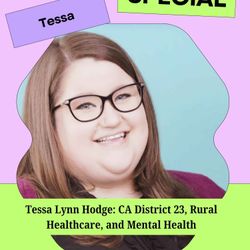
Tessa Lynn Hodge: CA District 23, Rural Healthcare, and Mental Health
53:55|SummaryIn this conversation, Tessa Lynn Hodge discusses her journey from being a licensed clinical social worker to running for office in District 23. She emphasizes the importance of community engagement, healthcare reform, and the need for authenticity in politics. Tessa shares her experiences and insights on the challenges faced by her community, particularly in rural areas, and highlights the significance of mental health accessibility and telehealth. Her campaign focuses on putting people over party and advocating for grassroots funding to ensure real change.Keywordsdisability, politics, healthcare, community, mental health, grassroots, Tessa Lynn Hodge, election, advocacy, social work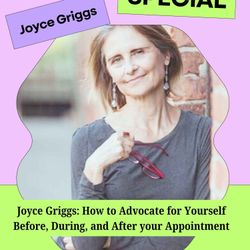
Joyce Griggs: How to Advocate for Yourself Before, During, and After your Appointment
50:25|Keywordshealth advocacy, patient empowerment, healthcare system, self-advocacy, doctor visits, healthcare resources, United States of Healthcare, patient stories, healthcare challenges, AI in healthcareSummaryIn this conversation, Joyce Griggs shares her journey into health advocacy, highlighting the challenges faced by patients in navigating the healthcare system. She discusses the importance of self-advocacy, preparing for doctor visits, and managing the dynamics between patients and healthcare providers. Joyce emphasizes the need for personalized care and the role of technology, including AI, in shaping the future of healthcare. The discussion also touches on the systemic issues within the healthcare system and the importance of community support and resources for patients.TakeawaysAdvocacy is crucial for navigating the healthcare system.Patients often face significant challenges in getting proper care.Self-advocacy is an essential skill for all patients.Preparing for doctor visits can improve outcomes.Emotional management is key before healthcare appointments.Bias exists in healthcare, affecting patient treatment.Community support can empower patients in their advocacy efforts.AI has potential benefits and risks in healthcare decision-making.Personalized care is necessary for effective treatment.Understanding insurance processes can help patients advocate for themselves.TitlesNavigating the Healthcare Maze: A Journey of AdvocacyEmpowering Patients: The Role of Self-AdvocacySound bites"We need to be our own advocates.""We are the experts of ourselves.""Personalized care is essential."Chapters00:00 Introduction to Health Advocacy02:54 Personal Journey into Healthcare Advocacy05:53 Navigating the Healthcare System08:25 Building the United States of Healthcare11:34 Resources for Health Advocacy14:23 Preparing for Doctor Visits17:07 Managing Emotions in Healthcare19:48 Interviewing Healthcare Providers22:49 Addressing Systemic Issues in Healthcare28:02 Navigating Healthcare Access Challenges30:38 Addressing Power Imbalances in Healthcare34:26 The Impact of Bias in Medical Treatment35:22 Evolving Perspectives in Medicine37:23 Utilizing Technology for Patient Advocacy42:04 Building Community and Support46:51 Envisioning a Better Healthcare System50:20 end cap.mp4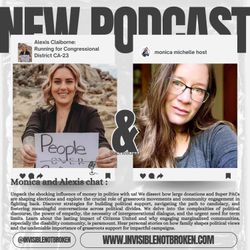
Citizens United & the Disability Vote: Reclaiming Our Democracy Witch Alexis Claiborne
01:14:51|Unpack the shocking influence of money in politics with us! We dissect how large donations and Super PACs are shaping elections and explore the crucial role of grassroots movements and community engagement in fighting back. Discover strategies for building political support, navigating the path to candidacy, and fostering meaningful conversations across political divides. We delve into the complexities of political discourse, the power of empathy, the necessity of intergenerational dialogue, and the urgent need for term limits. Learn about the lasting impact of Citizens United and why engaging marginalized communities, especially the disability community, is paramount. Hear personal stories on how family shapes political views and the undeniable importance of grassroots support for impactful campaigns.money in politics, super pacs, large donations, grassroots movements, community engagement, political campaigns, running for office, candidacy, political discourse, empathy in politics, intergenerational dialogue, term limits, citizens united, disability vote, disability community, marginalized communities, family and politics, grassroots support, election influence, campaign strategies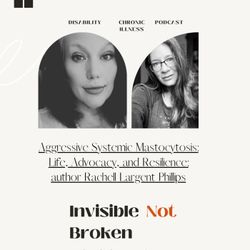
Aggressive Systemic Mastocytosis: Life, Advocacy, and Resilience: author Rachell Largent Phillips
52:48|KeywordsAggressive Systemic Mastocytosis, chronic illness, advocacy, mental health, writing, self-care, body image, healthcare activism, rare diseases, educationSummaryIn this conversation, Rachel Largent Phillips shares her journey with aggressive systemic mastocytosis, a rare disorder that significantly impacts her daily life. She discusses the challenges of living with a chronic illness, including navigating the healthcare system, advocating for herself and others, and the emotional toll of writing her book, 'Life Beyond the Flare.' Rachel emphasizes the importance of self-care, mental health, and authenticity in the face of societal pressures and the complexities of living with a rare disease. She also highlights the political nature of healthcare and the need for continued advocacy for those with chronic illnesses.TakeawaysRachel was born with aggressive systemic mastocytosis, diagnosed in her 30s.It took 12 years for her to receive a proper diagnosis.Daily life is unpredictable, requiring constant vigilance and preparedness.Advocacy is crucial; Rachel has lobbied for healthcare reforms.Writing her book was a way to educate others about her rare disease.Self-care and giving oneself grace are essential for managing chronic illness.Rest can take many forms, including mental and emotional breaks.Navigating relationships while managing a chronic illness can be challenging.Societal beauty standards can add pressure to those with chronic illnesses.Mental health is as important as physical health in chronic illness management.Sound bites"I was born with it.""I have lots of EpiPens.""It's okay to have bad days."Chapters00:00 Understanding Aggressive Systemic Mastocytosis03:31 Navigating Daily Life with a Rare Disorder07:47 Advocacy and Activism in Healthcare10:51 The Emotional Journey of Writing a Book13:48 Finding Grace in Chronic Illness16:01 Rest and Self-Care Strategies18:27 Managing Allergies and Anaphylaxis21:33 Dating and Relationships with Chronic Illness24:45 Societal Pressures and Body Image29:11 The Importance of Mental Health34:07 The Power of Authenticity37:34 Navigating the Medical System43:45 The Reality of Living with a Rare Disease49:56 Pursuing Education Amidst Health Challenges54:06 The Political Nature of Healthcare