Share

Invisible Not Broken - Chronic Illness Podcast Network
Real Romance: Carbs and Insulin Diabetes and Colitis: Parenting With Chronic Illness: Invisible Illness Serial Podcast
Disorder Info
Name *Vanessa Jean Locke
Age * 44
What is your disorder? *
Diabetes Type 1, Ulcerative Colitis, Hypo Thyroid, Vitiligo and Sjogrens (eyes)
At what age did your disorder become a daily issue? *
11
Who were you before your illness became debilitating? *
I was a carefree kid who enjoyed lemonade for fun rather than a hypo treatment. I don’t remember a lot about being without chronic illness as part of my life.
What would you do if you were not dealing with your invisible illness? *
Such an interesting question. If I didn’t have to manage the daily implications of my conditions, pursuits such as university study, full-time employment or highly demanding career options (nursing, teaching) and even enjoying social outings would be feasible. I try to focus on what I can contribute though!
What would you like people to know about your daily life? *
I minimize my pain. You will only know that I’m not feeling well or in pain when I’ve endured many hours or days of painful symptoms. I may speak curtly but I don’t mean to push you away. I feel like despite my best efforts, my body betrays me. Feelings of frustration and despair can be daily. Solitude, quality sleep and resetting my mind will help me be the Vanessa you know again.
What would make living and moving in the world easier for you? *
Beyond a cure, affordability of the continuous glucose monitoring (CGM) system would help a lot. Currently, the system is subsidized to those aged 21 and under (in Australia) but at full cost, $300-400 per month is too high to be sustainable. The system is based on a wearable sensor that can give data about blood sugar trends. Used in conjunction with normal finger prick blood testing, there is potential for added peace of mind and tighter control of blood sugar measures.
Do you have any life hacks? *
When I’m exhausted but need to go out and not look as though I’ve escaped from a morgue, dry shampoo helps me look as though I've washed my hair and B.B. cream is a desert island product—dark circles, rashy and pale to kinda of looking ‘normal’ in 2 minutes. Drinking fruit juice (orange or apple are most reliable) will help a hypo discreetly and quickly without having to shove candy in my mouth. It sounds like fun but believe me, it’s not.
What kind of support do you get from family or friends? *
Every support, emotional and physical, I get from my husband. I call him my angel on Earth. From allowing me to rest while he looks after the house or kids to talking with me in my low times...just being there with no judgment. It’s priceless to me. Outside the immediate family in my house, my expectations are low. People know I ‘have conditions’ but it’s confusing for them. Unless I am visibly sick or they have a specific question, it’s not something often talked about.
How has your invisible illness affected your relationships? *
I’m fortunate to soon be celebrating my 19 year wedding anniversary to the most incredible man who defies logic in his acceptance of me. Our marriage has gone through many ups and downs but at the core is the most thrilling unconditional love. It’s this love that gets us through my times of illness & lethargy.
Is there anything you are afraid to tell even the people closest to you? *
Big question. I’m not sure I’m ready to answer.
What is your best coping mechanism? *
My mind.
What are you the most fearful of and hopeful for in the future? *
Fearful: further autoimmunities corrupting my body. I wonder if it will be an autoimmune condition that claims my life in the end...or will I pass from old age? Hopeful: further technology to stabilize Diabetes. I am hopeful and expectant that none of my disorders have been passed to my children.
What is your favorite swear word?
SHIT!!!
Is there anything you want to make sure we talk about during the interview? Like an organization you want to promote or something specific that you deal with.
My Instagram page and Facebook page
Any questions you think we should add to this list?
What’s the hardest/best lesson your condition has taught you?
Monica's Note: We discussed chronic and clinical depression and if you have ever dealt with this you will know depression is very different from sad. If you are trying to understand clinical depression I would like to introduce you to one of my favorite webcomics Hyperbole and a Half by Allie Brosh In episode 1 and episode 2 she gave THE BEST explanations for what clinical depression feels like. We are a show that discusses medical issues we highly recommend visiting your doctor if you are experiencing symptoms.
Did you enjoy this episode? Subscribe and never miss a thing!Sign up with your email address to receive news and updates.
First Name Last Name Email Address Sign UpWe respect your privacy.
Thank you!
.
More episodes
View all episodes
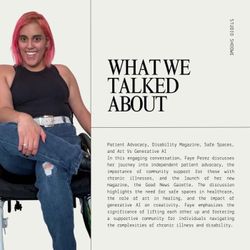
Faye: Patient Advocacy, Disability Magazine, Safe Spaces, and Art Vs Generative AI
36:55|Faye: Patient Advocacy, Disability Magazine, Safe Spaces, and Art Vs Generative AIPatient Power & Joy: Affordable Advocacy, Safe Spaces & Why Community Beats AI Art | FayeYouTube Description (Long-Form SEO & Social Media Ready)Are you tired of navigating the broken healthcare system alone? 💔In this uplifting and essential episode, we reconnect with the incredible Faye to dive deep into Independent Patient Advocacy. This conversation is your guide to feeling heard and supported in your health journey, combining practical advocacy tips with empowering discussions on community and creativity.What We Cover & Why You Need to Listen:02:49 - Patient Power: Understanding the crucial Role of Independent Patient Advocacy and how it can literally change your health outcomes.05:57 - Healthcare Hacks: Practical strategies for Navigating the Healthcare System and avoiding medical gaslighting.11:46 - Affordable Support: Learn about The Butterfly Guild and how they are providing vital, affordable advocacy services for chronic illness patients.14:34 - Positive Vibes: Discover The Good News Gazette—a source of light and hope in the often-dark world of chronic illness. ✨22:26 - Art vs. AI: A fascinating discussion on the Importance of Real Art Over AI and the unique value of human creativity in the disability space. 🎨27:42 - Find Your Tribe: The undeniable Value of Community in the chronic illness journey and how we can build Supportive Community for All.This episode is a must-listen for chronic illness patients, caregivers, advocates, and anyone interested in healthcare reform and the powerful impact of human connection.LISTEN NOW! 👇independent patient advocacy, affordable advocacy services, butterfly guild, navigating the healthcare system, patient safe spaces, medical gaslighting, chronic illness community, chronic illness support, disability advocacy, healthcare reform, joy and community, art vs ai, human creativity, aging and authenticity, universal income for artists, chronic illness podcast, patient empowerment, good news gazette, Faye, health advocacy tips, systemic healthcare issues.#PatientAdvocacy #ChronicIllnessWarrior #SpoonieLife #AffordableAdvocacy #HealthcareHacks #MedicalGaslighting #CommunitySupport #ArtVsAI #DisabilityCommunity #HealthPodcast #FindYourTribe #SupportSmallBusiness #ChronicLife #JoyThroughArt #HealthTech #ButterflyGuild #PatientPower 💪🦋🧠💻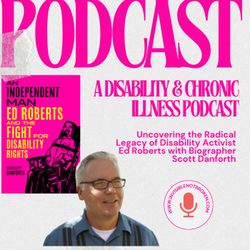
Uncovering the Radical Legacy of Disability Activist Ed Roberts with Biographer Scot Danforth
50:59|Uncovering the Radical Legacy of Disability Activist Ed Roberts with Biographer Scott DanforthKeywordsEd Roberts, disability rights, activism, biography, independence, community, technology, publishing, women in activism, accessibilityTakeawaysEd Roberts was a pivotal figure in the disability rights movement.His activism began at UC Berkeley with the Rolling Quads.The fight for disability rights is ongoing and requires constant vigilance.Family dynamics play a crucial role in fostering independence for disabled individuals.Community building is essential for effective activism.Technology can greatly enhance accessibility for disabled individuals.The Center for Independent Living was a groundbreaking initiative for disability rights.Women played a significant but often overlooked role in the disability rights movement.Writing a biography involves difficult choices about what to include or exclude.The publishing process can be challenging, especially for underrepresented stories.SummaryThis conversation explores the life and legacy of Ed Roberts, a pivotal figure in the disability rights movement. Scott Danforth, the author of a biography on Roberts, discusses the challenges and triumphs of advocating for disability rights, the importance of community and independence, and the role of technology in enhancing accessibility. The conversation also touches on the often-overlooked contributions of women in the movement and the complexities of writing a biography. Danforth shares insights from his research and the publishing process, emphasizing the need for continued advocacy and the importance of storytelling in the fight for disability rights.TitlesUnveiling Ed Roberts: A Disability Rights PioneerThe Legacy of Ed Roberts and Disability ActivismSound bites"This is not a very well-known man.""He had polio as a teenager.""He loved the technology."Chapters00:00 Introduction to Ed Roberts and His Legacy02:13 The Fight for Disability Rights09:07 Independence and Family Dynamics14:53 Building Community and Activism21:28 Technological Advancements and Accessibility26:57 Revitalizing the Center for Independent Living27:24 The Legacy of Ed Roberts and Disability Activism28:23 Unveiling the Myths of Disability Leadership30:49 The Unsung Heroes of the Disability Rights Movement31:54 Chronic Illness and the Overlooked Voices33:30 The Joys and Challenges of Writing a Biography35:21 The Process of Research and Writing36:17 Editing and Storytelling in Biography38:44 Navigating the Publishing Landscape41:25 The Journey into Disability Studies43:58 Dreams vs. Reality in Disability Advocacy46:46 The Importance of Community and Creativity48:23 Joy as Resistance in Activism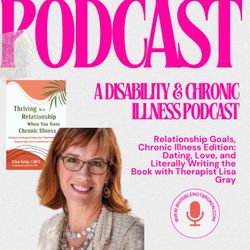
Relationship Goals, Chronic Illness Edition: Dating, Love, and Literally Writing the Book with Therapist Lisa Gray
43:45|Keywordschronic illness, relationships, conflict resolution, empathy, writing process, power imbalance, emotional management, self-help, therapy, communicationSummaryIn this conversation, Lisa Gray, a marriage and family therapist, discusses the complexities of relationships when chronic illness is involved. She shares insights on conflict resolution, the importance of empathy, and how to navigate power imbalances in relationships. Lisa also delves into her writing process, the significance of finding meaning in chronic illness, and practical tools for writing and publishing. The discussion emphasizes the need for understanding, communication, and the ability to adapt in relationships affected by chronic illness.TakeawaysConflict increases intimacy if done right.Healthy conflict means knowing your partner better.Stop fighting when you're already mad.Impulse control is key in managing conflict.Power imbalances can affect relationships with chronic illness.Empathy must go both ways in relationships.Finding meaning is crucial in the grieving process.Values can guide actions despite chronic illness.Writing can be a therapeutic process.Use tools that work for your energy levels.TitlesNavigating Relationships with Chronic IllnessThe Art of Healthy ConflictSound bites"Empathy needs to go both ways.""Intimacy is very broad.""Weighted blankets are so comforting."Chapters00:00 Introduction to Chronic Illness and Relationships02:55 Navigating Conflict in Relationships06:02 Impulse Control and Managing Emotions09:07 Power Imbalances in Relationships11:54 Empathy in Chronic Illness Relationships14:57 Core Skills for Managing Chronic Illness17:42 Finding Meaning and Values in Relationships20:55 Personal Discoveries Through Writing23:55 Building Empathy Through Curiosity24:15 Exploring Virtual Reality and Empathy25:39 Relationships and Support in Chronic Illness28:05 Intimacy and Chronic Illness30:30 The Writing Process and Tools for Writers38:58 Publishing Insights and ResourcesTranscript
Navigating the Patient Journey with Author Brenda Snow
41:00|SummaryIn this conversation, Brenda Snow shares her personal journey as a patient diagnosed with multiple sclerosis and discusses her book, 'Diagnosed: The Essential Guide to Navigating the Patient Journey.' She emphasizes the universal experience of navigating chronic illness, the importance of grief and acceptance, and the need for strong doctor-patient relationships. Brenda also highlights the significance of maintaining one's identity while caregiving and the power of storytelling in healing. The discussion concludes with advice for aspiring writers and the importance of sharing personal narratives.Chapters00:00 Introduction to Brenda Snow and Her Journey02:49 The Universal Patient Experience06:48 Navigating Grief and Acceptance12:41 The Doctor-Patient Relationship20:42 Identity and Caregiving26:12 Finding Growth in Adversity31:56 The Power of Storytelling35:40 Advice for Aspiring Writers
The Untold Risks of TMS: Jordan Hanson's Journey
01:00:05|KeywordsTMS, transcranial magnetic stimulation, brain injury, mental health, medical gaslighting, patient advocacy, chronic illness, technology in healthcare, self-care, mindfulnessSummaryIn this conversation, Jordan Hanson shares her personal journey with transcranial magnetic stimulation (TMS), a procedure intended to treat mental health issues. She discusses the initial excitement about the treatment, the subsequent negative effects she experienced, and the challenges of navigating the medical system. The conversation highlights the importance of patient advocacy, community support, and the role of technology in managing health. Jordan emphasizes the need for awareness and understanding of the risks associated with TMS and the importance of self-care and mindfulness in coping with chronic illness.TakeawaysTMS is a procedure that uses magnetic fields to stimulate brain activity.Jordan experienced significant negative effects from TMS, including brain injury symptoms.Medical gaslighting is a common issue faced by patients seeking help.Community support is crucial for those dealing with chronic illness.Technology, including AI, can assist in managing health and communication.Self-care and mindfulness are essential for coping with chronic illness.Advocacy is important to raise awareness about the risks of TMS.Family planning can be complicated by health issues and uncertainties.Understanding the impact of chronic illness on daily life is vital.The journey of healing is ongoing and requires patience and support.TitlesThe Hidden Risks of TMS: A Personal JourneyNavigating the Medical Maze: Jordan's TMS ExperienceSound bites"I was called headache girl for a year.""I want to share my story to help others.""I have to protect myself and my energy."Chapters00:00 Introduction to TMS and Jordan's Journey01:13 Understanding the Impact of TMS on Life01:28 Introduction and Background on TMS04:20 Understanding Trans-Cranial Magnetic Stimulation (TMS)07:23 The Experience of TMS Treatment10:20 The Impact of TMS on Daily Life13:09 Medical Gaslighting and Patient Advocacy16:13 The Journey to Recovery and Diagnosis19:14 Community Support and Sharing Stories22:18 The Decision to Create a Documentary25:13 Advocacy and Future Goals36:11 The Need for Scientific Understanding in TMS40:42 Coping with Chronic Illness and Disability44:52 Navigating Family Planning Amidst Uncertainty52:54 Leveraging Technology for Brain Injury Support59:42 Personal Growth Through Adversity
Epilepsy, UK Health System VS US, and How We Can Do Better: Conversation With Célestine Laurin
01:20:40|Epilepsy, UK Health System VS US, and How We Can Do Better: Conversation With Célestine LaurinSummaryIn this conversation, the speakers delve into the complexities of living with epilepsy and chronic illness, particularly focusing on the experiences of children and young adults. They discuss the challenges of diagnosis, the importance of support from family and friends, and the role of therapy in managing mental health. The conversation also touches on the stigma surrounding chronic illness, the impact of bullying, and practical advice for managing seizures and advocating for oneself in educational and social settings. Additionally, they explore how epilepsy is represented in the media and the need for better understanding and communication around the condition. This conversation delves into the complexities of living with epilepsy, particularly focusing on the challenges faced by women regarding medication and pregnancy. The speakers share personal experiences with the impact of epilepsy on their lives, careers, and the healthcare system. They discuss the stigma surrounding chronic illness, the importance of open communication with clients in business, and the differences in healthcare systems across countries. The conversation highlights the need for greater awareness and understanding of disability and chronic illness. In this conversation, the speakers discuss the challenges faced by individuals with disabilities, the impact of overprotection on children, and the need for inclusive spaces and universal design. They explore the healthcare systems in different countries, highlighting the disparities in access and affordability. The conversation emphasizes the importance of disability advocacy in health policy and the need for a more inclusive approach to legislation that considers the needs of all individuals, particularly those with chronic illnesses.Keywordsepilepsy, chronic illness, mental health, therapy, support, bullying, childhood illness, accommodations, media representation, epilepsy, medication, women’s health, chronic illness, disability, healthcare, personal stories, photography, career choices, mental health, disability, healthcare, universal design, overprotection, advocacy, inclusivity, chronic illness, education, mental health, accessibility
Raven: Paranormal Romance Writer, Sirens, Disability in the Media, and Training Service Dogs
52:33|Chapters00:00 Introduction to Romance Writing and Disability05:49 Life Changes During the Pandemic11:53 Writing Romance with Chronic Illness17:55 Representation of Disability in Romance24:35 The Viral Success of a Romance Novel31:07 Writing as a Form of Self-Discovery36:06 Navigating Writing with Disabilities49:59 The Journey of Training a Service DogSummaryIn this conversation, the speakers delve into the intersection of romance writing and disability representation, particularly focusing on the experiences of chronically ill individuals. They discuss the impact of the pandemic on their lives, the process of writing romance novels that feature disabled characters, and the importance of authentic representation in literature. The conversation also touches on the viral success of one speaker's romance novel, the emotional journey of writing, and the practical challenges of writing with disabilities. Additionally, they explore the journey of training a service dog and how it has positively influenced their lives.TakeawaysThe pandemic led to significant life changes and new diagnoses.Writing romance novels became a creative outlet during difficult times.There is a need for authentic representation of disabled characters in romance.Readers appreciate seeing themselves reflected in literature.The success of a romance novel can be validating for writers.Writing can be a form of self-discovery and healing.Navigating the writing process with disabilities requires adaptation and support.Service dogs can provide emotional and physical support for their owners.Community and connection are vital for those with chronic illnesses.The journey of self-publishing can be empowering despite challenges.
Tessa Lynn Hodge: CA District 23, Rural Healthcare, and Mental Health
53:55|SummaryIn this conversation, Tessa Lynn Hodge discusses her journey from being a licensed clinical social worker to running for office in District 23. She emphasizes the importance of community engagement, healthcare reform, and the need for authenticity in politics. Tessa shares her experiences and insights on the challenges faced by her community, particularly in rural areas, and highlights the significance of mental health accessibility and telehealth. Her campaign focuses on putting people over party and advocating for grassroots funding to ensure real change.Keywordsdisability, politics, healthcare, community, mental health, grassroots, Tessa Lynn Hodge, election, advocacy, social work
Joyce Griggs: How to Advocate for Yourself Before, During, and After your Appointment
50:25|Keywordshealth advocacy, patient empowerment, healthcare system, self-advocacy, doctor visits, healthcare resources, United States of Healthcare, patient stories, healthcare challenges, AI in healthcareSummaryIn this conversation, Joyce Griggs shares her journey into health advocacy, highlighting the challenges faced by patients in navigating the healthcare system. She discusses the importance of self-advocacy, preparing for doctor visits, and managing the dynamics between patients and healthcare providers. Joyce emphasizes the need for personalized care and the role of technology, including AI, in shaping the future of healthcare. The discussion also touches on the systemic issues within the healthcare system and the importance of community support and resources for patients.TakeawaysAdvocacy is crucial for navigating the healthcare system.Patients often face significant challenges in getting proper care.Self-advocacy is an essential skill for all patients.Preparing for doctor visits can improve outcomes.Emotional management is key before healthcare appointments.Bias exists in healthcare, affecting patient treatment.Community support can empower patients in their advocacy efforts.AI has potential benefits and risks in healthcare decision-making.Personalized care is necessary for effective treatment.Understanding insurance processes can help patients advocate for themselves.TitlesNavigating the Healthcare Maze: A Journey of AdvocacyEmpowering Patients: The Role of Self-AdvocacySound bites"We need to be our own advocates.""We are the experts of ourselves.""Personalized care is essential."Chapters00:00 Introduction to Health Advocacy02:54 Personal Journey into Healthcare Advocacy05:53 Navigating the Healthcare System08:25 Building the United States of Healthcare11:34 Resources for Health Advocacy14:23 Preparing for Doctor Visits17:07 Managing Emotions in Healthcare19:48 Interviewing Healthcare Providers22:49 Addressing Systemic Issues in Healthcare28:02 Navigating Healthcare Access Challenges30:38 Addressing Power Imbalances in Healthcare34:26 The Impact of Bias in Medical Treatment35:22 Evolving Perspectives in Medicine37:23 Utilizing Technology for Patient Advocacy42:04 Building Community and Support46:51 Envisioning a Better Healthcare System50:20 end cap.mp4