Share
Invest in Progress
Affirm: Why Shoppers are Walking Away from Credit Cards
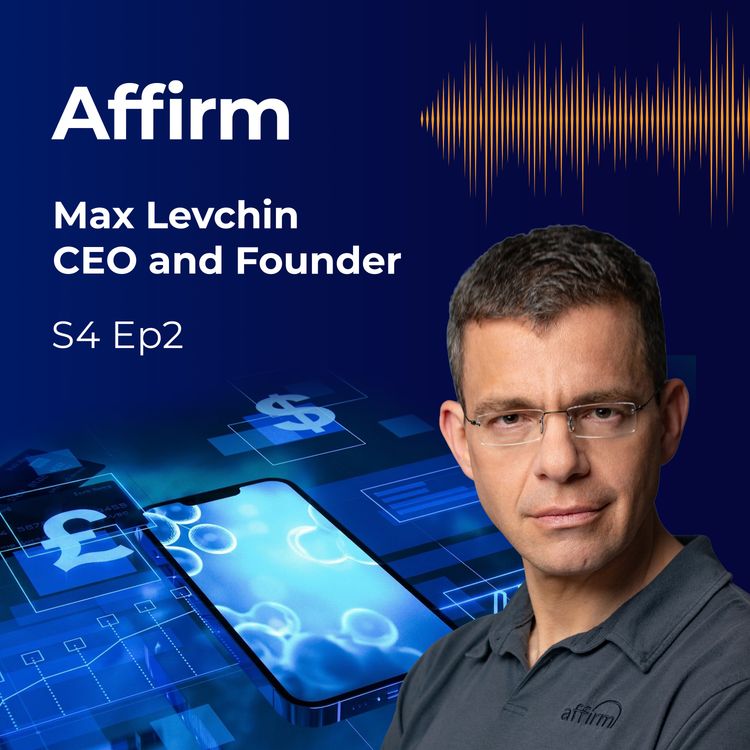
Affirm’s buy now, pay later service offers shoppers a transparent alternative to credit cards. It tells consumers up-front what monthly charge they face, promises no late fees or hidden charges – and in many cases offers a zero percent interest rate. Co-founder and chief executive Max Levchin reveals how the business originated in his own “painful” experiences with credit cards, and how AI-powered shopping agents could supercharge its future.
Background:
Scottish Mortgage first invested in Affirm in 2019, when it was still a private company.
Today, the listed business provides credit to millions of customers across the US, Canada and the UK when they make online and offline purchases, and it has its sights set on further expansion and taking a greater share of business away from the incumbents in the credit card industry.
“No one loves thinking about money because it’s a drag, it’s complicated,” Levchin tells investment manager Tom Slater in this interview. “It doesn’t have to be this way. And we’ve proven that for our little niche, big as it is… we can alleviate the burden.”
In this podcast, the two discuss how Levchin came to build Affirm after his prior success at PayPal, the technology that underpins the company’s ability to tailor loans to each customer and purchase, why merchants are keen to cover the cost of zero percent credit from a third party, and how AI-powered shopping agents could impact the firm.
Timecodes:
00:03 Coming up…
00:48 Introduction
02:25 Max Levchin interview begins
02:51 A transparent alternative to credit cards
04:05 A threatened amputation
08:52 Lessons from PayPal
11:44 Returning to the world of fintech
14:28 A terrible credit card experience
18:15 Attracting early investors
22:14 How Affirm works
25:48 The appeal to merchants
28:36 Focusing on the Affirm Card
31:23 Underwriting data provides a ‘powerful moat’
35:41 Why permit credit for luxury purchases?
39:25 Listening to your gut
42:20 How big could Affirm get?
45:39 AI agentic shopping
48:54 What the world looks like if Affirm fulfils its mission
50:38 Claire Shaw and Tom Slater on the investment case
57:35 Podcast lookahead
Glossary (in order of mention):
Point-of-sale lending: Credit offered at the moment a customer buys something, either online or in a shop.
Network effects: The effect where a product or service becomes more valuable as more people or businesses use it.
Fintech: Technology-driven financial services, such as digital payments, lending or banking tools.
Charge-off: When a lender writes off a debt as unlikely to be repaid, usually damaging the borrower’s credit record.
Delinquent/delinquency: A loan or credit account becomes delinquent when the borrower is late making required payments.
IPO: Initial public offering: the process by which a private company lists its shares on a public stock market.
Accrued interest: Interest that has built up over time on a loan or balance.
CMO: Chief marketing officer, the executive responsible for a company’s marketing strategy.
Competitive moat: A durable advantage that makes it hard for competitors to copy or overtake a business.
Cash flow: The movement of money into and out of a person’s or company’s accounts.
Total addressable market: The total revenue opportunity available if a company could reach all possible customers for its product.
Operating expense: Day-to-day business spending, such as salaries, rent or marketing.
AI agent: An AI system that can carry out tasks or make decisions on a user’s behalf.
Net promoter score: A customer loyalty measure based on how likely users are to recommend a company or product.
Flywheel: A business dynamic where one improvement drives another, creating self-reinforcing growth.
Read the transcript.
Check the podcast description to ensure this content is suitable for you. Your capital is at risk.
Presenter: Claire Shaw
Executive Producer: Leo Kelion
Line producer: Jessica Rooney
Broadcast Technician: Samual O’Hare
Editor: Jody Black
More episodes
View all episodes

4. 10-MINUTE TAKE: ASML
12:12||Season 4, Ep. 4A compressed version of Scottish Mortgage’s interview with chip-making equipment company ASML’s chief executive, Christophe Fouquet.Listen to the full episode here.ASML prints the vanishingly small patterns that make leading-edge computer chips possible. NVIDIA, Amazon and Anthropic all rely on it to create their products and services. “Without EUV [extreme ultraviolet light technology]… you don’t have AI,” Fouquet tells Scottish Mortgage deputy manager Lawrence Burns in this podcast.Background:When Scottish Mortgage invested in ASML, it couldn’t be certain that the Dutch firm’s efforts to harness EUV light would succeed. The holding was effectively an informed bet that the company could pull off one of the “greatest technical endeavours” of the time, as Burns puts it.To achieve this, the firm had to solve engineering challenges, such as generating plasma many times hotter than the sun’s surface tens of thousands of times a second, to create the special light. Then, it had to work out how to capture and control it with specialised multilayer mirrors. All this was done to print billions of transistors in spaces often as small as a fingernail.Its achievement has pushed computing to new limits, not least enabling the training of AI models including Claude, ChatGPT, Gemini, Mistral and MiniMax.“Whatever happens… ASML wins,” says Burns. “It’s an agnostic royalty on AI demand, and more broadly, compute demand.” Timecodes:00:00 Introduction01:11 Christophe Fouquet interview begins01:20 Printing transistors02:58 Nanometre scale, g-force acceleration05:09 Moore’s Law “on steroids”08:25 A cyclical industry10:48 An unknowable futureGlossary (in order of mention):EUV (extreme ultraviolet): A type of lithography that uses extremely short-wavelength light to print the finest, most advanced chip features. Lithography: The process of printing the pattern of a chip’s circuitry onto a silicon wafer using light. Semiconductor: The material (usually silicon) at the heart of a computer chip. Also used as shorthand for the chip industry. Transistor: A microscopic on/off switch. Packing more of them onto a chip is what increases computing power. Compute: Computing capacity – the processing power needed to train and run AI models. Logic chips and memory chips: The two main chip types – logic chips process information, memory chips store it. Moore’s law: There are various definitions, but a common one is that the number of transistors on a chip roughly doubles every two years. Transistor density: The number of transistors packed into a given area of a chip – the measure that Moore’s law tracks. Wafer: The thin disc of silicon on which chips are patterned, layer by layer, before being cut into individual chips. High NA: ASML’s next-generation EUV technology. NA stands for numerical aperture – a measure of how much light an optical system can gather and focus. High NA EUV gathers more than the original EUV system, allowing finer printing. Reticle: The mask carrying the chip-pattern information that the lithography machine projects onto the wafer. Inference: The stage where a trained AI model is actually used to answer queries or make predictions, as opposed to training it. Cyclical (industry): An industry whose sales rise and fall in boom-and-bust cycles, rather than growing steadily. Node: A generation of chip-manufacturing technology, loosely named for the size of its smallest features – smaller numbers mean denser, more advanced chips.Check the podcast description to ensure this content is suitable for you. Your capital is at risk. Presenter: Claire ShawExecutive Producer: Leo KelionLine producer: Jessica RooneyBroadcast Technician: Samual O’Hare Editor: Jody Black
4. ASML: The Printing Press of the AI Age
51:10||Season 4, Ep. 4ASML makes what many consider to be the most complex machines in the world. They print the vanishingly small patterns that make leading-edge computer chips possible. NVIDIA, Amazon and Anthropic all rely on it to create their products and services. “Without EUV [extreme ultraviolet light technology]… you don’t have AI”, the firm’s chief executive, Christophe Fouquet, tells Scottish Mortgage manager Lawrence Burns in this podcast.Background: When Scottish Mortgage invested in ASML, it couldn’t be certain that its efforts to harness EUV light would succeed. The holding was effectively an informed bet that the Dutch company could pull off one of the “greatest technical endeavours” of the time, as Burns puts it.To achieve this, the firm had to solve engineering challenges, such as generating plasma many times hotter than the sun’s surface tens of thousands of times a second to create the special light. Then, it had to work out how to capture and control it with specialised multilayer mirrors. All this was done to print billions of transistors in spaces often as small as a fingernail.ASML’s achievements have pushed computing to new limits, not least enabling the training of artificial intelligence models, including Claude, ChatGPT, Gemini, Mistral and MiniMax. As Fouquet discusses in the podcast, the company has recently launched a next-generation version of its EUV system to underpin further AI advances and other capabilities for years to come. “Whatever happens… ASML wins,” says Burns. “It’s an agnostic royalty on AI demand, and more broadly, compute demand.”Timecodes: 00:03 Coming up…01:08 Introduction02:53 Christophe Fouquet interview begins03:21 Printing transistors05:11 ASML’s origins05:57 From a shack to EUV08:46 Long-term relationships11:37 Moore’s Law “on steroids”15:08 A cyclical industry18:43 DUV v EUV21:03 Spending on R&D to stay ahead22:23 Why bet on EUV?25:27 High NA EUV27:39 An engineering mindset31:15 China sales restrictions36:01 ASML’s changing culture38:29 An unknowable future40:39 Lawrence Burns on the investment case50:26 Podcast lookaheadRead the glossary.Check the podcast description to ensure this content is suitable for you. Your capital is at risk. Presenter: Claire ShawExecutive Producer: Leo KelionLine producer: Jessica RooneyBroadcast Technician: Samual O’Hare Editor: Jody Black
3. 10-MINUTE TAKE: Gopuff
11:00||Season 4, Ep. 3A compressed version of Scottish Mortgage’s interview with the everyday item delivery service’s co-founder Yakir Gola.Listen to the full episode here.‘Instant commerce’ company Gopuff delivers groceries and other everyday goods to shoppers’ homes in as little as 15 minutes after an online order. What’s more, it can price-match many products with the major supermarkets. Co-founder and co-chief executive Yakir Gola tells Scottish Mortgage why running its own warehouses and technology is critical to its growth. Background:Scottish Mortgage first invested in Gopuff in 2021.The US-based company speedily delivers groceries, hot coffee and alcohol, among other items, to your door without charging premium prices. Unlike rivals that send gig workers to pick up goods from third-party stores, Gopuff runs its own warehouses.In this podcast, Gola discusses how the business grew out of a dorm-room idea, Gopuff’s partnerships with Starbucks and what’s next on his to-do list.Timecodes:00:03 Introduction01:05 Yakir Gola interview begins01:13 “5,000 products delivered in as fast as 15 minutes”01:50 A better way to get stuff delivered03:40 Keeping control of its own warehouses05:47 Fresh produce and everyday essentials07:02 Partnering with Starbucks08:24 Recalibrating after Covid09:53 Taking the hassle out of shoppingGlossary (in order of mention):Instant commerce:The category of online retail focused on delivering goods within minutes of an order, rather than within hours or the next day. Bootstrapped:When an entrepreneur starts and grows a business using his or her own money and cash generated by operations rather than outside investors. Inventory integration:The systems that let a company know what products are actually in stock and available to sell or deliver. Free cash flow:Cash left after paying for operating costs and investment needed to run the business. Vertically integrated:When a company owns and controls more of the supply chain itself, such as inventory and warehouses.Check the podcast description to ensure this content is suitable for you. Your capital is at risk. Presenter: Claire ShawExecutive Producer: Leo KelionLine producer: Jessica RooneyBroadcast Technician: Samual O’Hare Editor: Jody Black
3. Gopuff: Online Shopping's Express Aisle
52:16||Season 4, Ep. 3The instant commerce company Gopuff delivers groceries and other must-haves to shoppers' homes within minutes of an online order. Co-founder and co-chief executive Yakir Gola tells Scottish Mortgage manager Tom Slater how he developed the business from a dorm-room experiment into a service relied on by millions, and the changes he’s made to prepare for the next phase of growth.Background: Scottish Mortgage first invested in Gopuff in 2021.The US-based company speedily delivers groceries, hot coffee and alcohol, among other items, without charging premium prices. Unlike rivals that send gig workers to pick up goods from third-party stores, Gopuff runs its own warehouses. Gola explains how that decision, taken in the firm’s early days, helps it deliver exactly what customers ordered and keeps its prices competitive with the major supermarkets.In this interview, Gola discusses Gopuff’s partnerships with Amazon and Starbucks, why it has started offering free deliveries to US households receiving food stamps, and what’s next on his to-do list.“Consumers are price-sensitive, so if [Gopuff] can match the prices they experience outside of the convenience category or get closer and closer to those price points, then that just brings more and more users to them,” says Tom Slater.Timecodes: 00:03 Coming up…00:48 Introduction02:28 Yakir Gola interview begins02:44 “5,000 products delivered in as fast as 15 minutes”03:31 Making the family business millions of dollars04:56 A better way to get stuff delivered07:20 Capital from California10:33 Keeping control of its own warehouses13:20 The FAM membership scheme14:44 Free deliveries to families on food stamps18:22 Fresh produce and everyday essentials21:06 Partnering with Starbucks23:37 An alliance with Amazon UK24:52 Focusing on the long term27:24 Recalibrating after Covid30:55 A lesson from Steve Jobs33:06 In growth mode, again35:15 Sharing ownership37:39 Drawing on expert advice41:13 Taking the hassle out of shopping44:09 Tom Slater on the investment case51:26 Podcast lookaheadGlossary (in order of mention): Instant commerce:The category of online retail focused on delivering goods within minutes of an order, rather than within hours or the next day. Bootstrapped:When an entrepreneur starts and grows a business using his or her own money and cash generated by operations rather than outside investors. Free cash flow:Cash left after paying for operating costs and investment needed to run the business. Venture capital:Money invested by specialist investors in early-stage or high-growth private companies. Vertically integrated:When a company owns and controls more of the supply chain itself, such as inventory and warehouses.Series A:An early major round of external fundraising. Inventory integration:The systems that let a company know what products are actually in stock and available to sell or deliver.FAM membership:Gopuff’s paid subscription programme, which waives delivery fees and offers discounted prices in return for a monthly charge.Supplemental Nutrition Assistance Program (SNAP):A US government food support scheme for people on low incomes.Private label: Products sold under a brand owned by the retailer.Capital markets:The financial markets where companies raise money from investors.Unit economics:The profit or loss made on each order, customer or unit.Same-store sales growth:Sales growth from existing locations, excluding new ones.Read the transcript. Check the podcast description to ensure this content is suitable for you. Your capital is at risk. Presenter: Claire ShawExecutive Producer: Leo KelionLine producer: Jessica RooneyBroadcast Technician: Samual O’Hare Editor: Jody Black
2. 10-MINUTE TAKE: Affirm
11:28||Season 4, Ep. 2This is a compressed version of Scottish Mortgage’s interview with the buy-now, pay-later service’s chief executive and co-founder Max Levchin.Listen to the full episode here. Affirm offers shoppers a transparent alternative to credit cards. It tells consumers upfront what monthly charge they face, promises no late fees or hidden charges, and in many cases offers a 0 percent interest rate. Levchin tells Scottish Mortgage Investment Trust manager Tom Slater what drove him to create the business and why it has an edge over rivals.Background:Scottish Mortgage first invested in Affirm in 2019, when it was still a private company.Today, the listed business provides credit to millions of customers across the US, Canada and the UK when they make online and offline purchases. It now has its sights set on further expansion and is taking a greater share of business away from the incumbents in the credit card industry.In this podcast, Levchin reveals how he came to build Affirm after his prior success at PayPal, Affirm’s appeal to merchants and consumers, and why its underwriting technology gives it an enduring advantage. Timecodes:00:02 Introduction00:56 Max Levchin interview begins01:03 A transparent alternative to credit cards01:24 Lessons from PayPal02:55 A painful credit card experience05:50 How Affirm works08:35 Underwriting data provides a ‘powerful moat’Glossary (in order of mention):Point-of-sale lending: Credit offered at the moment a customer buys something, either online or in a shop.Network effects: The phenomenon whereby a product or service becomes more valuable as more people or businesses use it.Charge-off: When a lender writes off a debt as unlikely to be repaid, usually damaging the borrower’s credit record.Delinquent/delinquency: A loan or credit account becomes delinquent when the borrower is late making required payments.IPO: Initial public offering – the process by which a private company lists its shares on a public stock market.Accrued interest: Interest that has built up over time on a loan or balance.Underwriting: A lender's process of assessing whether to grant credit to a borrower, and on what termsCompetitive moat: A durable advantage that makes it hard for competitors to copy or overtake a business.Check the podcast description to ensure this content is suitable for you. Your capital is at risk. Presenter: Claire ShawExecutive Producer: Leo KelionLine producer: Jessica RooneyBroadcast Technician: Samual O’Hare Editor: Jody Black
1. 10-MINUTE TAKE: Enveda
11:56||Season 4, Ep. 1This is a compressed version of Scottish Mortgage’s interview with the biotech’s founder Viswa Colluru, for those of you wanting just the highlights.Listen to the full episode here.The biotech company Enveda has developed a new approach to explore and ‘decode’ nature’s chemistry. Its goal is to discover molecules that could underpin a new generation of blockbuster drugs. In this podcast, the firm’s founder and chief executive, Viswa Colluru, explains why Enveda has the potential to become a trillion-dollar business, and Scottish Mortgage Investment Trust manager Tom Slater considers the risks and opportunities the portfolio company faces. Background:Scottish Mortgage first invested in Enveda in November 2024. The US-headquartered company uses a proprietary artificial intelligence (AI) large language model to discover and develop new medicines from natural sources. At the time of writing, it has a pipeline of 12 drug candidates in various stages of development that could form the basis of new therapies to treat dermatitis, obesity, inflammation and chronic pain. Enveda’s founder, Viswa Colluru, has reimagined the drug discovery process from first principles based on his insight that natural molecular compounds should have a better safety profile than engineered ones.“Healthcare is the biggest industry in the world, and if you can increase the odds of success in drug discovery, there are so many unmet needs that its opportunity is effectively unbounded,” says Scottish Mortgage manager, Tom Slater. Timecodes:00:00 Introduction01:00 Interview starts01:10 “Things that work in the lab [often] don’t work in people”02:30 A mission grounded in a family death04:25 Investing his life savings08:45 Partnering with Microsoft and Sanofi Glossary (in order of mention):Chronic myeloid leukaemia:A type of blood cancer that affects white blood cells.Mass spectrometer:A lab instrument that measures the mass of molecules to help identify them.SaaS:Software as a service – software accessed online via a subscription.Cost of capital:How expensive it is for a company to raise money from investors or lenders.
1. Enveda: Finding Hidden Medicines in Nature
53:33||Season 4, Ep. 1The biotech company Enveda has developed a new approach to explore and ‘decode’ nature’s chemistry. Its goal is to discover molecules that could underpin a new generation of blockbuster drugs. In this podcast, the firm’s founder and chief executive, Viswa Colluru, explains how Enveda could become a trillion-dollar business, and Scottish Mortgage Investment Trust manager Tom Slater considers the risks and opportunities the company faces. Background:Scottish Mortgage first invested in Enveda in November 2024. The US-headquartered company uses a proprietary artificial intelligence (AI) large language model to discover and develop new medicines from natural sources. At the time of writing, it has a pipeline of 12 drug candidates in various stages of development that could form the basis of new therapies to treat dermatitis, obesity, inflammation and chronic pain. Enveda’s founder, Viswa Colluru, has reimagined the drug discovery process from first principles based on his insight that natural molecular compounds should have a better safety profile than engineered ones.“Healthcare is the biggest industry in the world, and if you can increase the odds of success in drug discovery, there are so many unmet needs that its opportunity is effectively unbounded,” says Scottish Mortgage manager, Tom Slater. Timecodes:00:03 Coming up…00:50 Introduction02:49 Viswa Colluru interview begins03:08 “Things that work in the lab [often] don’t work in people”04:35 A mission grounded in a family death08:50 Invested life savings11:24 Picking up from where evolution left off15:16 Using AI to make sense of nature21:32 A chemistry-first approach25:16 Historic points of failure27:32 Reimagining drug discovery from first principles29:19 Splitting work between US and India32:19 A growing drug candidate pipeline35:07 Partnering with Microsoft and Sanofi38:19 The relationship with Recursion Pharmaceuticals41:02 “Incredible people looking in unexpected places”43:00 A globally loved pharma company43:38 Tom Slater on the investment case52:42 Podcast lookaheadPlease see our glossary of terms. Read the transcript.Check the podcast description to ensure this content is suitable for you. Your capital is at risk. Presenter: Claire ShawExecutive Producer: Leo KelionLine producer: Jessica RooneyBroadcast Technician: Samual O’Hare Editors: Kerry Ingram
5. Horizon Robotics: Driving the Autonomous Revolution
43:30||Season 3, Ep. 5How the founder of a Horizon Robotics plans to become the Microsoft for robots. Join the Scottish Mortgage Team as we sit down with Dr. Kai Yu, founder of Horizon Robotics, a pioneer in autonomous driving technology. Discover how this ambitious company is transforming vehicles into "computers on wheels" and revolutionising the robotics industry. Episode highlights: Founder's Commitment to Machine Learning: Dr. Kai Yu, a leading AI scientist, has dedicated over 30 years to advancing machine learning. His passion for developing self-learning machines has been a driving force behind Horizon Robotics' innovative solutions.Founding Mission of Horizon Robotics: Horizon Robotics aims to transform vehicles into "computers on wheels" by mastering both hardware and software development. Their AI chips and computing platforms are pivotal in achieving various levels of autonomous driving, making them a key player in the autonomous driving revolution.Global Partnerships with OEMs: Horizon's "Journey Together" mantra has fostered strong relationships with automakers worldwide, including a significant $2bn investment from Volkswagen. These collaborations showcase Horizon's ability to build trust and embrace global partnerships.Embracing Innovation: The competitive and crowded EV market in China serves as an ideal testing ground for Horizon's technology. With over 50% market share, Horizon has successfully taken on Western Advanced Driver Assistance System providers, proving their scalable solutions' effectiveness.Vision for the Future: Horizon Robotics envisions becoming the "Microsoft for robots," applying their technology across various industries. This ambition highlights their potential to revolutionise not just autonomous driving but the entire robotics landscape.Whether you're an investor, tech enthusiast, or simply curious about the future of technology, this episode offers valuable insights into a company poised to become a leader in the robotics industry. Check the podcast description to ensure this content is suitable for you. Your capital is at risk. Presenter: Claire ShawExecutive Producer: Niamh KiddLine producer: Jessica Rooney Broadcast Technician: Samual O’Hare Editors: Rhona Taylor-Craig, An Phan