Share

In The Paddock
Rob Eccles - High Performance Pastures
This week we talk with independent agronomist Rob Eccles on High Performance Pastures and how they can be utilised to not only fill the winter feed gap but also increase stock turnover, increase weight gain, stocking rates and carcase quality. We cover everything including what is a high performance pasture, how to prepare for a high performance pasture, how to fertiliser a high performance pasture and how to effectively graze a high performance pasture.
Rob's Paper on High Performance Pastures
https://www.kalro.org/igc-irc2021congresskenya/proceedings/Session3Three/Paper%2069%20Short-term%20high-performance%20pastures%20in.pdf
Rob's Facebook Page
https://www.facebook.com/people/Rob-Eccles-Agronomy-Agribusiness-Services/100043255933850/
Explore In The Paddock articles, episode resources and videos at https://inthepaddock.au.
Follow In The Paddock on your favourite podcast app and share this episode with someone who would find it useful.
More episodes
View all episodes
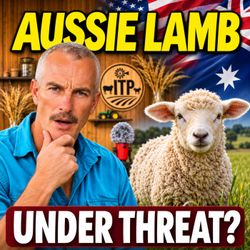
America Wants to Restrict Australian Lamb Again — Could It Backfire?
12:20|Could Australian lamb exports to the United States be under threat?The US is investigating Australian lamb imports, raising concerns about possible trade restrictions and what they could mean for Australian sheep producers, lamb prices and the wider red meat industry.In this episode of In The Paddock, farmer and agronomist Martin Murray examines the dispute, why American sheep producers are concerned about Australian competition, and whether history could be about to repeat itself.We revisit the 1999 US lamb trade dispute, when tariffs and import restrictions disrupted Australian lamb exports, and explore what a similar outcome could mean for producers today.In this episode:Why Australian lamb is attracting attention in the United States.What's driving concerns among American sheep producers.How Australia's lamb industry competes in the US market.What happened during the 1999 lamb trade dispute.How tariffs, quotas or other trade restrictions could affect Australian lamb prices.What the dispute reveals about agricultural protectionism and international trade.What Australian sheep producers should be watching next.The United States is an important export market for Australian lamb, but access to overseas markets isn't guaranteed. With agricultural trade increasingly influenced by domestic politics, could Australian farmers once again find themselves caught in the middle?Join Martin for a practical look at the economics, politics and potential consequences for Australian agriculture.About In The PaddockHosted by Australian farmer and agronomist Martin Murray, In The Paddock explores the issues shaping the future of farming, from agricultural technology and commodity markets to global food security, trade policy and farm profitability.🌐 Website: https://inthepaddock.au🎥 YouTube: https://www.youtube.com/@InThePaddockHave your say: Should Australia be concerned about growing agricultural protectionism in the United States?#AustralianLamb #SheepFarming #AgriculturalTrade #LambExports #AustralianAgriculture
Drones in Ag - Can we Replace The Tractor
18:33|Are agricultural drones worth the hype—or just another expensive piece of farm technology?Australian farmer and agronomist Martin Murray explores the practical potential of drones in agriculture, from spraying weeds and spreading fertiliser to mapping paddocks and monitoring crops and pastures.In this episode of In The Paddock, we look beyond the promotional footage to consider where farm drones can add value, where they have limitations, and what matters when deciding whether they suit your operation.Topics include:Drone spraying for weed control and crop protection.Aerial spreading of fertiliser and seed.Drone mapping and imagery for precision agriculture.Opportunities in steep and difficult-to-access country.Practical considerations including payload, battery life, application quality and operating costs.Whether you’re running a cropping enterprise, managing grazing country or advising farmers, join us for a practical look at agricultural drones and their place in Australian farming.Follow In The Paddock for more conversations about agronomy, agricultural technology and the business of farming. If you enjoyed this episode, share it with someone weighing up a farm drone.More articles and episodes: https://inthepaddock.au
Can We Breed Pulses That Fix More Nitrogen? | Field Notes
07:37|Can we breed pulses that fix more nitrogen—and leave more value for the next crop? Australian research is exploring how improved nitrogen fixation in chickpeas, lentils, faba beans, lupins, field peas and mungbeans could benefit farming systems.In this episode of In The Paddock — Field Notes, farmer and agronomist Martin Murray examines the breeding work, explains the biology and asks what it could mean for growers’ rotations and fertiliser budgets.First, though, a reality check: pulses don’t automatically leave a huge nitrogen surplus. They use nitrogen to grow and produce grain, and harvesting that grain removes much of it. Nitrogen fixed by a pulse crop is not the same as nitrogen available to the following wheat or canola crop.IN THIS EPISODE• How rhizobia and root nodules help pulses access atmospheric nitrogen.• Why crop growth and soil nitrate affect nitrogen fixation.• The Australian research programme targeting six pulse crops.• How breeders could combine useful genetic traits through “haplotype stacking”.• Why a target of at least 10% improved fixation does not mean a 10% fertiliser saving.• Grain nitrogen removal, residual benefits and the importance of the whole rotation.• What needs proving before improved genetics reach commercial paddocks.Better nitrogen fixation could be valuable—but it must work alongside competitive grain yield, disease resistance and suitable maturity. We explore the questions farmers should ask before assigning a dollar value to the potential benefits.HAVE YOUR SAYIf two pulse varieties yielded the same, would stronger nitrogen fixation influence your choice? What evidence of a benefit to the following crop would convince you?MORE FROM IN THE PADDOCKPractical agronomy, Australian farming and emerging agricultural research:https://inthepaddock.au/Follow In The Paddock for more Field Notes episodes, and share this episode with a grower or agronomist interested in pulse crops, soil fertility and nitrogen management.SOURCES & FURTHER READINGGRDC GroundCover — Stacking the genetics of nitrogen fixation in pulses:https://groundcover.grdc.com.au/innovation/plant-breeding/stacking-the-genetics-of-nitrogen-fixation-in-pulsesAustralian National University — Pulse nitrogen fixation research:https://researchportalplus.anu.edu.au/en/projects/genetic-initiative-to-transform-symbiotic-nitrogen-fixation-in-au/NSW DPIRD — Nitrogen benefits of chickpea and faba bean:https://www.dpird.nsw.gov.au/agriculture/broadacre-crops/winter-crops/general-information/nitrogen-chickpea-faba-beanEvans and colleagues (2001) — Grain-legume nitrogen balances and contributions to wheat nitrogen uptake:https://digital.library.adelaide.edu.au/items/6baad1e6-1f3f-495e-884f-7091a2b0d617/fullPulse Australia — Environmental benefits and nitrogen removal in grain:https://www.pulseaus.com.au/using-pulses/environmentResearch checked 26 October 2026. Improvement targets are research goals, not guaranteed outcomes or paddock-specific fertiliser recommendations. Historical trial findings illustrate variability; the worked nitrogen budget is hypothetical. Project completion dates are not confirmed commercial variety release dates.
AI in Agriculture: Will It Make Us Better Farmers or Replace Us?
18:06|AI in Agriculture: Will It Make Us Better Farmers or Replace Us?Could artificial intelligence revolutionise farming, improve profitability and make us better farmers? Or could it threaten agricultural jobs, introduce new risks and lead to some very expensive mistakes?As both a farmer and a practising agronomist, I'm exploring how AI tools like ChatGPT could change the way we farm. From interpreting soil tests and developing fertiliser programs to crop management, precision agriculture and farm business decisions, the opportunities are enormous.But there's a question I can't ignore: Could AI eventually replace me as an agronomist?In this episode of In The Paddock, we explore the opportunities, practical applications and potential dangers of artificial intelligence in Australian agriculture.We discuss:AI on the farm: How I'm exploring ChatGPT and artificial intelligence in everyday farming.The future of agronomy: Can AI replace agronomists or make them more effective?Smarter farming: Opportunities to improve productivity, reduce costs and increase farm profitability.Crop management: Using AI to analyse agricultural data, interpret soil tests and support fertiliser and crop protection decisions.The risks: Incorrect recommendations, unreliable information, liability and overreliance on technology.The future of agriculture: What AI, automation and emerging ag-tech could mean for farmers and agricultural professionals.Farming is complicated. Weather, soils, biology, economics and experience all influence the decisions we make. Artificial intelligence might be able to process enormous amounts of information, but can it truly understand what's happening in the paddock?The challenge isn't simply whether AI can give us answers. It's whether those answers are good enough to trust with our livelihoods.Will AI make us better farmers, or could it eventually replace some of us?🎙️ In The Paddock explores Australian agriculture, agronomy, emerging farming technologies, global markets and the issues shaping the future of our industry.🌐 Read more: https://inthepaddock.au📺 Watch on YouTube: https://www.youtube.com/@InThePaddockHave your say: Are you using AI in your farming business? Would you trust ChatGPT to make important agronomic recommendations?#AIinAgriculture #AgTech #AustralianFarming
Field Notes - These Companies Are Trying To Weigh Livestock Without Scales
09:10|Could you weigh cattle with your phone—or monitor sheep liveweight as they walk past a camera? Camera-based livestock weighing could make growth monitoring easier, reduce handling and help farmers make better feeding and sale decisions. But how accurate does it need to be?In this episode of In The Paddock — Field Notes, farmer and agronomist Martin Murray explores Scanabull’s cattle weight-estimation technology and FlockMate, the Australian sheep research project led by CSIRO with Meat & Livestock Australia and Australian Wool Innovation.We explain how 3D imaging and artificial intelligence estimate livestock weight, then examine the practical question: can those estimates provide information you can confidently act on?IN THIS EPISODE• Scanabull WeighApp: estimating cattle liveweight using an iPhone Pro.• WeighPoint: Scanabull’s automated camera development.• FlockMate: estimating sheep liveweight and fleece weight, with records linked to RFID tags.• Why a correct mob average can hide errors in individual animals.• Accuracy, repeatability and detecting meaningful changes in growth.• Practical checks against conventional livestock scales.• Indicative costs, scan allowances and development timelines.Whether you run beef cattle, sheep or a mixed grazing enterprise, the opportunity is more useful information with less effort. The test is whether that information helps you identify poor performers, assess feed supply or select livestock for sale.HAVE YOUR SAYWhere would camera weighing help most in your business: tracking mob growth, finding animals falling behind, or deciding which stock are ready to sell? Share your thoughts in your podcast app’s comments, where available, or join the discussion on the In The Paddock YouTube channel.MORE FROM IN THE PADDOCKExplore practical agronomy, livestock management and emerging agricultural technology:https://inthepaddock.au/SOURCES & FURTHER READINGScanabull — cattle weighing technology:https://scanabull.com/Scanabull — technical explanation and company-reported accuracy:https://scanabull.com/index.php/2026/08/31/scanabull-tech/Scanabull — indicative pricing:https://scanabull.com/index.php/pricing/CSIRO — measuring sheep liveweight:https://www.csiro.au/en/news/All/News/2026/July/Measuring-sheep-live-weightMLA — FlockMate liveweight and fleece-weight project:https://www.mla.com.au/news-and-events/industry-news/new-tool-for-estimating-sheep-liveweight-and-fleece-weight/AWI — FlockMate development update:https://www.wool.com/news-events/beyond-the-bale/issue-106-winter-2026/flockmateputs-sheep-measurement-in-a-new-frame-106/Follow In The Paddock for practical Australian farming insights, agricultural research and emerging agtech. Share this episode with a livestock producer interested in weighing without scales.Information checked 19 October 2026. This episode reviews published information, not a hands-on product test. FlockMate remains in research and development. Scanabull’s website retains early-access and future-release messaging; broad Australian availability is unverified. Accuracy figures are company-reported, not guaranteed limits for every animal. Pricing is provisional, with currency unspecified on the pricing page.
3D-Printed Meat Hits US Supermarkets — Is Real Beef in Trouble?
23:10|🥩 3D-Printed Fake Meat Is Here — But Is the Industry Going Broke?3D-printed fake meat has officially reached American supermarket shelves. But behind the futuristic technology is an industry struggling with falling sales, mounting financial losses and consumers who still overwhelmingly prefer real meat.Is fake meat genuinely the future of food, or one of agriculture's most overhyped technological revolutions?In this episode of In The Paddock, Australian farmer and agronomist Martin Murray investigates the economics of fake meat, the arrival of Steakholder Foods' Perfecta 3D-printed steaks, and what artificial meat could mean for Australian cattle producers.Using a process called Fused Paste Layering, Perfecta manufactures fake steaks from plant proteins, oils, binders and flavourings, attempting to replicate the texture, marbling and appearance of conventional beef.But making something look like steak is one thing. Convincing consumers to buy it — and making a profit — is another.THE BILLION-DOLLAR FAKE MEAT PROBLEMBeyond Meat's annual revenue peaked at US$464.7 million in 2021 before declining to US$275.5 million in 2025. Despite reporting an accounting profit in 2025, the company recorded a US$332.7 million operating loss.Meanwhile, US plant-based meat and seafood retail sales fell 10% in 2025, while conventional meat and seafood sales grew 5%.Fake meat still accounts for less than 1% of the total US retail meat market.IN THIS EPISODE:🥩 How does 3D-printed fake meat actually work?🧪 What's inside a Perfecta fake steak, and how does it compare with real beef?💰 Fake meat versus real meat: which costs consumers more?📉 Why are Beyond Meat and other alternative protein companies struggling financially?🏭 What happened to the billions invested in fake meat technology?💸 Which fake meat businesses have collapsed or been forced to restructure?🛒 Why aren't consumers buying fake meat in the numbers once predicted?🏷️ Why accurate food labelling matters for consumer choice and agricultural producers.🐂 Is artificial meat genuinely a threat to Australia's beef industry?THE BIG QUESTIONIf meat eaters want real meat, many vegetarians prefer whole foods, and consumers are increasingly sceptical of highly processed alternatives, who exactly is the target market for fake meat?Could 3D printing finally make artificial meat competitive, or is the industry spending billions trying to solve a problem consumers never asked it to solve?We separate the technological hype from the commercial reality and examine what this means for farmers, investors and the future of global food production.ABOUT IN THE PADDOCKHosted by Australian farmer and agronomist Martin Murray, In The Paddock explores agricultural technology, farm economics, food security, livestock markets and the global forces shaping agriculture.🌐 Website: https://inthepaddock.au📺 YouTube: https://www.youtube.com/@InThePaddockSOURCES & FURTHER READINGSteakholder Foods:https://www.steakholderfoods.com/Beyond Meat financial reports:https://investors.beyondmeat.com/Good Food Institute — Alternative meat sales:https://gfi.org/resource/analyzing-plant-based-meat-and-seafood-sales/JOIN THE DISCUSSIONWould you eat a 3D-printed steak? Would you pay more for it than real beef?Is fake meat the future of food, or an expensive technological experiment?Follow In The Paddock for independent analysis of agriculture, emerging technology and the global food system.#FakeMeat #3DPrintedMeat #FutureOfFood #AustralianAgriculture #BeyondMeat
Field Notes: Could These Crops Save You Nitrogen?
17:56|Could crops protect their own nitrogen—and help lower your fertiliser bill? Biological nitrification inhibition (BNI) is an emerging area of crop research that could offer new ways to improve nitrogen use efficiency in Australian agriculture.In this episode of In The Paddock — Field Notes, farmer and agronomist Martin Murray explores how plant roots could release natural nitrification inhibitors, helping retain nitrogen for crop uptake.First, we follow nitrogen from fertiliser application to the plant: how urea becomes ammonium and nitrate, where losses occur, and why different inhibitors protect different stages.You’ll hear:• How ammonia volatilisation, nitrate leaching and denitrification affect nitrogen availability.• How roots absorb ammonium and nitrate.• The difference between urease inhibitors such as NBPT and nitrification inhibitors such as DMPP.• What biological nitrification inhibition could offer wheat, sorghum and canola.• What Australia’s $10 million, four-year GRDC investment led by CSIRO is investigating.• Why promising overseas wheat results are not yet an Australian fertiliser-rate recommendation.BNI conserves existing nitrogen—it does not fix nitrogen from the atmosphere. The practical test is whether the trait delivers reliable benefits in yield, grain quality or fertiliser savings across Australian soils and seasons.💬 What would convince you to choose a nitrogen-protecting variety: lower fertiliser costs, more reliable yield, or better performance in wet seasons? Leave a comment on the companion article or join the discussion wherever your podcast player supports it.READ THE COMPANION ARTICLEExplore the nitrogen-loss graphics, inhibitor comparison and deeper research discussion. Scheduled for 6 am AEDT, Wednesday 14 October 2026:https://inthepaddock.au/?p=3805MORE FROM IN THE PADDOCKhttps://inthepaddock.au/SOURCES & FURTHER READINGGRDC GroundCover — Australian biological nitrification inhibition research:https://groundcover.grdc.com.au/grdc/announcements/new-grdc-nitrogen-research-could-deliver-future-crop-optionsCSIRO — Research into future nitrogen-efficient crop options:https://www.csiro.au/en/news/all/news/2026/july/new-grdc-nitrogen-research-could-deliver-future-crop-optionsGRDC — Nitrogen loss pathways and levers to mitigate losses:https://grdc.com.au/__data/assets/pdf_file/0026/614906/Paper-Bell-Schwenke-Grace_N-losses-Wagga-2025.pdfJIRCAS — Experimental BNI-enabled wheat results:https://www.jircas.go.jp/en/publication/research_results/2021_a04Bozal-Leorri and colleagues — BNI traits and nitrogen uptake in wheat:https://doi.org/10.3389/fpls.2022.1034219Follow In The Paddock for practical agronomy, emerging agricultural technology and research explained with Australian farmers in mind. Share this episode with someone weighing up their nitrogen-management options.General information only—not paddock-specific agronomic advice. Overseas experimental results do not establish that Australian growers can safely reduce nitrogen rates by 60%.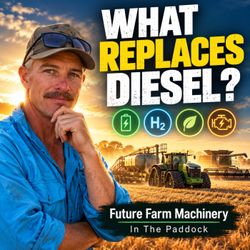
What Replaces Diesel on The Farm - The Future of Farm Machinery
27:33|What replaces diesel on the farm?Australian agriculture depends heavily on diesel, especially during sowing and harvest. But replacing it is not as simple as swapping a diesel engine for a battery.In this episode of In The Paddock, we look at the machinery and energy systems that could realistically power the next generation of farming — without sacrificing horsepower, endurance or productivity.We cover battery-electric tractors, battery swapping, diesel-electric hybrids, hydrogen fuel cells, biomethane, methane and HVO renewable diesel, as well as what agriculture can learn from the mining and freight industries.Machines discussed include the Honghu T150 electric tractor, Zoomlion DX7004 hybrid tractor, Zoomlion H7-600E hybrid combine, John Deere eAutoPowr, New Holland T7 Methane Power and Kubota’s hydrogen fuel-cell tractor.We also explore a bigger idea: rather than asking what single fuel replaces diesel, should farm machinery be designed around electric drivetrains that can accept different energy sources over time?From powered air carts to hybrid headers and swappable batteries, this episode looks at what might actually work in Australian broadacre agriculture — and what still has a long way to go.In this episode:Why giant battery tractors are difficultHow battery swapping could helpWhy hybrid-electric machinery may be the near-term answerWhat mining can teach agriculture about electrificationHydrogen, biomethane and renewable dieselThe future of high-horsepower sowing and harvest machineryWhy the future farm is likely to use a mix of energy sourcesRead the full companion article at InThePaddockPodcast.comIn The Paddock — practical discussion on agriculture, technology, markets and the forces shaping farming.
Field Notes - Can we Have Chemical Free Weed Control in Zero Till Farming?
10:05|Can Australian zero-till farming reduce its reliance on herbicides without going back to full-width cultivation?In this episode of In The Paddock – Field Notes, we look at emerging chemical-free weed control technologies designed to target established weeds while preserving the benefits of zero-till and conservation farming systems.We start with the Hayes Weed Chipper, an Australian-developed system that combines optical weed detection with individually controlled hydraulic tynes to physically remove weeds without cultivating the entire paddock. We then look at GRDC-backed research into other non-chemical weed control technologies, including electrical weed control, precision mechanical spot tillage, heat treatments and abrasive weed control.The key question is not whether herbicides disappear from Australian agriculture. They remain one of the most efficient weed-control tools available. The opportunity is to give growers additional modes of action for herbicide-resistant weeds, particularly survivors in fallow and low-density weed populations.Could the future sprayer or autonomous robot identify an individual weed and then choose between a herbicide nozzle, mechanical tyne, electricity or another physical treatment?That could fundamentally change how Australian growers think about herbicide resistance, zero-till weed management and precision agriculture.In this episode:Hayes Weed Chipper and optical weed detectionTargeted mechanical weed control in zero-till systemsElectrical weed control and weed electrocutionGRDC research into non-chemical weed controlPrecision agriculture and autonomous weed controlHerbicide resistance managementThe economics and limitations of physical weed destructionWhy the future may be multiple weed-kill mechanisms rather than simply new chemistryExplore the technologyHayes Weed Chipper:https://hayesspraying.com.au/weedchipper/GRDC GroundCover – autonomous and non-chemical weed control research:https://groundcover.grdc.com.au/__data/assets/pdf_file/0016/600802/Grain-Automate-and-Digital-Agronomy.pdfIn The Paddock covers Australian agriculture, agronomy, ag technology, farm business, machinery, research and the emerging technologies likely to shape farming in the years ahead.Keywords: Australian agriculture, zero till farming, no till farming, chemical free weed control, non chemical weed control, Hayes Weed Chipper, WEED-IT, GRDC, GroundCover, herbicide resistance, glyphosate resistance, electrical weed control, weed electrocution, precision agriculture, autonomous farming, robotic weed control, fallow weed control, broadacre farming, Australian grain farming, sustainable agriculture, agronomy, farm technology.