Share
Intelligence Squared Live
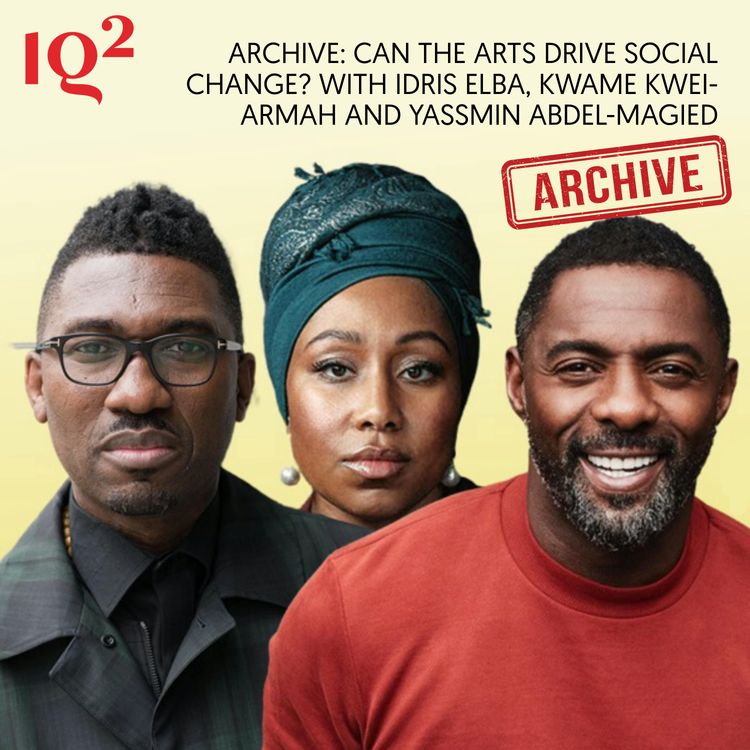
Archive: Can the Arts Drive Social Change? With Idris Elba, Kwame Kwei-Armah and Yassmin Abdel-Magied
•
In the summer of 2020, as Black Lives Matter protests swept the world, the arts and creative industries faced urgent questions about racism, representation and their role in driving meaningful change.
In this episode from the Intelligence Squared archive, actor Idris Elba and playwright Kwame Kwei-Armah join writer and broadcaster Yassmin Abdel-Magied to examine systemic racism in the cultural sector, the limits of diversity initiatives and what it really takes to turn promises of equality into lasting change.
Six years on, as debates about race, power and representation continue, we revisit a conversation that remains as relevant today as it was in 2020.
Learn more about your ad choices. Visit podcastchoices.com/adchoices
More episodes
View all episodes
The Battle for the Arctic and Why It Matters, with Rana Foroohar and Gillian Tett
48:22|Rana Foroohar has spent decades reporting on the forces reshaping the global economy, first as a foreign correspondent for Newsweek and now as the Financial Times’ Global Business Columnist and Associate Editor. In her new book Sea Change, she turns her attention to the Arctic, where she argues the next great geopolitical contest is already taking shape.As melting ice opens new shipping routes and access to critical minerals, Russia, China and the United States are competing for influence across one of the richest and most strategically important regions on earth. Who will control the trade routes, resources and infrastructure of the High North, and what will that mean for the balance of global power?Drawing on reporting from aboard America’s only Arctic icebreaker and conversations with senior figures in Washington, Beijing, Moscow and beyond, Foroohar explored why shipping lanes, shipbuilding, underwater data cables and natural resources could prove decisive in the decades ahead.
Nvidia Explained: How It Became the World’s Most Powerful Company
48:41|In June 2024, Nvidia became the most valuable corporation on Earth. Now, the actions of its CEO, Jensen Huang, threaten to tear it apart.For this episode, we're revisiting an episode from the Intelligence Squared archive that helps explain why this company matters so much.How did a company that started out making graphics chips for videogames become one of the most powerful corporations on Earth, and the driving force behind the AI revolution?In his book The Thinking Machine, Stephen Witt chronicles Nvidia's extraordinary rise, revealing how it came to dominate the market for AI hardware and, in the process, reinvent the computer.He joined author and Research Director at Demos Carl Miller to discuss the people, decisions and breakthroughs behind Nvidia's rise, and how one company became so central to the future of artificial intelligence.This conversation was recorded before the latest developments at Nvidia.
Shakespeare vs Milton: The Kings of English Literature Debate [Archive]
01:56:35|Nearly four centuries after his death, no writer has come close to matching Shakespeare’s understanding of the world – or his gift for dramatic poetry. It’s not just kings and queens that he captured so uniquely in his transcendent verse. Shakespeare analysed the human condition, not just for Elizabethan England, but throughout the world and for eternity. Britain may not have matched the Continent for music or art but when it comes to literature, Shakespeare sees off all international rivals, whether it’s in the spheres of comedy, tragedy or the sonnet. Even today you and I quote Shakespeare without knowing it: if you act more in sorrow than in anger, if you vanish into thin air or have ever been tongue-tied, hoodwinked or slept not one wink, you’re speaking the Bard’s English.Milton, say his fans, works on an altogether different, higher plane. In Paradise Lost – the best poem ever written in English – Milton moved beyond the literary to address political, philosophical and religious questions in a way that still resounds strongly today. In his complex, intellectual poetry he drilled down deep into the eternal truths and sought to embody new scientific discovery in his work.His engagement with the issues of the day – with the nature of knowledge, slavery, free will, love and creation – was unparalleled. Despite complete blindness in middle age, he was the English republic’s best known, most fervent apologist, and a key civil servant for Oliver Cromwell. In his other works, notably in Areopagitica, his attack on censorship, he showed himself as much a master of prose as poetry. He defines not only his age, but our own.To help you decide who should be crowned king of English letters we brought together advocates to make the case for each writer, and they called on a cast of leading actors to illustrate their arguments with readings from the works.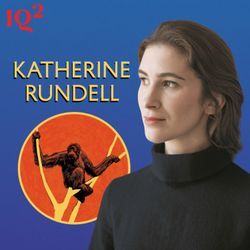
Can Pigs Really Appreciate Bach? Katherine Rundell Live
01:19:19|Katherine Rundell has dazzled millions of readers globally with her writing on fantastical beasts. In her bestselling book The Golden Mole, she profiled some of the world’s most extraordinary endangered animals, including pangolins, wombats, lemurs and seahorses. This critically acclaimed compendium celebrated the earth’s greatest wonders, and offered a rallying call to prevent their extinction.In October 2026 Rundell joined us live on stage at Conway Hall to discuss a new menagerie of spectacular creatures. Rundell drew on her new book, Napoleon’s Orangutan, to introduce us to twelve vanishing, amazing animals – from Napoleon’s pet orangutan to pigs who can learn the difference between Bach and a brass band.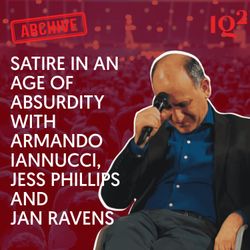
Is Politics Beyond Satire? Live with Armando Iannucci, Jan Ravens and Jess Phillips [Archive]
01:00:26|Has satire lost its power in this new world of fake news and ‘alternative facts’ - when our leaders lie so blatantly and frequently, and still manage to get away with it? Or is humour a more important tool than ever to hold those in power to account? We were joined by celebrated comedy writer and producer Armando Iannucci, Labour MP Jess Phillips, and satirist and impressionist Jan Ravens to unpack these questions live on stage at the Union chapel in London. The event was chaired by journalist, writer and broadcaster Samira Ahmed.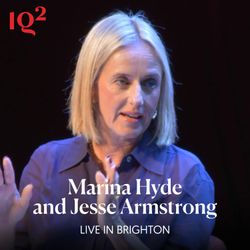
Marina Hyde and Jesse Armstrong, Live in Brighton
01:24:33|Described by Phoebe Waller-Bridge as “the most lethal, vital, screamingly funny truth-teller of our time”, Marina Hyde has become one of Britain’s most popular columnists and podcasters. A Sunday Times bestselling author and co-host of the smash hit podcast The Rest is Entertainment, she has an unrivalled talent for making sense of our stranger-than-fiction times. In September 2026 Hyde came to the Intelligence Squared stage in Brighton, marking the launch of her new book 'What A Time To Be Alive!'. From lambasting the Trump presidency, to the increasing popularity of Nigel Farage's Reform, from the spectacle of Jeff Bezos and Lauren Sanchez’s Venice wedding to the Beckham family feud, she is chief chronicler of our gloriously chaotic age. Hyde was joined live on stage award-winning screenwriter and producer Jesse Armstrong. Learn more about your ad choices. Visit podcastchoices.com/adchoices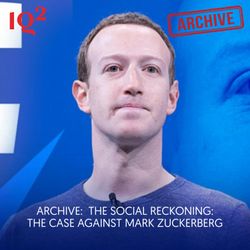
Archive: Is Mark Zuckerberg Damaging Society?
01:01:40|With the release of Aaron Sorkin's new film The Social Reckoning, Mark Zuckerberg and the dark side of Facebook are back in the spotlight. In 2019, Intelligence Squared put Zuckerberg on trial, asking whether Facebook was doing more harm than good. Was the platform connecting billions of people and transforming the world for the better? Or was it undermining democracy, spreading misinformation and fuelling political division? Seven years later, Facebook is part of Meta, artificial intelligence is transforming social media, and questions about the power and accountability of Silicon Valley's technology giants have become more urgent than ever. In this debate from the Intelligence Squared archive, Damian Collins and Nina Schick argue that Facebook is damaging society, while former Facebook executive Dex Torricke-Barton and former UK government minister Ed Vaizey defend the company. As Zuckerberg faces renewed scrutiny, we revisit a debate that asks who should be held responsible for the consequences of social media. Learn more about your ad choices. Visit podcastchoices.com/adchoices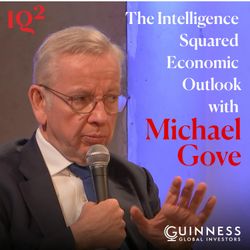
What Must Burnham Sacrifice To Make Britain Grow? With Michael Gove
01:28:43|Few figures in modern British politics have operated as close to the centre of power as Michael Gove. Over more than a decade in government, he has held some of the most senior offices of state – including Education Secretary, Justice Secretary and Secretary of State for Levelling Up, shaping policy across domestic reform, economic strategy and the future of the Union. Now, at a moment of continued economic uncertainty at home and instability abroad, Gove joined us for the Intelligence Squared Economic Outlook. In October 2026, live st Smith Square Hall in Westminster, he reflected on the forces reshaping Britain’s economic landscape. How resilient is the UK economy after a prolonged period of inflation, fiscal pressure and sluggish growth? What should a credible long-term strategy for productivity and investment look like? And how should Britain position itself in a more fragmented global economy, defined by geopolitical tension in the Middle East, energy insecurity and shifting trade alliances? This event was presented in partnership with Guinness Global Investors: https://https://www.guinnessgi.com/ Learn more about your ad choices. Visit podcastchoices.com/adchoices