Share
Voices of True Crime
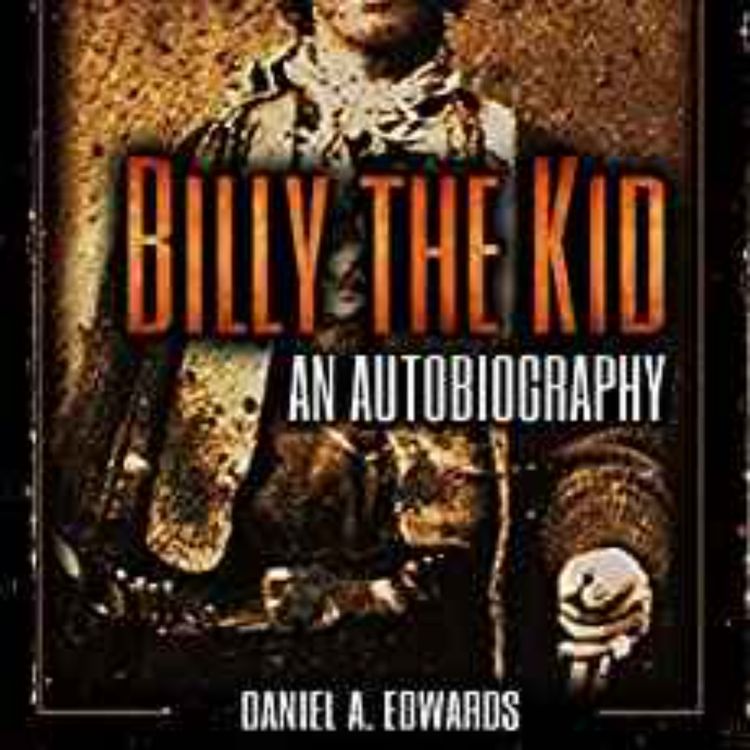
Daniel A. Edwards - Billy the Kid
Did Pat Garrett kill Billy the Kid? It was a moonlit night in Ft. Sumner, NM when history tells us that Sheriff Pat Garrett shot down the notorious outlaw Billy “the Kid”. Newspapers across the country quickly reported that the Kid was dead and Garrett quickly put the body in the ground. But rumors spread that the Kid had survived and the testimony of Garrett’s posse was contradictory about how, exactly, the shooting had gone down. Nevertheless, without evidence, the story of the heroic Sheriff stood for almost 70 years. Then, in 1950, an old man from Hico, TX petitioned the governor of New Mexico for a pardon for crimes he committed as Billy the Kid. No one took him seriously, and yet the old man was an exact match in physical characteristics and knew intimate details about the Kid’s life. He also knew details about the fateful shooting the night Garrett claimed to have shot him that had been erased by history. Details, for example, that Garrett had killed his very drunk bearded half-Mexican partner, a claim that has only recently been verified by modern research. It has been said that the living write history and not the dead, but when one returns from the dead, so to speak, that which was lost to history is restored. This is the true story of Billy the Kid, complete with new evidence that he lived to a ripe old age and died a free man. THE STORY In 1882 the notorious outlaw Jesse Evans, a childhood friend of Billy the Kid and a participant in the Lincoln County War, walked out of jail after serving a sentence for killing a Texas ranger. Jesse walked out of prison a free man and disappeared, never to be heard from again. Never, that is, until 1949 when Jesse came out of hiding after almost 60 years to claim an inheritance left to him by his brother. In the course of proving his identity to a court Jesse told some amazing stories of his time when he was an outlaw but his biggest revelation of all was that his good friend Billy the Kid was still alive. Jesse led a young lawyer named William Morrison to an old man named not William H. Bonney but William H. Roberts who after some consideration finally agreed to come forward and reveal himself as Billy the Kid. He agreed to this on one condition- that the lawyer help him obtain the pardon he was promised by the Governor but never received so he could die a free man. You see, Billy the Kid was still wanted for murder and was condemned to hang. To reveal himself was to risk arrest and death. This was a risk that William H. Roberts was willing to take. He sat down with Mr. Morrison and told his story. This book contains that story. It is the one true autobiography of Billy the Kid. A story that aside from some definite highlights and adventures that one would expect from the Kid, was remarkable normal and focused on his skill breaking horses as much or as more as his skill as a gunslinger. Billy the Kid was, in fact, just a gifted young cowhand who found himself juxtaposed against corrupt officials and lawmen at what became a key moment in American History. Before one dismisses Mr. Roberts it should be considered that 5 living acquaintances of Billy the Kid, aside from Mr. Evans who revealed him, were willing to sign legal affidavits that Mr. Roberts was the man they knew as Billy the Kid. Further, new photographic comparison shows beyond a shadow of a doubt that they were the same man. Mr. Roberts' story became the inspiration for the opening scene in hit movie "Young Guns II" starring Emilio Estevez as Billy the Kid. Also Consider that Pat Garrett was denied his reward for killing the kid for many months, and that only a special act of the legislature allowed him to finally receive it. All of this and more is contained in this book. Thanks to Mr. Morrison each of us can now pull up a chair, sit down across from Billy the Kid, and listen as he shares his story.
More episodes
View all episodes
James Renner - A Cruise to Nowhere
40:06|Gripping, suspenseful, and layered with insight, this is the first full account of the infamous disappearance of Amy Lynn Bradley while onboard a cruise ship in the Caribbean—from the acclaimed author of True Crime Addict.In March 1998, the Bradley family—Ron, Iva, and their children, Amy and Brad—boarded the Rhapsody of the Seas for a week-long Caribbean cruise. The trip was a chance to celebrate Ron’s success at work and Amy’s college graduation.In the early hours of March 24, Amy Bradley—a pretty, athletic 23-year-old—returned to the family’s stateroom with Brad after dancing at the ship’s nightclub. Amy grabbed a blanket and went out to sleep on the balcony. A few hours later, her father awoke to find her gone. What happened to her remains a mystery.Did Amy fall or jump into the water? Did she leave the boat voluntarily when it docked at Curaçao that morning? Was she smuggled off against her will and trafficked in one of the island’s brothels? In a baffling case filled with false leads, rumors, and conflicting witness reports, the only certainty is that, nearly three decades later, the Bradleys are still looking for Amy.Now, acclaimed investigative journalist James Renner provides the first definitive account of Amy’s disappearance, enriched with his own personal narrative that explores themes of identity, loss, and the deeply human need to find meaning in tragedy.With empathy and a keen eye, Renner interviews witnesses who speak on record for the first time, offering fascinating new theories, and explores a little-known side of Amy’s life that may explain everything about her fate.
Jerry Langton - Reasonable Doubts
27:36|Texas Deputy Kent McGowen shot and killed Susan White after she pulled a gun on him. It seemed like an open-and-shut case of an officer acting in self-defense. But before his first court date, the Houston region was inundated with rumor, innuendo and speculation about the case. Many believed those fabrications and half-truths to be fact. And an unsubstantiated-but-persistent story of how McGowen allegedly set up White as a murder victim because they had a relationship, or that she refused to have one, sealed his fate. McGowen was found guilty, Twice. He's already done his years in prison, but his case is worth examining for all the ways criminal courts can be manipulated by media, fast-talking lawyers and dubious witnesses.
Kent McGowen - Reasonable Doubts
59:27|Texas Deputy Kent McGowen shot and killed Susan White after she pulled a gun on him. It seemed like an open-and-shut case of an officer acting in self-defense. But before his first court date, the Houston region was inundated with rumor, innuendo and speculation about the case. Many believed those fabrications and half-truths to be fact. And an unsubstantiated-but-persistent story of how McGowen allegedly set up White as a murder victim because they had a relationship, or that she refused to have one, sealed his fate. McGowen was found guilty, Twice. He's already done his years in prison, but his case is worth examining for all the ways criminal courts can be manipulated by media, fast-talking lawyers and dubious witnesses.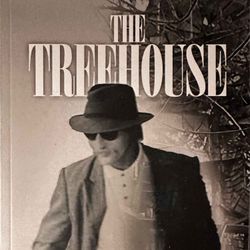
Steven Meyers & Shawn Johnson - The Treehouse :The True Story of Hollywood the Bank Robber
01:10:40|In the gray hues of Seattle, two men, Steven and Scott, are locked in a perilous journey beyond the law's reach. Entangled in a world of bank heists and fleeting loyalties, they chase redemption in a society relentless in pursuit. Amid adrenaline-fueled escapades and moral dilemmas, their kinship deepens, culminating in an unexpected bond. The tale traces their odyssey against the unforgiving backdrop of the law, culminating in the tragic end of Hollywood, a man who lived and died on his own terms, leaving a legacy entwined with the lives he touched.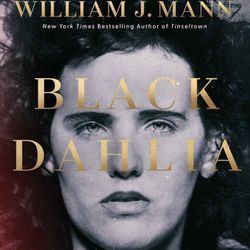
William J. Mann - Black Dahlia
29:00|The brutal murder of Elizabeth Short—better known as the Black Dahlia—in 1947 has been in the public consciousness for nearly eighty years, yet no serious study of the crime has ever been published.Short has been mischaracterized as a wayward sex worker or vagabond, and—like the seductive femme fatales of film noir—responsible for and perhaps deserving of her fate. William J. Mann, however, is interested in the truth. His extensive research reveals her as a young woman with curiosity and drive, who leveraged what little agency postwar society gave her to explore the world, defying draconian postwar gender expectations to settle down, marry, and have children. It’s time to reexamine the woman who became known as the Black Dahlia.Using a 21st-century lens, Mann connects Short’s story to the anxious era after World War II, when the nation was grappling with new ideas, new demographics, new technologies, and old fears dressed up as new ones. Only by situating the Black Dahlia case within this changing world can we understand the tragedy of this young woman, whose life and death offer surprising mirrors on today.Mann has strong opinions on who might’ve killed her, and even stronger ones on who did not. He spent five years sifting through the evidence and has found unknown connections by cross-referencing police reports, District Attorney investigations, FBI files, court documents, military records, and more, using the deep, intense research skills that have become his trademark. He also spoke with the families of the original detectives, of Short’s friends, and even of suspects, and relied on advice from experienced physicians and homicide detectives.Mann deftly sifts through the sensationalized journalism, preconceived notions, myths, and misunderstandings surrounding the case to uncover the truth about Elizabeth Short like no book before. The Black Dahlia promises to be the definitive study about the most famous unsolved case in American history.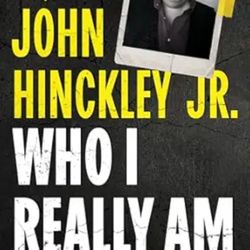
John Hinckley Jr. & Jason Norman - Who I Really Am
23:07|As shots rang out on March 30, 1981 outside the Hilton Hotel in Washington, D.C., President Ronald Reagan and three others lie seriously wounded. Just two months after Reagan was sworn in as the 40th president, John Hinckley Jr. shocked the world because of his movie star obsession.What followed was chaos. America learned of the deep psychosis that led to Hinckley’s obsession with actress Jodie Foster, and how, in his mind, he did it all for her. His trial gripped the nation. Many expected a guilty verdict, but his acquittal on grounds of insanity sparked outrage and forever changed how the law viewed mental illness.Now, for the first time, Hinckley tells his own story. He takes us through an early life of unfulfilled dreams, a music career and college degree that slipped away, and the descent into a mind overcome by delusion. He recounts the years spent in confinement at St. Elizabeth’s Hospital, the slow climb toward recovery, and the people who helped him find his way back.A life defined by a single, horrific act becomes something more: a story of mental illness, redemption, and the long road to understanding the man behind one of America’s most infamous moments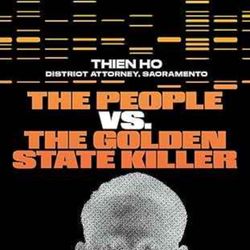
Thien Ho - The People vs. the Golden State Killer
35:52|In The People vs. the Golden State Killer, Thien Ho, the current District Attorney of Sacramento, recounts his harrowing and exhilarating experience as the lead prosecutor responsible for capturing and prosecuting Joseph DeAngelo. Referred to at various times by law enforcement and the media as the Visalia Ransacker, the East Bay Rapist, the Original Nightstalker, and finally the Golden State Killer, DeAngelo, a former policeman, is widely considered “one of the most notorious serial predators in American history.”Ho’s book is the first official account of how the Golden State Killer was apprehended and put behind bars for life. Ho led an elite team of law enforcement from six California prosecutor's offices, using a newly developed tool known as “investigative genetic genealogy” to connect DeAngelo to multiple cold cases stretching back nearly a half century.Many previous narratives about DeAngelo, including two bestselling books and multiple documentaries, focused largely on the killer and his heinous crimes. This book not only provides hundreds of facts and details never revealed to the public about the Golden State Killer’s crimes, it also presents the real-life story of the people who worked tirelessly to bring DeAngelo to justice. It also offers the unprecedented authorized perspective of three survivors of DeAngelo's crimes who courageously turned their pain into empowerment and activism. A portion of the book’s proceeds will be donated both by the author and Third State Books to Phyllis’s Garden, a nonprofit advocating for victims’ rights begun in honor of a GSK survivor.The People vs. the Golden State Killer also recounts Ho’s fascinating personal journey, from escaping communist Vietnam with his family as a child to working his way up from an internship to an elite homicide division and eventually becoming one of only ten Asian American district attorneys out of 2,400 nationwide.
Eli Frankel - Sisters in Death
40:49|Who killed the Black Dahlia? In this eye-opening shocker, an award-winning producer, true-crime researcher, and Hollywood insider finally solves the greatest - and most gruesome - murder mystery of the twentieth century just before its 80th anniversary.In January 1947, the bisected body of Elizabeth Short, completely drained of blood, was discovered in an undeveloped lot in Los Angeles. Its gruesome mutilations led to a firestorm of publicity, city-wide panic, and an unprecedented number of investigative paths led by the LAPD—all dead ends. The Black Dahlia murder remained an unsolved mystery for over seventy years.Six years earlier and sixteen hundred miles away, another woman’s life had ended in a similarly horrific manner. Leila Welsh was an ambitious, educated, popular, and socially connected beauty. Though raised modestly on a prairie farm, she was heiress to her Kansas City family’s status and wealth. On a winter morning in 1941, Leila’s butchered body was found in her bedroom bearing the marks of unspeakable trauma.One victim faded into obscurity. The other became notorious. Both had in common a killer whose sadistic mind was a labyrinth of dark secrets.Eli Frankel reveals for the first time a key fact about the Black Dahlia crime scene, never before shared with the public, that leads inexorably to the stunning identification of a criminal who was at the same time amateurish and fiendish, skilled and lucky, sophisticated and brutish. Drawing on newly discovered documents, law enforcement files, interviews with the last surviving participants, the victims’ own letters, trial transcripts, military records, and more, this epic true-crime saga puts together the missing pieces of a legendary puzzle.In Sisters in Death, the Black Dahlia cold case is finally closed.
Rachel Corbett - The Monsters We Make: Murder, Obsession, and the Rise of Criminal Profiling
27:32|Criminal profiling—the delicate art of collecting and deciphering the psychological “fingerprints” of the monsters among us—holds an almost mythological status in pop culture. But what exactly is it, does it work, and why is the American public so entranced by it? What do we gain, and endanger, from studying why people commit murder? In The Monsters We Make, author Rachel Corbett explores how criminal profiling became one of society’s most seductive and quixotic undertakings through five significant moments in its historCorbett follows Arthur Conan Doyle through the London alleyways where Jack the Ripper butchered his victims, depicts the tailgate outside of Ted Bundy’s execution, and visits the remote Montana cabin where Ted Kaczynski assembled his antiestablishment bombs. Along the way emerge the people who studied and unraveled these cases. We meet self-taught psychologist Henry Murray, who profiled Adolf Hitler at the request of the U.S. government and later profiled his own students—including the future Unabomber—by subjecting them to cruel humiliation experiments. We also meet the prominent Yale psychiatrist Dorothy Lewis, who ended up testifying that Bundy was too sick to stand trial. Finally, Corbett takes the story into our own time, explaining the rise of modern “predictive policing” policies through a study of one Florida family that the analytics targeted—to devastating effects.With narrative intrigue and deft research, Corbett delves deep into the mythology and reality of criminal profilers, revealing how thin the line can be separating those who do harm and those who claim to stop it.