Share
HumorUs Stories — Classic and Original Funny Stories
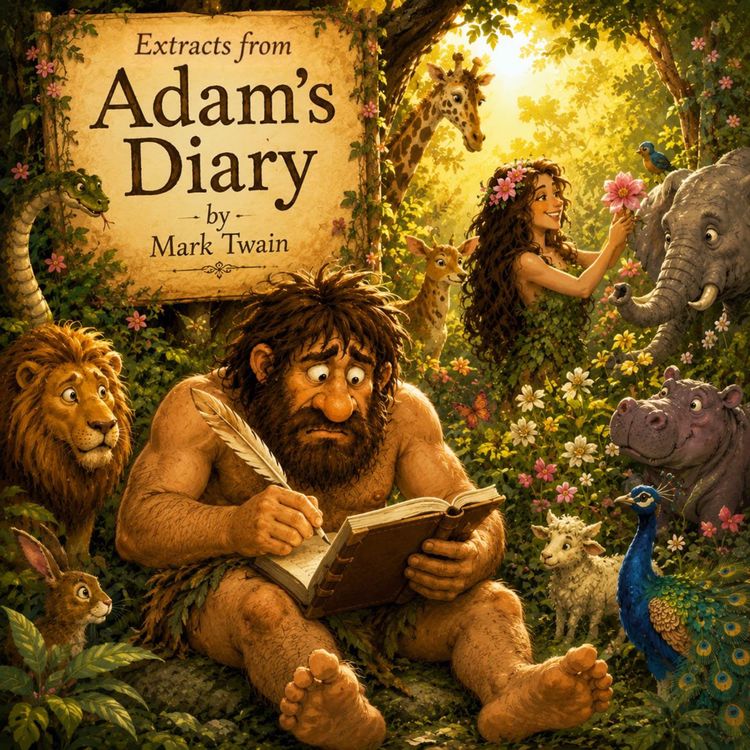
Excerpts from Adam's Diary by Mark Twain
Before there was marriage counseling, there was Adam's diary. Mark Twain's comic monologue imagines the Garden of Eden's first resident keeping a running, increasingly exasperated account of the strange new creature who's moved in, started naming his animals, and rewritten the rules of the place without asking. It's Genesis as domestic comedy, and it's every bit as sharp as Twain at his best.
Mark Twain, born Samuel Langhorne Clemens in 1835, remains one of America's most enduring literary voices, known for wit as sharp as his social criticism. From The Adventures of Huckleberry Finn to shorter satirical pieces like this one, Twain had a gift for finding the absurd in the everyday, even when the everyday happened to be the Garden of Eden.
Despite a few suspicious reviews, every story you hear is narrated by an actual human—me, Don McDonald. If you enjoy the show, please rate it five stars and help me prove I’m not AI—which is, admittedly, exactly what AI would ask you to do.
More episodes
View all episodes
The Romance of a Busy Broker — A Classic Humorus Story by O. Henry
10:17|Wall Street, a spring morning at the turn of the century. The ticker is running hot, the telephone won’t quit, and Harvey Maxwell, broker, is handling it all like a man with springs where his heart should be. His clerk thinks the boss is slipping. His stenographer has something on her mind. Then a window opens, and somebody on the Exchange starts clubbing the stuffing out of Union Pacific.O. Henry at full gallop, in a nine-minute comedy from The Four Million, read by Don McDonald.HumorUs is part of the Short Storyverses network of fiction podcasts. More stories, more feeds, at shortstoryverses.com.
Tobermory — A Classic Short Story by Saki
19:38|Every house party has a guest who knows too much. A mild little man named Cornelius Appin has spent seventeen years on one problem. He believes he's solved it: he has taught a cat to speak. The company around Lady Blemley's tea table does not believe him — and that, as it happens, is the last comfortable moment anyone in the house will enjoy. Pour yourself some tea. Mind the saucer. Saki was the pen name of Hector Hugh Munro (1870–1916), the sharpest wit of the Edwardian age. Born in Burma and raised in Devon by a grandmother and two aunts he could not abide, he became a foreign correspondent before turning his pen on polite society. He borrowed his pen name from the cupbearer in the Rubáiyát of Omar Khayyám. When war came in 1914, he enlisted as a private at forty-three and refused a commission; he was killed by a sniper in France on November 14, 1916. His last words were “Put that bloody cigarette out.” “Tobermory” first appeared in the Westminster Gazette in 1909 and was collected in The Chronicles of Clovis in 1911. Read by Don McDonald. HumorUs is part of the Short Storyverses network. shortstoryverses.com If you enjoyed this one, tell a friend, subscribe on your favorite podcast app, and leave a review. It genuinely helps. Also, check out my multiple short story universes at shortstoryverses.com Find more stories at ShortStoryverses.com — a multiverse of audio fiction spanning seven shows: classics on LitReading, original voices on New Tales Told, children's stories on Readastorus, holiday tales on Season's Readings, horror on FRIGHTLY!, romance on Love Lit, and comedy on HumorUs. Every story sized to fit a commute, a walk, or the quiet stretch before sleep. We have stories buried everywhere.
A Foot Too Deep — An Original Short Story by Don McDonald
14:32|Nobody in New Orleans had ever made Bernard de Marigny look foolish in public. He was rich past counting, small as a foil, and very likely the most dangerous man in Louisiana with a pistol in his hand. Then a blacksmith from a far parish, seven feet of him and slow to speak, said something true on the floor of the legislature, and the whole chamber laughed.The card came to the forge two days later.The blacksmith was no duelist. He was, however, a man who had spent his life learning where something hard gives.From Short Storyverses. More at shortstoryverses.com.
A Slice of Life — A Classic Story by P.G. Wodehouse
36:18|A man in a country pub insists his story is true. It concerns his brother Wilfred, a chemist of some genius, a jolly outdoor girl with a wholesome sunburn, and a Yorkshire baronet who spells his name with four small f's. Somebody is being kept behind a locked door on the second floor. Somebody else is about to regret asking what's true to life.This is P.G. Wodehouse, 1926, at his most gleefully unreliable.First published in Liberty, August 7, 1926; collected in Meet Mr. Mulliner, 1927. Read by Don McDonald. HumorUs is part of the Short Storyverses network. shortstoryverses.com
The Celebrated Jumping Frog of Calaveras County by Mark Twain
15:20|An errand, a name, a question. That's all it takes.Sent east to west on a friend's behalf, a traveler walks into a decayed mining camp in Calaveras County and asks one polite question of one agreeable old man. He is then backed into a corner, blockaded there with a chair, and told at enormous length about Jim Smiley, a gambler who would bet on a horse race, a dog fight, a camp meeting, or two birds on a fence, and who once spent three solid months in his back yard teaching a frog to jump.The frog's name was Dan'l Webster. He was, by every account, the finest jumper in the county.Then a stranger came through camp.Mark Twain published this in the fall of 1865 and woke up famous. Sixty years of American humor start here, on a barroom floor, with forty dollars on the line.Mark Twain was the pen name of Samuel Langhorne Clemens, born in Missouri in 1835. Printer's devil, riverboat pilot, and, briefly and disastrously, a silver prospector. He went west in 1861 chasing a fortune he never found, and came back with something better, which was a way of hearing how Americans actually talked.He heard this story in a tavern in Angels Camp in the winter of 1865, wrote it down, and watched it run in a New York paper that November. It was reprinted everywhere, pirated almost as fast, and read aloud in parlors and barrooms coast to coast. He was thirty and unknown that fall. By spring he was Mark Twain. Tom Sawyer was still eleven years away.If you enjoyed this one, tell a friend, subscribe on your favorite podcast app, and leave a review. It genuinely helps. Also, check out my multiple short story universes at shortstoryverses.com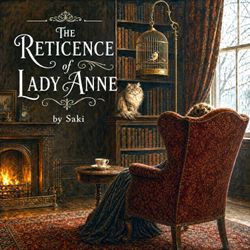
The Reticence of Lady Anne — A Classic Short Story by Saki
09:15|A December afternoon, a fire going down, and a marriage stalled halfway through a quarrel nobody bothered to finish. Egbert comes in for tea prepared to be reasonable, then conciliatory, then almost penitent. Lady Anne, rigid in the armchair by the tea table, declines to participate. Somewhere above them a bullfinch works through the only tune it knows, and on the rug a Persian cat named Don Tarquinio waits with the patience of an animal who has already decided something.Saki at his most precise: eleven minutes of drawing-room comedy built entirely out of one person not speaking, and a closing line that reorganizes everything you just heard."The Reticence of Lady Anne" was collected in Reginald in Russia and Other Sketches (1910). Read by Don McDonald.Litreading is part of Short Storyverses. shortstoryverses.com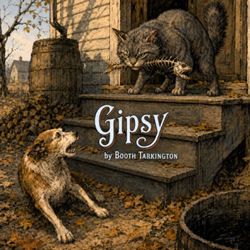
Gipsy — A Classic Comic Tale by Booth Tarkington
14:09|Duke is a little old dog with a pessimistic worldview and a well-earned suspicion that life rarely improves. Gipsy is a rangy, scarred, yellow-eyed stray cat who lives by his own code and has never met a creature he could not intimidate. When Gipsy helps himself to a fishbone resting near Duke's sleeping nose, the afternoon explodes into a comic war of nerves, claws, and theatrical yelping that draws every boy in the neighborhood running to witness the spectacle.Booth Tarkington, one of only three writers to win two Pulitzer Prizes for Fiction, brings his gift for sharp character comedy to this brief, savage encounter between two animals who understand each other perfectly. The battle is brief, the casualties are mostly to dignity, and the ending involves a cistern, a miscalculation, and one of the most memorable splashes in American humor.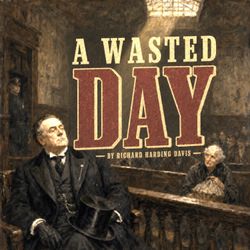
A Wasted Day — A Classic Short Story by Richard Harding Davis
33:43|Arnold Thorndike buys a Correggio before breakfast and can price his own time to the minute. Two hundred dollars of it. So when he stops his car at the Court of General Sessions to say a word for a young stenographer who got drunk, lost five hundred dollars of his employer's money, and is due up for sentence, he figures the errand will run him about a thousand.The court has other ideas. Richard Harding Davis, the most famous reporter of his generation, sets the Wisest Man in Wall Street down on a hard oak chair and leaves him there, unrecognized and unimportant, admitted only because he's "with Mr. Andrews," while the whole sorry parade of the city files past the bench.This is a comedy of manners with a soft heart. If you enjoy well-narrated short stories, check out our many story-telling podcasts at shortstoryverses.com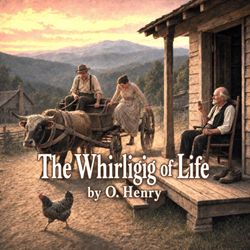
The Whirligig of Life — A Classic Short Tale by O. Henry
14:21|Ransie and Ariela Bilbro come down out of the Cumberland Mountains to have their marriage undone. Justice of the Peace Benaja Widdup can find no law on the subject, so he invents one, and prices it at five dollars, which happens to be every cent Ransie made on his furs. Then Ariela wants alimony. What follows is a night ride, a masked man, a bill rolled tight and pushed down a rifle barrel, and a decree that nobody much wants by morning. O. Henry watches a single five-dollar bill travel in a perfect circle, and two stubborn people get carried around with it. A love story for anyone who ever meant it when they said they were leaving.