Share
HR on the Offensive
How can leaders manage change through uncertainty?
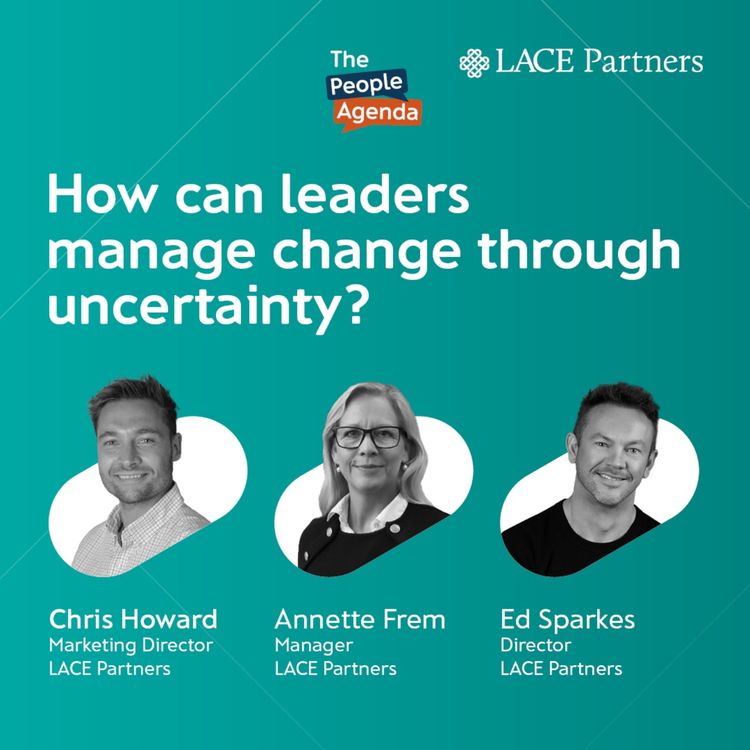
Change is no longer an occasional business challenge. It is a constant reality. Organisations are facing difficult decisions at an unprecedented pace. The real test for leaders is not whether change happens, but how they guide people through it when the impact feels personal. In this episode of The People Agenda podcast Chris Howard, Annette Frem, and Ed Sparkes, explore the practical strategies for managing restructures organisational change with empathy, transparency, and resilience. This topic was also explored in our blog, When change feels personal – navigating tough times, read it for more details.
Organisations are experiencing more restructures and workforce reductions because economic, technological, and market pressures continue to accelerate.
- Around one-third of UK employers are preparing for headcount reductions.
- Rising employment costs are forcing businesses to review operating models.
- AI and technology adoption are reshaping workforce structures and job design.
- Global uncertainty, including economic instability and geopolitical events, is increasing pressure on organisations.
- The pace of change continues to increase, requiring businesses to adapt more frequently.
How can leaders manage change more effectively?
Leaders should involve people early, communicate honestly, and build understanding before difficult decisions are announced. They can do this by:
- Sharing business challenges before major decisions are finalised.
- Explaining the case for change through a series of transparent updates.
- Avoiding creating surprises by gradually building awareness of business realities.
- Focusing on respect, honesty, and consistency in communication.
- Demonstrating that alternative options were considered before implementing cuts.
Why are middle managers so important during change?
Middle managers are often the most important link between leadership and employees during periods of change. Because they work closely with their teams every day, they have a strong understanding of employee concerns and can provide practical insights that may not be visible at senior leadership level.
They also play a key role in turning strategy into meaningful conversations, helping employees understand what is changing and what it means for them. When middle managers are involved early and given the right support, they can build trust, strengthen engagement, and have a significant influence on how change is experienced across the organisation.
What leadership behaviours make the biggest difference?
During periods of uncertainty, employees look to leaders for clarity, consistency, and reassurance. Trust is built when leaders are visible, communicate openly about what they can and cannot share, and remain consistent in their messaging. While difficult decisions are rarely easy, employees are more likely to respect them when leaders show confidence in the choices they have made and explain the rationale behind them.
The most effective leaders also balance empathy with a clear focus on business priorities, acknowledging the impact on people while demonstrating that they, too, are carrying the responsibility and challenges that come with leading through change.
Change may be constant, but how organisations manage it remains a choice. This podcast provides practical guidance for leaders, HR professionals, and change practitioners who want to navigate difficult transitions with empathy, transparency, and confidence. Listen to the full People Agenda podcast to hear the real-world experiences, leadership lessons, and actionable advice from the LACE team.
More episodes
View all episodes

What is a CPO? with Sean Mileusnic
29:34|The role of the Chief People Officer (CPO) is evolving faster than ever. No longer focused solely on HR operations, today’s CPO is increasingly responsible for driving organisational transformation, shaping strategy, influencing culture, and helping businesses navigate complex change. In this episode of The People Agenda podcast, Debbie Mitchell speaks to Sean Mileusnic from the Royal National Institute of Blind People (RNIB) as he shares his perspective on what it means to be a modern CPO and why the role has become critical to organisational success.What is a Chief People Officer?A CPO is an enterprise leader first and a people leader second. While the role varies between organisations, every CPO plays a central part in connecting people, culture, strategy, and business performance. CPOs must be able to:Influence organisational direction alongside the CEO and BoardRepresent employee perspectives at executive levelOversee culture, organisational design, and workforce strategyEnsure core people processes operate effectivelyAdapt responsibilities based on organisational needs and context How does a new CPO identify priorities?Successful CPOs quickly balance urgent operational issues with long-term strategic goals. As Sean puts it, “you’re trying to manage that balance between… things that I urgently need to deal with… and the three to five key strategic things that are going to make a difference.” CPOs can achieve balance by:Conducting extensive due diligence before joiningMeeting as many colleagues as possible during the first monthsAddressing immediate risks and operational challenges quicklyIdentifying three to five strategic priorities for long-term successBuilding plans that deliver both short-term stability and future growth How does a CPO build the right team?Building the right team requires an honest assessment of culture, capability, and future requirements. The goal is to retain strong talent, develop potential, and introduce new skills where needed.Evaluate current team structure and capabilitiesRetain high-performing individuals who fit future needsDevelop employees willing to grow with the organisationRecruit specialist expertise where capability gaps existCommunicate future expectations transparently and early Why is organisational development so important?Organisational Development (OD) can play a key role when businesses are going through significant change. By building a dedicated OD capability, organisations can bring specialist expertise in areas such as culture, capability, engagement, and organisational design, helping to support transformation in a more focused way.This not only strengthens the foundations for long-term organisational effectiveness but also helps businesses move more quickly on strategic priorities and deliver change more successfully. What makes being a CPO in the charity sector different?The charity sector presents unique challenges because decisions must balance commercial realities with social impact. Leaders often manage greater complexity, particularly around governance, accessibility, and stakeholder expectations.Work closely with trustee boards that are deeply connected to organisational purposeBalance financial sustainability with social responsibilityConsider the impact of decisions on vulnerable communitiesManage higher levels of accessibility and inclusion requirementsNavigate complex decisions where ideal solutions may not exist The Chief People Officer has evolved into one of the most influential roles in modern organisations. As businesses face growing complexity and change, the ability to align people, culture, and strategy has never been more valuable.If you want deeper insights into how today’s CPOs are shaping organisations, leading transformation, and preparing for the future, listen to this episode of The People Agenda podcast.
What is a CPO? with Michelle Wall
31:05|The role of the Chief People Officer has evolved far beyond traditional HR. In high-growth, private equity-backed businesses, today’s CPO is a commercial leader responsible for driving growth, enabling strategy, shaping culture, and creating the conditions for long-term business success. In this episode of the People Agenda Podcast Chris Howard and Debbie Mitchell speak to Michelle Wall as she shares how modern people leadership is becoming a key driver of business value rather than a support function. How is today’s Chief People Officer defined? A CPO role is to make sure the people strategy supports the organisation's growth, performance, and long-term success. By aligning people priorities with business goals, they help create the conditions for sustainable growth and stronger organisational performance. This means shaping operating models that can scale with the business, improving the employee experience, and ensuring the organisation is set up to adapt and perform effectively. Increasingly, the CPO is seen not as a support function, but as a strategic leader who helps drive business value and outcomes. How can HR move beyond being seen as a support function? Michelle argues that HR earns its place at the leadership table by starting with business priorities, not HR priorities. They can start by: Building people strategies around business objectives. Participate in business strategy discussions from the outset. Use commercial language that resonates with senior stakeholders. Demonstrate how people initiatives contribute to growth and profitability. Position HR as an enabler of business outcomes rather than a policy owner. How should CPOs communicate with Executive teams? Michelle believes that CPOs should focus conversations on business outcomes and measurable value. To achieve this CPOs must: Connect people initiatives to growth, productivity, and profitability. Use board-level metrics such as Employee Net Promoter Score (eNPS). Highlight retention in critical roles that directly affect customer delivery. Frame discussions around organisational health and business performance. Adapt messaging to the audience while maintaining a commercial focus. How can businesses preserve culture during rapid growth and acquisitions? Successful growth preserves local culture while creating alignment around shared principles. To preserve their culture organisations should: Retain existing brands, customer relationships, and cultural identities. Introduce common values centred on a people-first philosophy. Implement a structured 90-day integration approach for new acquisitions. Reinforce cultural alignment through quarterly reviews and operating rhythms. Create consistency without imposing a one-size-fits-all culture.What role do systems play in organisational growth? Technology and systems provide the foundation for scalable growth and operational consistency. Introduces common platforms for scheduling, finance, contracts, and health and safety. Creates visibility into workforce data and resource planning. Improves service delivery and operational efficiency. Supports transformation through standardised processes. Delivers quick wins that help employees see immediate value from change. The modern CPO is no longer focused solely on people processes. The role has become a strategic leadership position that drives growth, supports transformation, strengthens culture, and helps organisations create lasting business value. If you want to understand how people leadership is shaping the future of business, listen to this episode of the People Agenda Podcast.
What is a CPO? with Jonny Friedman
29:09|The modern Chief People Officer is no longer just a people leader. Today's CPO is a strategic business partner, cultural architect, and organisational conscience. In this episode of The People Agenda Podcast Chris Howard and Debbie Mitchell speak to Jonny Friedman, Senior Vice President of People and Talent at Acumetis, as he shares how people leaders can balance commercial performance, organisational transformation, and employee experience while navigating rapid growth and change. What is a Chief People Officer? Jonny argues that the CPO is the conscience of the business, balancing commercial goals with employee wellbeing and organisational culture. Their role includes: Acting as both a strategic advisor and servant leader Combining emotional intelligence with data-driven decision making Influencing stakeholders across the entire organisation Helping align people strategies with business objectives Ensuring employees can contribute effectively to the organisation's mission What challenges come with integrating multiple businesses? Successfully bringing multiple organisations together requires balancing growth, culture, processes, and employee experience throughout the transition. It means aligning systems, ways of working, and contractual arrangements, while also helping people adapt to cultural changes particularly when moving from a family-owned business to a private equity-backed environment. Keeping employees informed, engaged, and supported throughout the process is key to maintaining trust and ensuring the integration delivers its intended outcomes. How is Gen Z changing leadership? Jonny believes that Gen Z is driving greater transparency, authenticity, and openness in workplace leadership. Around 35–40% of the workforce consists of graduates, master's degree holders, and PhD-level talent Employees increasingly expect honest and direct communication Leaders are encouraged to listen more and rely less on hierarchy Constructive challenge is viewed as a strength rather than a disruption Organisations benefit when employees feel safe expressing ideas and opinions How can organisations build a stronger culture? Strong cultures are created when organisations combine shared values with clear expectations and genuine employee involvement. Leaders who encourage people to share their views and contribute to decision-making are often better able to build engagement and trust. Practices such as reverse mentoring can also help senior leaders gain valuable insights from employees across the business, creating a stronger understanding of different experiences and perspectives. When cultural expectations are communicated clearly and applied consistently, they help bring people together around a common purpose, regardless of role or team. What is human-centred leadership? Human-centred leadership creates trust by prioritising authenticity, connection, and empathy during periods of change. Leaders openly acknowledge challenges and uncertainty Vulnerability is used to strengthen credibility and trust Employees are encouraged to bring their whole selves to work Community, belonging, and purpose drive engagement beyond compensation Strong relationships help organisations navigate complex transformations The key takeaway from this conversation is clear: successful CPOs create business value by putting people at the centre of organisational transformation. As businesses become more complex, the ability to balance commercial outcomes, culture, leadership, and employee experience will become even more critical. If you're interested in the future of people leadership, organisational culture, and the evolving role of the Chief People Officer, listen to this podcast episode and hear Jonny Friedman's insights firsthand.
What is a CPO? with Neil Morrison
30:29|Great leadership roles are rarely defined by job titles alone. In this episode of the People Agenda podcast, Chris Howard and Debbie Mitchell sit down with Neil Morrison, the Chief People Officer (CPO) of Severn Trent as he explains why the modern CPO is no longer just an HR leader. The role has evolved into a business-critical position focused on organisational performance, culture, trust, and commercial impact. Neil shares practical insights on what separates high-performing executive teams from disconnected leadership groups. What is the role of a modern CPO? A modern CPO is expected to drive organisational performance, not just oversee HR operations. Neil describes the role as helping individuals, teams, and the wider business perform at their best by aligning culture, strategy, and execution. In his view, the most effective leaders focus less on staying within traditional functional boundaries and more on where they can create the greatest impact. He also believes that high-performing executive teams work collaboratively across the business, rather than operating as separate functional silos. Why are people and communications functions merging? People and communications teams are increasingly working more closely together because both functions have a major influence on culture, trust, storytelling, and overall business performance. Neil explains that organisations today need stronger alignment between internal and external messaging, especially as employees expect greater transparency and consistency. He sees both HR and communications as functions focused on shaping behaviour and building engagement, which makes collaboration between them more important than ever. He also argues that consistent messaging helps strengthen trust across the workforce. How does culture directly impact business performance? Neil believes culture has a bigger impact on operational performance than many organisations often recognise, shaping everything from discretionary effort to customer outcomes and long-term resilience. He notes that while strong cultures can take years to build, they can be damaged quite quickly if consistency and trust are lost. In his view, employees tend to go the extra mile when they feel a genuine connection to their communities, customers, and the organisation’s purpose, particularly in moments where customer experience really matters. He also cautions against repeatedly “relaunching” culture initiatives, as this can create confusion rather than providing the clarity and stability employees need. What makes a CPO effective at executive level? An effective CPO builds trust, challenges leadership constructively, and helps executive teams perform better collectively. Neil describes the role as being both “inside” and “outside” leadership conversations at the same time. CEO relationships are the most critical partnership for a CPO. Trust must exist both in competence and authenticity. Emotional intelligence and business understanding are equally important The CPO acts as a “critical friend” who improves the quality of executive conversations. How is AI changing the people function? AI is changing the people function by improving productivity, operational efficiency, and employee support systems. Neil believes organisations must balance innovation with employee experience. AI is being used to improve engineering design and optimise construction planning. Contact centre teams use AI tools to surface customer history and relevant policies in real time. AI adoption must support both organisational goals and employee outcomes. AI is a tool for enhancing work rather than replacing human judgement. This episode offers a practical and refreshingly honest perspective on the future of leadership, culture, and the evolving role of the CPO. If you want actionable insights on organisational performance, executive leadership, and the intersection of people and business strategy, this is a podcast worth listening to.
Who owns agentic AI?
19:19|The conversation around AI in the workplace is shifting fast and the real tension isn’t about technology, it’s about ownership. Who actually “owns” AI inside an organisation today? In this episode of The People Agenda podcast Chris Howard and LACE Director of AI Data and Technology, Martin Colyer, speak with Chris Cherry from Eightfold. They cut through the noise and explore how HR, IT, and business leaders are navigating agentic AI, and real-world adoption. We also collaborated with Eightfold on a webinar centred around this topic which you can watch on demand here. Who should lead the AI strategy in the modern workplace? HR must take centre stage in owning the AI strategy because agentic AI functions more like a worker than a traditional software tool. While IT has historically managed technology decisions, the move toward AI agents requires a focus on operating model design, workflow placement, and the handoff process between humans and digital agents. At LACE we are calling this “The AI + Human network”. Below are some reasons why AI could sit in each function: HR: Focuses on operating model design and the integration of AI agents as members of the workforce. IT: Provides the underlying infrastructure, manages cybersecurity, and mitigates data leakage risks. Cross-functional leadership: Some organisations have combined HR and IT under a single leader to accelerate deployment. Chief AI Officer: This emerging role represents an inflection point where tech and people management roles blur. We explore the role of a Chief AI Officer here. What is agentic AI and why does it matter? Agentic AI refers to systems that can act independently to complete tasks and workflows, going beyond basic automation into decision-making and execution. Instead of relying on constant human input, these systems can handle multi-step processes, connect across different platforms to run workflows end-to-end, and learn from data to improve over time. As a result, AI starts to move from being a supporting tool to acting more like a digital worker. This marks a fundamental shift, Chris Cherry explains, “traditionally the workforce has been a user of technology, with agentic AI the technology itself becomes part of the workforce.” How can organisations bridge the communication gap between CPOs and CIOs? Leaders need to develop a shared language by becoming more digitally savvy and service-oriented, so their functions don’t end up working in silos. Traditionally, HR and IT have spoken different “languages,” which can create friction, especially when governance is seen as a blocker rather than something that enables progress. For CPOs, this means building AI fluency as a core skill so they can engage confidently with the C-suite and CIO. At the same time, CIOs need to see their role as supporting people and the wider business, not just managing technology. When both sides align on common goals and shared accountability, governance shifts from being a hurdle to something that actively supports and protects innovation. How is AI changing HR’s role? HR is evolving from process owner to strategic enabler of skills and workforce intelligence. AI is pushing HR toward a more data-driven and forward-looking function by: Transitioning to a skills-first approach in hiring and development Using AI to identify talent gaps and internal mobility opportunities Enhancing decision-making with predictive analytics Reducing manual administrative workload through automation AI is an operational reality that demands clarity, coordination, and action. If you want to hear the full discussion, including real examples and practical insights from industry experts, take the next step and listen to this podcast.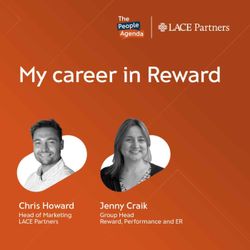
My career in Reward with Jenny Craik
32:42|“Reward and performance is all about understanding people.” says Jenny Craik. In this episode of The People Agenda podcast, host Chris Howard is joined by experienced HR leader Jenny Craik, who shares insights from her career in reward and performance at organisations like HSBC, Standard Chartered and Barclays. Jenny talks about what it really takes to succeed in the world of reward, highlighting that it’s not just about technical expertise, but also about understanding people. She offers practical reflections on building influence, managing change, and staying relevant in an evolving landscape. How do you break into and succeed in reward roles today? Jenny believes to succeed in reward HR leaders need to combine technical understanding with strong interpersonal and critical thinking skills. While tools and AI are changing the way we work, how can we keep the human touch? Jenny suggests that we: Focus on core skills: analytical thinking, attention to detail, and listening Learn from experienced professionals through observation and questions Build foundational knowledge in data, models, and reward structures Develop understanding of behavioural science and human motivation Use AI as a tool but validate outputs with critical thinking and an AI structured framework What are the biggest challenges in a reward career? The most difficult challenges involve high-stakes decisions, stakeholder tension, and managing people dynamics. According to Jenny, HR leaders can avoid these challenges by: Making decisions with real human impact Navigating conflicting priorities between executives, boards, and stakeholders Managing emotionally charged topics like pay, fairness, and value perception Leading diverse teams with different perspectives and working styles Maintaining resilience and objectivity under pressure What makes a career in reward meaningful and rewarding? The most rewarding part of this work comes from making a real impact on people and seeing tangible change across the organisation. Reward has a direct influence on employees’ experiences, which makes the work feel meaningful day to day. In some cases, the consequences can be deeply personal. “We make decisions that are going to change somebody’s life,” Jenny says, this highlights the emotional weight that often sits behind pay, benefits and fairness decisions. There’s also a lot of value in coaching and developing future leaders, as well as gaining broader perspectives through international experience. Jenny notes that designing policies that genuinely improve people’s lives, and then seeing that reflected in employee feedback and engagement data, is what makes it especially worthwhile. How do reward professionals balance business and people priorities? Success comes from aligning commercial outcomes with employee experience through strong partnerships, especially with finance. Reward sits at the intersection of cost and value and must be able to: Build mutual respect and curiosity with finance teams Understand business performance, investor expectations, and strategy Use data and evidence to support reward decisions and proposals Develop clear business cases for people initiatives Combine data with storytelling to influence decision-making What is the future of the reward and performance function? The future of reward lies in strategic partnership, enabled by AI to provide personalised employee experiences. While administrative tasks will reduce significantly, the need for human skills in navigating emotive issues and challenging business leaders will increase. Jenny notes that the profession must adapt to increasing transparency and a shift toward skills-based compensation models. If you want to hear the full conversation and dive deeper into these insights, listen to this episode of The People Agenda podcast. It’s packed with real-world perspective you won’t get from theory alone. If you want support on how to build an effective reward strategy check out our Reward and performance services page to learn more.
How can smart incentive design drive performance?
29:07|Well-designed incentives can transform organisational performance however, poorly designed ones can quietly undermine strategy, culture, and results. In this episode of The People Agenda podcast host Chris Howard and LACE reward specialists, Julie Elder and Mike Aldred as they explore how organisations can design incentives that genuinely drive the behaviours they want. They discuss why incentives matter, the most common structures companies use, and how leaders can align reward programmes with business strategy to maximise impact. Why do organisations design incentive programmes? Organisations use incentives to help align employee behaviour with business strategy. When employees can clearly see how their performance connects to rewards, they are more likely to focus on the priorities that matter most to the organisation. Well-designed incentive plans support strategic objectives and motivate employees to achieve measurable outcomes, such as increasing revenue, improving productivity, or supporting strategic change. They also encourage accountability by tying rewards directly to performance. If organisations start to see a disconnect between performance goals and the rewards employees receive, they often review or redesign their incentive plans. In practice, the most effective programmes usually include a mix of short-term and long-term incentives to balance immediate results with long-term success. What types of incentives do organisations typically use? Short-term incentives are often used across broader employee populations, while long-term incentives are usually reserved for senior leaders or critical talent roles. Below are some incentives organisations typically use: Short-term incentives: annual bonuses linked to financial or operational targets Long-term incentives: multi-year rewards tied to sustained performance Cash incentive plans: common in smaller or private companies Equity-based plans: shares or share options used in larger or listed organisations Sales incentives: targeted schemes designed for revenue-generating roles What makes an incentive plan effective? Effective incentive plans work best when they are closely aligned with an organisation’s strategy and clearly understood by employees. The design should support the behaviours and outcomes that leadership wants to prioritise. However, over time, incentive plans can gradually move away from their original strategic purpose, especially as business priorities change. Regular reviews help ensure that these plans continue to support the organisation’s evolving goals. This raises an important question: how can organisations make sure their incentive programmes remain effective? Incentives should directly support business strategy and key performance metrics Targets must be measurable, achievable, and clearly communicated Reward outcomes should feel fair and transparent to participants Organisations should balance multiple incentives as part of a wider reward strategy Periodic reviews help prevent misalignment between incentives and business goals Incentive design sits at the heart of an effective reward strategy. When done well, it aligns people, performance, and business outcomes in a powerful way. If you want to hear the full discussion and deeper insights from reward experts, listen to this episode of The People Agenda podcast for practical examples and real-world perspectives on designing incentives that work.
How can CPOs build greater influence in the C-suite?
29:44|Great leadership does not start with a title. It starts with influence. In this episode of The People Agenda podcast, we explore one critical question: how can today’s Chief People Officer (CPO) move from having a seat at the table to genuinely shaping business transformation? Drawing on insights from our research “From implementer to influencer” host Chris Howard and fellow LACEr Debbie Mitchell speak to executive coach Hilary Gee, on how CPOs can build influence among the C-suite. As a part of our research LACE surveyed 450 C-level executives (CPOs, CEOs, CFOs, COOs and CTOs) in large organisations in the UK, GCC and North America Why isn’t having a seat at the table enough? Having a seat at the C-suite table is no longer the primary challenge, influence is. Our research shows that while 64% of leaders say HR is actively involved in shaping decisions, a quarter (25%) say HR is considered but not central to the decision-making process. In many organisations, CEOs and CPOs interact infrequently, limiting alignment on strategic priorities, while CFOs and COOs undervalue HR’s contribution to business-wide outcomes. HR is often viewed as functionally strong but commercially light and transformation leadership is still, in some cases, perceived as operational rather than people led. How can CPOs speak the language of the C-suite? Despite HR’s growing presence at the top table, influence can still stall. 41% of leaders say HR is seen as reactive or lacking measurable impact, limiting its ability to shape strategic outcomes at the highest level. CPOs need to connect people strategy directly to commercial outcomes. Influence grows when HR leaders speak the language of finance, operations, and growth not just culture and engagement. They can strengthen their impact by: Framing culture initiatives in terms of productivity, margin, and risk mitigation. Presenting workforce investments with quantified ROI ranges and cost-benefit clarity. Tailoring communication style to the audience Shifting from “employee experience” language to business value creation. When CPOs are able to align their message with business metrics, their credibility rises significantly. What makes C-suite collaboration difficult? Collaboration at the C-suite level often breaks down because leaders are structurally incentivised to focus on their own performance rather than shared outcomes. When finance, operations, and HR each have KPIs that pull in different directions, silos are created before the conversation even starts. Leadership updates tend to be delivered function by function, with success measured individually instead of against business-wide goals. Over time, this can drive defensive behaviour, as executives protect their metrics rather than lean into collective accountability. If incentives reward competition, collaboration will struggle. To shift this dynamic, our guest discuss: How organisations can introduce shared business metrics alongside functional goals. Tie a portion of executive reward to collective performance. Structure leadership meetings around strategic priorities instead of departmental update. Assign joint ownership of key transformation initiatives. When collaboration is built into the system, it becomes far more likely to show up in behaviour. Tune in to this episode of The People Agenda podcast to hear the full discussion and start redefining HR’s role in business transformation. Want to know more takeaways from our research then download our whitepaper “From implementer to influencer”.