Share
How to Save It
Building Bridges in the Amazon Rainforest
The Waimiri-Atroari people fought with their lives to protect their land when Brazil’s military dictatorship forced the BR-174 highway through the Amazon rainforest in the 1970s, cutting the habitat of wildlife in two. The Waimiri subsequently recorded more than 20,000 road fatalities of wildlife. In this episode, Kate Humble and Edward Whitley hear from Fernanda Abra, a road ecologist and pioneer of low-cost canopy bridges in Brazil. Together with the Waimiri, Fernanda and her team have built the first 32 bridges to reconnect habitat for tree-dwelling mammals such as Capuchin and spider monkeys. Her Reconecta Project is the start of an ambitious plan to scale across the world's most biodiverse country which has the fourth-largest road network.
See Fernanda’s short film narrated by Sir David Attenborough here: bit.ly/AmazonCrossings
Edited and produced by Sarah Treanor
How to Save It highlights ingenious solutions from the world’s leading conservationists. Applications for the Whitley Awards are open! If you are leading a grassroots conservation project in the Global South that we should know about, please apply here: bit.ly/WhitleyAward_ApplyNow
Click here to donate: bit.ly/WhitleyAwards_Donate
More episodes
View all episodes

Sir David Attenborough at 100
13:10|Kate Humble and Edward Whitley mark Sir David Attenborough's 100th birthday live from the 2026 Whitley Awards to celebrate his very special relationship with the NGO. This episode discusses the collective action that Sir David inspired and features the "Bat Man of Mexico" Professor Rodrigo Medellin, and dentist Dr Hotlin Ompusunggu, who gives free treatment in exchange for planting tree saplings in Indonesia. Edward explains that Sir David could see that "our winners were the missing part of the picture to protect life on earth and to ensure that the Blue Planet really did stay blue." Kate reaches back to 2018 to an interview with Sir David for WFN on why he thinks it's a "remarkable organisation". With gratitude to Sir David, who since 1998 has been a trustee, ambassador, a judge and ceremony compere as well as narrator of the winner filmsSpecial thanks to: Dr Hotlin Ompusunggu, Dr Farina Othman, Dr Dino Martins, Dr Pati Medici and Prof Rodrigo MedellinWatch and comment on the film of our birthday tribute to Sir David: https://bit.ly/SDA_WFNFilm_HowToSaveItHow to Save It highlights ingenious solutions from the world’s leading conservationists. To learn more about their work and to receive updates, sign up here https://bit.ly/WFN_Podcast_NewsletterSignupFollow us on https://www.instagram.com/whitleyawards/ and https://uk.linkedin.com/company/whitley-fund-for-natureExecutive Producer: Sarah TreanorIllustrations: Emily Faccini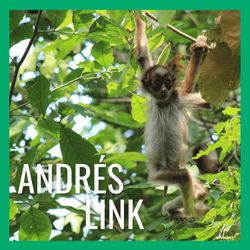
7. Connecting Corridors for Colombia's Brown Spider Monkeys
12:22||Season 2, Ep. 7The brown spider monkey and its "orchestral" Magdalena River Valley habitat in Colombia have been the focus of Dr Andrés Link's work for 20+ years. Birds, not monkeys were his original plan, he tells Kate and Edward, but the monkey's graceful movement and complex social behaviour drew him to the species whose forest habitat had become fragmented, cleared for ranching and palm oil. Reconnecting it is crucial for survival and Andrés and his team at the NGO he founded Fundación Proyecto Primates are not only winning support from local landowners, they're helping them to plant trees. It’s a project Andrés says has the potential to be replicated across Colombia, home to almost 10 percent of the world's biodiversity. How to Save It highlights ingenious solutions from the world’s leading conservationists. To learn more about their work and to receive updates, sign up here https://bit.ly/WFN_Podcast_NewsletterSignupFind out more and watch Andrés film here https://bit.ly/WFN_Podcast_LinkFollow us on https://www.instagram.com/whitleyawards/ and https://uk.linkedin.com/company/whitley-fund-for-nature For more on reconnecting habitat for tree-dwelling mammals, listen to our episode with Fernanda Abra who is building low-cost canopy bridges in the Amazonhttps://bit.ly/WFN_Podcast_Abra Executive producer: Sarah TreanorIllustrations: Emily Faccini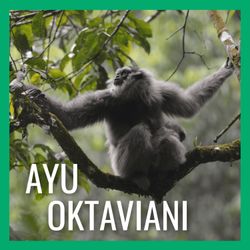
6. Java's Singing, Swinging Gibbons
10:36||Season 2, Ep. 6It’s a happy accident for the Javan gibbon that Rahayu Oktaviani could not find funding to study orangutans and switched to gibbons for purely practical reasons. She was hooked once she heard “the most beautiful song” of her life in the forest and is working with her team at KIARA, the NGO she founded, to make sure that it doesn’t disappear. Less than 10 percent of forests remain in Java, one of the most densely populated islands on earth. Rahayu, known as Ayu, is part of a new generation of conservationists inspired by Sir David Attenborough as well as primatologists Jane Goodall, Dian Fossey and Birute Galdikas. She tells Kate and Edward that she wants to raise awareness of the Javan gibbon in the same way the legendary women helped chimpanzees, gorillas and orangutans to win hearts and minds around the world. How to Save It highlights ingenious solutions from the world’s leading conservationists. To learn more about their work and to receive updates, sign up here https://bit.ly/WFN_Podcast_NewsletterSignup Find out more and watch Ayu’s film https://bit.ly/WFN_Podcast_Oktaviani Follow us on https://www.instagram.com/whitleyawards/ and https://uk.linkedin.com/company/whitley-fund-for-nature For more on primates, listen to our episode with Kuenzang Dorji in Bhutan who works with Gee’s Golden Langur monkeys https://bit.ly/WFN_Podcast_Dorji Executive producer: Sarah TreanorIllustrations by Emily Faccini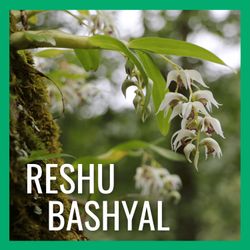
5. Saving the Tigers of the Plant World in Nepal
10:50||Season 2, Ep. 5The healing powers of Nepal's orchids and yew trees have always been prized by local communities but global demand is stripping the forests of its healers. Step in Reshu Bashyal who's not only raising awareness of illegal harvesting of what she calls "the tigers of the plant world" but has a plan to protect these natural resources. Reshu tells Kate and Edward that she grew up understanding that plants are special but they did not appear to be recognized in wildlife conservation. She’s changing that. Reshu and her colleagues at NGO Greenhood Nepal want to empower forest groups, clear invasive species, plant thousands of new yews and rehabilitate fallen orchids. She’s also - crucially - working with government and forest officials to formalise a sustainable harvest and trade.How to Save It highlights ingenious solutions from the world’s leading conservationists. To learn more about their work and to receive updates, sign up here https://bit.ly/WFN_Podcast_NewsletterSignupFind out more and watch Reshu’s film here: https://bit.ly/WFN_Podcast_BashyalFollow us on https://www.instagram.com/whitleyawards/ and https://uk.linkedin.com/company/whitley-fund-for-natureFor more stories on Nepal, listen to our episode with Nepal’s “Owl Sir” https://bit.ly/WFN_Podcast_AcharyaExecutive producer: Sarah TreanorIllustrations by Emily Faccini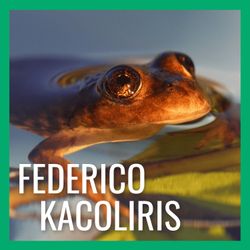
4. Argentina's El Rincón Stream Frog Finds its Biggest Champion
11:28||Season 2, Ep. 4Argentina’s Somuncura Plateau in the Patagonian steppe resembles a vast rocky lunar landscape. It’s where a volcanic stream allowed for the evolution of a tiny amphibian, the El Rincón stream frog which has found its biggest champion in Dr Federico Kacoliris."Unlike most people, I was drawn to those often seen as ugly or feared – frogs, snakes, lizards, but also many insects. I like them. I don’t know why..." he tells Kate and Edward. The frog was one of the most endangered amphibians in the world. In this episode, Federico explains to Kate and Edward how his team at his NGO Fundación Somuncura brought the frog back from the brink of extinction through captive breeding and finding solutions for people living in this remote landscape whose livestock were a threat. Federico is now scaling up and creating a nature reserve to share his enthusiasm for the extreme landscape that he loves with tourism on the agenda to see his favourite frog and other fauna.... How to Save It highlights ingenious solutions from the world’s leading conservationists. To learn more about their work and to receive updates, sign up here https://bit.ly/WFN_Podcast_NewsletterSignup Find out more and watch Federico’s short film https://bit.ly/WFN_Podcast_KacolirisPhoto credit: Hernán Povedano Follow us on https://www.instagram.com/whitleyawards/ and https://uk.linkedin.com/company/whitley-fund-for-nature For more on the discovery of new species, listen to our episode with Leroy Ignacio in Guyana https://bit.ly/WFN_Podcast_Ignacio Executive producer: Sarah TreanorIllustrations by Emily Faccini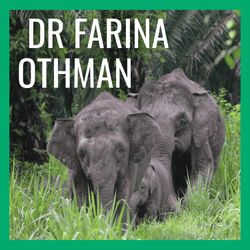
3. Walking with World's Smallest Elephants in Malaysian Borneo
11:58||Season 2, Ep. 3The Lower Kinabatangan in Malaysian Borneo is a tropical mix of lush forests, mangroves and oxbow lakes and home to the Bornean elephant, the world's smallest as well as roundest and cutest elephant, in the opinion of Dr Farina Othman. She and her team are building a protected corridor in partnership with oil palm plantations for the 250 elephants that remain locally. Ninety percent of their original habitat has been converted to oil palm, now the main source of income for local people who feel the elephant “belongs to the scientists, the NGOs, the government…" and not them, she tells Kate and Edward. Her nonprofit Seratu Aatai is helping build the skills to coexist with elephants and to "walk this journey with them,” Farina explains. Her plan is to put Kinabatangan on the map as a conservation model that can be replicated across other landscapes. How to Save It highlights ingenious solutions from the world’s leading conservationists. To learn more about their work and to receive updates, sign up here https://bit.ly/WFN_Podcast_NewsletterSignup Find out more and watch Farina’s film https://bit.ly/WFN_Podcast_Othman Follow us on https://www.instagram.com/whitleyawards/ and https://uk.linkedin.com/company/whitley-fund-for-nature For more on the elephant’s closest relative, the manatee, listen to our episode with Dr Aristide Kamla from Cameroon https://bit.ly/WFN_Podcast_Kamla Executive producer: Sarah TreanorIllustrations by Emily FacciniPhoto credit: Cede Prudente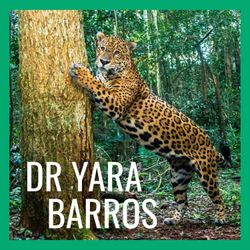
2. The Jaguars of Iguaçu Just Wanna Be Jaguars
12:46||Season 2, Ep. 2"Shy, incredibly powerful, they are the biggest cat in America…." and jaguars are free to roam Iguaçu National Park in Brazil's Atlantic Forest, home to one of the world's biggest waterfalls and 185,000 hectares of lush and diverse sub-tropical broadleaf forest. They are also critically endangered locally. "If you remove your fear glasses and you really look at them, you see that they just want to be jaguars," Dr Yara Barros tells Kate and Edward. "They don't want to kill you. They don't want to harm. They just want to hunt, raise their cubs, live in peace in the forest."Yara is executive coordinator of Project Jaguars of Iguaçu and arguably the species biggest champion. Her team is on call around the clock to ensure the survival of the apex predator, taking action to both defuse and prevent conflict with the inhabitants of the ten cities surrounding the park. Jaguar numbers more than doubled to 25 individuals in the park thanks to the work of Yara's small team to continuously monitor the species and raise awareness with local communities. How to Save It highlights ingenious solutions from the world’s leading conservationists. To learn more about their work and to receive updates, sign up here https://bit.ly/WFN_Podcast_NewsletterSignup Find out more and see Yara’s short film https://bit.ly/WFN_Podcast_Barros Follow us on https://www.instagram.com/whitleyawards/ andhttps://uk.linkedin.com/company/whitley-fund-for-nature For more on another of Brazil's iconic species, listen to our episode with Dr Pati Medici, a world leading expert on tapirs. https://bit.ly/WFN_Podcast_Medici_Maldonado Executive producer: Sarah TreanorIllustrations by Emily FacciniPhoto credit: Emilio White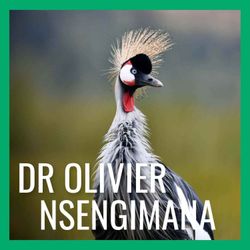
1. Grey Crowned Cranes Make a Comeback in Rwanda
13:18||Season 2, Ep. 1Rwanda’s Grey Crowned Cranes were in trouble before a vet and former gorilla doctor stepped in with an innovative plan to save the leggy bird, known for its striking plumage and elaborate courtship dance. Dr Olivier Nsengimana tells Kate and Edward how his campaign won support from both Rwandans and the government, boosting the crane's fragile population by 1,000 individuals. When you fall in love with nature, you can’t let your childhood superhero disappear, Olivier says. It's not just about saving the cranes, he says, but preserving the life-giving wetlands they inhabit for wildlife - and humanity. Olivier and his team at Rwanda Wildlife Conservation Association, the NGO he founded, are now leading an ambitious plan to reverse declines in the crane across East Africa, with partners in Tanzania, Uganda and Burundi. How to Save It highlights ingenious solutions from the world’s leading conservationists. To learn more about their work and to receive updates, sign up here https://bit.ly/WFN_Podcast_NewsletterSignup Find out more and watch Olivier's short film https://bit.ly/WFN_Podcast_Nsengimana Follow us on https://www.instagram.com/whitleyawards/ and https://uk.linkedin.com/company/whitley-fund-for-nature For more on birds and preserving wetlands, listen to our episode on Dr Purnima Devi Barman whose pioneering work has saved the Greater Adjutant Stork in Assam. https://bit.ly/WFN_Podcast_Barman Executive producer: Sarah TreanorIllustrations by Emily FacciniPhoto credit: Lynn Von Gagen, Denver Zoo
Introducing How to Save It Season 2 with Kate Humble and Edward Whitley
00:40||Season 2Join us for new stories of hope and agency from conservationists around the world in Season 2 of How to Save It with Kate Humble and Edward Whitley.Listen to their sometimes unlikely paths to protecting wildlife species from Javan gibbons to jaguars in Brazil and learn how a small frog in remote Patagonia found its biggest champion.Tune in for a dose of inspiration and optimism as we hear from an emerging army of advocates who are protecting, restoring and redefining our relationship with the natural world.Backed by Sir David Attenborough, and founded by Edward Whitley, the Whitley Fund for Nature is a London-based environmental NGO that accelerates the work of grassroots conservationists.How to Save It is a podcast by the Whitley Fund for Nature: bit.ly/WhitleyFundForNatureExecutive producer: Sarah TreanorIllustrations: Emily Faccini