Share
How to Age Well with Amy Kaszak
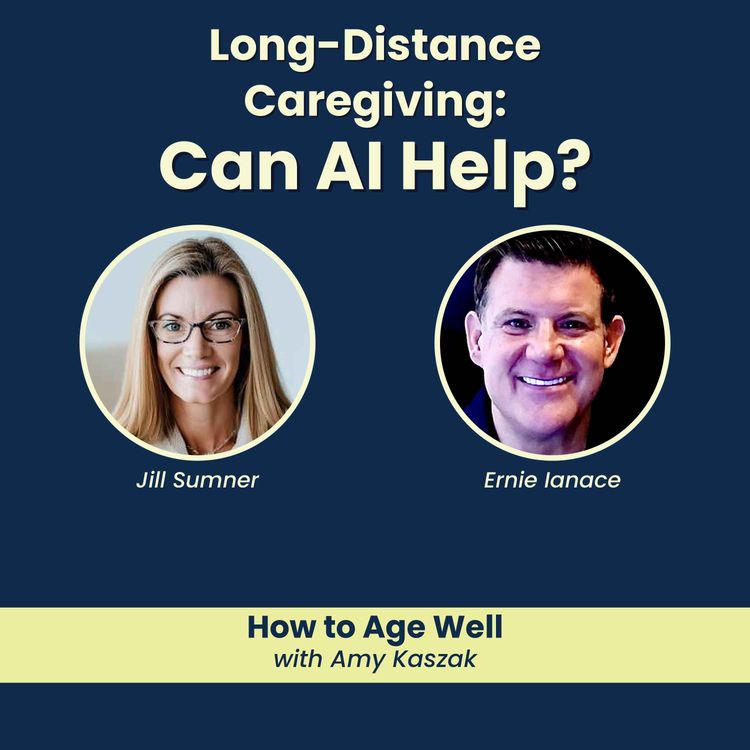
Long-Distance Caregiving: Can AI Help?
Caring for an aging parent from another state can feel like a second job. Jill Sumner has spent 20+ years in senior care and population health, yet when her own parent began showing signs of memory loss, she still felt like a failure. She ended up juggling AirTags, a medication dispenser, motion sensors, and a smart display, and switching between all of them to see how her parent was doing. This week, Jill and health tech entrepreneur Ernie Ianace join Amy to talk about why caregiving technology is so fragmented, whether AI can actually help, and what every family should ask before trusting a tool with a parent's health data.
In this episode:
- Jill's story of caring for a parent with memory loss from afar, and why working in senior care didn't make it easier
- The sandwich generation squeeze: kids, a job, and aging parents at once
- Three problems Ernie sees over and over: too many disconnected systems, data locked in silos, and tools seniors won't keep using
- What "agentic AI" means in plain English
- Why general-purpose AI isn't built for health information, and why purpose-built, private systems matter
- What to demand from any caregiving tech: a written promise not to use or share your data, strong security, and a clear answer on how your information is used
- Why Jill's Medicare Advantage plan didn't have the dementia care program she enrolled for, and how to verify before you commit
- How to find local resources, and how to ask whether a referral service is neutral or paid by the facility
- Why a local geriatric care manager can make a big difference
- Jill's advice for long-distance caregivers: keep trying
- What aging well means to each guest
Guests:
Jill Sumner is the Founder and Principal of Lyle Health Advisors. She has more than 20 years of experience in payer and provider organizations, with a focus on long-term care, special needs plans, and value-based care. Connect with Jill at Jill Sumner | LinkedIn
Ernie Ianace is Co-Founder and CEO of CareAlly, an AI orchestration platform for institutional healthcare, and Co-Founder and Chief Commercial Officer of InsightAlly.ai.
Learn more at AI Family Engagement for Senior Living | AgeWell | CareAlly
Want more on Medicare, Medicare Advantage, and special needs plans? Listen to our Medicare Month series, earlier in the feed.
This episode is sponsored by Naborforce, which connects older adults with vetted, caring neighbors for rides, errands, companionship, and check-ins. Learn more at naborforce.com.
Follow How to Age Well with Amy Kaszak on Instagram @howtoagewell_podcast
More episodes
View all episodes
18. Plan to Age Well: What to Share, What to Ask this Thanksgiving
33:49||Season 1, Ep. 18Thanksgiving is often when families notice things they haven't seen before: Mom seems more forgetful, Dad isn't keeping up with the house, and the kids realize they don't know where the important documents are. It's also a chance to start gathering information, without turning dinner into a three-hour legal discussion.In this re-run, with a new introduction for Thanksgiving week, I talk with elder law attorney Harry Margolis, who has spent nearly four decades helping families plan for aging, incapacity, and long-term care. Harry explains what estate planning really means (it's not just for the wealthy), which documents every adult should have, and how to start conversations that families often put off.Whether you're an adult child or an older adult, you'll learn what to ask, what to share, and what to write down.In this episode:• Why "estate" just means what you own, and why planning is about more than what happens after you die• The documents Harry puts at the top of the list: a durable power of attorney, a health care proxy, a will, and a HIPAA release• What can happen without a power of attorney: court, cost, delay, and family conflict• How to approach advance directives without feeling overwhelmed• Why to review your plan about every five years, including trusts and beneficiary designations• Planning when parents remarry, and why prenups matter later in life• What long-term care can cost, why Medicare doesn't pay for it, and where to turn if money runs short• When a trust makes sense, and whether to see an elder law or estate planning attorney• How to start the family conversation, and why it doesn't have to happen all at onceTimestamps00:10 Thanksgiving week introduction03:09 What is estate planning, really?04:56 When to make a plan and how often to review it07:34 The documents every adult should have12:40 Advance directives that empower rather than overwhelm16:04 Remarriage and blended families19:27 Why prenups belong in estate planning21:35 What long-term care costs23:44 Why Medicare doesn't cover it, and what does26:58 When a trust is useful30:58 How to start the family conversation32:37 Wrap-upResources from Harry Margolis• Margolis Bloom & D'Agostino• AskHarry.info (Q&A site)• Book: Get Your Ducks in a Row• Substack and podcast: Risking Old Age in AmericaAlso listen: last week's conversation with Tami Calais on navigating difficult aging conversations.This episode is brought to you by Naborforce. Naborforce connects older adults and caregivers with caring, vetted neighbors for companionship, errands, outings, and a break for caregivers. Learn more at naborforce.com.This episode is for education and does not replace advice from an attorney. Estate, Medicaid, and long-term care rules vary by state, so talk with a qualified elder law or estate planning attorney about your situation.How to Age Well with Amy Kaszak is a weekly podcast about aging well, for older adults and the families who support them. Like, Share, and Follow our show and find us on Instagram @howtoagewell_podcast.17. Home for the Holidays? Tips You Need to Navigate Difficult Conversations
34:08||Season 1, Ep. 17How do you talk about driving, accepting help, moving, financial planning, or future care without creating conflict or damaging the relationship?. In this episode of How to Age Well, Amy Kaszak sits down with aging and change coach Tami Calais to discuss practical strategies for navigating difficult aging conversations with empathy, curiosity, and respect. Drawing from her expertise in motivational interviewing, Tami explains why many older adults aren't resistant to change at all. They're ambivalent. And the way families approach these conversations can make all the difference.Together, Amy and Tami explore how adult children can move beyond persuasion and problem-solving to create conversations that preserve dignity, autonomy, and connection.In this episode, you’ll learn:Why your parent is probably not “resistant to change” but ambivalent, torn between independence and their own worriesWhy to start conversations in your parents’ 60s, as a series of small chats rather than one big talkWhy leading with solutions makes people defend the status quo, and what to say insteadHow to open a conversation about driving or falls with a neutral observation and a question about how your parent feelsHow memory loss changes the approach, including Tami’s “necessary fibbing” to protect a parent’s dignity (with their doctor and legal documents in the loop)How to share safety concerns with your parent’s doctor even without formal authorizationHow to agree on “indicators of change” ahead of time, and why social isolation deserves attentionTimestamps00:50 Welcome and Tami’s journey into aging and change coaching05:27 What motivational interviewing is08:44 Resistance vs. ambivalence10:44 Why families wait for a crisis12:24 When to start the conversation14:34 Biggest mistakes adult children make16:56 What to say instead of “Mom, you need help”19:17 How memory loss changes the conversation21:02 Why driving is so emotionally charged25:52 Driving without memory loss: vision, mobility, and safety27:40 Talking with your parent’s doctor29:22 Setting milestones in advance and staying socially connected31:13 Rapid-fire questions31:51 What aging well means to TammyConnect with Tami Calais at Aging and Change CoachInstagram: https://www.instagram.com/agingandchangecoach/TikTok: https://www.tiktok.com/@agingandchangecoachFacebook: https://www.facebook.com/people/Aging-and-Change-Coach/61553850676913/Email: info@agingandchangecoach.comAbout Naborforce: Naborforce’s carefully matched neighbors provide companionship, transportation, technology support, and help around the house for older adults. Learn more at naborforce.com.About How to Age Well: Host Amy Kaszak talks with experts about aging well, caregiving, and the decisions families face along the way. If this episode helped, please subscribe, leave a review, and share it with someone who is helping a loved one age well.Follow the show on Instagram and Facebook: @howtoagewell_podcast16. Be Politely Paranoid: How to Spot Scams and Other Helpful Tech Advice
29:15||Season 1, Ep. 16Scams are getting more convincing, and AI can now copy a grandchild’s voice. Amy talks with Liz Hamburg, founder and president of CanDoo Tech, about how older adults and their families can stay safe online without giving up on technology. Liz also shares what to do if you’ve been scammed, plus tips on healthcare portals, wearables, simple phones, smart homes, and AI.Key takeawaysDon’t rush. Messages that say “act now” or “your account will be closed” are most likely scams.Check the sender. Right-click to see who a message really came from, and watch for misspellings and odd spacing.Never enter your email and password from a party invite. Delete it.Phone scams are still around. AI can mimic a grandchild’s voice, so take a beat and ask someone you trust.If you’ve been scammed, disconnect your device, change your passwords, call your bank, and ask a professional for help.Be “politely paranoid,” but don’t let fear keep you from technology.Timestamps00:00 Welcome and meet Liz Hamburg02:14 Liz’s story: her dad, Alexa, and the voicemail behind CanDoo Tech04:58 Going 100% remote05:44 The biggest online risks for older adults08:44 The party-invite scam09:21 Password managers10:46 Other scams on the rise, including AI voice cloning12:58 What to do if you’ve been scammed14:22 “Politely paranoid”15:00 Helping family members without taking over16:38 Smart homes, accessibility, and mobility18:22 The top tech questions CanDoo gets19:29 Healthcare portals, telehealth, and Medicare’s AI tools20:45 Wearables and mental health apps21:49 Flip phones vs. smartphones23:40 Laptop, tablet, or phone?24:42 Tip: dry fingertips and touchscreens25:21 New tech and AI: the good and the scary27:25 What aging well means to Liz28:14 How to reach CanDoo TechAbout the guest Liz Hamburg is the founder and president of CanDoo Tech, a leading provider of tech support and training for older adults. She was named to the Forbes Next 1000 list. Visit candootech.com or call 646-758-6606.Resources mentionedSenior Planet from AARP and AARP’s free online tech classesGrandPad tabletJitterbug phones from LivelyRAZ MobilityMedicare Plan FinderThank you to our sponsor This episode is brought to you by Naborforce. Our trusted neighbors help with errands, transportation, companionship, and everyday tasks. Learn more at naborforce.com.Connect with AmyInstagram: @howtoagewell_podcastLinkedIn: Amy Kaszak15. Plan Before the Crisis: Home Care 101
32:41||Season 1, Ep. 15Most families don’t look into home care until there’s a fall, a hospital stay, or a discharge that happens faster than anyone expected. Olivia Jones of Care Advantage explains what home care is, how it differs from Medicare home health, and how to plan before a crisis hits.Olivia is executive vice president of operations at Care Advantage and has spent nearly three decades in home care, working with thousands of families and caregivers.In this episode:Home care (personal care) vs. home health, and what Medicare does and doesn’t coverADLs vs. IADLs, and why IADLs are often the first signs a parent needs helpSubtle warning signs: unopened mail, spoiled food, skipped social activities, changes in hygieneHow a neutral nurse assessment can make the conversation with a parent easierWhat a typical visit looks like and how a personalized plan of care is builtHow to choose a home care agency when Medicare has no rating system for itHourly, overnight, and live-in care, and how private pay worksWhy caregiver training improves safety and health outcomes at homeWhy bringing in help lets you be the daughter or son againQuestions to ask any home care agency:Are you licensed by the state?How do you screen caregivers?What training do caregivers receive?Who supervises the care, and who is my point of contact?How can I see the plan of care and communicate changes?If you guarantee coverage, how do you deliver on it?Chapters: 00:00 Welcome and meet Olivia Jones 01:43 What is home care? 02:42 Home care vs. home health 05:55 ADLs and IADLs explained 08:26 Signs it may be time for help 10:36 Assessments and the neutral third party 12:53 The risks of waiting for a crisis 15:15 What a typical visit looks like 16:43 The plan of care and keeping family involved 20:49 How to choose a home care agency 23:05 Who are caregivers? 25:01 Cost and payment options 28:32 Why caregiver training matters 30:50 What aging well means to OliviaLearn more about Care Advantage: www.careadvhomecare.comThis episode is brought to you by Naborforce, which connects older adults with friendly, vetted neighbors for rides, errands, tech help, and companionship. Support before you need home care. www.naborforce.com If this episode helped you, please follow the show, share it with someone who needs it, and leave a review.Connect with Amy: Instagram @howtoagewell_podcast | LinkedIn linkedin.com/in/amy-kaszak-670296314. From Caregiver to Patient: What a Breast Cancer Diagnosis taught Dr. Katy Lanz
33:36||Season 1, Ep. 14Nurse practitioner and Life Plans founder Dr. Katy Lanz shares what it’s like to go from caregiver to breast cancer patient, and how to have the hardest conversations.She spent 30 years helping families through the hardest moments of their lives. Then she read the words "invasive lobular carcinoma" in the middle of a work meeting. October is Breast Cancer Awareness Month, and as a breast cancer survivor myself, this conversation is close to my heart. I'm joined by Dr. Katy Lanz, nurse practitioner, healthcare innovator, and founder and CEO of Life Plans, a platform that helps families organize medical information, coordinate care, and plan for life's big moments. Katy was recently diagnosed with breast cancer, and she's honest about what it means to move from caregiver to patient and what it's doing to her family. IN THIS EPISODE, WE TALK ABOUT: - What goes through your mind in the first days after a diagnosis, and why the hardest part is telling the people you love - A simple framework for delivering difficult news: set the scene, check perception and ask permission, share the news briefly, then stop talking - Why children may react differently (one crumbles, one giggles) and why you shouldn't answer questions they haven't asked - Whether to share a diagnosis right away, and why you need at least one quiet support person- Why Google and AI can mislead you about a cancer diagnosis, especially when treatments are changing quickly - How to set kind boundaries with well-meaning friends and neighbors - The grief caregivers don't talk about: mourning how a relationship used to be - Why "night duty" surprises caregivers, and why it's okay to ask for help you didn't know you'd need - How Life Plans helps families prepare for life moments, from weddings to a parent's fall to a terminal diagnosis - What aging well means to Katy: not a death plan, but a clear strategy for how you want to live CHAPTERS: 00:00 Welcome and introduction 01:37 Katy's path from bedside nurse to founder of Life Plans 06:55 Reading the diagnosis at work 08:50 Telling your family 11:25 A framework for hard conversations 15:50 Should you share a diagnosis right away? 18:25 Why not to rely on Google or AI 19:10 Setting boundaries with loved ones 21:10 Advice for unexpected caregivers 22:15 The grief caregivers don't talk about 25:45 Night duty and asking for help 28:40 How Life Plans works 31:05 What aging well means to Katy ABOUT OUR GUEST: Dr. Katy Lanz is the Founder and CEO of Life Plans. Learn more: https://www.ourlifeplans.com/who-we-are Instagram: https://www.instagram.com/our_lifeplans/ Facebook: https://www.facebook.com/ourlifeplans SPONSOR: This episode is brought to you by Naborforce, which connects families with trusted neighbors for companionship, errands, transportation, and support. Learn more at https://naborforce.com CONNECT WITH US: Instagram: https://www.instagram.com/howtoagewell_podcast/ LinkedIn: https://www.linkedin.com/in/amy-kaszak-6702963/ If you enjoyed this episode, please follow the show, leave a rating or review, and share it with a caregiver or friend who needs it.13. Playbook, not Panic. Why I started How to Age Well.
23:45||Season 1, Ep. 13Most families don’t plan for aging until a crisis forces the conversation. A broken hip, a dementia diagnosis, or a sudden hospitalization hits, and everyone is scrambling. In this solo episode, host Amy Kaszak shares why she created How to Age Well and answers the seven questions she hears most from peers, listeners, and families, so you have a playbook instead of panic.In this episode:Why Amy started the podcast, and why she knows she’s one of the lucky onesWhy women, especially Gen X and millennial women, carry most of the caregiving loadWhy aging well is about more than healthcare: home, safety, finances, relationships, and purposeThe seven questions keeping families up at night, with practical first steps for eachTimestamps:00:00 Welcome and what this episode is about00:52 Amy’s story: a Gen X daughter, and parents who planned ahead02:54 Why women are the primary caregivers, and what it costs them07:10 Q1: How do I know when my parent needs help?09:44 Q2: What should I do first when a parent starts needing care?12:16 Q3: How do I get a loved one to accept help?14:02 Q4: How do I start a conversation about care?14:53 Q5: Assisted living, memory care, skilled nursing, and independent living: what’s the difference?18:04 Q6: What legal documents do we need?19:34 Q7: How do I talk about driving, safety, and living arrangements?23:06 Closing thoughts: preparation, clarity, and confidenceEpisodes mentioned:Episode 1: Dr. Tony Gamboa: hospitalization planningEpisode 6 and Episode 8: Diane Omdahl and Gretchen Jacobson: Medicare decisions Episode 3: Harry Margolis: legal documents and what to have ready Episode 4: Dayna Steele: hard conversations about accepting help Episode 10: Jennifer Pryor: assisted living Your starter checklist: doctors and care team, full medication list (including supplements and vitamins), important passwords, financial accounts, legal documents, and a prioritized list of emergency contacts that every sibling knows how to find.Follow along: Subscribe to How to Age Well so you never miss an episode. If this one helped, share it with someone who’s in the middle of caregiving, and leave a rating or review to help other families find the show.Connect with Amy on Instagram @howtoagewell_podcast and on LinkedIn (Amy Kaszak | LinkedIn)Learn more about Naborforce at www.naborforce.com
12. Loneliness, Purpose, and Good Days
28:59||Season 1, Ep. 12Loneliness isn’t just a feeling. It’s a measurable health risk. Nearly 1 in 3 adults aged 50 to 80 report lacking companionship, and loneliness raises the risk of premature death by more than 30%. It’s also linked to higher rates of dementia, depression, heart disease and stroke.In this episode, Amy talks with Dr. Timothy Puri, Chief Medical Officer of Population Health at Curana Health, about what he sees when he looks at patterns across thousands of seniors. Loneliness shows up in the data as a clinical risk factor, and purpose can work as an intervention. Dr. Puri explains how loneliness differs from isolation, which small withdrawals families often miss, and how one simple question can open a conversation: “What does a good day look like for you?”In this episode:Why loneliness is a clinical risk factor, and what it costs the health care systemLoneliness vs. isolation: “the gap between the connections you have and the connections you want”Early warning signs: shorter phone calls, skipped hair appointments and card games, mail piling up, eating lessHigh-risk moments to check in more often: the death of a spouse or friend, giving up driving, a move, hearing or vision changesHow purpose reduces loneliness, even through solitary activitiesWhy caregivers drop their own activities first, and why loneliness can peak after caregiving endsHow to offer specific help, such as “I’ll sit with Dad Thursday from 2 to 5,” instead of “let me know if you need anything”Where technology helps (video calls, rides, activity baselines) and why it can’t replace human connectionWhen to raise loneliness with your doctor, and how Medicare and ACOs are starting to measure itDr. Puri’s one step for this week: ask your loved one what a good day looks like, then help make one happenChapters:0:00 Loneliness as a health risk1:42 Meet Dr. Timothy Puri2:51 What “population management” means6:00 When loneliness became personal7:15 Loneliness vs. isolation8:12 Early warning signs families miss10:42 Purpose as a health intervention12:27 The “good day” question17:27 Caregivers and loneliness22:00 Technology, rides and connection24:06 When to talk to a doctor25:20 Medicare and social factors25:52 One simple step this week26:30 What aging well means to Dr. PuriAbout our guest: Timothy Puri, MD, is a board-certified internist and a graduate of the Stanford Graduate School of Business Executive Program. He has spent more than a decade in value-based care and senior care at scale. As Chief Medical Officer of Population Health at Curana Health, he sets the clinical direction for a national senior care platform operating in more than 30 states. Earlier in his career he held clinical leadership roles at Landmark Health and ConcertoCare.Resources:Visit Curana Health at www.curanahealth.com to learn more about Dr. Puri’s work and Curana Health.Naborforce provides light support, social connection and companionship for older adults and respite for caregivers: www.naborforce.comIf this episode helped you, please share it with someone who needs it, and follow, rate and review How to Age Well wherever you listen.
10. What Is Assisted Living? Signs It's Time and How to Know.
35:19||Season 1, Ep. 10Assisted living sits in a confusing middle space — not independent living, not skilled nursing — and most families don't know what it actually includes, what it costs, or how to know when the time is right. This week, Amy sits down with gerontologist and licensed assisted living administrator Jennifer Yañez-Pryor to break down what assisted living really looks like day to day, what drives the wide range in cost, and how to check whether a facility is actually safe before you move a loved one in.In this episode:What assisted living actually looks like day to day, and how personalization helps the transitionWhether couples can move in together, and what happens if one partner later needs memory careHow assisted living differs from independent living and skilled nursingWhy the cost of assisted living varies so widely by state and by facility, and what's usually included vs. billed extraSigns it may be time to consider a move — and the risk of moving in too earlyHow to check whether a facility is safe using state inspection reports (and the limits of online reviews)Where the industry is headed, including new technology and evolving regulationGuest: Jennifer Yañez-Pryor is the graduate program director for the Department of Gerontology at Virginia Commonwealth University and a licensed assisted living administrator in Virginia since 2014. She co-hosts the Aging for All podcast.Episode Sponsor: Need some neighborly help? Visit On-demand, trusted home help for Seniors | NaborforceResources mentioned: CareScout Cost of Care Survey: https://www.carescout.com/cost-of-care Eldercare Locator (find your local Area Agency on Aging): https://eldercare.acl.gov Virginia Assisted Living Facility Search: https://www.dss.virginia.gov/facility/search/alf.cgi NAB (National Association of Long Term Care Administrator Boards): https://www.nabweb.org Aging for All podcast: https://blogs.vcu.edu/pryorjm/Follow How to Age Well with Amy Kaszak on Instagram @howtoagewell_podcast Instagram