Share
HortWeek Podcast
Predicting and protecting plant futures with RBG Kew's Richard Barley and Rebecca Lane
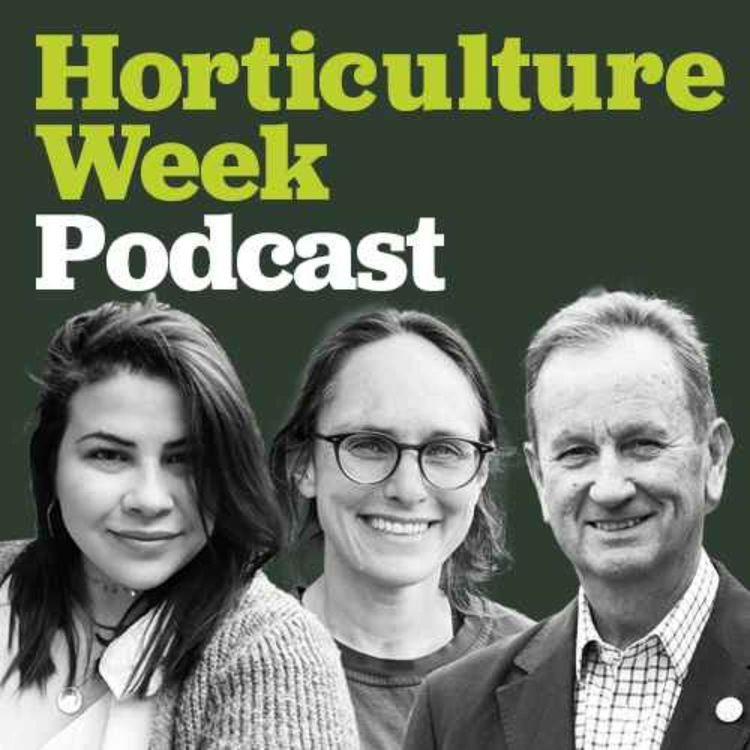
This week RBG Kew's director of gardens Richard Barley and arboretum supervisor Rebecca Lane join the Horticulture Week Podcast.
Kew has changed a lot over the last 10 years, including the introducing the Great Broadwalk Borders, the Children's Garden, Agius Evolution Garden, "reinvigorating" the Kitchen and Winter gardens, plus and the restoration of the Temperate House.
These days a visitor coming to Kew today might say "there's a bit more obvious horticulture and perhaps a bit more of an eye for design on the site", Richard says.
The staff culture at Kew has also changed, says Rebecca, "giving more autonomy with the view of improving design and I think that's made a really big difference to how people are looking after their areas and the drive within the teams has really improved as a result of that".
Kew recently achieved Plant Healthy certification (only the third garden in the UK to receive it) and Richard explains why it was so important to Kew:
"Plant health and biosecurity are incredibly important for this country and for any country because the risk and cost that arises from accidental introduction of pathogens and pests and diseases as everyone knows can be horrendous - not only monetary cost, but costs to the landscape.
"We are really focused [on this] and we need to be because our collections are hugely important, but also as we feel it's our responsibility to set that example for other organisations as well."
Faced with the vagueries of climate change for its outdoor collections, Kew is undertaking research on future climate conditions 2050 to 2100 in the London area and whether its plant stock will be suited to them. Strikingly, "By 2050 approximately a quarter of what we are growing currently will be out of its range of comfortable growing conditions", Richard says. "So our gaze shifts to parts of the world which have conditions that are better matched to the future climate in this part the country, and that's where we look to find species that we can substitute into the landscape for the future". Rebecca explains how they are working to monitor individual species, relocating them where necessary so as not to lose collections.
Visitor numbers have bounced back strongly since Covid but Kew is continuing work on its diversity agenda to reach all communities within the UK and overseas and they discuss developments on the educational front.
As for the future, fundraising will be key with significant developments in the pipeline. Chief among these is a "carbon-neutral Palm House", an expansion of the Mediterranean Garden and a "'Carbon Garden' or possibly a 'Climate Change Garden', we're still debating the name of it" where the connection between carbon and nature can be explored.
More episodes
View all episodes

16. HortWeek's Matt, Sally and Rachael make their predictions for horticulture in 2026
31:55||Season 6, Ep. 16HortWeek editor Matthew Appleby, senior reporter Rachael Forsyth and technical editor Sally Drury make their predictions for horticulture in 2026.JUMP TO00:02:16 - weather00:06:24 - cost pressures00:14:20 - volunteers00:15:27 - imports/exports/SPS agreement and UK plant production00:17:15 - pests & disease00:19:08 - climate change and innovation00:20:17 - Turf - turfgrass breeding and appreciation of grass and grass eating! 00:23:02 - readiness for spring and an early Easter and how to monetise the 'fallow' post Christmas period00:27:43 - sharing of knowledge and raising of professionalism in the horticulture industryCheck out our huge archive of HortWeek Podcast interviews with an unrivalled selection of prominent and fascinating figures from all corners of the horticulture sector.
15. Can rock dust save UK soils and rock horticultural production? with Veolia's Jennifer Brodie
22:50||Season 6, Ep. 15Studies such as that of McCance and Widdowson have revealed dramatic drops in fruit and vegetable mineral content since the 1940s. This week's guest on the HortWeek Podcast Jennifer Brodie believes that 'rock dust', a by-product of volcanic rock mined for road construction and rich in minerals trapped since the pre-dinosaur era, could help reverse this by remineralizing the soil and feeding microbes that will re-fortify plants.Brodie has come full circle in her career and is now returning to her passion project 12 years after she founded REMIN (Scotland), which pioneered the use of rock dust as a top dressing for soil, compost mixer and activator.Now leading the Pro-Grow rock dust division for resource management company Veolia, she explains the geology behind basalt rock dust, its dual benefits for plant health and carbon capture, and how the industry is shifting toward "ecological transformation".She details how some of the 400,000 tonnes of green waste they process annually is integrated with rock dust to create a PAS 100-certified compost for the garden retail market. Her goal now is to expand rock dust's use into the organic farming sector.Quoting Soil Association founder Lady Eve Balfour, Brodie says: "Everything begins to matter when the rate of soil erosion exceeds the rate at which life can invade the mineral rock underlying the soil and convert it into soil." Brodie believes that rock dust has an "unrecognised" role in rectifying the mistakes of the past and helping renew soils for the benefit of all.Make sure you never miss a HortWeek podcast! Subscribe to or Follow HortWeek podcasts via Apple Podcasts, Spotify or your preferred podcast platform.
14. HortWeek on Horticulture in 2025 - Review of the Year
39:02||Season 6, Ep. 14HortWeek editor Matthew Appleby, senior reporter Rachael Forsyth and technical editor Sally Drury share their top horticulture stories of 2025.JUMP TO...00:00:43 - horticulture and peat-free00:04:10 - developments in Biodiversity Net Gain00:07:26 - remote mowers, new technology and implications00:13:13 - loss of horticulture colleges and new learning options00:17:54 - the impact of drought in 2025 going into 202600:21:30 - how horticulture is turning to battery-powered kit00:26:20 - diversity, inclustion and equity in horticulture00:30:34 - border inspections - imports, exports and an SPS agreement for 202600:36:42 - what are the team looking forward to in 2026?Do check out our huge archive of HortWeek Podcast interviews with an unrivalled selection of prominent and fascinating figures from all corners of the horticulture sector.Podcast presenters: Matthew Appleby, Rachael Forsyth and Sally DruryPodcast producer: Christina TaylorMake sure you never miss a HortWeek podcast! Subscribe to or Follow HortWeek podcasts via Apple Podcasts, Spotify or your preferred podcast platform.
13. Linden Groves on why The Gardens Trust needs to remain as a planning statutory consultee
16:56||Season 6, Ep. 13The Garden Trust's Linden Groves is campaigning against a proposal to end the organisation's role as a planning statutory consultee.She robustly contests the proposal to remove the statutory consultee role and disagrees that it would improve the planning system. Instead, precious parks and gardens, hard won over many centuries, would be lost to communities both now and in future.“We are passionate about the role that the UK’s world-famous historic parks and gardens can play in supporting positive economic growth and healthy cohesive societies, and eager to continue helping this in our role as statutory consultee. We encourage supporters to respond to the consultation and will publish our response as soon as possible.”In March, the Government decided to ditch planning consultancy from bodies including The Gardens Trust, to speed up the planning system. “We are seeking views on reforming the role of statutory consultees in the planning system in England,” it said. The consultation closes at 11:59pm on 13 January 2026.The consultation can be accessed here.Make sure you never miss a HortWeek podcast! Subscribe to or Follow HortWeek podcasts via Apple Podcasts, Spotify or your preferred podcast platform.
12. Why tree guru Tony Kirkham wants to 'get rid of the term 'tree planting''
25:51||Season 6, Ep. 12Tony Kirkham has a mission, one that will resonate with many arborists across the UK: "I'd like to get rid of the term 'tree planting'".The former Kew arboretum head says: "Our success rate of establishing trees isn't good in this country... I'd sooner see less trees planted and established rather than planting big numbers that fail to establish." In his conversation with HortWeek editor Matthew Appleby, Kirkham gives his thoughts on the "exotics" versus "natives" debate and reveals his "top future trees" which include his favourite "hard-working trees".On pest and disease threats to trees, Kirkham issues a stark warning. Experts say it is a case of "not if but when" Xylella enters the UK, and Kirkham says, with more than 400 host plants identified so far: "I think every woody plant is vulnerable. We really need to crank up our biosecurity."Other than Xylella, his the top concern is plane wilt, which "is spread by arborists" via tools, machinery, PPE and clothing, and which is "coming towards us pretty quick...we need to keep that out at ALL costs".He also talks about how arborists can handle the rising frequency and intensity of storms, recalling how he got Kew back up and running in the wake of the storm of 1987 that brought down so many trees that he considered "old friends".But despite the devastation that took three years to clear, he now says it is "the best thing that could have happened" - getting rid of unsafe trees, giving the Kew team a chance to replant and refresh the arboretum, revolutionising tree-planting practice. Make sure you never miss a HortWeek podcast! Subscribe to or Follow HortWeek podcasts via Apple Podcasts, Spotify or your preferred podcast platform.
11. How grower-gardener collaboration is driving innovation in the tree sector - with Kevin Martin of Kew and Adam Dunnett of Hillier
01:04:47||Season 6, Ep. 11This is the second special podcast with an arboriculture focus produced as part of ArbWeek, HortWeek's deep dive into all things arb held from 24 - 30 November.Listen to Jeremy Barrell on how 'Failing clients deserve failing trees', plus tree growing, procurement, planting and establishmentThis week's guests bring their distinct perspectives on the arb sector - but also bring a holistic perspective having worked together for many years on fascinating and crucial research projects.Kevin Martin, head of tree collections at RBG Kew and Adam Dunnett, production and amenity director for Hillier Nurseries are thought leaders in their fields and bring fascinating insights and forthright opinions to their discussion with Rachael Forsyth.They discuss tree planting and establishment, ground breaking research with "remarkable" results that is transforming tree selection and understanding of how to grow and in particular, water, trees.Skip to...00:00:49 How Kevin and Adam began their careers in horticulture00:05:45 Kevin Martin on his research into resiliant trees sourced from around the world00:09:53 Trees we should be planting to weather the future00:14:40 Hillier's 'Streetwise' range of trees for urban environments00:17.39 Peat-free growing and trees00:20:48 Groundbreaking research into irrigation for trees at Hillier00:30:13 The importance of grants, continuity in Government support and business certainty00:40:39 Adam Dunnett on seeing changes in the school curriculum making a difference to hort00:50:40 The latest on Resistor elms00:52:43 Kevin and Adam's 'dream' pieces of research topicsOn the topic of encouraging young people into horticulture, Adam Dunnett relates a "chink of light" following a visit to a secondary school where as part of their work on the "2050 project" they are looking at what trees will be thriving in 25 year's time. "That's just one school, but actually that could be really quite transformational if that's happening in other schools!"Kevin says: "Horticulture and growing plants is an applied science, and it's one fo the most important applied sciences we do and it's so overlooked...it's always been seen as suitable for someone who's not academic, and that's not the case."We need some of the brightest people to solve some of the biggest questions...we need to work on that narrative."In this episode the Victorians get a couple of name-checks and we also get some top tips on which tree to go to to get unbeatable conkers.Podcast presenter: Rachael ForsythPodcast producer: Christina Taylor
10. ICL's Chloe Whiteside on peat-free, fertiliser and biocontrol use for growers this winter
14:47||Season 6, Ep. 10Chloe Whiteside, ICL’s technical area sales manager covering Norfolk, Suffolk and Cambridgeshire – has spoken on the HortWeek podcast about the highs and lows of the 2025 spring bedding season and what the strong start and weaker finish mean for the 2026 bedding plant season.She talks about what bedding growers should be doing in the lead-up to the spring season and gives advice about watering, nutrition and storage regimes for peat-reduced and peat-free growing media.On nutrition, she talks about using controlled release fertiliser and water solubles, as well as which biocontrol, biopesticide and biostimulant products are at the grower’s disposal and, as a BASIS qualified adviser, what she recommends.Before joining ICL, Whiteside spent 10 years in horticultural research at ADAS, delivering research projects on a wide range of ornamental and edible crops. She managed the AHDB funded Bedding and Pot Plant Centre trials, as well as the AHDB, Defra and industry-funded project on Transition to Responsibly Sourced Growing Media Use in UK Horticulture. The project ran for five years and covered all sectors of horticulture, from bedding propagation right through to container grown trees and soft fruit production.
9. 'Failing clients deserve failing trees' - arb consultant Jeremy Barrell on the realities of tree procurement, growing, planting and establishment
31:27||Season 6, Ep. 9The HortWeek Podcast has joined ArbWeek to bring HortWeek readers a series of interviews with leading arborists. The first of these is Jeremy Barrell.A influential figure in the tree care landscape (and HortWeek columnist) Jeremy Barrell is one of the leading authorities on tree care.A passionate campaigner on street trees in the wake of a number of controversial local authority fellings, in this week's podcast HortWeek editor Matthew Appleby hears Jeremy's uncompromising views on tree safety, tree planting, tree production and local authority procurement.Barrell says: "The standard of training on some of the people that are planting [trees] - it's not surprising the trees don't survive...if you don't have a specification that is up to scratch, then of course contractors are going circles around you and you deserve to have a load of failures". "I deal with more tree failure cases that result in harm than any other expert in Britain...the harsh reality is there are many large duty holders...that don't do anything like the standard of tree checking that should be done".
8. 'Outrageous' damage to plant imports, peat ban latest and the garden centre of the future
29:58||Season 6, Ep. 8HortWeek editor Matt Appleby and senior reporter Rachael Forsyth report on the essential horticulture stories of the week.HortWeek editor Matthew Appleby and Rachael talk about:The "outrageous" ongoing delays and reports of damaged to imported plantsThe latest on the prospective peat banWhat the garden centre of the future might look likeDo check out our huge archive of HortWeek Podcast interviews with an unrivalled selection of prominent and fascinating figures from all corners of the horticulture sector.Podcast presenters: Matthew Appleby and Rachael ForsythPodcast producer: Christina Taylor