Share

HortWeek Podcast
Growing plants that are 'right commercially and right for the environment' - with Guy Watts of Architectural Plants
This week's guest is Guy Watts of West Sussex-based specialist plant nursery, Architectural Plants.
After a successful debut at RHS Chelsea Flower Show, Guy talks about Architectural Plants' apprenticeship scheme Home Grown which he hopes will encourage new talent into the industry.
The nursery grows and sells a huge variety of unusual and exotic plants, and in line with the nursery's aims to reduce plant movements within and without the UK, Guy talks about the nursery's innovative 'lab' which allows the nursery to propagate and grow plants that require more specialist conditions.
On biosecurity risks Guy has strong views: "Our evidence is that they are as likely to come from within the UK as they are from outside of it". And despite bans on chemicals increasing biosecurity risks, he reveals how the nursery has been largely chemical-free for some 20 years which has mitigated some of those biosecurity challenges. He outlines some of the systems and strategies he uses to monitor pests and diseases, some of the non-chemical treatments they use and how staff are involved in the process.
Guy also talks frankly about his perspective on going peat-free; the nursery is running trials and has reduced peat use, but Guy expresses doubts about talks of the RHS imposing "blanket ban" and he questions whether the alternatives are environmentally sound: "it needs to be the right decision commercially and it needs to be right for the environment".
More episodes
View all episodes
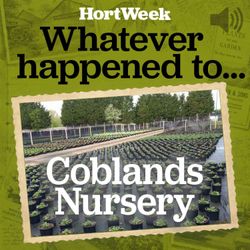
5. HortWeek Podcast: Whatever happened to Coblands Nursery
21:24||Season 7, Ep. 5In this special series, HortWeek columnist and garden industry consultant Neville Stein brings his Whatever Happened To... feature to the HortWeek podcast, exploring the stories and legacies of once-great horticulture businesses.In this episode Stein speaks to Richard Burt, sales director at Provender Nurseries, to take a deep dive into the precipitous rise, and ultimate demise of Coblands Nursery, once a towering presence in the UK amenity plant market.Coblands was a colossal operation with a massive geographical footprint stretching from Sevenoaks down to Tunbridge Wells and beyond, comprising a 20-acre cash-and-carry site and expansive nursery operations.The nursery capitalised on the golf course development boom, specializing in high-volume, low-value stock focused on trees, shrubs, and herbaceous plants. They supplied landscape projects, including Leeds Castle and the Crystal Palace dinosaur park.Burt joined Coblands as a student from Cannington College in 1993 and remained until 2007, finishing cash and carry manager. He describes a vibrant, youthful work culture that operated like a close-knit family business, where staff worked hard and socialised just as intensely. Stein and Burt discuss the numerous innovations, driven by frugality, brought about under the direction of the late Geoff Turner.The operational DNA of Coblands lives on at Provender Nurseries. Burt, along with around half a dozen former Coblands staff, transported and refined the Coblands cash-and-carry model. With this continuity in mind, the pair discuss lessons learned, what has changed in horticulture business since Coblands' hayday, and how some things, good and bad, remain the same.To find out more about this fascinating history, read Neville Stein's original article: Whatever Happened to... Coblands.Find dozens more horticulture business histories from the Whatever happened to... series HEREPodcast presenter: Neville SteinPodcast producer: Christina TaylorIf you enjoyed this podcast do check out our huge archive of HortWeek Podcast interviews with an unrivalled selection of prominent and fascinating figures from all corners of the horticulture sector.Make sure you never miss a HortWeek podcast! Subscribe to or Follow HortWeek podcasts via Apple Podcasts, Spotify or your preferred podcast platform.
4. Stories from a 'modern day plant hunter' with New World Plants' Rod Richards
30:18||Season 7, Ep. 4"Modern day plant hunter" Rod Richards or New World Plants has banked decades of experience in bringing plants to market and knowing what works.Richards tells the HortWeek Podcasts what makes a good plant introduction and reflects on some of his own successes, for instance Dicentra 'Gold Heart', Salvia 'Amistad' and Iberis 'Masterpiece' as well Geranium 'Black Beauty'.He gives his candid perspectives on peat, water, and what the industry needs from Monty Don's replacement.And he shares stories of antics from the good old days and discusses what he thinks has made New World Plants so successful.
3. Building the UK's largest urban farm at Northern Roots with Anna da Silva of Northern Roots Oldham
16:32||Season 7, Ep. 3This September, Northern Roots launched the first phase of what will become the UK's largest urban farm and eco-park, transforming 160 acres of underused land in Oldham into a visitor destination, community resource and living testbed for tackling some of the country's biggest social and environmental challenges.Anna Da Silva, chief executive of Northern Roots, outlines how the project is transforming an abandoned post-industrial site into a community-centric green asset delivering ecological, health, educational, and economic benefits.She talks about the transformation of the land, the goals they have for it, and explains how many years of "banging the drum" for green prescribing has led to the project:"I was the programme director at RHS Garden Bridgewater in the set-up phase of that project. So I very much pioneered the RHS's initial work on being social prescribing, gardening for well-being on that site as well."Vegetables for the cafe are grown "200 yards away" by celebrated local chef, Mary-Ellen McTague, with an offering designed and priced to cater for all comers.Da Silva explains how the project overcame initial challenges including vandalism by liaising with community organisations and encouraging people to feel ownership of the project and "help create" Northern Roots. And, pending funds being raised, she outlines her hopes and plans for the project in coming years including creating various biking and sports areas and a habitat bank which she hopes will leverage biodiversity net gain funding."Critically, what we want it to be is a living, vibrant place where all sorts of different people come and come together and can ...grow their lives and help us grow. And I would hope, something that other places are coming to visit and seeing 'how could we have a thing like this in our place?'".
2. Going 100% peat-free, with Form Plants' Jamie Butterworth
31:48||Season 7, Ep. 2Jamie Butterworth has gained a higher media profile in recent years with stints on TV presenting for RHS Chelsea Flower Show and Gardeners' World.Despite his growing TV presence, Butterworth considers himself a gardener first and foremost, and by trade, a specialist grower of peat-free plants.The UK horticulture sector's transition to peat-free growing has been underway for decades. However, a persistent challenge has remained: many operations claiming to be "100% peat-free" have still been forced to import young plants and plugs grown in peat from overseas.Recent breakthroughs in the UK’s domestic peat-free plug sector have altered the landscape, sparking a movement demanding that peat-free should truly mean peat-free, from propagation to sale.Butterworth has fully embraced this shift. On this week's podcast, he opens up about the logistical and technical challenges of achieving 'true' peat-free status for his nursery, Form Plants - a commitment he has pledged to fulfill starting 1 September this year, as well as the hurdles facing the wider industry.Central to his strategy is bringing all propagation in-house. By doing so, Butterworth aims to:Gain total control over every stage of plant production.Reduce long-term costs by minimizing external dependencies.Break free from reliance on European supply chains, a goal he believes the broader UK horticultural industry should actively pursue.Looking back on what was supposed to be a "quiet" year, Butterworth reflects on navigating record-breaking summer heat and drought. Yet despite the environmental challenges, it has been a landmark year: his nursery, Form Plants, supplied greening projects for the UK Commonwealth Games, alongside personal milestones including a move to Cumbria and a new baby on the way.Podcast presenter: HortWeek editor Matthew ApplebyPodcast producer: HortWeek digital content manager Christina Taylor
1. Labour MP Ben Goldsborough on his policy ideas for horticulture
26:38||Season 7, Ep. 1As party conference season gets underway, and a new PM starts his tenure in earnest, HortWeek takes stock of where UK politicians stand on horticulture policy. MP Ben Goldsborough, has been vocal on horticulture issues since winning the Parliamentary seat for South Norfolk for the Labour Party in 2024 and was recently elected to the EFRA Parliamentary committee.He has a horticulture pedigree, having worked on policy for the RHS, helping save RHS Wisley from being shut during lockdown but, because of that lockdown, missing out on perks like going to Chelsea Flower Show.After writing an opinion piece for HortWeek (Modern horticulture deserves a bigger place in Britain's food future: Labour MP says Government policy must back the UK fresh produce production), we asked him on to the HortWeek Podcast to find out where he stands on issues affecting the wider horticulture sector. Goldsborough tells HortWeek editor Matt Appleby how he thinks the UK can balance between protecting domestic plants from pests and disease with the need to reduce trade friction for commercial growers.He give his views on how to address seasonal labour shortages and on ways to ensure green space, green infrastructure and private gardens are prioritised as Labour looks to meet its target to build 1.5 million new homes.As an MP in East Anglia, one of the driest regions in the UK, Goldsborough talks about the shortcomings of the Environment Agency and his belief that Water Boards are best placed to manage issues around water abstraction and long-term supply.For the retail and fresh produce sectors, Goldsborough raises the need for fair supply-chain terms when selling to big retailers and the need to eliminate 'flag washing'.And on peat-free, Goldsborough outlines his ideas on a way forward that can work for horticulture and the environment.
52. Prizes, products and pilfering at Four Oaks 2026 and HortWeek's new plant ID game Hortle goes viral
18:23||Season 6, Ep. 52This week HortWeek editor Matt Appleby and technical editor Sally Drury tackle the following topics: Four Oaks Trade Show: winning plants and productsPeat-free panel updateAnd HortWeek's plant-identification game which launched at Four Oaks and is taking the YPHA by storm, Hortle.life - how many can you score?
51. Could EV charging be a golden opportunity for garden centres? With Richard Seppings of ElectRoad
17:32||Season 6, Ep. 51Diversification and multiple income streams is the name of the game for garden centres looking to future proof their businesses.One such income stream could be electric car charging and this week's guest on the HortWeek Podcast believes tapping this rapidly expanding market is the perfect way to "make existing space work harder commercially.ElectRoad is an independent electric vehicle charging network and infrastructure specialist and founder Richard Seppings believes “Ggrden centres already have the ingredients that make EV charging work: accessible car parks, customers who naturally spend time on site. He explains how their business model differs from "traditional" Charge Point Operators by working "in partnership with retailers", enabling them to retain ownership of their charging infrastructure and customer relationship. Meanwhile ElectRoad manages installation, monitoring, maintenance, payment administration and 24-hour support.Seppings added that retailers should stop thinking about EV charging as a piece of infrastructure and start treating it as part of the wider retail proposition so that the car park "can become an income-generating asset in its own right."
50. ICL's Brendan Howell on the horticulture market in Ireland
16:30||Season 4, Ep. 50Brendan Howell, ICL's sales development manager for professional horticulture Ireland, speaks about the local horticulture market. its challenges, and what ICL offers to solve them.Howell is based in ICL’s expanding growing media factory in Portlaoise, County Laois, Ireland. He brings 18 years of experience in the professional horticulture market, having previously worked at Bord na Móna and offers key insights into the sector's recent hurdles.Howell highlights the widespread challenges Irish growers and manufacturers have navigated in recent years, including:Global and supply chain disruptions: Overcoming pandemic-related constraints, raw material shortages, and maintaining adequate factory inventories.Cost and operational pressures: Managing rising material and logistics expenses alongside ongoing labor shortages.Environmental and market Shifts: Addressing climate change impacts and alleviating growers' anxieties over supply reliability.ICL entered the Irish growing media market in 2021 following Bord na Móna’s exit. Since then, the company has introduced key product lines including Levington Advance, Solutions & Sustain, and Fibagro Advance, resulting in plant quality and consistency that Howell notes is now higher than ever.As climate volatility continues, Howell stresses the growing importance of advanced crop management solutions like H2Gro Liquid & Granular water management products, Osmoform, Osmocote, and Lalguard.To feature these innovations and demonstrate custom mix production, ICL is opening a new showroom at the Portlaoise facility to showcase its full range.
49. Memories and reflections from 185 years of HortWeek - with Matthew Appleby and Sally Drury
30:06||Season 4, Ep. 49This week HortWeek (Horticulture Week, Horticultural Trade Journal, GC & HTJ and Gardener's Chronicle) is celebrating its 185th birthday.HortWeek editor Matt Appleby (with the title since 2003) and technical editor Sally Drury (who joined in 1982) reflect on this long history, the landmark changes in the publication, but also the huge shifts in the horticulture industry that have happened since the periodical was founded in 1841, by gardener, Sir Joseph Paxton, botanist John Lindley, politician Charles Wentworth Dilke, and printer William Bradbury.Find tributes by some of the biggest names in horticulture, a timeline of key events from 1841 to today, and more reflections on horticulture and its history at https://www.hortweek.com/hortweek185.