Share
Hold My Umbrella
Painted Ladies: Spotlighting Four Feminist Artists
Thanks for tuning in as we discuss four female artists from the past and present. Today we are going to tell the stories of these four inspiring women: Harriet Cany Peale, Sarah Freeman Clarke, Mary Cassatt, and Lorna Simpson.
Harriet Cany Peale is our most historic artist, being born in 1799, in Philadelphia. Married to Rembrandt Peale as his second wife, Harriet didn’t stop painting when she wed as most women were expected to do at the time. Her work was exhibited for most of her career and can still be found in galleries like the Chrysler Museum of Art, the Schwarz Gallery and many more.
Sarah Freeman Clarke was a creative of many types. Born in Boston in 1840, she painted, illustrated, wrote poetry, sketched, and frequently traveled. There is a Facebook group, Old Marietta, that highlights vintage photos of Marietta, Georgia, where Sarah settled down for a time. The page has spotlighted Sarah numerous times.
She knew how to network and had friends in high places like Margaret Fuller and Ralph Waldo Emerson. Sarah’s connection to Emerson influenced her work and style. She traveled to the Great Lakes with Margaret Fuller, sketching and painting landscapes along the route. This became part of Fuller’s Summer on the Lakes collection of poetry, art, dialogues, anecdotes and more. Sarah had accumulated thousands of books throughout her years of travel and opened a catalogue of her books to lend out. Eventually her catalogue merged with the Marietta Library Association and today it is part of the 16 branch Cobb Library System as the Clarke Library.
Editor's note: When Kate mentions a president who died after eating too many cucumbers and being cut open, she said William McKinley, but we later learned it was Zachary Taylor.
Mary Stevenson Cassatt was born in Boston in 1840, as the daughter of two real estate and investment brokers. The high status she was born into led to many early opportunities to travel and explore artistry. Although women were discouraged from pursuing careers, she enrolled in the Philadelphia Academy of Fine Arts at 16 years old. She ended up quitting the program to move to Paris after realizing the courses were slow and inadequate.
Her portrait titled The Mandoline Player was selected for display by Paris Milan, an exclusive annual exhibition organized by the Royal Academy of Painting and Sculpture.
Finally, we discuss modern artist Lorna Simpson who continues to produce art. Lorna’s style and choice of mediums has evolved over the course of her career. She has drawn, painted, photographed and sculpted hundreds of works of art in her lifetime already. As a pioneering feminist, her work raises questions about the nature of representation, identity, gender, race and history. Listen in for her full story!
For the first time since we started the podcast, we're plugging ourselves! Kate's mom, Cynthia Mollenkopf, is an artist with work displayed at the Cocoon Gallery in Apex, NC.
Kate is a pastry master and you can find her on Instagram @cococake15. Natasha paints and such and her Instagram is @artbynatashahope
Thanks for supporting us and this podcast! Enjoy and see you next time!
More episodes
View all episodes
15. Season Finale: Welcome to America Part 2
03:11:30||Season 1, Ep. 15It’s our final episode of the season and we’re wrapping up our walk through the nation’s road to becoming the United States. As we mention tirelessly, indigenous people were here first. You can check out a list of current federal and state recognized tribes here. If you missed the last episode, you’ll want to listen to episode 14 before starting this one. Unless you like starting stories in the middle, we won’t stop you. We have links to many of the events we discussed in the first show, which you can find wherever you enjoy listening to podcasts (Spotify, Pandora, iHeartRadio, Apple Podcasts, Google Podcasts, etc.) We didn't thoroughly discuss it in these episodes, but it's worth noting: Presidents Washington and Jefferson each owned more than 600 slaves while they were sitting presidents. More resources: Quebec Act Toledo War River Raisin Massacre Battle of the Thames Juan Ponce de LeonTreaty of Paris RailroadsSix Flags over TexasBlack Hawk War Wooly Mammoth Fossils in Iowa The Winnebago War Mexican War of Independence Treaty of Guadalupe HidalgoZebulon Pike Lewis and Clark ExpeditionTreaty of 1818Ewing YoungOregon Trail Black Exclusion LawKansas-Nebraska ActPony ExpressTelegraph The Homestead Act Texas has two national parks - Guadalupe Mountains and Big Bend Maui Accommodations GuideThank you so much for listening to us this season. Your support means so much. Stay tuned for information about our Patreon for season 2 so we can keep doing this thing! Follow us on Instagram @HoldMyUmbrella during our break!
14. Welcome to America: Part One
02:34:29||Season 1, Ep. 14We’re going out strong for our two-part season finale with a walk through the history of America’s origins. Every state was once inhabited by thousands of indigenous people of many different tribes. You can find the list of current federal and state recognized tribes here. Most European colonies were formed after 1600, and by the 1760s, the 13 original colonies were populated with 2.5 million people mostly from England and later Great Britain, France, Spain, and the Netherlands. Indigenous people were forced out of their lands as the newly forming states debated and moved boundaries while vying for statehood. The freshly formed United States soon became an industrial leader and has continued to be a nation filled with entrepreneurship and industrialization. This is a fact filled show that had our brains tired by recording time, which led to some of our best on-air goofiness you won’t want to miss. Of course, the bloody history of our country’s past is not a funny topic, and we don’t make light of the many losses of life. But if you love history and silly banter, this is the show for you. If you’d like to dig deeper, check out: Articles of Confederation Bill of Rights Alexander HamiltonU.S. Slavery Indigenous Peoples of Chesapeake Slavery in New Hampshire Mason-Dixon line Confederacy and UnionThe Louisiana Purchase Cotton Production Manifest Destiny Abraham LincolnThe Civil WarAbolition of Slavery and a Timeline Reconstruction Era Jim Crow laws Civil Rights MovementCommonwealth vs. Jennison Commonwealth vs. Aves Fugitive Slave Act OnesimusMoses Brown The Princeton and Slavery Prject Chicago RiverFind us on Instagram @HoldMyUmbrella and thank you for listening!
12. In Session: Education Part 2
58:52||Season 1, Ep. 12It’s our first two-parter. There was too much to discuss for just one episode. Make sure to check out Episode 10, In Session: Education Part 1 before this one! This week we’re getting into some dark pipelines found in the education system. We first talk about the realities of structural racism, which is intertwined in many ways that leave minority children to face more extreme challenges to achieving academic success. Through recruitment and hiring practices, there are fewer black educators, leading children without role models to become educators themselves. The Seattle Times project Education Lab examines how these problems are enforced.Kate talks about the National Network Opposing the Militarization of Youth (NNOMY) and an article written by Rebecca Perez. Perez wrote that even though there have only been two known military generals who have been superintendents of schools, we still use the MBA mentality. She describes this as a mentality “where the skills of management are so generic that one can seamlessly transition from one type of organization to another. Such as here; from militia to education.” Alexandria Ocasio Cortez introduced a pair of amendments to a defense appropriations bill. The amendments would bar the military from using funding to maintain a recruiting presence in US Schools or digital platforms like Twitch. Listen in to hear the current status of these amendments. Kate tells of the issues surrounding JROTC programs and recruiting children into the military at young ages. We respect military members and families, but believe locking young people into this decision can be dangerous. Another pipeline we discuss is the school to prison pipeline, or its more nuanced term, school to prison nexus. Natasha talks about the report Indicators of School Crime and Safety by the Institute of Education Sciences that shows many schools lack adequate mental health services. But school funds are put into school resource officers, who are on-site law enforcement. These SROs have led to more suspensions, expulsions, and arrests. The disproportionate race statistics of current inmates reflects this pipeline/nexus. Black and latinx students are more likely to face negative consequences through this system. A Civil Rights Data Collection on School Discipline highlights these alarming numbers.
11. Maternity Leave: Catch Up America
01:14:30||Season 1, Ep. 11We’re back with another vast topic that has our heads spinning. This week we’re discussing the contrast in maternity leave offerings globally and here in the U.S. We talked with many mothers to hear their parental leave experiences. Kate talks about the varied parental leave policies around the globe. Most developed and even developing nations have better laws in place for new parents than America. The legislative roller coaster that is the Family and Medical Leave Act leaves much to be desired. We talk about the long road it’s taken to have the basic offerings available, and how the pandemic temporarily provided a better plan with the Families First Coronavirus Response Act. But these improvements are soon to expire and many parents are forced to save up sick and vacation time for the birth of their child. Some companies offer paternal leave for fathers, but there is no law requiring it. Leading up to this podcast, we talked with mothers who experienced a variety of maternity leave experiences. We were left desperately wanting more for the parents of our future generations. Tune in to hear the full rant and follow us on Instagram @HoldMyUmbrella
10. In Session: Education Part 1
50:24||Season 1, Ep. 10Oh what a rabbit hole we have fallen into. This is the first in a series on education in America. Hold tight to your umbrellas because this one's got us riled up. We begin by telling Lizzie Martinez's story. Lizzie didn’t wear a bra to school one day while recovering from a sunburn. She was asked to put bandaids over her nipples by her school’s administration and shared her story online, which went viral. We discuss school dress codes and the often unfair consequences of these rules. We talked to students who brought up the pervasive problem of bullying. Bullying wasn’t even defined until 2014, and it’s proven a complex issue for schools to handle. One program, Social and Emotional Learning (SEL), teaches self awareness and how to make responsible decisions. SEL has shown to effectively lower hostile events in schools but is only used a small number of districts. Sexual harassment, assault, and rape are widely reported in schools across the nation. Several students we spoke to felt their schools didn’t take action against these claims. National statistics support this with reports rising, but school action and punishment hasn’t equally increased. Title IX is a federal civil rights law passed in 1972 as part of the Education Amendments. Title IX states, “No person in the United States shall, on the basis of sex, be excluded from participation, be denied the benefits of, or be subjected to discrimination under any education program or activity receiving Federal financial assistance.” Although this law is in place, many reports go nowhere. In an upcoming episode we’ll dig deeper into the racial inequalities in the U.S. school system, so stay tuned! Follow us on Instagram @HoldMyUmbrella and thank you for listening!
9. Questions No One Asked For
58:20||Season 1, Ep. 9If you're feeling a little tired of all the news lately, this is the episode for you. This week’s show was recorded after the election. We knew we didn’t have the energy for our usual research, so we decided to take it easy with a fun, semi-ridiculous Q&A session. Nothing important takes place here, but we sure had a blast. Tune in to discover our Harry Potter houses (find out yours), what kind of rollercoaster we prefer, Star Wars vs. Stark Trek, and plenty more nonsense. Follow us on Instagram @HoldMyUmbrella
8. No Sugar Coating
01:11:36||Season 1, Ep. 8It’s getting hot in our metaphorical podcast kitchen as we talk about Wolfgang Puck and dish behind the scenes of working in the food industry. Wolfgang Puck is an Austrian-born American celebrity chef and restaurateur, who’s famous for his high end gourmet restaurants, catering services and cookbooks. Kate tells the story of how he was raised and reached his culinary successes. Kate studied Pastry Arts and Baking at Johnson & Wales University in Rhode Island, receiving her bachelor’s degree and a wealth of food smarts. Natasha worked almost every front of house restaurant job from hostess, to server, to bartender, and barista, with a brief stint back of house as a breakfast line cook. Kate shares her culinary adventures, including international travels and an internship at Facebook. She never made the same dessert twice during her internship and biked to and from her AirBnB in Palo Alto, California. Natasha dishes on her first restaurant job, which entailed a fluffed-up resume, some culture shock, and an embarrassing first kiss. The food industry isn’t for the faint of heart, perhaps a reason why Natasha has recently quit the biz. We don’t hold back in this conversation about our careers in restaurants, bakeries, coffee shops, and the like. Follow us on Instagram @HoldMyUmbrella and we’ll talk to you next week!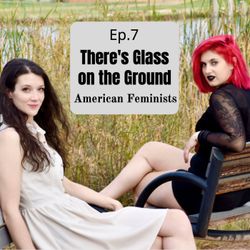
7. There's Glass on the Ground: American Feminists
01:01:28||Season 1, Ep. 7We’ve wanted to do this episode since we started the podcast. This week we are highlighting a few of America’s most groundbreaking feminists. It was hard to narrow down a list, but we chose to focus on Amelia Bloomer, Frances Perkins, Shirley Chrisholm, and Maya Angelou this time. Amelia Bloomer (1818-1894) is most known for her association with bloomers, a more comfortable and realistic women’s dress style of loose fitting pants that cinched at the ankles underneath a knee-length skirt or tunic. She wrote about the style in The Lily, a newspaper she created, written by and for women. The Washington Post recently brought the publication back. Amelia was an activist for women’s rights, temperance, and dress reform. Her passion for temperance, a movement focused on abolishing or reducing alcohol consumption, separated her from other suffragettes. But she continued her activism until the day she died. Frances Perkins (1880-1965) was the United States secretary of labor during Franklin D. Roosevelt’s presidency. She witnessed the famous Triangle Shirtwaist Factory fire and was the principal architect of The New Deal. She played a decisive role in efforts that lead the landmark Fair Labor Standards legislation. She remained in government after her time as secretary of labor and became a civil service commissioner. She lectured on problems of labor and industry until her death. Shirley Chisholm (1924-2005) was the first African-American woman elected to US Congress. Her signature campaign slogan was “Unbought and unbossed” as she fought for higher wages for workers, more public education funding, and demanding respect for black Americans and women. She helped found the National Women’s Political Caucus, which is dedicated to increasing women’s participation in political and public life. She wrote The Good Fight describing her run for President.Maya Angelou (1928-2014) is well-known for her long list of accomplishments, writing, and activism. The United Nations called her to write a poem for the world after her recitation of “On the Pulse of the Morning” at Bill Clinton’s inauguration. She received the Presidential Medal of Freedom award in 2011 for her contributions to the world. Listen in for the full stories of these historic women. Follow us on Instagram @holdmyumbrella