Share
The War Office
Black Hawk Down - The Battle of Mogadishu 1993
On 3rd October 1993, amid the ongoing Somali Civil War, American forces of Task Force Ranger received a tipoff on the location of a meeting of Mohamed Farrah Aidid’s Somali National Alliance in Mogadishu, Somalia. The Americans hoped to capture two of Aidid's advisors to get closer to capturing Aidid himself.
Due to an earlier attack on and rescue of US Marines in another part of Mogadishu, Aidid's forces are put on alert and they were prepared to protect the meeting with small arms and RPGs.
The shooting begins as soon as the US helicopters arrived outside the building where the meeting was taking place. Things quickly go wrong for the troops of Task Force Ranger and these American forces engaged in their largest sustained firefight they have fought in since the Vietnam War.
Thanks to:
- Dr. Jonathan Carroll, Associate Professor of Military History and Modern War Studies at the Royal Military Academy Sandhurst and the author of Beyond Black Hawk Down: Intervention, Nation-building and Insurgency in Somalia, 1992-1995.
You can listen to The War Office on Spotify, Apple Podcasts, Amazon Music, or The War Office Podcast YouTube Channel.
New episodes will be released every Tuesday morning. If you enjoy the episodes, please help us grow the podcast by subscribing, liking, sharing, commenting, and listening to future releases.
More episodes
View all episodes
The Munich Olympics Hostage Crisis
54:17|On 5 September 5th 1972, eight militants of Black September, a Palestinian militant group with ties to the Fatah faction of the Palestinian Liberation Organization, burst into one of the apartments of the Israeli delegation to the 1972 Munich Olympics. At gunpoint they take many Israeli hostages. One of the hostages was able to escape and two were killed in the apartment building after attempting to fight back against the militants.The militants demand the release of 328 imprisoned Arabs and non-Arabs, including members of the German Red Army Faction, or they will begin shooting hostages. The West German police fail to rescue the hostages or to reach an agreement with the Black September militants to release the hostages in the Olympic Village. As a result, the militants and the remaining nine hostages were taken by helicopters to Fürstenfeldbruck Airfield, a remote Luftwaffe base about 12 miles west of Munich. Shortly after the arrival at the airfield, a shootout breaks out.It ends with all nine remaining Israeli hostages killed along with one West German police officer. During the shootout five of the eight perpetrators of the massacre are killed. Over the course the hostage taking at the Olympic Village and shootout at the airfield, eleven Israeli Olympic team members are killed. These events played out on televisions all across the world displaying the poor handling of the situation by the West German government and police. This leads to changes as on 26 September 1972, in direct response to the poor handling of the hostage rescue attempt at the airfield, the West German government establishes Grenzschutzgruppe 9, or Border Protection Group 9, which is better known today as GSG-9. Five years after Munich, GSG-9 will be called upon to resolve another hostage crisis playing out on the world stage, the hijacking of Lufthansa Flight 181.Thanks to:Professor Ofer Ashkenazi, author of ‘Still Lives: Jewish Photography in Nazi Germany’, and member of the 2023 Commission to investigate the Olympics attack in collaboration with the Leibniz Institute.Dr. Aviva Guttmann, lecturer in Strategy and Intelligence at Aberystwyth University and author of Operation Wrath of God: The Secret History of European Intelligence and Mossad's Assassination Campaign. Professor David Clay Large, author of ‘Munich 1972: Tragedy, Terror, and Triumph at the Olympic Games’ and ‘Nazi Games – The Olympics of 1936’. He is a senior fellow at the Institute of European Studies at University of Califorinia Berkeley and a professor at the Fromm Institute at the University of San Francisco.Operation Overlord - Did the Germans Know?
57:45|Operation Overlord was one of the pivotal events of the Second World War. The Germans had been preparing for an Allied landing in Europe for many years. One of their attempts to keep the Allies out was the Atlantic Wall. This was a series of concrete emplacements, guns, barbed wire, and other obstacles located from the Arctic Circle in Norway to the Franco-Spanish border. Pas-de-Calais was heavily defended where as Normandy had less defences. This was a critical element in choosing the location of landings.German commanders had a large influence on what unfolded when the Allies landed. Field Marshal Gerd von Rundstedt and General Erwin Rommel had different opinions on the best strategy to defeat the Allied landings. Rommel wanted German armour close to the coast to quickly defeat the Allies on the beaches while Rundstedt wanted the armour to defeat them inland. Hitler could not decide between the two approaches so a comprise was reached that didn't work out well for the Germans.The largest question related to Operation Overlord is how much did the Germans know before the actual landings began? The Allied deception plans played a major role in keeping the Germans in the dark. The plans were well crafted and highly complex. It involved spies, fake divisions, and getting the Germans believe their false assumptions about when and where the landings would happen.Operation Overlord was one of the most complex military operations in history and this podcast episode dives into how the Germans planned to defeat and how the Allies worked to confuse the Germans. Thanks to:Jonathon Trigg, historian and author of The Defeat of the Luftwaffe: The Eastern Front 1941-45, A Strategy for Disaster, Barbarossa Through German Eyes, and D-Day Through German Eyes.James Holland, historian, co-host of the 'WW2 Pod: We Have Ways of Making You Talk' and author of Normandy '44: D-Day and the Battle for France, Brothers in Arms: One Legendary Tank Regiment's Bloody War from D-Day to VE-Day, and Cassino '44 Five Months of Hell in Italy.Dr. Klaus-Jürgen Bremm, historian and author of Normandy 1944: The Decisive Battle For EuropeHow The Allies Planned Operation Overlord
56:28|By the end of June 6, 1944, D-Day, thousands of Allied troops had landed in Normandy, France. They were supported by tanks, artillery, and thousands of tons of supplies. How did the Allies pull off one of the largest military operations in history?In this podcast, we explore how the Allies came together to plan Operation Overlord. The Transportation Plan, in which the bombers of the US Eighth Air Force and British Bomber Command attacked railways and bridges across France, limiting the Germans’ ability to reinforce Normandy once the landings had begun. Despite disagreement on the best course of action, the plan led to one of the most successful bombings campaigns in history. Also, the French resistance provided crucial support for the landings with the gathering of intelligence and the sabotaging of German defences and logistics. Finally we explore why the Allies chose June 6, 1944 as the date to launch Operation Overlord and the role the volatile weather of the English Channel played in this decision. Careful planning, bravery, difficult choices, and just a bit of luck made the Normandy landings a success. With the Allied return to France, the beginning of the end of Nazi Germany was insight.Thanks to:John Curatola, Senior Historian at the National World War II Museum in New Orleans, Louisiana and author of Armies Afloat: How the Development of Amphibious Operations in Europe Helped Win World War II.The September 11th Attacks from the Pentagon's Perspective - Part 2
53:33|In this podcast, we pick up from where The September 11th Attacks from the Pentagon's Perspective - Part 1 left off. The North and South Towers of the World Trade Center in New York City have been hit by American Airlines Flight 11 and United Airlines Flight 175 respectively. The Pentagon, outside Washington DC, was stuck by American Airlines Flight 77 and is on fire.In Part 2, we begin amongst chaos and confusion about whether or not further attacks will happen when United Flight 93 begins to act erratically on radar and turns toward Washington DC.Military and government officials, including President George W Bush aboard Air Force One, still do not have the full picture of what is happening. The shocking details are slowly revealed as the day goes on including who is responsible for the attacks.The deadly terrorist attacks on September 11 2001 will be largest in American history.Thanks to:Rick Findley is a retired general of the Royal Canadian Air Force. He was Director of Combat Operations for NORAD, based at the Cheyenne Mountain Complex near Colorado Springs, during the September 11, 2001 attacks. He was the Deputy Commander of NORAD from 2003 to 2007.The September 11th Attacks from the Pentagon's Perspective Part 1
49:41|On September 11, 2001, the United States suffered one of the worst terrorist attacks in history. Terrorists hijacked four commercial airlines and targeted the World Trade Center, the Pentagon, and were going to attack, it is suspected, other government buildings in Washington DC, potentially the White House or the US Capitol. In Part 1, we follow the stories of the key decision makers, such as members of the United States Armed Forces, NORAD, the Federal Aviation Administration, Congress, and President George W Bush, as they grappled with the horrific and confusing events of 9/11. Eyewitness testimony and first accounts are used to show the many events of the first part of 9/11 with the realization that multiple aircraft had been hijacked, the attacks on the World Trade Center and the Pentagon, and how the various people and organizations tried to prevent further attacks that day. Thanks to:Rick Findley is a retired general of the Royal Canadian Air Force. He was Director of Combat Operations for NORAD, based at the Cheyenne Mountain Complex near Colorado Springs, during the September 11, 2001 attacks. He was the Deputy Commander of NORAD from 2003 to 2007.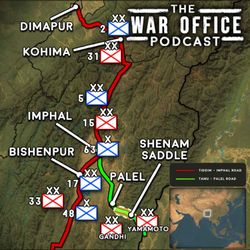
The Battles of Imphal & Kohima - Part 3
53:33|By May 1944, Operation U-Go, the Japanese invasion of India, had run out of steam. The units of the British 14 Army were either stopping Japanese attacks cold or pushing Japanese units back all along the front.At Kohima, the Japanese are pushed off the tennis court by a combined infantry-tank attack down the terraces of Garrison Hill. The fighting at the tennis court has been called one of most brutal and fierce battles against the Japanese in the Burma Campaign and even the entirety of the Pacific War of the Second World WarAt Scraggy Hill, part of the Shenam Saddle, Yamamoto Force suffered heavy casualties in human wave attacks and is stopped from advancing closer to Imphal. A last ditch Japanese armoured counterattack at Bishenpur was also stopped by the use of PIAT anti tank weapons. Rifleman Ganju Lama twice attacks Japanese tanks and was awarded the Victoria Cross for his actions.By the middle of June 1944, Japanese troops were facing starvation and diseases as their supplies ran out and there was no easy way to evacuate the wounded and sick. With no other choice, the Japanese 15th Army retreats back into Burma.The Japanese 15th Army is all but destroyed during the invasion of India and suffered the worst defeat by the Japanese armed forces during the Second World War.Thanks to:Robert Lyman, retired British Army officer, historian, and author of Japan’s Last Bid for Victory: The Invasion of India, 1944; and Kohima 1944: The battle that saved India. He is the co-host, along with Jack Bowsher, of The Forgotten War Podcast about the Burma Campaign of World War 2.Jack Bowsher, historian and author of Thunder Run: Meiktila 1945 and Forgotten Armour: Tank Warfare in Burma. He is the other co-host of The Forgotten War Podcast.Listen to The Forgotten War Podcast: Burma Campaign WW2 here: https://open.spotify.com/show/638ufiXTIRidEheXE1ELfu?si=f0f0a2b888fd43b8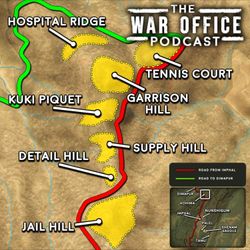
The Battles of Imphal & Kohima - Part 2
59:01|The fierce fighting at Imphal and Kohima continued into April 1944, as units of the British 14th Army fell back to these strategic locations in hopes of defeating the Japanese invasion of India.The troops of the Japanese 15th Army began to face supply issues as the plan to capture Allied supplies to sustain their campaign began to fail. In contrast, the Allied units continued to receive lots of supplies and reinforcements via aircraft landings at airfields throughout the Imphal plain.The Battles of Imphal & Kohima - Part 2 covers the actions of Jemader Abdul Hafiz, of the Indian Army, who was awarded the Victoria Cross for his actions at what will become known as Runaway Hill, the desperate fighting on Kohima Ridge that sees the Japanese capture the infamous tennis court, and many others.Thanks to:Robert Lyman, retired British Army officer, historian, and author of Japan’s Last Bid for Victory: The Invasion of India, 1944; and Kohima 1944: The battle that saved India. He is the co-host, along with Jack Bowsher, of The Forgotten War Podcast about the Burma Campaign of World War 2.Jack Bowsher, historian and author of Thunder Run: Meiktila 1945 and Forgotten Armour: Tank Warfare in Burma. He is the other co-host of The Forgotten War Podcast.Listen to The Forgotten War Podcast: Burma Campaign WW2 here: https://open.spotify.com/show/638ufiXTIRidEheXE1ELfu?si=f0f0a2b888fd43b8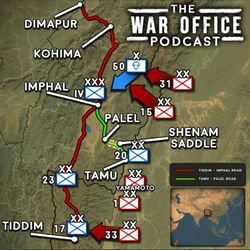
The Battles of Imphal & Kohima - Part 1
59:38|In March 1944, the Japanese 15th Army invades British controlled India during Operation U-Go. Japanese commander General Renya Mutaguchi was initially against such an invasion but comes to see it as not only a way in which Japan could win the Second World War but a chance for him to win personal glory on the battlefield.For the Japanese to control the area near the Indian-Burmese border, they need to capture crucial Allied supply hubs in northeast India to sustain their advance as they have limited supplies. The Allied forces must hold important hubs such as Imphal and Kohima to stop the Japanese advance into India. If the Japanese take these supply hubs, it could have massive strategic consequences for not only the Second World War but for British control of India itself.The fighting will be fierce as British, Indian, and Gurkha units face off against the Japanese at places that will become famous such as the Tennis Court, the Bungalow, and Scraggy Hill.Thanks to:Robert Lyman, retired British Army officer, historian, and author of Japan’s Last Bid for Victory: The Invasion of India, 1944; and Kohima 1944: The battle that saved India. He is the co-host, along with Jack Bowsher, of The Forgotten War Podcast about the Burma Campaign of World War 2.Jack Bowsher, historian and author of Thunder Run: Meiktila 1945 and Forgotten Armour: Tank Warfare in Burma. He is the other co-host of The Forgotten War Podcast.Listen to The Forgotten War Podcast: Burma Campaign WW2 here: https://open.spotify.com/show/638ufiXTIRidEheXE1ELfu?si=f0f0a2b888fd43b8The Sinking of the Battleship Bismarck
57:53|In May of 1941, the Bismarck, a brand-new German battleship, leaves port to begin Operation Rheinübung. Along with the heavy cruiser Prinz Eugen, Bismarck is sent to prey on Allied shipping in the north Atlantic in hopes of crippling Britain in the Second World War by cutting off this vital supply route. The British command is rightly alarmed by the risk that this battleship presents to their war effort and launches a massive effort to stop it.Once out to sea, Bismarck clashes with the mighty Hood, the pride of the Royal Navy and British Empire. The massive German battleship also faced off against Swordfish aircraft, a seemingly outdated fabric-covered biplane torpedo bomber, launched from aircraft carriers amid the harsh conditions of the north Atlantic. One of the greatest pursuits in naval history ends when the Bismarck is sunk by a combined effort of British destroyers, aircraft, cruisers, and battleships.Thanks to:Alex Pocklington, creator of the naval history YouTube channel, Drachinifel. He also contributed to a book on HMS Hood by Key Publishing and is the author of HMS Belfast: Naval History Special Editions for the U.S. Navy Institute Press.