Share

Heredity Podcast
A mixing of wolves
•
While there is little doubt that the grey wolf is one of the world's most iconic species, it is equally true that it is one of the world's most reviled. This later sentiment has seen them extirpated from much of their former habitat. However, in a few places, wolves are making a comeback. In this episode, Sarah Hendricks, Dr Rena M. Schweizer and Prof. Robert Wayne discuss their recent research exploring the genetic history of naturally re-established wolf populations in the US states of Oregon and Washington: their discovery that some of these populations represent a genetic mixing of two distinct ecotypes presents challenges for current conservation policy in the country, and raises the question: what wolf belongs where?
More episodes
View all episodes

Eugenics and the Genetics Society
28:57|Turning the lens on the history of genetics itself, we talk to authors of an article examining its historical relationship with the eugenics movement, which promoted the since discredited idea that genetic improvement techniques could and should be applied to human populations.
Special Issue on Structural Variation
17:27|We hear from Clio Karageorgiou about her work and a recent special issue of Heredity on the same topic - structural variation.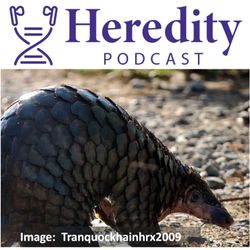
Pangolin popgen & the illegal wildlife trade
27:58|We hear from Portia Wong and Paolo Momigliano about using samples seized from the illegal wildlife trade to inform the conservation of endangered pangolins.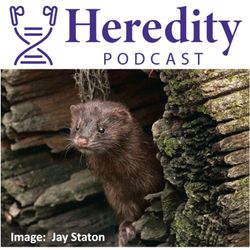
American mink & the use of pangenomes
28:36|A team from universities in Connecticut tell us about their use of pangenomes to examine the status of mink populations in Florida, and an innovative programme that's training the next generation of researchers.
Where your publication fees go, with Jonathan Pettit
13:07|Genetics Society Vice President Jonathan Pettitt discusses what Heredity's publication revenue is used for, and the scientific community benefits of publishing in society journals.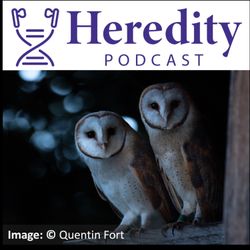
Student Paper Prize 2025 - Inbreeding in European Barn Owls
19:18|The Student Paper Prize for 2025 was won by Eléonore Lavanchy. Eléonore discusses her work, the winning paper and inbreeding in European Barn Owls.
PopGroup 59 - part 2
23:20|Episode 2/2 from the 59th Popgroup meeting in Lille. Plenary speakers Claire Mérot and Denis Roze discuss their experience of the conference and the content of their talks.
PopGroup 59
23:00|Episode 1/2 from the 59th Popgroup meeting in Lille. Plenary speaker Florencia Camus talks about her experience of the conference and the content of her talk.
Sexual selection in a warming world
25:28|Reproduction involves decisions about when to mate and who with. We know that high temperatures affect fertility, but how does this affect mating decisions and sexual selection within populations? Tilly Pembury Smith and Rhonda Snook tell us about their work using fruit files.