Share
Healthy Sports Parents
Approaching youth sports with the end in mind (with former MLB player Brett Carroll)
Brett Carroll played six seasons in Major League Baseball. After retiring and starting a family, he opened BC Athletics - a baseball clinic dedicated to developing not just baseball players, but well-rounded athletes who are prepared to make an impact as future leaders in their homes, teams, schools, and communities.
In our conversation with Brett, we talk about why it's so important not to coach from the stands, the best thing you can say to your kid after a game, and how the youth sports journey changes as your kids get older. We also discuss how your kid is more than the athlete they're becoming, why losing is an important part of growing up, and how approaching youth sports with the end in mind actually changes your entire outlook of your kid's athletic career.
3:29 - When your kids want to get better on their own
4:18 - Balancing your own competitiveness with not burning out kids
6:06 - Why you shouldn’t coach from the stands
9:20 - Our kids want to see us as mom and dad first
9:52 - The most important thing you can say to your kid after a game
12:40 - Letting our kids lead when it comes to putting in work to get better
14:52 - The journey changes as your kids get older
15:25 - Your kid is more than simply the athlete they’re becoming
17:52 - The way we respond to our kids are often interpreted different than we intent
19:32 - The importance of celebrating the little things
20:48 - Taking the pressure to perform off of kids can lead to better results
22:44 - Before puberty, the kids with more developed kids will most often win
23:27 - The things sports should be teaching you aside from winning
25:01 - Eventually your kids are going to play their last game
26:30 - Approaching youth sports with the end in mind
28:04 - The mental/emotional work it takes to be a healthy sports parent
32:01 - Why losing is an important part of growing up
33:54 - No one tries to be a bad parent, but it takes work to be a good one
35:47 - Encouragement for parents this week
New episodes every Wednesday.
---------
Get your Healthy Sports Parents gear:
https://www.healthysportsparents.com/shop
---------
Get your Weekend Playbook:
https://www.healthysportsparents.com/playbook
-----------
Follow us on social:
https://www.instagram.com/healthysportsparents
https://www.tiktok.com/@healthysportsparents
More episodes
View all episodes
16. Fun and Hard Can Both Exist in Youth Sports (with Jake Savicki)
01:01:51||Season 3, Ep. 16Youth sports are supposed to help kids grow, compete, fail, learn, and have fun. But somewhere along the way, a lot of adults started acting like fun and hard can’t both exist at the same time.In this episode of Healthy Sports Parents, Jonathan Carone sits down with former player, coach, and creator Jake Savickifor a conversation about what kids actually need from the adults around them in sports.Jake shares stories from coaching high school baseball, raising his own daughter through youth sports, and learning firsthand how much weight parents’ words, reactions, and expectations can carry. The conversation dives into why so many kids stop loving sports, how parents unintentionally add pressure, and why creating the right environment matters more than chasing the perfect development plan.Jonathan and Jake also talk about:Why fun changes as kids get olderThe difference between hard work and pressureHelping kids stay connected to the game long-termWhy comparison and FOMO lead parents into bad decisionsThe importance of understanding each kid individuallyWhat happens when kids feel safe to failWhy parents matter more than they realizeThis episode is a reminder that most kids don’t need perfect coaching, year-round training, or adults obsessing over outcomes. They need support, perspective, encouragement, and the freedom to enjoy the process of growing up through sports.--------More from Jake:TikTok: https://www.tiktok.com/@jakesavicki?lang=enInstagram: https://www.instagram.com/jakesavicki/Facebook: https://www.facebook.com/p/Jake-Savicki-100066450740049/--------FROM OUR SPONSORS:Hey Coachhttps://heycoach.team/Onsideshttps://www.getonsides.com/--------
BONUS: Let Kids Play (with Senator Cory Booker and Representative Chris Deluzio)
31:36||Season 0Congressman Chris Deluzio and Senator Cory Booker join Healthy Sports Parents creator Jonathan Carone for a conversation about the newly introduced Let Kids Play Act and why they believe youth sports in America are becoming inaccessible for too many families.Instead of focusing only on the details of the legislation, this conversation explores the bigger questions underneath it all: Why do youth sports matter so much? What happens when sports become a luxury item instead of a community experience? And what role, if any, should the federal government play when families are being priced out?Jonathan talks with Congressman Deluzio and Senator Booker about private equity in youth sports, stay-to-play requirements, rising costs for families, youth sports data privacy, and the growing concern that community-based leagues and facilities are disappearing as larger companies consolidate control over more parts of the sports ecosystem.The conversation also goes beyond policy. Senator Booker shares how sports shaped his life and taught him lessons about teamwork, perseverance, and unity, while Congressman Deluzio reflects on growing up in community baseball and why he believes every kid deserves the chance to play regardless of their family’s income.Whether you agree with the bill or not, this episode is ultimately about something much bigger than politics: preserving the role youth sports can play in helping kids grow into healthy adults and keeping those opportunities accessible for future generations.Episode recorded May 13, 2026.--------FROM OUR SPONSORS:Hour-a-thonhttp://www.hour-a-thon.comHey Coachhttps://heycoach.team/--------
15. Why Your Kid Needs Sports To Be Bigger Than Sports (with Lisa Willis, retired WNBA player)
50:34||Season 3, Ep. 15Youth sports can feel like they’re all about the next game, the next season, or the next level. But what if the bigger opportunity has nothing to do with any of that?In this episode of Healthy Sports Parents, Jonathan Carone sits down with Lisa Willis to talk about what sports are really meant to give our kids. From her journey through UCLA and the WNBA to her work as a coach today with Texas Sports Academy, Lisa shares how the lessons that mattered most had nothing to do with stats or accolades, and everything to do with mindset, resilience, and identity.Together, they unpack why so many young athletes are more skilled than ever but often struggle with confidence, pressure, and failure, and what parents can do to help shift that. Lisa explains why habits matter more than highlight moments, how to help kids handle tough emotions after games, and why separating identity from performance is one of the most important things we can teach them.This conversation keeps coming back to one simple idea: sports should be bigger than sports. Not because of what kids achieve, but because of who they’re becoming in the process.If you’ve ever felt the tension between wanting your kid to succeed and wanting them to enjoy the experience, this episode will help you approach it in a more grounded, intentional way.At the end of the day, the goal isn’t simply to raise a great athlete. It’s to raise a great human.--------More from Lisa:Instagram: https://www.instagram.com/lisawillis40/Website: https://lisacwillis.com/Texas Sports Academy: https://sportsacademy.school/--------FROM OUR SPONSORS:Eleven11https://eleven11teamsports.com/Hey Coachhttps://heycoach.team/--------
14. Raising Healthy Humans Through Youth Sports (with Dr. Jeremy Alland, Chicago Bulls + White Sox)
01:08:44||Season 3, Ep. 14Youth sports are not about winning. They’re about helping our kids become the best version of themselves possible.In this episode of Healthy Sports Parents, Jonathan sits down with Dr. Jeremy Alland, team doctor for the Chicago Bulls and White Sox, for a practical and honest conversation about injuries, overuse, and what parents need to understand about their child’s long-term health.They discuss why kids are getting hurt at younger ages, how fatigue and year-round play are driving many of these injuries, and what that means not just for this season, but for the next 30 to 60 years of a child’s life. The conversation also covers how to think about training volume, the role of free play, when to introduce strength training, and why most families should focus on nutrition before supplements.The goal isn’t short-term success this season.It’s raising a kid who leaves sports healthy, confident, and equipped for life.--------More from Dr. Alland:Instagram: https://www.instagram.com/jeremyallandmd/TikTok: https://www.tiktok.com/@jeremyallandmd--------FROM OUR SPONSORS:Eleven11https://eleven11teamsports.com/Hey Coachhttps://heycoach.team/--------
13. Club Sports 101: What Parents Need to Know Before Leaving Rec League (with Karen Scholl)
54:29||Season 3, Ep. 13A lot of families hit a point where rec league doesn’t feel like enough anymore, and the next step seems obvious: move to club (travel) sports where kids will get more games, more training, and more opportunity.But before making that jump, it’s worth slowing down and understanding what actually changes when you leave rec behind.In this episode, Jonathan is joined by author Karen Scholl – a mom who navigated the club sports journey with both her sons and wrote a book about it called Surving Soccer.In the conversation, they walk through what club sports really are, why so many families feel pulled in that direction, and what parents should be thinking about before committing. They talk about the time, the cost, the pressure, and the tradeoffs that don’t always get talked about upfront. This isn’t about saying club sports are good or bad. For some kids and families, they can be a great fit.But club sports are not the only path, and it’s not always the right next step just because it feels like the natural one.If your family is starting to wrestle with the rec vs. club decision, this conversation will help you take a step back, think it through, and make a choice that actually fits your kid and your life.--------More from Karen:Buy Surviving SoccerSubstack: https://karenscholl.substack.com/--------FROM OUR SPONSORS:Hour-a-thonhttp://www.hour-a-thon.com--------
12. What a D1 Dad Wants Parents to Know About the Youth Sports Journey (with Britt Lee, Co-Founder Pure Athlete)
51:14||Season 3, Ep. 12A lot of families start the youth sports journey with the same goal in mind: play at the highest level possible and see where it goes. But what happens when you actually get there… and realize it wasn’t what you thought it would be?In this conversation, Jonathan sat down with Britt Lee, co-founder of Pure Athlete and a dad who’s walked the full path. His son reached Division I tennis. He also had another son burn out. And somewhere along the way, he learned what actually matters and what doesn’t.They talk about the pressure parents feel to specialize early, why so many well-meaning families get pulled into decisions they never intended to make, and how easy it is for sports to slowly take over more of our lives than we realize. Britt shares what he wishes he knew at the beginning, what he’d do differently, and how parents can take a step back and lead their kids through sports in a healthier way.They also get into identity, both for kids and for parents, and why it can be so hard to let go when a sport ends even if we’ve kept the right perspective the whole time. And maybe most importantly, we talk about how to keep sports in the right place so they add to your family instead of taking it over.If you’re in the middle of it right now, trying to figure out what’s best for your kid while managing all the noise and pressure around you, this one will hit close to home.--------More from Britt + Pure Athlete:https://www.pureathlete.com/https://www.instagram.com/pureathleteinc/https://www.facebook.com/profile.php?id=100086392548798https://www.tiktok.com/@pureathleteinc--------FROM OUR SPONSORS:Hour-a-thonhttp://www.hour-a-thon.com--------READ MY ARTICLE IN MOCKINGBIRD:https://mbird.com/sports/the-gospel-according-to-youth-sports/--------
11. Taking Youth Sports Back One Family at a Time (with ESPN College Football Reporter Heather Dinich)
49:13||Season 3, Ep. 11Youth sports can quickly take over family life, leaving parents feeling pressure to specialize early, chase opportunities, and keep up with everyone else. But what if taking youth sports back starts with one simple shift at home?In this episode of the Healthy Sports Parents podcast, ESPN college football reporter and sports mom Heather Dinich joins the conversation to talk about balancing youth sports, family life, and ambition. As a parent of three boys navigating multiple sports, Heather shares what she’s learned about helping kids find the right fit, avoiding unnecessary pressure, and keeping sports in their proper place.We discuss the realities of club sports, the pressure families feel to specialize early, and how parents can support their kids without letting sports take over their identity or family time. This conversation also explores how to let kids take ownership of their sports journey while still providing guidance and perspective along the way.If you're a sports parent trying to balance busy schedules, rising expectations, and what’s actually best for your kid, this episode offers a practical and encouraging perspective on taking youth sports back one family at a time.In this episode, we discuss:• Balancing youth sports and family life• The pressure to specialize early• Letting kids find the sport that fits them• How parents can avoid comparison and urgency• Taking youth sports back one family at a time--------More from Heather:https://www.instagram.com/cfbheather/--------FROM OUR SPONSORS:ESPN's Take Back Sportshttps://www.takebacksports.orgHour-a-thonhttp://www.hour-a-thon.com--------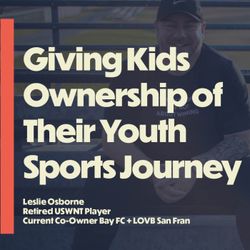
10. Giving Kids Ownership of Their Youth Sports Journey (with Leslie Osborne, retired USWNT)
50:58||Season 3, Ep. 10What happens when we stop trying to control our kids' sports experience and start helping them own it?In this episode, retired USWNT player and current youth coach / pro team owner Leslie Osborne shares why the healthiest sports journeys are the ones driven by kids, not adults. From playing multiple sports growing up to navigating injuries and life after soccer, Leslie reflects on how ownership, passion, and perspective shaped her career and now shape how she parents and coaches.We also explore what it looks like to support kids without pushing them, how parents can balance competitiveness with emotional development, and why youth sports should be about developing confident, capable humans more than elite athletes.Our job isn’t to control the journey.It’s to give kids the tools, space, and confidence to own it themselves.This conversation is about stepping back, trusting our kids, and remembering that sports are simply the vehicle. The real goal is helping them grow into resilient, confident adults who can handle whatever comes next, both on and off the field. That long term development mindset sits at the heart of Healthy Sports Parents and the idea that youth sports are ultimately about raising healthy adults, not just athletes.--------FROM OUR SPONSORS:Hour-a-thonhttp://www.hour-a-thon.comSmallsidehttp://www.smallside.co
9. Youth sports are serious. Just not *that* serious. (with comedian and sports dad Dustin Nickerson)
56:28||Season 3, Ep. 9Youth sports matter. We care because our kids care. But somewhere along the way, it’s easy for that care to turn into pressure, stress, and taking things way more seriously than we ever intended.In this episode, Jonathan sits down with comedian and sports dad Dustin Nickerson to talk about the realities of being a sports parent – the long tournaments, the awkward sideline dynamics, the pressure we feel to show up to everything and get it all right, and the moments when we realize we might need to take a breath and laugh a little.Dustin shares what youth sports look like through the lens of an introvert, how he balances being on the road with being present for his kids, and why effort matters more than perfect attendance. They also get into failure, perspective, participation trophies, arguing with refs, and why kids notice our effort more than our perfection.This is a conversation for parents who care deeply about their kids, want to support them well, and are trying to keep youth sports healthy for their family.Youth sports are serious. Just not that serious.--------FROM OUR SPONSORS:Hour-a-thonhttp://www.hour-a-thon.com