Share
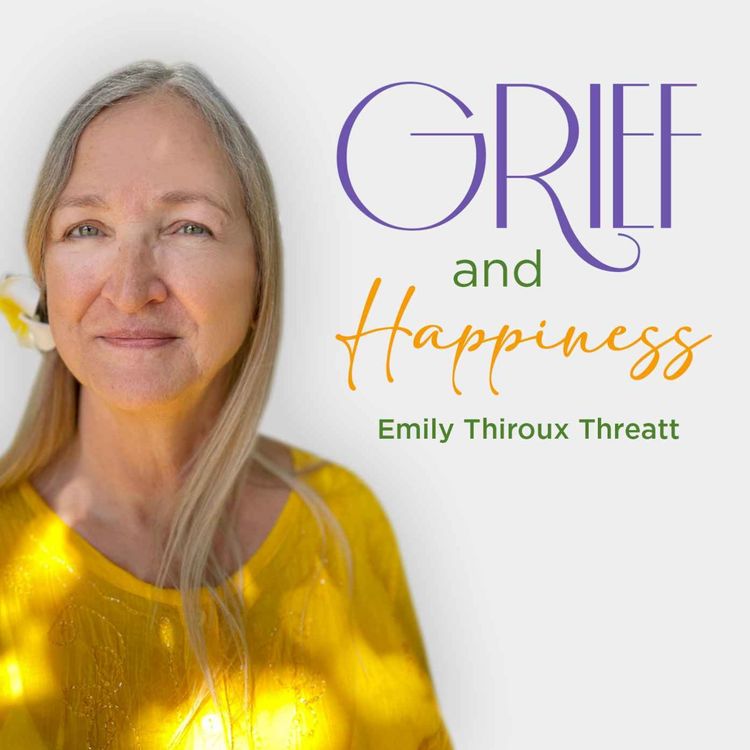
Grief & Happiness
Art As A Gateway to Healing: The Inspiring Story of Barbara Bonsall Wood
Have you given art a chance to help you grieve? For some people, art is much more than a coping mechanism; it is the only way out.
In this episode, I'm joined by the incredibly inspiring author Barbara Bonsall (BB) Wood. After her young adulthood in Europe, Barbara settled in Virginia, earned a Ph.D., and won state, national, and international recognition as a highly successful biology teacher. She lost her father almost at the same time she was diagnosed with Parkinson's Disease, which impaired her dominant hand, forcing her to stop teaching. Many people would have seen that situation as a dead end, yet for Barbara, it was the complete opposite; it was the beginning of a beautiful story.
Throughout our conversation, you'll hear about Barbara's extraordinary and inspiring grief story, her ability to resignify and transform setbacks into daunting challenges, and how she turned audio tapes recorded by her later father about his experiences as a World War II prisoner and his experiences as an Olympic gymnast into the book: "The Violent Years."
Additionally, Barbara shares some of her favorite stories about her father, talks about how writing and drawing saved her, shares her thoughts on relying on our families to heal, and much more.
Tune in and listen to episode 198 of Grief and Happiness and be inspired by Barbara's incredible story of resilience, hope, and healing.
In This Episode, You Will Learn:
- About Barbara's life before the death of her father (2:10)
- Barbara talks about how her mother helped her contextualize her father's tape recordings (5:30)
- Barbara's father's life before and after the war (10:00)
- About Barbara's father's life as a gymnast (17:30)
- Barbara talks about how it is to write a book with Parkinson's (19:00)
- How art can help us go through grief with ease (25:00)
Connect with Barbara:
Let's Connect:
- Website
- The Grief and Happiness Alliance
- Book: Emily Thiroux Threatt - Loving and Living Your Way Through Grief
More episodes
View all episodes

460. Why Your Loved Ones Aren't Sending You Dreams — A Medium Explains the Real Reason
31:04||Ep. 460If you've ever wondered what tarot and ancient mourning rituals can teach us about grief, episode 460 of Grief and Happiness is for you. Psychic medium Jenna Matlin discusses her book, The Tarot Book of the Dead, born from helping clients hold unresolved loss—including the taboo "widow's fire" that can follow a partner's death. She compares global grieving traditions to the West's approach, showing how ritual can make grief sacred.In This Episode, You Will Learn:(01:06) Jenna Matlin's introduction — tarot reading, mediumship, and doula training(01:55) How tarot and mediumship help clients process unresolved grief(06:15) What Western culture gets wrong about holding space for someone else's pain(08:26) Emily's story of losing her husband Jacques — and the friends who stayed(14:00) Why some people receive spirit visits in dreams and others don't(18:04) The "At the Waterline" tarot spread for grief and mediumship readings(23:06) "Widow's fire": the instinctual desire for aliveness after loss(27:06) How death became the unexpected inspiration behind The Tarot Book of the DeadJenna Matlin is a professional tarot reader and psychic medium based in Durham, North Carolina, with a practice serving clients worldwide since 2012 and a tarot career dating to 1990. She is the author of multiple books, most recently The Tarot Book of the Dead, published by Weiser Books, drawing on her anthropology background and cross-cultural research into death and mourning. Her honors include a COVR Silver Award and Best Spiritual Guru distinction from Philadelphia Magazine, and she teaches at Omega Institute while mentoring aspiring readers.In this episode, Jenna brings that lens to grief, exploring it through tarot, mediumship, and ritual. Drawing on her anthropology background, she contrasts the West's administrative approach to death with the communal, presence-based mourning of indigenous cultures, arguing Western culture rarely teaches people to sit with pain without trying to fix it. She describes tools she uses with grieving clients, including a tarot spread called "At the Waterline," and speaks to disenfranchised grief among those excluded from funerals. She also introduces "widow's fire," the surge of desire that can follow a partner's death, framing it as sacred rather than shameful, and closes by weaving in myth to argue grief deserves more ritual and community.Connect with Jenna Matlin:WebsiteInstagramTikTokYouTubeGet Jenna’s books!Let's Connect: WebsiteLinkedInFacebookInstagramTwitterPinterestThe Grief and Happiness AllianceBook: Emily Thiroux Threatt - Loving and Living Your Way Through Grief
459. We Get By With a Little Help From Our Friends
04:26||Ep. 459Do you stay in touch with your friends? If not, today is a good time to start!Let's Connect:You can join the Grief and Happiness Alliance which meets weekly on Sundays by clicking hereYou can order the International Best Selling The Grief and Happiness Guide by clicking here.You can order Loving and Living Your Way Through Grief by clicking here at Amazon:You can listen to my podcast, Grief and Happiness, by clicking hereRequest your Awaken Your Happiness Journaling Guide hereSee acast.com/privacy for privacy and opt-out information.458. Lost, Breathless, in Despair: How Grace Trail Founder Turned One Word Into a Five-Question Lifeline
30:48||Ep. 458If you've ever wondered how one word, scrawled on a beach stone, could turn into a national movement, episode 456 of Grief and Happiness is for you. Grace Trail founder Anne Barry Jolles shares how five simple questions pulled her out of grief and later helped her cope while her son served in combat overseas. She shows how the right questions, asked at the right moment, can turn despair into a path forward.In This Episode, You Will Learn:(00:49) Anne introduces Grace Trail and its five-question framework(01:51) The kitchen floor breakdown that gave birth to the five questions(04:30) Walking the questions with her husband turned grief into connection(07:00) Her son's deployment to Afghanistan and the birth of the first physical trail(13:03) From beach stones to boulders: what a Grace Trail looks like, and its growth into schools, hospitals, and workplaces(19:43) Grace Trail's international reach and the search for a partner to help it scale(22:08) Trail kits, meaningful gifts, and the power of writing your answers down(25:13) Letting nature guide the process — and Anne's closing thoughtsAnne Barry Jolles is an occupational therapist and certified professional coach who founded Grace Trail®, a national resilience movement built around five guiding questions: gratitude, release, accept, challenge, and embrace. She created the process in 2000 while grieving the loss of both her parents, and has since coached more than 2,000 clients and delivered the TEDx talk "Cracking the Grace Code." Her work has earned her ICF New England's Life Coach of the Year award and international recognition, including a feature in Marie Claire Hungary.In this episode, Anne shares the origin story behind Grace Trail, tracing how the five questions emerged intuitively from the word "grace" during that period of grief, and how the practice deepened after her son returned from combat in Afghanistan in 2012. She describes Grace Trail's growth from hand-lettered stones on a Massachusetts trail to more than a dozen licensed installations nationwide, spanning universities, hospitals, schools, and a farm in Texas, with an upcoming VA site honoring her son's service. She also discusses the trail kits she designed for those without trail access, the simple rules that keep it safe — privacy, confidentiality, judgment-free listening — and her hope to expand Grace Trail nationwide and eventually worldwide.Connect with Anne Barry Jolles:WebsiteFacebookLinkedInInstagramXYouTubeGet Anne’s books!Let's Connect: WebsiteLinkedInFacebookInstagramTwitterPinterestThe Grief and Happiness AllianceBook: Emily Thiroux Threatt - Loving and Living Your Way Through Grief
457. A Good Death
05:33||Ep. 457What is your definition of a good death?Let's Connect:You can join the Grief and Happiness Alliance which meets weekly on Sundays by clicking hereYou can order the International Best Selling The Grief and Happiness Guide by clicking here.You can order Loving and Living Your Way Through Grief by clicking here at Amazon:You can listen to my podcast, Grief and Happiness, by clicking hereRequest your Awaken Your Happiness Journaling Guide hereSee acast.com/privacy for privacy and opt-out information.456. He Lost His Dad on 9/11 at 12 — Then Built a Podcast Empire on Grief
28:24||Ep. 456If you've ever wondered how getting deliberately lost could help you heal, episode 456 of Grief and Happiness is for you. David Ferrugio, host of Dead Talks Podcast, shares how losing his father on 9/11 at 12 led to hundreds of conversations about grief and the afterlife. From a solo motorbike ride into Thailand's dark hills to the guilt over public attention, David shows how isolation and risk can carry us through grief.In This Episode, You Will Learn:(00:58) David Ferrugio's introduction and the origin of Dead Talks(01:49) Losing his father on 9/11 at age 12(04:07) Why grief feels universal yet deeply isolating(06:36) Finding community through grief camps and shared experience(08:40) The unexpected path to writing his book(11:15) Why he kept the book eclectic instead of prescriptive(13:40) Finding hope in hundreds of stories, and a solo ride into Thailand's unknown(18:45) The illusion of control and learning to adapt(19:21) Saying yes to uncertainty as a way through grief(26:29) Dead Talks Podcast and his upcoming book, You're Not Dead YetDavid Ferrugio hosts Dead Talks Podcast, which for six years has normalized conversations about grief, loss, and the afterlife through guests' own experiences with death. Having lost his father on 9/11 at 12, he learned the value of sharing stories, a loss that became the foundation of his work and has led to hundreds of conversations on grief and the afterlife. He's also author of the forthcoming book You're Not Dead Yet, out September 8th, blending his story with lessons from his guests.In this episode, David traces how losing his father at 12 shaped an evolving understanding of grief, describing the paradox of feeling isolated despite strong family support, and how guilt over the attention his loss received sparked Dead Talks as a way to spotlight other people's stories. He describes his upcoming book as an eclectic, non-prescriptive collection of perspectives rather than a formula for healing, and shares a story about a solo motorbike ride in Thailand that became a metaphor for stepping into the unknown. The episode closes on how saying yes to uncertainty, and taking the next step, often carries people through grief.Connect with David Ferrugio:WebsiteFacebookInstagramYouTubePodcast: DEAD TalksBook: David Ferrugio - You’re Not Dead YetLet's Connect: WebsiteLinkedInFacebookInstagramTwitterPinterestThe Grief and Happiness AllianceBook: Emily Thiroux Threatt - Loving and Living Your Way Through Grief
455. Reflections on Manifestation
05:42||Ep. 455Have you tried manifestation? What have you manifested?What is the difference for you between mourning and grief?Let's Connect:You can join the Grief and Happiness Alliance which meets weekly on Sundays by clicking hereYou can order the International Best Selling The Grief and Happiness Guide by clicking here.You can order Loving and Living Your Way Through Grief by clicking here at Amazon:You can listen to my podcast, Grief and Happiness, by clicking hereRequest your Awaken Your Happiness Journaling Guide hereSee acast.com/privacy for privacy and opt-out information.454. Why This Grieving Father Forgave His Daughter's Killer — For Himself, Not for Him
27:48||Ep. 454Episode 454 of Grief and Happiness features author Arik Housley on losing his 18-year-old daughter, Alaina, in the 2018 Borderline Bar & Grill mass shooting. He shares his path to forgiveness and post-traumatic growth, from his teenage son's eulogy the night of the tragedy to the well-meaning phrases that missed the mark, offering practical wisdom on showing up for the grieving.In This Episode, You Will Learn:(01:00) Arik Housley introduces himself and the loss of his daughter, Alaina(02:16) Finding strength in vulnerability, and a story that reshaped his faith(04:46) The night of the Borderline shooting and the family's evacuation(07:52) His 14-year-old son's decision to write a eulogy that same night(09:57) Speaking at the Parents of Murdered Children's Conference(14:29) Navigating the line between giving privacy and creating isolation(17:06) What to say — and what not to say — to someone who's grieving(20:36) Why "I know how you feel" can do more harm than good(24:47) Choosing joy and carrying love forward after unimaginable loss(25:45) The story behind his book, Always NovemberArik Housley is an author, entrepreneur, and public speaker based in Napa Valley, California, where he has spent nearly 30 years building a portfolio of businesses spanning grocery stores, a winery, and a restaurant. He is the father of Alaina Housley, killed at 18 in the 2018 mass shooting at Borderline Bar & Grill in Thousand Oaks, and author of the bestselling memoir Always November: Lessons in Loss, Love and Resilience, co-written with novelist Holly Lynn Payne. In Alaina's memory, he and his wife, Hannah, founded Alaina's Voice Foundation, supporting mental health and education, and he now speaks widely at universities and conferences on grief and resilience.In this episode, Arik shares the story behind Always November, from the night his family learned of Alaina's murder to the post-traumatic growth that followed, including his decision to forgive the shooter for his own sake, and how he helped his teenage son process the loss of his sister. Much of the conversation turns practical, as Arik offers guidance for supporting the grieving: navigating the line between giving space and disappearing, and why saying something imperfect beats saying nothing at all. He closes by reflecting on how honesty, even when painful, builds the trust that carries families through tragedy.Connect with Arik Housley:WebsiteFacebookInstagramLinkedInSubstackBook: Arik Housley - Always NovemberLet's Connect: WebsiteLinkedInFacebookInstagramTwitterPinterestThe Grief and Happiness AllianceBook: Emily Thiroux Threatt - Loving and Living Your Way Through Grief
453. The Key to Happiness
04:20||Ep. 453Keeping track of what makes you happy can make you happier!Let's Connect:You can join the Grief and Happiness Alliance which meets weekly on Sundays by clicking hereYou can order the International Best Selling The Grief and Happiness Guide by clicking here.You can order Loving and Living Your Way Through Grief by clicking here at Amazon:You can listen to my podcast, Grief and Happiness, by clicking hereRequest your Awaken Your Happiness Journaling Guide hereSee acast.com/privacy for privacy and opt-out information.452. The "Elegant Exit": Why This Divorce Coach Says Splitting Up Doesn't Have to Be a War
37:05||Ep. 452If you've ever felt divorce only leaves one way to fight, episode 452 of Grief and Happiness is for you. Divorce coach Karen McNenny reframes divorce as its own kind of grief, sharing tools for splitting with dignity, from a "divorce announcement" to protecting kids caught in the middle.In This Episode, You Will Learn:(01:04) Karen McNenny's divorce story and founding the Good Divorce Academy(03:23) Emily on staying in an unhappy marriage because she felt she "had to"(04:17) Why society permits changing everything except marital status(07:52) The "elegant exit" and Karen's mayonnaise-jar metaphor for knowing it's over(10:45) The shame and judgment divorcing families face, and how to support them(13:23) The "divorce announcement" tool for controlling the narrative(17:30) Why kids should never be the mediator or messenger between parents(20:54) Comparing the grief of divorce versus losing a spouse to death(31:10) Karen's wound-to-scar metaphor for how divorce grief healsKaren McNenny is a mediator, certified divorce coach, and co-parenting specialist, and the founder of The Good Divorce Academy. A Montana native with a BFA from Montana State University and graduate studies in London as a Rotary International Scholar, she spent 25 years as a business consultant before shifting her focus to divorce work during the pandemic. She is the author of The Good Divorce: How to End Your Marriage Without Ending Your Family and hosts The Good Divorce Show, now in its fourth season, featuring couples and individuals who've navigated separation well. In this episode, Karen reframes divorce as a form of grief that's too often overlooked and under-supported, drawing on her own divorce 15 years ago to argue that couples default to adversarial, court-driven splits when society offers no "elegant exit." She shares practical tools from her coaching practice — like writing a joint "divorce announcement" to head off gossip and isolation — and stresses that children should never be used as messengers or mediators between parents. She also unpacks divorce's layered losses (identity, routine, social circle), offering her signature image of grief as a wound that scars but never fully vanishes, and connects her story to Emily's in exploring where divorce grief and death grief overlap and diverge.Connect with Karen McNenny:WebsiteFacebookInstagramLinkedInYouTubePodcast: Good Divorce ShowBook: Karen McNenny - The Good DivorceLet's Connect: WebsiteLinkedInFacebookInstagramTwitterPinterestThe Grief and Happiness AllianceBook: Emily Thiroux Threatt - Loving and Living Your Way Through Grief