Share
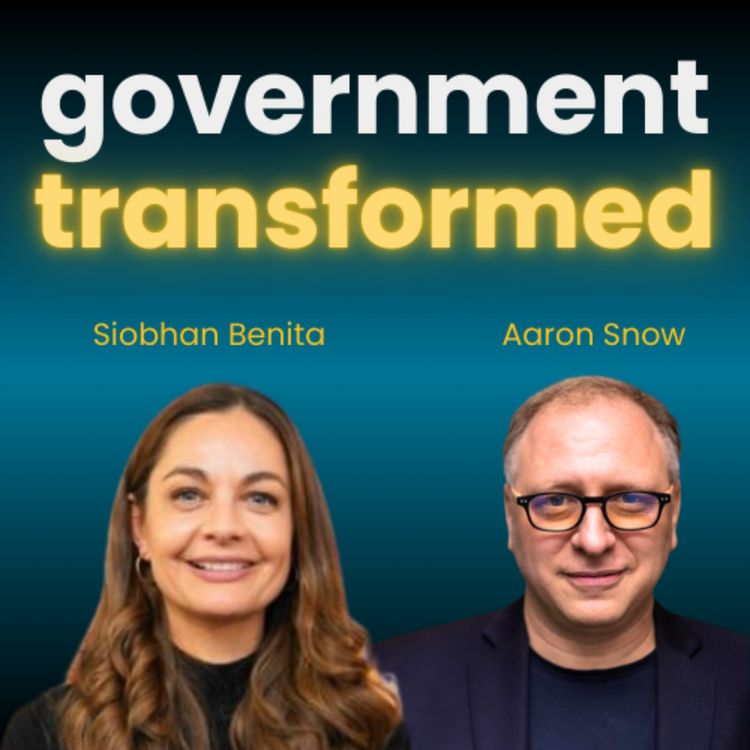
Government Transformed
How the failure of Healthcare.gov kickstarted US government transformation
The 2013 launch of healthcare.gov – the US government website that helps American’s find health insurance – is most often viewed as a failure. The website crashed on its first day, leading to batch of negative headlines as the US government scrambled to get it back online.
But this is only half the story. What is less remembered now is the recovery – how government changed how it worked to get the system working and then spread the lessons across the federal government.
In this episode of Government Transformed, Siobhan Benita speaks to Aaron Snow, faculty fellow at Georgetown University in the Beck Center for Social Impact and innovation, about what it means for governments to achieve digital transformation with public good at its core – from his work helping turn round healthcare.gov and beyond.
Aaron has been named one of the world's 20 most influential people in digital government. In this interview, he recounts to Siobhan his leadership journey through the digital public service landscape.
Starting as a Presidential Innovation Fellow (PIF) in 2012, Aaron became one of the founding members of 18F an organisation set up as a digital expertise arm of the General Services Administration (GSA) to transform public services across America after the problems with healthcare.gov.
In this candid conversation, Aaron shares his insight on what it is like to drive digital change across government from this organisation, as well as the day when an organisational restructure moved 18F from a discreet operation into a much larger outfit – and what this meant for its work. On a practical level Aaron details the daunting challenges he and his colleagues faced were dauting – like having to “design a plane while building it, while flying it”.
He says the stress of leading in such a high-pressure environment seems “pretty natural in retrospect”. “I didn't know what I was feeling [at the time] because I hadn't been through that before, not at that level,” he adds.
In this exclusive podcast, Snow shares his reflections on working in government – from the startup culture of 18F to the bureaucratic obstacles – what he calls the symphony of incentives and requirements that push on people who are trying to improve government service experiences for the public.
He emphasises the need for leaders to foster and protect a strong, innovative team culture. He highlights the importance of having regular conversations with people at every level of an organisation so that every competing need, incentive and requirement is fulfilled.
He also reflects on his time leading the Canadian Digital Service, and his work now as a fellow at the Beeck Center for Social Impact and Innovation at Georgetown University, where he divides his time between the Digital Service Network and the Intergovernmental Software Collaborative.
Listen to the episode in full here.
FOLLOW US:
X: @globegov
Linkedin: Global Government Forum
More episodes
View all episodes
Government Transformed 2.0 Episode Five: What is the institutional imperative – and why does it matter for evaluation in government (and everything else)?
41:54|In the fifth and final episode of Government Transformed 2.0, David Halpern rejoins Richard Johnstone and Nicholas Gruen to discuss the efficacy of evaluative processes in government, and how public servants can and should be empowered to make better evaluations of public policy.Gruen explains the concept of the institutional imperative by way of Warren Buffett's ‘business imperative’, from which he admits he has borrowed the term. “What [Buffett] says is that business managers find that they are driven to expand the business. His argument is that, as an investor and a business manager, his role is not to expand a business, but to use capital as productively as possible. And those two things are not the same in government.”Gruen went on to say that the institutional imperative often risks becoming a “preoccupying force” in government, such that it crowds out “problem-solving [and] critical thinking about how a system can improve”.Listen to hear Gruen and Halpern also discuss:· The importance of independent evaluations of policy, · The role of curiosity in driving innovation· The potential for bottom-up meritocracy to improve government services.
Government Transformed 2.0 Episode Four: Public-private digital partnerships
48:00|Governments around the world are focusing on how to use technology to deliver better public services, and in this episode of Global Government Forum’s Government Transformed 2.0 looks at how governments can realise the digital to usher in a public health revolution.In this conversation, Nicholas Gruen and Sherry Glied, professor of public service at New York University, discussed the potential for genetic and DNA testing to provide more personalised public services.Gruen spoke about the potential of services like 23andMe to be used for preventative and personalised public health services. He described going to San Francisco in 2012 to see Anne Wojcicki, the firm’s former CEO, give a presentation on the service. The company is a private sector company, but Gruen said he thought about how it has the potential to work in government. “There was this perfect opportunity. What should happen with 23andme is that the government should pay for the genomic analysis, it should get a copy of the genome, which, of course, it should keep private.”Broadening the conversation, Glied spoke about concerns that were both economic and political. In America, the idea of government owning information on individuals is problematic, which is a challenge, and, indeed, using genomes “hasn't actually generated as much medical advance as people had thought”.The conversation also touched on countries that have led the principle and practice of digital government, and how pioneering governments are not just looking at how to give citizens easier access to digital public health services, but proactively making them aware of these services when they reach life milestones.Listen to this episode to find out:· The potential for public-private digital partnerships· Challenges in leveraging digital technology in healthcare· The impact of the COVID-19 pandemic on public trustFinally, DO NOT MISS your chance to be among the stellar list of delegates and speakers at GGF's flagship UK event, Innovation 2026.
Government Transformed 2.0 Episode Three: Truly embracing technology in government
45:14|In the third episode of this podcast series, Richard Johnstone, Nicholas Gruen, and Dan Corry discuss the evolution of government's role in technology regulation – and what it mean to truly embrace technology for digital engagement, collaboration, and transparency.In this conversation, they discuss the potential identified in the 2009 Government 2.0 report on the potential for digital engagement, collaboration, and transparency in government – and whether governments have been able to realise this potential.In this conversation, Gruen discusses the reasons behind slow progress, which include risk aversion in public service, and a lack of leadership.Listen to this conversation to hear:The importance – and challenges – of data linkages in government to improve services.The benefits of transparency in policy making – and how it can help.The need for transparency as AI is used more in government service delivery – and how to implement it.Finally, DO NOT MISS your chance to be among the stellar list of delegates and speakers at GGF's flagship UK event, Innovation 2026.
Government Transformed 2.0 Episode Two: Maximising the benefits of public goods and government as a ‘benevolent wholesaler of life’
53:11|The second episode of Global Government Forum’s Government Transformed 2.0 podcast discusses the changing nature of public goods in the digital age – and what governments must do to maximise their benefits.The series comprises conversations that look at the story of digital transformation in government over the last 15 years, and this second discusses the evolution of public goods in the digital age.In this episode, host Richard Johnstone, regular contributor Nicholas Gruen and guest David Halpern, discuss what now counts as public goods in the digital age – and how they can be harnessed for public policy ends.In this conversation Gruen – an Australian economist and government innovation thought leader – and Halpern – president emeritus and former chief executive of the UK's Behavioural Insights Team, and now director of The Downing Battcock Institute – discuss the public goods of the digital era.This discussion explores how digital platforms like Wikipedia and Google have become public goods of opportunity, providing free access and generating significant value, and how governments can support and leverage these digital public goods.They also discuss the potential for government to act as a benevolent wholesaler, providing information to help citizens make informed decisions and improve market functioning.
Government Transformed 2.0 Episode One: What is Government 2.0?
54:59|Welcome to Government Transformed 2.0, a podcast series by Global Government Forum.In this series, Richard Johnstone, the executive editor at Global Government Forum and Australian economist Nicholas Gruen look at the story of the history of government transformation, and what lies ahead.In conversations with a public service experts, Richard and Nicholas will reflect on the work of internationally acclaimed Government 2.0 taskforce in Australia, which in 2010 set out a landmark vision for how the work of government could be transformed by technology.These conversations will look at how much progress has been made in making the most of digital to transform the work of government.This first episode rewinds the clock back to 2010, when Nicholas chaired the Government 2.0 Taskforce. This first episode will look discuss what Government 2.0 was: its guiding principles, its findings, how well it has stood the test of time, and what about it could use a systems update.Joining us for this episode are Laura Gilbert, visiting professor in practice at the school of public policy at the London School of Economics, and senior director of AI and Head of the AI for Government program at the Tony Blair Institute, and Tom Burton, journalist and former government editor at The Australian Financial Review.
Subscribe now to GGF’s new podcast series: Government Transformed 2.0
02:30|Welcome to Government Transformed 2.0, a new podcast series in which Global Government Forum and leading Australian economist and government innovation thought leader Nicholas Gruen to help unpick the story of digital transformation in government over the last 15 years.Across give episodes, this series will outline the opportunities that have been realised from digital transformation in government.The conversations will reflect on the Australian government’s internationally acclaimed Government 2.0 Taskforce – chaired by Nicholas – which in 2009 examined the potential of the digital revolution to boost collaboration between government and citizens, and how this could produce better public services and stronger communities.Now, Nicholas and experts from across the public policy landscape will reflect on what the report contained, where it set out a blueprint for digital government, how much was achieved, and what its lessons are now.Each episode discusses the opportunities governments must seize in an age where data and digital capabilities open the door to better public services everywhere.This series will be published on GGF’s Government Transformed podcast feed. Subscribe to Government Transformed on Apple Podcasts, Spotify, Google Podcasts or Acast, or wherever you get your podcast.
Rewiring the state: Reflections on how to unlock government transformation
01:16:13|The UK government has set the directive for a “complete rewiring of the British state to deliver bold and ambitious long-term reform”. It says that a “digital revolution” will underpin the move to a more “agile, effective and active state”, focused on delivering its missions: growing the economy, an NHS fit for the future, safer streets, opportunity for all, and making Britain a clean energy superpower. It is also essential to simplifying how citizens interact with government to access more joined-up services.A new Global Government Forum study – which was led by Lord Gus O’Donnell and based on in-depth interviews with 12 UK permanent secretaries – pinpoints the barriers and enablers to transformation in government, with a particular emphasis on the role of digital technologies and data, and identifies four priority areas as key opportunities to accelerate change.In this podcast, Lord O’Donnell sets out the findings of the report with former senior civil servant and GGF’s global event and webinar chairperson, Siobhan Benita, along with their guests Yatin Mahandru, vice president, head of public sector and health, Cognizant UK & Ireland, and Faye Holt, director, UK public sector, Amazon Web Services – whose organisations were knowledge partners for the report.Together, they discuss the key findings from the interviews with permanent secretaries, covering:The role of leadership in driving change.How to build capacity in government for digital transformation.How to unlock the power of data and AI.Listen to this episode to get insights from government leaders on the opportunity for government transformation – and unique reflections from the experts featured in this podcast on how to make change happen.Read the Rewiring the State report here.This podcast is based on a Global Government Forum webinar, held on 4 November.
The opportunity for AI agents in government
46:29|In this special episode of Government Transformed, the executive editor of Global Government Forum Richard Johnstone speaks to Luukas Ilves, an advisor to the deputy prime minister and minister of digital transformation of Ukraine who is also former undersecretary for digital transformation and CIO for the Government of Estonia, and Manuel Kilian, the founding managing director of the Global Government Technology Centre, about how agentic AI can revamp how government works.This conversation covers what agentic AI is; how it can be useful to governments, and how to build systems in public services that can make the most of it, looking at potential use cases across the different functions of government.Listen to this episode to help understand the elements of this potential government transformation and the potential for creating an agentic state.If you enjoyed this podcast, please share it to help other people find GGF’s content. And if you are new Government Transformed, please subscribe so you will get all of our conversations on government innovations as soon as they are published.Read the report: The Agentic State: How Agentic AI Will Revamp 10 Functional Layers of Public AdministrationLike this episode? Please share with your friends and colleagues, and if you have an idea you would like us to cover in Government Transformed, please contact: jack.aldane@pendragonim.com
How to improve government payments, with knowledge partners Visa Direct and J.P. Morgan
01:11:31|The development of digital tools has revolutionized many areas of people’s lives – from how they communicate, to how they plan their finances and book trips.In this special episode of Global Government Forum’s Government Transformed podcast, state and local officials join host Siobhan Benita and knowledge partners Visa Direct and J.P. Morgan Payments to discuss how technology can help transform government services to meet the growing expectations of users in the digital world.Listen to this exclusive conversation to hear from local government leaders on how they have made transformation happen – and how they can do so in a way that improves digital inclusion and creates government services with communities.Plus, find out from Visa Direct and J.P. Morgan how government can be transformed to provide more responsive services, and improve productivity, efficiency, and accuracy across government.This podcast is hosted by Siobhan Benita, moderator, Global Government Forum; and the participants were:· Scott Erickson, County Clerk & Recorder, Knox County, Illinois· Brian Page, Managing Director, J.P. Morgan Chase· Curtis Webb, Senior Director, Head of Disbursements and Go-to-market Strategy, Money Movement Solutions, North America, Visa· Freda Richardson Taylor, Deputy Director of Finance/Comptroller, City of New Orleans· Kahlida Lloyd, Director, Office of Human Rights & Equity, Mayor’s Office, Mayor LaToya Cantrell, City of New OrleansFor further reading, please see J.P. Morgan's report: How fast bank payments are helping to modernize public sector disbursements.