Latest episode
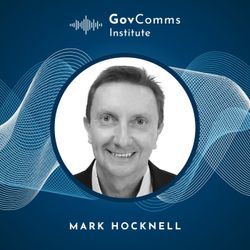
196. EP196: Slow Down to Improve Performance — with Mark Hocknell
41:34||Season 1, Ep. 196In a world of constant urgency, better work can start with doing less – more deliberately.Host David Pembroke is joined by Mark Hocknell, consultant, author and speaker, to explore why ‘shallow’ work is creeping into organisations and what it is costing performance. They discuss the pressure leaders place on teams to produce more activity faster, how that drives task-focused planning instead of outcomes, and why genuine improvement needs deep thinking, evidence and step-change interventions. Mark also shares practical ideas for carving out time, choosing the right measures and creating a culture where teams can focus on what matters most for communities and customers.KEY POINTS- Shallow work misses what matters: Quick answers and time pressure can crowd out deep thinking, leading to plans that lack insight and fail to shift outcomes.- Leaders set the tempo: When leaders pass down urgency and firefighting, teams lose the space to focus on outcomes and meaningful improvement.- Prioritise outcomes over activity: Clear outcomes help teams stop chasing task lists and instead measure what is changing for communities and customers.- Continuous improvement is step change: Improvement rarely happens by doing the same thing ‘a bit better’ every day; it needs deliberate interventions and learning from evidence.- Focus on one outcome at a time: Limited capacity means teams are more likely to improve performance when they concentrate on a single priority outcome, not dozens of competing goals.Links mentioned in the podcast:Profit by Design: How to Build a Customer Portfolio Full of Profitable Promoters (Mark Hocknell): Book mentioned by Mark Hocknellhttps://www.amazon.com.au/s?k=Profit+by+Design+How+to+Build+a+Customer+Portfolio+Full+of+Profitable+Promoters+Mark+HocknellPuMP (Performance Measurement Process): Performance measurement methodology mentioned in the episode (developed by Stacey Barr)https://www.staceybarr.com/pump/Team of Teams: New Rules of Engagement for a Complex World (Stanley McChrystal): Leadership book referenced in the discussionhttps://www.penguinrandomhouse.com/books/231444/team-of-teams-by-general-stanley-mcchrystal/Mentoring for Growth (Queensland Government): Small business mentoring program Mark referencedhttps://www.business.qld.gov.au/running-business/growing-business/business-growth/mentoring-for-growthQueensland University of Technology (QUT) – Master of Business Administration (MBA): MBA program mentioned (Mark developed elective subjects for QUT’s MBA)https://www.qut.edu.au/courses/master-of-business-administrationMark Hocknell – website: Mark’s website (blog posts and videos mentioned)https://markhocknell.com/Mark Hocknell – LinkedIn: Mark’s LinkedIn (contact point mentioned in the episode)https://www.linkedin.com/search/results/all/?keywords=Mark%20HocknellIf you enjoyed this podcast then please:Follow, rate, and review on Apple PodcastsFollow and rate on SpotifyWatch our videos on the GovComms YouTube pageConnect with us on Facebook, LinkedIn and Instagram!The GovComms Institute podcast is produced by contentgroup.
More episodes
View all episodes
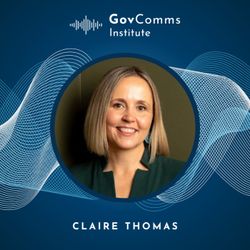
195. EP#195: Why Neuroaffirming Workplaces Win - with Claire Thomas
42:26||Season 1, Ep. 195Modern leadership is being redefined in real time.Host Iris Lisle speaks with Claire Thomas, CEO and founder of Empact Group, about what it takes to build workplaces that deliver results without burning people out.They unpack psychological safety, neuroaffirming leadership and why “being deeply human” is not a 'nice-to-have' – it is a practical way to lift performance, trust and inclusion. Claire shares simple shifts leaders can make, from asking better questions to designing teams where people do not have to mask to belong, and why these changes matter now as workload pressures and AI reshape the public service.KEY POINTS- High performance needs psychological safety: Teams do better work when leaders create environments where people can be honest, ask questions and take reasonable risks.- Neuroaffirming design helps everyone: Adjustments that support one person often improve clarity, focus and accessibility for the whole team.- Curiosity beats certainty: Switching from “here’s what you need to do” to questions first builds trust and leads to better decisions.- Watch for overwork, not just disengagement: Strong output can hide unsustainable workloads, especially in flexible and hybrid settings with less visibility.- Masking has real costs: When people feel they must perform a version of themselves to fit in, it drains energy, increases burnout risk and reduces effectivenessLINKS MENTIONEDEmpact Grouphttps://empactgroup.com.au/Australian Financial Review – BOSS Best Places to Workhttps://www.afr.com/work-and-careers/boss/best-places-to-workAPS Academyhttps://www.apsacademy.gov.au/Digital Transformation Agency (DTA)https://www.dta.gov.au/help-and-advice/digital-service-standard/digital-service-standard-guide/discoveryWeb Content Accessibility Guidelines (WCAG)https://www.w3.org/WAI/standards-guidelines/wcag/AI Co-Labhttps://www.aicolab.org/If you enjoyed this podcast then please:● Follow, rate, and review on Apple Podcasts● Follow and rate on Spotify● Watch our videos on the GovComms YouTube page● Connect with us on Facebook, LinkedIn and Instagram!The GovComms Institute podcast is produced by contentgroup.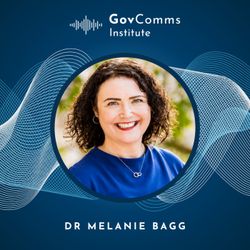
194. EP#194: Science Communication: Building Trust & Access to STEM with the National Youth Science Forum — with Dr Melanie Bagg
55:05||Ep. 194Creating a strong future STEM workforce starts with helping young people see what is possible. Host David Pembroke is joined by Dr Melanie Bagg, CEO of the National Youth Science Forum (NYSF), to talk about how NYSF connects students with real STEM people, workplaces and pathways they cannot always access at school. They discuss what changed through Covid, how a small team works with a large volunteer network, and how NYSF tailors communications across channels while keeping the “human” experience at the centre. Melanie also shares what their long-term evaluation reveals about confidence, belonging and career direction, plus practical lessons for government communicators on testing, listening and staying audience-led.KEY POINTS- Make STEM real, not abstract: Young people respond when they meet real people in real workplaces and can see multiple pathways into careers.- Design for inclusion, not ‘elite’ performance: A friendly, youth-led approach can reduce imposter syndrome and widen participation, particularly for young women and regional and remote students.- Use data to prove impact and shape programs: NYSF surveys students on day one, day nine, one year and five years to track shifts in confidence and options, and to inform new offerings.- Match channels to audiences: NYSF adjusts tone and content by platform (eg Instagram, Facebook and LinkedIn) and uses feedback loops to keep learning.- Adopt AI carefully and ethically: AI can speed up external-facing work, but sensitive information needs clear boundaries, checks and governance.Links mentioned in the podcast:● National Youth Science Forum (NYSF): Youth-led STEM programs including the Year 12 Program https://www.nysf.edu.au/ ● National Youth STEM Summit: NYSF’s program for early-tertiary/VET and early-career STEM participants https://www.nysf.edu.au/programs/national-youth-stem-summit/ ● Rotary International: NYSF’s founding partner mentioned in the episode https://www.rotary.org/ ● Science & Technology Australia: Professional membership organisation mentioned as part of the STEM ecosystem https://www.scienceandtechnologyaustralia.org.au/ ● Australian Academy of Technological Sciences and Engineering (ATSE): Learned academy mentioned https://www.atse.org.au/ ● Australian Academy of Science: Learned academy mentioned (and Melanie’s previous organisation) https://www.science.org.au/ If you enjoyed this podcast then please:● Follow, rate, and review on Apple Podcasts● Follow and rate on Spotify● Watch our videos on the GovComms YouTube page● Connect with us on Facebook, LinkedIn and Instagram!The GovComms Institute podcast is produced by contentgroup.
193. EP#193: Building KPIs Leaders Can Trust - with Stacey Barr
58:36||Ep. 193Measurement should make our work clearer, not harder. Host David Pembroke is joined by Stacey Barr, a specialist in organisational performance, measurement and evidence-based leadership, to unpack why evaluation still feels elusive in government, even when toolkits and frameworks are readily available. They discuss the hidden “missing pieces” that undermine many measurement approaches, how to strip out vague “weasel words” from strategy, and how Stacey’s PuMP methodology helps teams define results, identify credible evidence, and report performance in a way that supports better decisions. The conversation also explores the role of leadership, the reality of public accountability pressures, and where AI can (and cannot) help.KEY POINTS- Start with results, not activity: Be clear about the outcome you want to improve before you decide what to measure, otherwise you end up tracking busywork instead of impact.- De-weasel your strategy language: Replace vague terms such as “quality”, “transparency” or “diversity” with plain, specific wording that everyone can interpret the same way.- Define evidence before choosing measures: Ask what you would see, hear or observe that proves progress, then work out how to quantify that evidence.- Report performance to reveal real signals: Move beyond traffic-light reporting and focus on patterns that show meaningful change, so you don’t overreact to noise or miss early warnings.- Tie initiatives directly to the KPI they shift: Keep actions and results connected, so you can prove whether an initiative actually closed a performance gap.SHOW NOTES:● PuMP® (Performance Measurement Process): Stacey Barr’s practical methodology for performance measurement mentioned in the episodehttps://www.pump.academy/● Practical Performance Measurement (book): Book by Stacey Barr mentioned in the episodehttps://www.amazon.com/s?k=Practical+Performance+Measurement+Stacey+Barr● Prove It! (book): Book by Stacey Barr mentioned in the episodehttps://www.amazon.com/s?k=Prove+It%21+Stacey+Barr● Australia Centre for Evaluation (ACE): Australian Government evaluation initiative mentioned (including toolkit/library resources)https://www.pmc.gov.au/resources/australia-centre-evaluation● Harvard Business Review (website): Stacey notes her content has appeared on HBR’s websitehttps://hbr.org/● ManageMentor (platform): Program Stacey describes as featuring her contenthttps://www.managementmentor.com/● OKR Institute: Organisation mentioned in relation to the OKR Institute World Summithttps://okrinstitute.org/● Objectives and Key Results (OKR) framework: Framework explicitly referenced (“OKRs, objectives and key results”)https://www.whatmatters.com/faqs/okr-meaning-definition-example/● State Library of South Australia: Organisation cited in Stacey’s case examplehttps://www.slsa.sa.gov.au/● Federal Aviation Administration (FAA): Organisation cited in Stacey’s case examplehttps://www.faa.gov/● info@PuMP.academy: Email Stacey provides for arranging a “discovery discussion”mailto:info@pump.academyIf you enjoyed this podcast then please: ● Follow, rate, and review on Apple Podcasts● Follow and rate on Spotify● Watch our videos on the GovComms YouTube page● Connect with us on Facebook, LinkedIn and Instagram!The GovComms Institute podcast is produced by contentgroup.
192. EP#192: When AI Moves Faster than Truth - with Sree Srinivasan
47:00||Season 1, Ep. 192When technology speeds up, trust and truth are put under pressure. Host David Pembroke is joined by Sree Srinivasan, who reflects on what he learnt broadcasting daily from New York during the early days of Covid, and how those lessons apply to today’s AI-driven information environment. They discuss what consistent, two-way communication can achieve in a crisis, why misinformation spreads so easily, and the risks of leaving AI decisions to a handful of powerful companies. Sree also shares practical guidance on building AI strategy and policy inside organisations, with an emphasis on transparency, staff input and regular review. KEY POINTS - Consistency builds trust: Turning up at the same time every day helped create a reliable source of information people could return to during uncertainty. - Two-way communication matters: Making space for audience questions and comments improved clarity, relevance and engagement. - AI policy needs shared ownership: Don’t leave it to tech teams alone; involve the whole organisation and build guidance people will actually use. - Plan for constant change: AI tools and risks evolve quickly, so policies and governance need frequent review, not set-and-forget documents. - Use AI to lift quality, not just cut costs: The best use cases focus on improving work and capability, rather than simply reducing headcount. FIND OUT MORE ABOUT SREE:LinkedIn: https://www.linkedin.com/in/sreenivasanSubstack: https://sreenet.substack.com/Sree's Presentation: https://bit.ly/sreeaibrochureNYTReadalong: https://www.digimentors.group/nytreadalongLINKS MENTIONED IN THE PODCAST: StreamYard: Live-streaming tool Sree used to broadcast across multiple platforms https://streamyard.com/ Don’t Look Up (Netflix): Film Sree referenced as an analogy for ignoring looming crises Southern Poverty Law Center (SPLC): Organisation Sree mentions running a workshop with Stanford Institute for Human-Centered Artificial Intelligence (HAI): Institute referenced (Fei-Fei Li) Columbia Journalism School: Institution Sree mentions teaching at Stony Brook University: Institution Sree mentions teaching at Sebastian Mallaby: Author referenced (book about Demis Hassabis mentioned)
191. EP#191: Storytelling for Trust in the AI Era - with Brenda Duran
01:00:02||Season 1, Ep. 191Government comms has shifted from crafting messages to shaping meaning in a fast-moving digital world. Host David Pembroke is joined by Brenda Duran, director of external affairs at LA County’s Justice Care and Opportunities Department, to reflect on what has changed since they last spoke in 2019. They discuss the COVID-19-driven digital acceleration, the rise of direct-to-public communication, and how misinformation has become a high-volume, targeted threat. Brenda also shares practical approaches to faster approvals, building trusted messenger networks, and creating content that earns attention, before looking ahead to why storytelling and public trust matter even more in an AI-shaped environment.KEY POINTS:COVID-19 accelerated digital government for good Government teams had to pivot quickly to virtual briefings, real-time updates and direct-to-public channels, permanently changing how service information is delivered.Treat misinformation as a trust and security problem Countering false narratives now requires proactive “pre-bunking”, real-time monitoring and partnerships with trusted community messengers, not just reactive corrections.Fix approval bottlenecks by redesigning decision rights Define preauthorised “lanes” for routine updates, rapid approvals and high-risk crisis content so teams can move at the speed of public need.Act like a publisher, not a noticeboard Build weekly content plans, create evergreen explainers, use subject matter experts on camera, and turn government data into meaningful stories people can use.In an AI-driven world, storytelling becomes the differentiator As content volume increases, trust becomes scarcer—public sector communicators add value by creating narratives that restore context, clarity and humanity.Links mentioned in the podcast:AMEC Barcelona Principles: Measurement principles for communication (outputs, outtakes, outcomes) https://amecorg.com/barcelona-principles-3-0/AMEC (International Association for the Measurement and Evaluation of Communication): Organisation behind the Barcelona Principles and comms measurement resources https://amecorg.com/Latinas in Public Relations: Shaping Communications, Communities, and Culture (edited by Melissa Vela-Williamson): Book mentioned (Brenda Duran contributed) https://www.routledge.com/Latinas-in-Public-Relations-Shaping-Communications-Communities-and-Culture/Vela-Williamson/p/book/9781032547805If you enjoyed this podcast then please:Follow, rate, and review on Apple PodcastsFollow and rate on SpotifyWatch our videos on the GovComms YouTube pageConnect with us on Facebook, LinkedIn and Instagram!The GovComms Institute podcast is produced by contentgroup.
190. EP#190: Act to Decide — Why Governments Need to Act on AI Now
44:02||Season 1, Ep. 190Governments cannot afford to keep talking about AI as a future challenge when citizens are already expecting better, faster, and more human-centred services. In this episode of GovComms, David Pembroke speaks with Pete Williams (Chief Edge Officer at Deloitte) about why the real risk is not moving too fast, but moving too slowly. Together, they explore how AI can help government shift from clunky documents and static websites to conversational, accessible and practical service delivery. From internal capability and leadership to chatbots and global examples, this episode is a clear-eyed look at what government needs to do next and why the right time to act is now. #GovComms #AI #government #communication #Deloitte