
Latest episode

6. GLOW Stories: Episode 6 - Tina Arena & Kate Miller-Heidke
50:37||Season 1, Ep. 6Two of Australia’s most celebrated and enduring female artists, Tina Arena and Kate Miller-Heidke, come together for a powerful, candid and deeply revealing conversation on Episode 6 of GLOW Stories, confronting the darker realities of the Australian music industry, the #MeToo movement, sexism, ageism, power, accountability and the treatment of women throughout their careers.In one of the most frank conversations yet on GLOW Stories, the acclaimed artists reflect on their vastly different journeys through the Australian entertainment industry, the people who have shaped their careers, and the difficult experiences that have often remained behind the scenes.While both artists have enjoyed extraordinary success, the conversation explores the price of being a woman in a male-dominated industry, including power imbalances, expectations placed on female performers, and how women have historically been expected to stay silent to protect careers, reputations, and relationships.Honest, funny, confronting and deeply human, Episode 6 of GLOW Stories is a conversation about power and vulnerability, success and sacrifice, speaking up and being heard, ageism, accountability and the ongoing fight for women to be treated with respect.It is also a conversation about resilience and reclaiming your voice.For two artists who have spent decades navigating an industry that has not always known what to do with women who refuse to conform, their message is ultimately one of strength.Supported by @soundnswKnow your worth, protect your voice, challenge the system and never allow someone else to define who you are.
More episodes
View all episodes
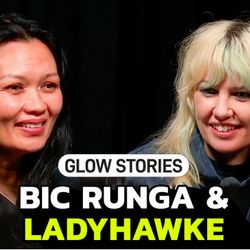
5. GLOW Stories: Episode 5 - Ladyhawke & Bic Runga
45:28||Season 1, Ep. 5Two of Aotearoa's most celebrated artists, Bic Runga and Ladyhawke, come together for one of the most honest and heartfelt conversations yet on Episode 5 of GLOW Stories.In a candid and deeply personal discussion, the acclaimed musicians reflect on decades in the industry, the confidence that comes with experience, and why they're creating some of the strongest music of their careers.Although they've crossed paths for years, the episode marks the first time the pair have shared an intimate one-on-one conversation. As Bic says, "We've spoken a lot, but it's always around millions of other people... We've never actually had a sit down."What follows is a warm and revealing exchange between two artists who quickly discover just how much their journeys have in common, from navigating the pressures of the music industry and raising families to rebuilding confidence and embracing creative independence.Ladyhawke opens up about her forthcoming album, describing it as both her most personal and most rewarding project to date. "This record is quite a special one for me. I feel like it's the best thing I've ever done," she says, explaining that the record represents a rebirth after years of personal growth. "I'm 12 years sober... I'm finally comfortable in who I am. I'm a mum, I'm in my 40s, and I just don't care like that anymore. I just want to do my thing and make music."Bic reflects on releasing her first album of original material in 15 years, revealing that stepping away from industry expectations ultimately gave her the freedom to create entirely on her own terms. "It's nice to have a new album that's independent and just doing things in my own way and in my own time," she shares.Together, the pair candidly discuss the impossible standards often placed on women in music, the pressure to conform, and the confidence that comes with experience. Ladyhawke recalls being told, "I was too old when I was in my twenties. I had to lie about my age. I got told I couldn't be gay," while Bic reflects that perspective eventually drowns out those voices. "It just comes with age... You reject all that noise anyway."Beyond music, the conversation ventures into everything from Ladyhawke's love of vintage gaming consoles and Twitch communities to analogue recording techniques, songwriting, and the reasons imperfections often make records timeless. The pair also discuss the importance of supporting artists and the role music plays in people's lives, with Bic observing that "Music is a marker for moments in your life... It's so important."One of the episode's most moving moments comes as both artists reflect on what they would tell their younger selves. Ladyhawke's answer is both emotional and empowering: "I wish I could go back in time and tell myself, 'You're awesome. You're a really good person. You're good at what you do. Believe in yourself.'"Honest, funny and deeply human, Episode 5 of GLOW Stories is a conversation about resilience, creativity and the freedom that comes from trusting your instincts, reclaiming your voice and creating without compromise. It captures two of New Zealand's most respected artists at a point in their lives where authenticity matters more than expectation—and the music is all the better for it.
4. GLOW Stories: Episode 4 - Kaylee Bell & Ladi6
01:08:03||Season 1, Ep. 4Kaylee Bell reflects on growing up in rural New Zealand and discovering music could become a career. “I never actually remember a time that I didn’t sing,” she shares, recalling that winning the Gold Guitar in Tamworth was the moment she realised, “This could actually be something I do with my life.” Bell also speaks candidly about independence in today’s industry, saying, “I’m so proud to be independent,” while acknowledging that “behind the glamorous side is so much grind and so many hats to wear.”For Ladi6, the conversation explores songwriting, motherhood, and navigating the industry on her own terms. “Music changed my life because it gave me a way to sing about my trauma and loneliness,” she says, while also opening up about the emotional toll of touring as a mother. Reflecting on the shared experiences of women in music, Ladi6 adds, “I feel like we have so much in common that we don’t even realise until we sit down and talk about it.”The conversation closes on a hopeful note as Ladi6 reflects on the changing landscape for women in music today. “I think women in music are finally starting to normalise having families and careers at the same time,” she says, while also acknowledging the importance of boundaries: “I had to learn to say no to things to protect myself.”The eight-part content series celebrates the talent, diversity, and powerful storytelling shaping the AU/NZ music landscape, showcasing both emerging and established artists across genres. GLOW STORIES forms part of the broader GLOW music hub, alongside GLOW Radio, a 24/7 ad-free station dedicated to AU/NZ music, as well as curated playlists across Spotify, Apple Music, and YouTube.
3. GLOW Stories: Episode 3 - Marcia Hines & PANIA
54:57||Season 1, Ep. 3A vibrant and deeply personal cross-generational conversation between Australian music icon Marcia Hines and rising New Zealand artist PANIA. The series is produced by Poppy Reid, co-founder and chief content officer of Curious Media.In a warm, candid exchange, Hines and PANIA explore identity, longevity, creativity, and the realities of navigating music across generations. Their conversation moves seamlessly between humour, hard-earned wisdom, and deeply personal reflections on life, artistry, and staying grounded in an ever-changing industry.A central theme of the episode is authenticity and trusting creative instinct. Hines speaks to the importance of leading with intuition over outside noise: “I listen to my heart… I don’t sing anything I don’t like, because I’m telling a story and I’m speaking from my heart.” PANIA echoes this sentiment, reflecting on the challenge of balancing external opinions with personal truth: “You can hear all these opinions, but at the end of the day, it’s like what do I love?”Kindness, humility, and personal values emerge as guiding principles throughout the conversation. Reflecting on a lifetime in music, Hines shares a simple but powerful mantra: “Stay humble. Be kind.” She expands on this through a formative lesson she has carried with her since childhood: “Words spoken in anger can’t be taken back, so when you’re angry, don’t say anything.”The conversation also delves into confidence, vulnerability, and performance. Both artists acknowledge the nerves that come with stepping on stage, reframing fear as a sign of care and commitment. Hines notes: “If you walk on stage and you don’t care, there’s something wrong… that feeling means you care.” She also shares her pre-performance ritual of grounding herself in purpose and connection: “Find a quiet space… and remind yourself you know what you’re supposed to do here. Do it well.”Creativity and songwriting are explored as deeply emotional and often unpredictable processes. Hines describes songwriting as an act of observation and empathy: “I sit in cafés and listen to people… everybody’s got a story.” Both artists acknowledge the role of emotion in creating meaningful work, with PANIA reflecting on the difficulty of writing from a place of happiness, while Hines adds, “What else is there but love? That’s what people write about.”The episode also highlights the importance of growth, learning, and longevity in music. With a career spanning over five decades, Hines reflects: “I’ve been in the industry over 50 years, and I’m still learning.” She encourages openness to evolution, while PANIA speaks to her own journey of discovering her voice and developing her craft in a modern, self-directed landscape.Throughout the conversation, a strong sense of gratitude and perspective underpins both artists’ outlooks. Hines emphasises the importance of staying present and appreciating the everyday: “Waking up each day and realising hey, I did it again… the little things become the big things.” PANIA shares a similar sentiment, describing her outlook simply as: “Blessed… I get to do what I love.”Episode 3 of GLOW STORIES is a powerful reflection on artistry, identity, and connection—bridging generations through shared experiences, mutual respect, and an unwavering belief in staying true to yourself.Supported by @soundnsw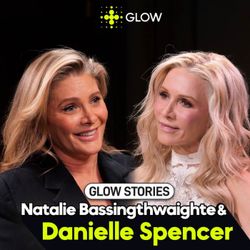
2. GLOW Stories: Episode 2 - Danielle Spencer & Natalie Bassingthwaighte
01:02:10||Season 1, Ep. 2In a deeply personal and wide-ranging discussion, the two artists explore the realities of navigating long careers in music and entertainment while confronting ageism, personal transformation, grief, family life and creative independence.Both women speak openly about the industry barriers faced by female artists as they get older, particularly within radio and traditional label systems, while highlighting the creative liberation they have found through independence. As Spencer reflects, “You don’t hit an age and suddenly lose your talent.”A central theme of the episode is the tension between industry expectations and artistic longevity. Danielle Spencer reflects on the irony that artists often become more interesting with age and experience, yet receive less support from traditional music structures: “Women who are doing some of their best work are not actually platformed anywhere. I don’t think people become less interesting as they get older, I think they become more interesting.”Bassingthwaighte shares her own confronting experience with industry ageism, recalling how she was told her music might not receive radio support: “I was told, ‘They’re not going to play your songs on radio… you’re too old to sign a new deal,’ That was confronting,” states Bassingthwaighte.The conversation also highlights the growing movement of established artists stepping away from traditional label systems and reclaiming creative control.Both Danielle Spencer and Natalie Bassingthwaighte discuss how independence has allowed them to reconnect with the core reason they make music, authenticity. As Bassingthwaighte reflects, “We’re independent now, and it is so exhilarating… we don’t have to ask anyone else’s permission.” For Spencer, her latest album Regenerate reflects a broader life shift, embracing change as children grow up and new chapters begin: “It’s about hitting this point in life where you can decide it’s all over… or you can regenerate.”The episode explores how lived experience, relationships, parenting, grief, and personal growth deepen artistic expression. Spencer notes that songwriting becomes richer with time and perspective: “I love hearing lyrics from somebody who has actually lived.” Bassingthwaighte reflects on the emotional impact of performing in the musical Jagged Little Pill and how it forced her to confront unresolved trauma: “Jagged Little Pill unravelled something in me. It left me raw and wide open.”The conversation also moves into deeply personal territory, as both artists discuss navigating divorce, blended families, and parenting through major life transitions. Bassingthwaighte shares a powerful moment of honesty with her daughter while navigating a new relationship and evolving identity: “My daughter said, ‘Are you a lesbian?’ and I said, ‘I don’t know… I’ve just met someone I have a connection with.’ I wanted to be truthful, even though it was terrifying.” Throughout the episode, a common thread emerges: the importance of honesty in art and in life: “When you get older, you start to ask, ‘Who am I at my core? What do I stand for?’ That’s where the creativity comes from.”Despite industry challenges and personal upheaval, both artists emphasise the importance of continuing to create and share stories. Spencer notes, “I realised I still had plenty to say. I’m not suddenly at a point where I need to be in the garden.” The episode offers a powerful reminder that creativity does not diminish with age; it evolves.Supported by @soundnsw
1. GLOW Stories: Episode 1 - Missy Higgins & Gordi
57:06||Season 1, Ep. 1The first GLOW STORIES episode features Missy Higgins in conversation with Gordi for a raw and expansive discussion about sexuality, identity, and the responsibility of writing songs drawn from real life. Reflecting on the early days of her craft, Gordi describes an almost unstoppable creative impulse: “When I first started songwriting, it was like a tap that wouldn’t turn off,” she says, explaining that, “When I was younger, I felt songwriting was a way to communicate feelings that I couldn’t say.”As she navigated the pressures of sexuality and public perception, music became both an outlet and therapy, a parallel path to her work as a resident doctor, which she ultimately put on hold to fully pursue her art. Missy, meanwhile, reflects on her own evolution and the challenges of radical self-examination through songwriting. “I went through a big phase in my twenties when songwriting was so selfish in a way, I was in a real self-hatred mode… Not making a difference in the world… look at all these people on the front line… why don’t I do something truly worthy?” she recalls. “Cut to now, and I realise the power of music and how important it is to people’s lives.”In a lighter moment, she even floats the idea of writing a “really sad Christmas song about becoming a newly single mum,” capturing the episode’s blend of humour, vulnerability, and creative truth.GLOW RADIO was born out of a clear gap in Australia and New Zealand’s media landscape. While homegrown talent continues to thrive, too many artists, particularly women over 35, gender-diverse voices, and First Nations musicians struggle to find consistent airplay or meaningful exposure. GLOW was created to change that. It’s a platform built to celebrate artistry without bias, champion career longevity, and reconnect audiences with the incredible depth of Australian and New Zealand music that often goes unheard on mainstream radio.Supported by @soundnsw