Share

Education Leaders | The Chart-Topping School Leadership Podcast
Rethink your literacy strategy | A Conversation with Chris Scorer
Is your school's literacy strategy doing more harm than good? In today's episode, educational consultant Chris Scorer joins me at a local British pub to delve deeply into how our traditional approach to literacy might be causing stress and anxiety for students. Chris draws from both professional expertise and personal experience to challenge the orthodoxy of literacy education. This episode is a must-listen for international school leaders who are keen to explore more inclusive ways to support student well-being while also fostering literacy.
Chris Scorer, an educational consultant and regular speaker on the international education circuit, shares a transformative and deeply personal perspective on literacy. We discuss how overly narrow definitions of literacy and an unyielding drive towards it can have detrimental effects on students, especially those with dyslexia or other literacy difficulties. Chris suggests a radical rethinking of our literacy strategies, advocating for broader frameworks to access and express knowledge that caters to individual learning needs.
- Chris’s journey from being a proponent of literacy for all to questioning its universal relevance due to his son's struggles with learning to read.
- How narrow definitions of literacy can cause stress and anxiety among students.
- The importance of rethinking our approach to literacy to include alternative methods of accessing knowledge.
- The impact of pushing students toward literacy on their mental health and well-being.
- The role of school leaders in facilitating a more inclusive environment.
- Chris’s comparison of literacy accommodation to the Disability Discrimination Act and how we can learn from historical shifts in policy.
- Practical steps for teachers and school leaders to begin implementing a more flexible approach to literacy.
This episode is supported by the International Curriculum Association. Click here to Register For The International Curriculum Conference 2024
Thank you for tuning in, and as always, if you found this episode useful, please share your experience. You can find me online on X (@leaningshane), and LinkedIn. My website is shaneleaning.com and email address is shane@shaneleaning.com.
About the host
Shane Leaning is an independent organisational coach based in Shanghai, collaborating with international schools and agencies globally. He co-founded Work Collaborative, a community dedicated to inside-out change in education, and hosts the chart-topping podcast, Global Ed Leaders. Previously, Shane was the Regional Head of Teacher Development for Nord Anglia Education’s China bilingual schools, overseeing professional development across 11 schools. He holds an Executive Master’s in International Education from King’s College London and is a certified organisational development coach.
Join Shane's Intensive Leadership Programme at educationleaders.co/intensive
Shane Leaning, an organisational coach based in Shanghai, supports school leaders globally. He is the author of the best-selling 'Change Starts Here.' Shane is a leading educational voice in the UK, Asia and around the world.
You can find Shane on LinkedIn.
We are a proud member of the Education Leaders podcast network. For more great education shows, visit educationleaders.co/network/
More episodes
View all episodes
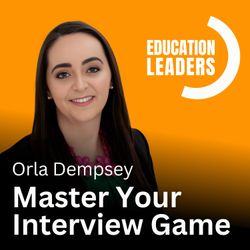
183. Master Your Leadership Interview Game | A Conversation with Orla Dempseyla Dempsey
27:08||Ep. 183Leadership interviews terrify plenty of capable teachers, and Shane admits he is one of them. So Orla Dempsey, a coach who helps teachers secure leadership positions, coaches him live in this episode. She starts with a reframe Shane calls huge: when a question asks “what would you do if...”, answer in the past tense and tell a story about something you have already done. If you are preparing for a school leadership interview, or helping a colleague prepare, you can use her tools straight away.In this archived episode, you’ll learn how Orla teaches the STAR technique (situation, task, action, result), including her “clam” image and her rule that the result should take 17 words or less. Shane has a go at a live mock answer about coaching a colleague whose long emails annoyed his team, and Orla shows how a list of verbs makes it sharper. You’ll also hear how to put figures behind your impact, how to read a school’s needs from a principal’s address and photographs, and why speaking from the heart beats speaking from the head when a setback comes up. Orla’s closing message is worth hearing before your next interview: not being the right fit for one school does not mean you are not good enough.Resources & Links Mentioned:Orla Dempsey's LinkedInOrla Dempsey's websiteEpisode PartnersInternational Curriculum AssociationSisi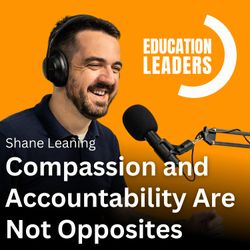
182. Compassion and Accountability Are Not Opposites
13:27||Ep. 182A teacher hands in their planning late for the third time, and you know they are dealing with a difficult situation at home. Insist on the deadline and you may ask for something they cannot manage, but keep extending it and colleagues end up carrying the load while pupils’ preparation suffers. This solo episode of school leadership coaching looks at what to do when two of your values pull in opposite directions, using Rushworth Kidder’s idea of “right versus right” dilemmas. It matters for any leader who has felt torn between standards and compassion and defaulted to whichever response felt most familiar.Shane walks through five practical moves: name both concerns and what each one protects, gather the facts, look for another route, choose and acknowledge the cost, then rehearse the conversation. You’ll hear what “standards” and “compassion” might mean in the late planning example, and why a temporary arrangement with a clear review date can create room for both. Shane also shares how he slipped on his own delegation when family visited from the UK and his self-care suffered. The episode ends with a simple if-then commitment you can use this week, so you can press play and leave with something to try before your next difficult conversation.Resources & Links Mentioned:Giving Voice to Values, Mary Gentile’s approach to acting on your valuesEpisode PartnersInternational Curriculum AssociationSisi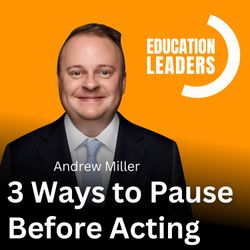
181. 3 Ways to Pause Before Acting | A Conversation with Andrew Miller
24:17||Ep. 181Dr Andrew Miller, Academic Principal at Beijing International Bilingual Academy, explains what going slow really looks like for a school leader and why "maybe don't" could be the most useful phrase you say all year. His career spans Washington State's Office of Superintendent of Public Instruction, Singapore American School and Shanghai American School, so he has seen how pressure to move fast plays out in very different systems. There is also a story behind this episode: Shane's audio failed to record, so you hear Andrew's answers as they were given on the day, with short bridge lines from Shane to set up each question.You'll learn how to tell deliberate slowness apart from avoidance or a loss of nerve, and how Andrew resets his own sense of urgency on the days when he feels he hasn't done enough. He also covers how to let staff see your thinking without it sounding like excuses, and where the line sits between useful vulnerability and venting. Shane closes with three practical steps to try this week, starting with writing down what would happen if you didn't launch that next initiative. If everyone around you is waiting for you to act, this conversation gives you a way to pause with confidence.Resources & Links Mentioned:Washington State Office of Superintendent of Public Instruction Singapore American School Shanghai American School Andrew's LinkedInEpisode PartnersInternational Curriculum Association
180. 3 Big Ideas from This Month's Episodes | Education Leaders Live
44:20||Ep. 180Every month, Shane Leaning and Chris Scora sit down to unpack what has come up on the Education Leaders podcast, and this live catch-up covers two of the season's most talked-about conversations. The main event is a robust back-and-forth on Claire Badger's episode, "Do Schools Really Kill Creativity?", where Chris admits he needed three listens to get past his initial discomfort with Claire's certainty before finding real common ground. They also revisit Jim Knight's "Stop Telling Teachers What to Do" and discuss why his coaching-over-directing approach has struggled to gain traction in UK schools despite making obvious sense on paper.You'll hear why Chris pushed back on Claire's definition of creativity as needing to be both "novel and useful," and why he worries that scaffolding can tip into constraint when applied under classroom time pressure. Shane and Chris also work through the tension between aspiration and pragmatism in education, using the IB's diploma programme as a case study, and close with reflections on Jim Knight's ideas about listening, agency and the "helpful bully" trap leaders can fall into. If you've ever wondered whether structure helps or hinders creative thinking in your classroom, this conversation will give you plenty to weigh up.Resources & Links Mentioned:Education Leaders Podcast NetworkDo Schools Really Kill Creativity? with Claire BadgerStop Telling Teachers What to Do with Jim KnightWhat Can Leaders Learn from Architects? with Phil IdleBritain's Strictest Head Teacher with Katharine BirbalsinghEpisode PartnersInternational Curriculum AssociationSisi
179. Do Schools Really Kill Creativity? | A Conversation with Claire Badger
34:06||Ep. 179Claire Badger, a former research scientist and science teacher, disagrees with one of the most popular ideas in education: that schools kill creativity. Drawing on the cognitive science in her book, she argues that creativity has a clear definition (something must be both new and useful) and that most school approaches to it miss the second half. If your school celebrates its art displays, orchestra and project weeks as proof of creativity, this conversation will make you question what those activities are actually building. It matters for international school leaders in particular, where inquiry-based and project-based learning sit at the heart of the curriculum.You'll hear why a child's paperclip-spaceship idea is imaginative but not creative, and why a group of students told to write about "Colin, a red-haired boy missing a toe" produced better stories than those given a blank page. Claire shares her own "sustainable product" project day, which ended with a perpetual motion machine, and explains why cross-curricular projects often teach less than leaders hope. You'll also pick up practical first steps, from loosening the grip of data drops and Key Stage 3 exams to changing just one element of a lesson, such as asking for a video explanation instead of pages of written calculations. Shane and Claire even compare two very different schools and ask which one is more likely to produce creative graduates.Resources & Links Mentioned:Ken Robinson's TED talk "Do Schools Kill Creativity?"The Double Diamond design process (Design Council)World Economic Forum Future of Jobs ReportClaire Badger on LinkedInClaire Badger's Creativity for Teachers: A Cognitive Science Approach (The Teacher CPD Academy)Episode PartnersInternational Curriculum AssociationSisi
178. Introducing the Education Leaders Podcast Network
44:25||Ep. 178Shane Leaning has spent years building the Education Leaders podcast into a trusted source for practical leadership strategies. In this special launch episode, he's joined live by the hosts of four other education podcasts to unveil something new: the Education Leaders Podcast Network. What started as a conversation between Adam Kohlbeck and Chris Passey about wanting all their favourite education podcasts in one place has become a five-show network, each independently produced but bound by shared quality standards and a common goal of broadening the conversation across the sector.You'll hear directly from the hosts of EduPulse, Beyond the Status Quo, Teaching on Purpose, Coaching Done Well and Coaching Unpacked, and Education Leaders Live, each explaining what makes their show distinct. Shane and his co-hosts discuss everything from the "kintsugi" philosophy behind Beyond the Status Quo to the new podcast studio behind Teaching on Purpose, and Adam Kohlbeck shares the same-day publication of his book on coaching for adaptive expertise. If you want to know where to find practical, high-quality education content from voices across the globe, this episode is your map to the whole network.Resources & Links Mentioned:Education Leaders with Shane LeaningCoaching Done Well x Coaching Unpacked with Shane Leaning, Jim Thompson, Adam Kohlbeck, Chris Passey and Sarah CottinghattEduPulse with Adam Kohlbeck and Chris PasseyTeaching on Purpose with Chiltern Learning TrustBeyond the Status Quo with Kathryn Gorman and Tamara Zaple RolfsEducation Leaders Podcast Network — full feedEpisode PartnersInternational Curriculum AssociationSisi
177. Why Your Open Door Policy Fails
10:22||Ep. 177Shane opens this episode by naming a habit most school leaders share: telling their team "my door is always open," then wondering why staff still hesitate to bring problems to them. He argues these phrases feel generous but give people nothing concrete to act on, leaving new starters and existing team members to guess how you actually want to be approached. Drawing on a 2013 field study of over 600 call centre employees, Shane shows how a single day of onboarding, focused on staff rather than company values, cut turnover by nearly a third within six months.You'll learn three specific things to tell your team in your very first meeting this year: how to reach you and how quickly you'll genuinely reply, the specific situations you want flagged before they escalate, and how you behave under pressure so people stop having to work it out by trial and error. Shane also shares his own example of going quiet under stress and warns against the two ways this approach usually falls apart. If you want a practical, low-cost way to replace vague reassurances with something your team can use, this episode gives you the exact script.Resources & Links Mentioned:Cable, Gino & Staats (2013) study on employee onboarding and identityEpisode PartnersInternational Curriculum AssociationSisi
176. What can Leaders Learn from Architects? | A Conversation with Phil Idle
32:04||Ep. 176This episode explores what happens when school leaders stop starting a building project with a room count and start with a harder question about who their students are becoming. Phil, a Director at EIW Architects and past International Chair of the Association for Learning Environments, has spent more than thirty years watching how classrooms, corridors and timetables quietly shape behaviour, belonging and identity. If you are planning a new build, an expansion, or simply rethinking how your existing spaces reflect your school's values, this conversation offers a genuinely different starting point.You'll learn why treating a design brief as a fixed checklist can trap a school in yesterday's thinking, and how Nanjing International School flipped that process by writing a "Dear Architect" document about beliefs rather than room specifications. Phil shares the story of a project in rural Tanzania that turned his team from experts into learners, and explains why risk avoidance has quietly become a measure of "responsible" leadership at the expense of better design. Shane and Phil also discuss why architecture and school leadership are really the same discipline in disguise, both shaping how humans learn, belong and flourish together. If you've ever wondered what your school's corridors are secretly saying about what you believe, this conversation will change how you look at your own building.Resources & Links Mentioned:EIW ArchitectsPhilip Idle on LinkedInSarah Williams Goldhagen's short film "What Design Can Do"Jay Shetty's "On Purpose" podcastDr Etienne Wenger-Trayner on communities of practiceAssociation for Learning Environments (A4LE)Episode PartnersInternational Curriculum AssociationSisi
175. Inside Britain's Strictest School | A Conversation with Katharine Birbalsingh
27:50||Ep. 175This week, we're revisiting a favourite from the archives. Shane sits down with Katharine Birbalsingh, founder and headmistress of Michaela Community School, the free school in a converted Wembley office block that has posted the highest Progress 8 scores in England for three consecutive years. Katharine explains why she's never once used an agenda in a meeting, why simplicity beats choice in almost every part of school life, and why she believes real autonomy only works when staff genuinely own what they're building together.You'll hear the ice cream cone analogy Katharine uses to explain why schools quietly become too complicated over time, why she deliberately warns candidates about the parts of Michaela they might not like before hiring them, and how she applies the logic of the dating world to setting standards with parents and pupils alike. Whether or not you agree with her approach, this conversation will push you to think harder about what genuine conviction in leadership actually looks like.Resources & Links Mentioned:Michaela Community SchoolThe Battle Hymn of the Tiger Teachers, edited by Katharine BirbalsinghThe Schools We Need and Why We Don't Have Them by E.D. HirschEpisode PartnersInternational Curriculum AssociationSisi