Share
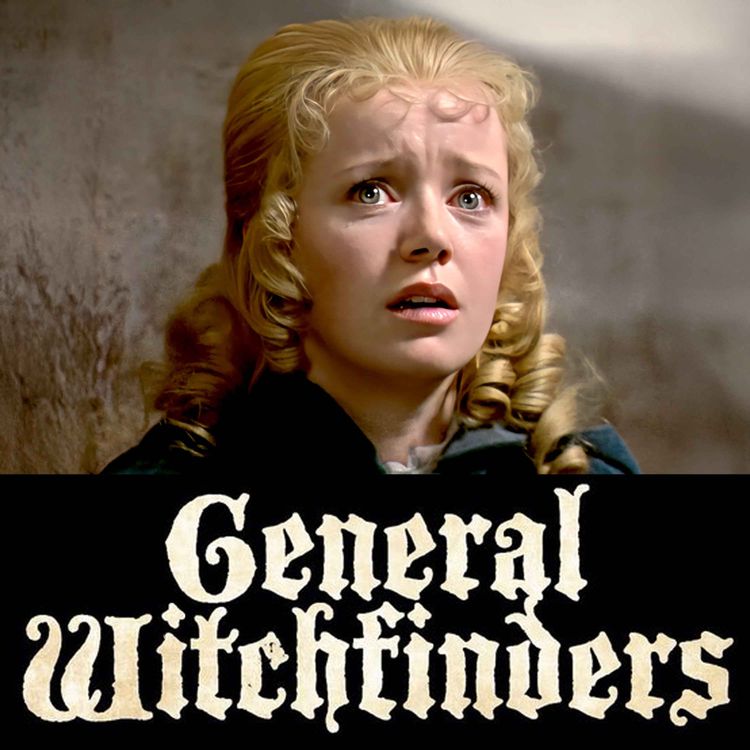
General Witchfinders: The British Horror Podcast
55 - The Hands of the Ripper (1971) - Hammer Horror
Join us for Hammer’s Hands of the Ripper, a 1971 British horror film released as the second half of a double feature with Twins of Evil. Directed by Peter Sasdy, produced by Aida Young, and written by L.W. Davidson from a story by Edward Spencer Shew.
Making good use of the large Baker Street set at Pinewood Studios—left over from The Private Life of Sherlock Holmes—the production was denied permission to film its final scenes at St. Paul's Cathedral, so a replica was constructed instead. If the Pritchards' home and staircase look familiar, it’s because Hammer’s ever-resourceful set designers reused elements from The Curse of Frankenstein years earlier (see episode 2 of our podcast for more on that classic).
Director Peter Sasdy, who cited Hands of the Ripper as his favourite film, also directed the original Adrian Mole TV series (both The Secret Diary and The Growing Pains), three episodes of Hammer House of Horror, and two other Hammer features: Countess Dracula and Taste the Blood of Dracula (the latter coming to the podcast later this year, hopefully). Most monumentally, he directed the legendary BBC sci-fi thriller The Stone Tape (definitely check General Witchfinders number 5—our third most popular episode to date!).
Eric Porter stars as Doctor Pritchard. Renowned for his work in film, television, and theatre, he famously played Professor Moriarty opposite Jeremy Brett’s Sherlock Holmes and Soames Forsyte in The Forsyte Saga.
Angharad Rees plays Anna, the daughter of the Ripper. She appeared in Boon (take a drink), starred as Demelza in 28 episodes of Poldark, and, the year after Hands of the Ripper, featured in Under Milk Wood alongside Richard Burton, Peter O'Toole, and Elizabeth Taylor. She was made a Fellow of the Royal Welsh College of Music & Drama, had a pub named after her in Pontypridd (sadly now a card shop), and founded a Knightsbridge jewellery company, Angharad. Pieces she designed were featured in Elizabeth: The Golden Age. Wikipedia also notes she was once in a relationship with Alan Bates, which we mention only to plug episode 35, where we talked about The Shout.
Lynda "Nurse Gladys Emmanuel" Baron appears as Long Liz—a curious name choice considering Long Liz was an actual canonical Ripper victim. Here, she’s depicted alive and well (at least initially), years after Saucy Jack's supposed demise.
Baron appeared as a recurring character in both Coronation Street and EastEnders, and played three different characters in Doctor Who across three Doctors.
Dora Bryan turns up as Mrs Golding, one of two clairvoyants in the film. You may know her from 50 episodes of Last of the Summer Wine, Boon (drink), or as Helen in A Taste of Honey (written by Jon's mum's mate Shelagh Delaney). She (Dora, not Shelagh) also appeared in both a Carry On and a St Trinian's.
Lastly, Norman Bird pops up as the Police Inspector. If he looks familiar, it's because he had over 200 TV and 60 film roles. He was in Spywatch (as Mr Jenkins), Boon (drink), Woof!, Whack-O!, and Help! (with Stephen Mangan). He also did a stint in Jim Davidson’s Up the Elephant and Round the Castle—only mentioned because Ross was convinced it was alongside Marina Sirtis, but IMDb says she was in just one episode?
Anyway, back to Norman Bird. He appeared in The Adventure Game, Whistle Down the Wind, Steptoe and Son, Fawlty Towers, Please Sir!, and The Medusa Touch (on our long list since day one). He was Mr Braithwaite, the farmer, in Worzel Gummidge and voiced Bilbo in the 1978 Ralph Bakshi Lord of the Rings.
More episodes
View all episodes
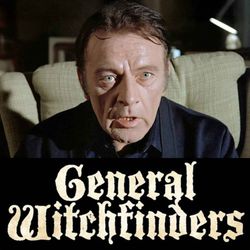
68. 68 - The Medusa Touch
02:14:00||Season 1, Ep. 68LIVE EVENT: General Witchfinders x Tasel & Skylark BooksJoin the General Witchfinders for our first-ever live show! We are partnering with Dorchester’s premier bookshop, Tasel and Skylark, for a night of high-strung atmosphere and folk horror.Date: Tuesday 5th MayVenue: Kings Arms Hotel, DorchesterFeaturing: Live music, exclusive story readings, a deep-dive talk on Folk Horror, and the official launch of our brand-new zine.Tickets are strictly limited – grab yours now at www.generalwitchfinders.comThe Medusa Touch (1978): Richard Burton and the Power of CatastropheIn this episode, we investigate the 1978 supernatural horror thriller The Medusa Touch. Directed by Jack Gold and adapted from the Peter Van Greenaway novel, The Medusa Touch is a quintessential piece of seventies British cinema that sits at the dark intersection of the disaster movie and the occult thriller. The film follows the investigation into the apparent murder of John Morlar, played with volcanic intensity by Richard Burton.Richard Burton is the undeniable gravitational centre of The Medusa Touch. Despite Richard Burton only filming for three weeks and demanding a massive upfront fee, his presence as the telekinetic John Morlar defines the movie’s grim atmosphere. We discuss how Richard Burton portrayed a man who believed his thoughts could cause jumbo jets to crash and cathedrals to crumble. Interestingly, because of Richard Burton’s high cost, his character is often seen heavily bandaged in a hospital bed, allowing a stand-in to do the heavy lifting while Richard Burton provided the piercing close-ups and that legendary voice.Fans of 90s rock will know that a specific line from Richard Burton in The Medusa Touch – ‘I will bring the whole edifice down on their unworthy heads’ – was famously sampled by the Manic Street Preachers. This misanthropic energy is what makes John Morlar such a compelling antagonist. Throughout our review of The Medusa Touch, we explore how Richard Burton channeled his own real-life disillusionment into the role of John Morlar, creating a performance that feels both radioactive and world-weary.The supporting cast of The Medusa Touch is equally impressive. We look at Lino Ventura as Detective-Inspector Brunel, the man tasked with solving the mystery of John Morlar. Since The Medusa Touch was a co-production between the UK and France, Ventura provides a gritty, European perspective to this very British tale of destruction. Lee Remick, known for her work in The Omen, appears here as Dr Zonfeld, the psychiatrist who holds the keys to understanding the psychic pressure building inside John Morlar.We also dive into the rich layer of British character actors that populates The Medusa Touch. From Jeremy Brett, the future Sherlock Holmes, playing the man who steals John Morlar’s wife, to the ubiquitous Harry Andrews and Gordon Jackson, The Medusa Touch serves as a ‘who’s who’ of the era’s talent. We even touch upon the vocal work of David de Keyser, whose rich tones dubbed Ventura and appeared in everything from Superman to Doctor Who.Whether you are a fan of seventies horror, telekinesis films, or the legendary career of Richard Burton, this deep dive into The Medusa Touch has something for you. We examine the film's legacy, its sociopolitical commentary, and the sheer technical spectacle of the climactic cathedral collapse.
STOP THE PRESS – LIVE EVENT ANNOUNCEMENT!
02:01|LIVE EVENT: General Witchfinders x Tasel & Skylark BooksJoin the General Witchfinders for our first-ever live show! We are partnering with Dorchester’s premier bookshop, Tasel and Skylark, for a night of high-strung atmosphere and folk horror.Date: Tuesday 5th MayVenue: Kings Arms Hotel, DorchesterFeaturing: Live music, exclusive story readings, a deep-dive talk on Folk Horror, and the official launch of our brand-new zine.Tickets are strictly limited – grab yours now at www.generalwitchfinders.com
67. 67 - Frankenstein Created Woman (Hammer Horror 1967)
01:38:02||Season 1, Ep. 67Frankenstein Created Woman (1967) | Hammer Horror & Peter Cushing Deep DiveWelcome to another atmospheric installment of the General Witchfinders podcast. In this episode, we are throwing chronology to the wind and jumping straight into the heart of the Hammer Films oeuvre. Having previously explored the Baron’s first experiment in The Curse of Frankenstein and his final bow in Frankenstein and the Monster From Hell, we now settle into the middle of the franchise with the 1967 cult classic: Frankenstein Created Woman.Directed by the undisputed master of gothic cinema, Terence Fisher, and featuring a career-defining performance by Peter Cushing, this film stands as one of the most intellectually provocative entries in the Hammer Horror canon. Interestingly, this is famously cited as one of Martin Scorsese’s favorite films, proving that the brilliance of the Baron transcends the "B-movie" label.The Soul of Science: Baron Victor FrankensteinIn Frankenstein Created Woman, Peter Cushing returns as Baron Victor Frankenstein. Unlike earlier iterations where the focus was on the stitching of limbs and the reanimation of dead tissue, the screenplay by Anthony Hinds (writing as John Elder) takes a metaphysical turn. Here, the Baron is obsessed with the soul.The plot follows the wrongful execution of Hans Werner (Robert Morris), the lover of the physically scarred Christina Kleve (Susan Denberg). After Christina takes her own life in grief, the Baron captures Hans’s soul and traps it within Christina’s surgically repaired body. This results in a "soul-swapping" revenge thriller that remains unique within the Frankenstein series. Cushing’s performance is refined, showing a Baron who is less of a graverobber and more of a cold, calculated philosopher of the macabre.The Legend of Susan Denberg and Nikki van der ZylThe casting of Susan Denberg is central to the film's legacy. A German-Austrian model and 1966 Playboy Miss August Playmate, Denberg was already known to sci-fi fans for her appearance in the Star Trek episode "Mudd’s Women." While her visual presence is striking, the production decided her Austrian accent was too strong for the character.Enter the legendary Nikki van der Zyl. If you have watched a James Bond film, you have likely heard her voice. She famously dubbed Honey Ryder in Dr. No and provided dialogue for countless Bond girls and even Gert Fröbe in Goldfinger. Her work on Frankenstein Created Woman adds a layer of polished professional mystery to Christina’s character, bridging the gap between Hammer Horror and the 1960s spy-fi aesthetic.The Hammer Character Actor NexusAs we always do at General Witchfinders, we track the "mother nexus" of British character actors who populated the halls of Bray Studios. This film is a treasure trove for genre enthusiasts:Thorley Walters (Dr. Hertz): A close personal friend of director Terence Fisher, Walters brings a much-needed warmth to the role of the Baron's assistant. Fans will recognize him as a recurring Doctor Watson in various Sherlock Holmes adaptations, including Sherlock Holmes and the Deadly Necklace.Duncan Lamont (Werner): A veteran of the Hammer stable, Lamont appeared in the original Quatermass Experiment and returned for the 1967 film version of Quatermass and the Pit. He is also a favorite of ours from The Creeping Flesh.Robert Morris (Hans Werner): Another Quatermass alum who brings a tragic weight to the first half of the film.Derek Fowlds (Johann): Long before he was a household name in Yes Minister and Heartbeat, Fowlds was a RADA scholar cutting his teeth in the world of horror.Production History: From Bray Studios to the ScreenThe road to Frankenstein Created Woman was long. It was originally mooted as a follow-up to The Revenge of Frankenstein in 1958, capitalizing on the popularity of Roger Vadim's And God Created Woman. By the time it went into production at Bray Studios in July 1966, it was one of the penultimate productions at that iconic location.
66. 66 - The Asphyx (1972) aka Spirit of the Dead aka The Horror of Death
01:33:05||Season 1, Ep. 66The Asphyx (1972) In this episode, we dive deep into the 1972 British science fiction horror cult classic, The Asphyx (also known as Spirit of the Dead or The Horror of Death). Set in the Victorian era, this unique period chiller follows a wealthy philanthropist and amateur scientist, Sir Hugo Cunningham, who stumbles upon a way to photograph the "Asphyx"—the Ancient Greek spirit of death that appears at the precise moment of a person's demise.A Quick Mea Culpa on Picture QualityBefore we get into the meat of the film, we have to address the elephant in the room: the visuals. Throughout the episode, you’ll hear us absolutely tear into the "pan and scan" and the ropy, grainy picture quality of the version we watched.Full disclosure: We’ve since realized we were watching a particularly bottom-of-the-barrel DVD. It turns out there are actually stunning, high-quality HD versions of The Asphyx available for free on YouTube! From the Todd-AO 35mm widescreen transfers to beautifully restored prints, the real film looks pretty good. If you want to see what Freddie Young actually intended, go search for it—it’s easy to find and looks worlds better than the disc we suffered through.Inside the Episode: Behind the Lens of a Horror Oddity. Despite our technical hurdles, The Asphyx is a fascinating piece of British cinema history. We explore the career of director Peter Newbrook, who rose from a messenger boy to the second unit photographer for the legendary mirage shot in Lawrence of Arabia. Key Discussion Points:The Legend Freddie Young: How a three-time Academy Award-winning cinematographer ended up shooting a 70s mad scientist flick. The Ghostbusters Connection: We examine the theory that this film’s spirit-trapping tech was the direct blueprint for the 1984 Ghostbusters equipment. The Remake That Never Was: Details on the failed 2011 reboot that was set to star Bond girl Alison Doody. Music: Composer Bill McGuffie (of Daleks' Invasion Earth 2150 A.D. fame) and his incredible story of overcoming a childhood injury to master the piano. A Star-Studded Cast of British Icons. The acting pedigree in this film is surprisingly high, featuring some of the most recognizable faces in British television and film: Robert Stephens: The star of The Prime of Miss Jean Brodie and The Private Life of Sherlock Holmes. We discuss his marriage to Maggie Smith and his iconic work in The Box of Delights.Robert Powell: From Jesus of Nazareth to fighting rats in Doomwatch, Powell brings a certain intensity to the role of Giles. Jane Lapotaire: A Tony-winner and star of The Crown (as Princess Alice). We also take a detour into her role in One of Our Dinosaurs Is Missing. Fiona Walker & Ralph Arliss: Spotting familiar faces from Doctor Who, I, Claudius, The Abominable Dr. Phibes, and the classic series Survivors.
65. 65b - K9 and Company: A Girl's Best Friend (Doctor Who Spinoff - BBC 1981)
01:25:54||Season 1, Ep. 65In this episode, we explore the 1981 television pilot K-9 and Company, a unique and historic entry in the Doctor Who universe. Produced as a proposed Doctor Who spin-off, K-9 and Company stars the legendary Elisabeth Sladen as investigative journalist Sarah Jane Smith alongside the robotic dog K9, voiced by John Leeson. While both were iconic former companions of the Fourth Doctor in Doctor Who, they had never appeared together on screen until the K-9 and Company pilot episode, titled A Girl’s Best Friend. Broadcast on BBC1 as a Doctor Who related Christmas special on 28 December 1981, K-9 and Company remains a vital piece of the Doctor Who franchise history despite not being commissioned for a full series. The existence of K-9 and Company was largely due to Doctor Who producer John Nathan-Turner, who wanted to bring Elisabeth Sladen back to the Doctor Who family. His initial 1980 plan for the actress would have seen Sarah Jane Smith travel in the TARDIS during the Doctor Who transition from Tom Baker to Peter Davison. However, Sladen wanted a role that evolved beyond her previous Doctor Who narrative. Simultaneously, the Doctor Who production team was struggling with the logistics of K9. While K9 was a massive hit with Doctor Who viewers, the prop was technically awkward and made the Doctor Who heroes too capable. The solution was K-9 and Company, a child-orientated Doctor Who spin-off where Sarah Jane Smith would be the central heroic lead. Before K-9 and Company, Elisabeth Clara Heath Sladen built a career in theatre and television, appearing in Z-Cars and Doomwatch. Her work on Z-Cars led directly to her casting in Doctor Who. Interestingly, the Doctor Who role of the new companion for The Time Warrior was originally cast with April Walker. However, Doctor Who lead Jon Pertwee felt the chemistry was wrong, leading to Sladen being cast as the definitive Sarah Jane Smith. She played the role in Doctor Who from 1973 to 1976, eventually returning for the K-9 and Company pilot. Her Doctor Who legacy continued in 2006 with David Tennant and the successful Doctor Who spin-off The Sarah Jane Adventures. Following her death in 2011, Doctor Who aired a tribute during The Impossible Astronaut, proving her status as a Doctor Who icon. The voice behind the metal dog in K-9 and Company, John Leeson, first voiced K9 in the 1977 Doctor Who serial The Invisible Enemy. While Tom Baker had a difficult relationship with the K9 prop, he worked well with Leeson. Leeson briefly left Doctor Who to avoid being typecast but returned for K-9 and Company and later the Doctor Who anniversary special The Five Doctors. The K-9 and Company pilot also featured Colin Jeavons, known for his work in The Hitch Hiker’s Guide to the Galaxy and the Doctor Who serial The Underwater Menace, and Mary Wimbush, a stalwart of The Archers. Written by Terence Dudley, a writer and director for Doctor Who stories like Meglos, the K-9 and Company pilot stands as a fascinating "what if" in the wider Doctor Who mythology.
65. 65a - BBC Ghost Story for Christmas - The Ice House (1978)
01:20:04||Season 1, Ep. 65The Ice House is part of the BBC Ghost Stories for Christmas tradition, originally broadcast under the banner A Ghost Story for Christmas. First shown on BBC1 on Christmas Day 1978, it marked the final instalment of the original 1971 to 1978 run. This episode completes our podcast coverage of that era. - Written by John Bowen, who previously delivered The Treasure of Abbot Thomas, The Ice House was produced by Rosemary Hill and directed by Derek Lister. Its Christmas Day broadcast made it only the second entry in the strand to air on 25 December, following Lost Hearts, securing its place in the BBC Ghost Story for Christmas canon despite being quietly sidelined over the years. - Starring John Stride as Paul, Geoffrey Burridge as Clovis and Elizabeth Romilly as Jessica, The Ice House breaks from tradition by being a contemporary ghost story rather than a period adaptation. This change was driven by Rosemary Hill after she took over the strand. Series creator Lawrence Gordon Clark preferred the earlier M R James style and left after Stigma, making The Ice House the only film in the original run not directed by him. - John Stride had appeared uncredited in Sink the Bismarck! before gaining wider recognition in The Omen and A Bridge Too Far. He later starred in the BBC adaptation of The Old Devils. Producer Adrian Mourby later described Stride as a powerful actor whose volatility could be difficult to manage. - Geoffrey Burridge is remembered for Blake’s 7, Emmerdale Farm and his appearance in An American Werewolf in London. He died in 1987 from an AIDS related illness. His partner Alec McCowen later insisted their relationship be acknowledged during the broadcast of This Is Your Life. McCowen also connects back to the podcast through Frenzy and his role as Q in Never Say Never Again. - Elizabeth Romilly appeared in several television plays and in Secrets of a Door to Door Salesman. By 2011 she had left acting and was working as a lawyer in the Government Legal Service. - Writer John Bowen went on to create Hetty Wainthropp Investigates and wrote for Dead of Night and The Guardians, a 1971 series imagining a fascist Britain. It feels increasingly relevant and is very much on our list for future podcast coverage.
64. 64 - Psychomania aka The Death Wheelers
02:14:49||Season 1, Ep. 64This time we watched the 1973 British horror film Psychomania, a cult biker horror oddity originally filmed as The Living Dead before the title changed. In the United States it appeared as The Death Wheelers. Not to be confused with the 1963 American film Psychomania, also known as Violent Midnight. The film was produced by Benmar Productions, better known for Spaghetti Westerns shot in Spain. They also made Horror Express later the same year with the same writers, which we covered back in episode 7. Psychomania was created in association with Scotia Bar Distributors who had director Don Sharp under long term contract.Don Sharp was born in Tasmania and began as an actor before becoming a director in the mid 1950s. He turned out low and medium budget films including the Tommy Steele musical It’s All Happening, then Hammer Films hired him and he made several well received thrillers. He also worked as second unit director on Those Magnificent Men in Their Flying Machines. Quiz time for Jon. Sharp directed BigChrisLee six times. Name them. Beryl Reid plays psychic medium Mrs Latham. She left school at 16 and debuted in 1936 as a music hall performer at the Floral Hall in Bridlington. She became famous on BBC radio in Educating Archie as Monica and as the Brummie Marlene. She later worked for the National Theatre and the Royal Shakespeare Company. She made the very first challenge on Just A Minute in the 1967 pilot. In the late 1970s and early 1980s she played Connie Sachs in Tinker Tailor Soldier Spy and Smiley’s People, earning two British Academy Television Award nominations and winning for Smiley’s People. Doctor Who fans will know her as Captain Briggs in Earthshock. The same year as Psychomania she appeared in Dr Phibes Rises Again. Ross will always remember her as Grandma in the Adrian Mole TV adaptation. Nicky Henson plays lead biker Tom Latham. A familiar face across British television, he excelled at playing cultivated gents, snobs and playboys. His many guest roles included several appearances in The Bill, A Touch of Frost, Pie in the Sky, Fawlty Towers and Witchfinder General as Trooper Swallow. His first wife was Una Stubbs, with whom he later appeared in EastEnders. Despite living with cancer for twenty years he continued acting on screen until 2018. Robert Hardy plays Chief Inspector Hesseltine. We discussed him fully in episode 41a when we covered The Stalls of Barchester from the BBC Ghost Stories for Christmas series. Academy Award winner George Sanders plays Shadwell. Born in Russia to an English horticulturist mother and a rope maker father, he became a British subject when the family fled during the revolution. His smooth voice and upper class accent made him perfect for polished villains. His roles included Jack Favell in Rebecca, Scott Folliott in Foreign Correspondent, the Saran of Gaza in Samson and Delilah and Addison DeWitt in All About Eve which won him the Oscar for Best Supporting Actor. He voiced Shere Khan in Disney’s The Jungle Book and played Simon Templar in several films in The Saint series. British horror fans may know him from the Doomwatch movie as The Admiral. There are brief appearances by June Brown as Mrs Pettibone, John Levene from Doctor Who and Bill Pertwee as a publican. Levene worked with Jon Pertwee who was Bill’s second cousin. The soundtrack by John Cameron was released in 2003 by Trunk Records. Cameron said they needed something spooky and different with a rock feeling, all pre synthesizer. They recorded at Shepperton’s studios which had not been updated since before the war. He described hooligan musicians scratching inside pianos while the engineer sat there in suit and tie, completely anachronistic.
63. 63 - Flash Gordon (part 2 of 2)
01:22:07||Season 0, Ep. 63We return to our rundown of Flash Gordon, just as Flash and Prince Barin are being taken to the Hawkmen’s planet to fight to the death!Flash Gordon was directed by Mike Hodges, the British filmmaker behind Get Carter and Pulp, and produced by the legendary Dino De Laurentiis. Based on the King Features comic strip created by Alex Raymond, the film stars Sam J. Jones as the all-American hero Flash, Melody Anderson as Dale Arden, Ornella Muti as the dangerous Princess Aura, Max von Sydow as Ming the Merciless, and Topol as the eccentric scientist Dr. Hans Zarkov. The supporting cast includes Timothy Dalton, Brian Blessed, Peter Wyngarde, Peter Duncan and John Hallam — a line-up that reads like a who’s who of cult cinema.We dig into the incredible production history of Flash Gordon, from De Laurentiis’ first attempts in the 1960s to his decision to turn down George Lucas — a choice that helped inspire Star Wars. The film’s troubled development included a scrapped version by Nicolas Roeg, with Debbie Harry once rumoured to play Princess Aura. Eventually, Hodges took the reins, working from a screenplay by Lorenzo Semple Jr., the same writer who brought Batman’s colourful POW! ZAP! style to TV in the 1960s. That influence is clear throughout, giving Flash Gordon its unmistakable comic-book tone.The film was shot mainly at Elstree and Shepperton Studios, pushing British set design and visual effects to the limit. For the famous Hawkmen sequence, the crew built a sixty-foot-high, hundred-foot-wide blue screen powered by a million watts of light. The result is one of the most gloriously excessive moments in sci-fi history — a flying army, Brian Blessed shouting “Gordon’s alive!” and Queen blasting through the speakers.Speaking of Queen, we explore how their soundtrack revolutionised film music, paving the way for rock bands to score major blockbusters. The combination of Freddie Mercury’s operatic flair and Howard Blake’s orchestral compositions gave Flash Gordon a sonic identity that still feels fresh today.We also look at the film’s eclectic cast. Sam J. Jones’ brief but memorable career, Melody Anderson’s move from acting to social work, and Ornella Muti’s headline-grabbing life and legal troubles. There’s Max von Sydow’s path from The Seventh Seal to The Exorcist and Star Wars: The Force Awakens. Topol’s secret links to Mossad, Timothy Dalton’s long and winding journey to becoming James Bond, and Peter Wyngarde’s transformation from Department S to the gold-masked villain Klytus.And, of course, the mighty Brian Blessed — mountaineer, Shakespearean thunder-god, near-astronaut, and national treasure. From I, Claudius to Doctor Who, Cats, Star Wars: The Phantom Menace, and beyond, he’s one of Britain’s most extraordinary performers.In this episode, we unpack the layers of Flash Gordon as both cult classic and chaotic masterpiece: how its bright visuals masked a difficult shoot, how its camp sensibility influenced generations of filmmakers, and why it remains a cornerstone of British sci-fi fandom. Whether you’re here for trivia, nostalgia, or the Queen soundtrack alone, this is one of our most detailed episodes yet — and we’ll be back next week with part two to finish the adventure.
63. 63 - Flash Gordon (part 1 of 2)
01:30:18||Season 0, Ep. 63Sorry this one’s a bit late — but to make up for it, we’ve gone all in with an extra-long episode of General Witchfinders, split into two parts. This week, we take you through the extraordinary, over-the-top world of Flash Gordon (1980) — the space opera superhero film that blended camp comedy, science-fiction spectacle, and Queen’s iconic soundtrack into something truly cosmic. The second half of this intergalactic adventure will land next week. Flash Gordon was directed by Mike Hodges, the British filmmaker behind Get Carter and Pulp, and produced by the legendary Dino De Laurentiis. Based on the King Features comic strip created by Alex Raymond, the film stars Sam J. Jones as the all-American hero Flash, Melody Anderson as Dale Arden, Ornella Muti as the dangerous Princess Aura, Max von Sydow as Ming the Merciless, and Topol as the eccentric scientist Dr. Hans Zarkov. The supporting cast includes Timothy Dalton, Brian Blessed, Peter Wyngarde, Peter Duncan and John Hallam — a line-up that reads like a who’s who of cult cinema. We dig into the incredible production history of Flash Gordon, from De Laurentiis’ first attempts in the 1960s to his decision to turn down George Lucas — a choice that helped inspire Star Wars. The film’s troubled development included a scrapped version by Nicolas Roeg, with Debbie Harry once rumoured to play Princess Aura. Eventually, Hodges took the reins, working from a screenplay by Lorenzo Semple Jr., the same writer who brought Batman’s colourful POW! ZAP! style to TV in the 1960s. That influence is clear throughout, giving Flash Gordon its unmistakable comic-book tone. The film was shot mainly at Elstree and Shepperton Studios, pushing British set design and visual effects to the limit. For the famous Hawkmen sequence, the crew built a sixty-foot-high, hundred-foot-wide blue screen powered by a million watts of light. The result is one of the most gloriously excessive moments in sci-fi history — a flying army, Brian Blessed shouting “Gordon’s alive!” and Queen blasting through the speakers. Speaking of Queen, we explore how their soundtrack revolutionised film music, paving the way for rock bands to score major blockbusters. The combination of Freddie Mercury’s operatic flair and Howard Blake’s orchestral compositions gave Flash Gordon a sonic identity that still feels fresh today.We also look at the film’s eclectic cast. Sam J. Jones’ brief but memorable career, Melody Anderson’s move from acting to social work, and Ornella Muti’s headline-grabbing life and legal troubles. There’s Max von Sydow’s path from The Seventh Seal to The Exorcist and Star Wars: The Force Awakens. Topol’s secret links to Mossad, Timothy Dalton’s long and winding journey to becoming James Bond, and Peter Wyngarde’s transformation from Department S to the gold-masked villain Klytus.And, of course, the mighty Brian Blessed — mountaineer, Shakespearean thunder-god, near-astronaut, and national treasure. From I, Claudius to Doctor Who, Cats, Star Wars: The Phantom Menace, and beyond, he’s one of Britain’s most extraordinary performers. In this episode, we unpack the layers of Flash Gordon as both cult classic and chaotic masterpiece: how its bright visuals masked a difficult shoot, how its camp sensibility influenced generations of filmmakers, and why it remains a cornerstone of British sci-fi fandom. Whether you’re here for trivia, nostalgia, or the Queen soundtrack alone, this is one of our most detailed episodes yet — and we’ll be back next week with part two to finish the adventure.