Share
Futures Interrupted
Jaffa 1948 as an entry point into the interrupted futures of Palestine: what happened to the bride of the sea?
We start this conversation about the interrupted futures of Palestine and the Palestinians in the year 1948 in the city of Jaffa, known also as 'Arûs al-bahr (the bride of the sea) and as Um al-gharîb (mother of strangers) in Arabic.
00:00 - Introduction
02:22 - Jaffa: A history of interrupted futures
04:25 - Jaffa in the Nakba (1948)
12:35 - The fate of the refugees
13:23 - Yusuf Haikal, the last mayor of Jaffa and his role
19:17 - Understanding Gaza through the history of interrupted
futures in Jaffa
26:48 - The Role of Orthodox Clubs and Communities
31:00 - Engaging with Palestinian history and its sources
About Salim Tamari:
Salim Tamari is Senior Fellow at the Institute for Palestine Studies and the former director of the Institute of Jerusalem Studies. He is former editor of the Jerusalem Quarterly and Hawliyyat al Quds. He is Professor Emeritus of sociology at Birzeit University. He has authored several works on urban culture, political sociology, biography and social history, and the social history of the Eastern Mediterranean. Recent publications include: Camera Palaestina: Photography and the Silenced History of Palestine (2023); The Great War and the Remaking of Palestine (2020); Year of the Locust: Palestine and Syria during WWI (2010); The Mountain Against the Sea (2008); among many others. Tamari has served as visiting professor, University of California at Berkeley (2005, 2007, 2008); Eric Lane Fellow, Cambridge University (2008); lecturer in Mediterranean Studies Ca’ Foscari University in Venice (2002-2020); among other positions.
Credits:
Episode No. 1
Release Date: 10 June 2025
Recording location: New Media Center (NMC), University of Basel
Sound production by Sebastian Schell, NMC
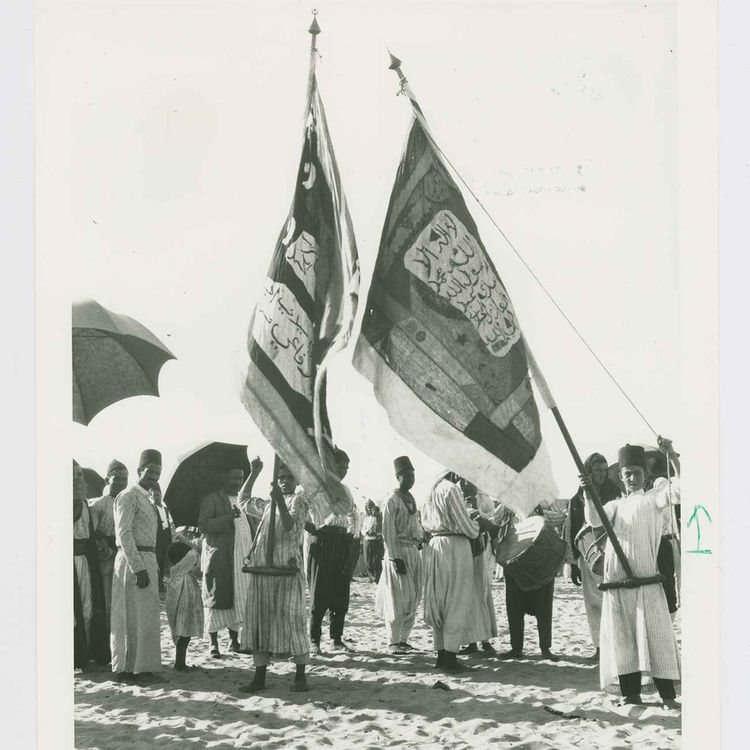
Episode image: Library of Congress
Series logo: drawing by Sara Nuria Leitner
More episodes
View all episodes
2. Paths not taken in Palestine
25:01||Season 1, Ep. 2In the framework of the Fall 2025 seminar A History of Late Modern Palestine: before and beyond the conflict (1840-1948) offered by Falestin Naïli, the students learned about various political projects that existed for Palestine before 1948 but that didn’t materialize. Among these projects were decentralization within the Ottoman Empire (early 20th century), the Arab Kingdom of Syria (1916- 1920), a binational state for Jews and Palestinians (1920s onwards), a Communist state project (20th century), hopes for Federalism under the umbrella of Kemalist Turkey (1919-1924) and the daily struggles for dignity of the Palestinian trade union movement (1925-1947). All these projects generated writings by political thinkers, activists and journalists. They offered political horizons that have since been largely forgotten. With this mini-exhibition and podcast project, we propose to shift the gaze towards some of these paths not taken. The period of the First World War and its immediate aftermath stand out as a particularly fertile moment brimming with alternative imaginaries and competing conceptions and dimensions of political community. Many of these visions reached beyond the nation-state, offering strikingly different understandings of belonging and citizenship.CreditsEpisode No. 2Release Date: 21 January 2026Recording Date: 11 December 2025Recording location: New Media Center (NMC), University of Basel Sound production by Sebastian Schell, NMC