Share
Future of Mobility
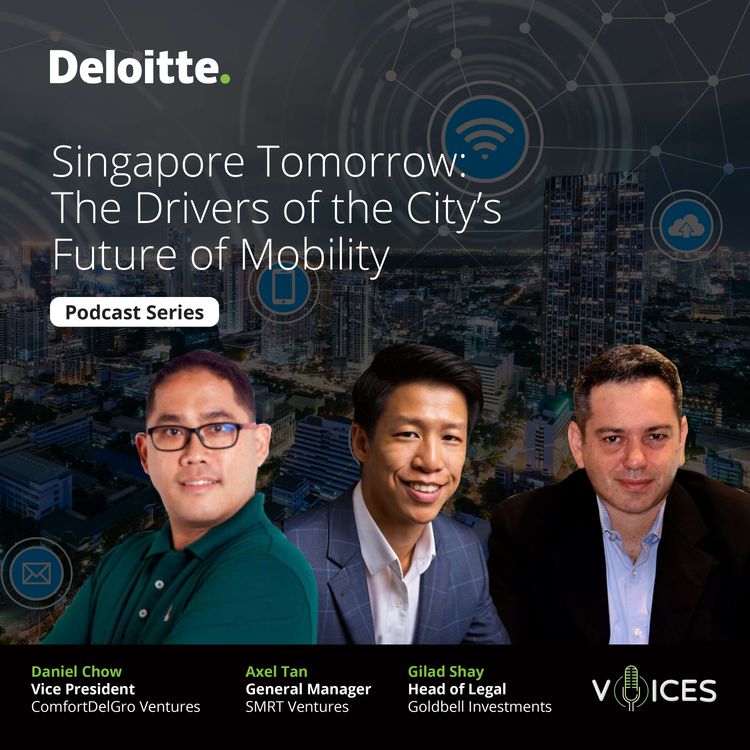
Singapore Tomorrow: The Drivers of the City's Future of Mobility
Season 1, Ep. 8
•
Often described as a global leader in the future of mobility, Singapore boasts one of the world’s most robust public transport systems. According to Deloitte’s City Mobility Index 2020, good vision and investments are amongst the many strengths that drives Singapore towards being a global leader in the future of mobility.
In this episode, join Daniel Chow, Vice President at ComfortDelgro Ventures; Gilad Shay, Head of Legal at Goldbell Investments and Axel Tan, General Manager at SMRT Ventures, as they share how their organisations are playing a pivotal role in driving Singapore’s promising transport system.
More episodes
View all episodes
1. Closer to Space with Mobility
35:44||Season 2, Ep. 1Unlike other industries that are largely driven by the public sector, the space tech industry is increasingly fronted by private entities. On top of the regional collaborations, funding by private entities have accelerated space tech advancements in cities like Singapore. In this episode, we speak to Lynette Tan, Chief Executive at Singapore Space & Technology Ltd (SSTL) and Nikolai Khlystov, Lead, Shaping the Future of Mobility and Space at the World Economic Forum, as they discuss space technology and its role in elevating mobility on Earth.
9. Digitising the Movement of Goods: What Does It Take?
41:04||Season 1, Ep. 9According to Deloitte’s 2019 Innovation Report, the Southeast Asian digital economy is expected to exceed US$300 billion by 2025, with e-commerce in particular showing strong and persistent growth. With demands expected to continue growing, more effort is required to optimise service levels for efficient deliveries. How then can organisations responsible for the mobility of goods keep up with innovations and new ways of working, especially in times of the COVID-19 pandemic? In this episode, join Audrey Cheong, Managing Director of Operations of FedEx Express, and Dr. Kevin Lv, Head of Asia Pacific at JD.com, as they discuss the state of mobility of goods and the steps organisations are taking to future-proof themselves.
7. Beyond COVID-19: Future of Mobility for Goods
39:28||Season 1, Ep. 7Digitalisation could be the key to future business success for players in the maritime industry and goods mobility. However, how are ports evolving to adapt to these emerging technologies? What is the blueprint to success for goods mobility in these volatile times? Join Kenneth Lim, Chief Technology Officer of the Maritime and Port Authority of Singapore and Dawn Lim, Vice President and Head of Commercial and Professional Services, at the Singapore Economic Development Board (EDB) as they discuss the future of goods mobility and the huge role technology will play.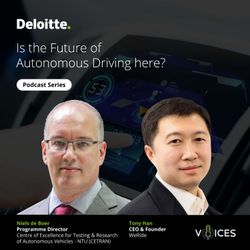
6. Is the Future of Autonomous driving here?
42:13||Season 1, Ep. 6In recent years, the mobility field has seen an increase in companies delving into autonomous vehicles due to a confluence of heavy investments as well as significant technological advances. If properly harnessed, autonomous vehicles have the potential to massively change the way we live by providing us with a safer, more efficient and accessible transportation model. In this episode, hear from Tony Han, CEO & Founder of WeRide and Niels De Boer, Programme Director of CETRAN, NTU as they discuss the evolution of autonomous vehicles and what needs to be true for AVs to be implemented successfully.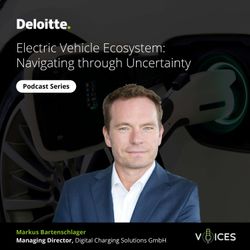
5. Electric Vehicle Ecosystem: Navigating through Uncertainty
23:06||Season 1, Ep. 5By 2050, more than two-thirds of the global population will live, commute, and work in urban areas. As urban populations grow, so will the need for more sustainable and eco-friendly mobility. Fortunately, consumers today have shown growing preferences towards electric vehicles (EVs), according to Deloitte’s 2020 Global Automotive Consumer Study. What constitutes the shift towards this new paradigm of electromobility? In this episode, we discuss the journey towards the future of sustainable mobility.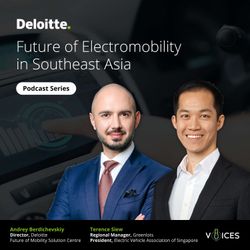
4. Future of Electromobility in Southeast Asia
36:19||Season 1, Ep. 4The COVID-19 situation has seen a steep decrease in local air pollution as well as global greenhouse gas emissions. However, this has come as a result of lockdowns and mobility restrictions. So, how do we curb local pollution levels and emissions while still maintaining our level of mobility? Enter the concept of electric vehicles also known as EVs. EVs allow the freedom of mobility, without the associated problems of high carbon emissions typical of internal combustion engine (ICE) vehicles. Join Andrey Berdichevskiy and Terence Siew as they discuss the state of electromobility in Southeast Asia.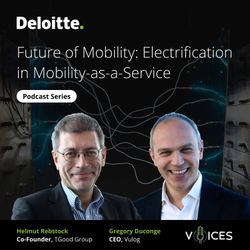
3. Future of Mobility: Electrification in MaaS
24:38||Season 1, Ep. 3The convergence of emerging technologies combined with changing consumer and societal preferences has resulted in the rapid adoption of Mobility-as-a-Service also known as MaaS; getting users from point A to B in a flexible, multimodal, and seamless way through a single interface. Recent collaborations have also seen the integration of eco-friendly transportation modes into MaaS. In this episode, we discuss the possibilities of electrification in MaaS.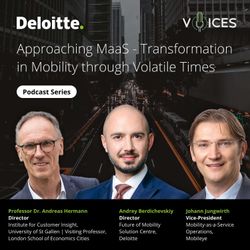
2. Approaching MaaS – Transformation in Mobility through Volatile Times
30:38||Season 1, Ep. 2Could the future of mobility lie in shared modes of transport rather than personal vehicles? If the success of Netflix is any indicator, the future of urban mobility might very well be centred on shared transportation. MaaS models are forecasted to empower a new reality for urban mobility by ensuring equity and reducing traffic congestion, helping cities all over the world achieve their social and environmental goals.