Latest episode
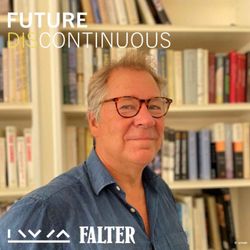
5. Did Vienna Invent the Modern World, Richard Cockett?
40:42||Season 3, Ep. 5At the turn of the 20th century, Vienna was the capital of an empire in decline. Yet the city was a hotbed of intellectual cross-pollination, spawning new ideas and scientific innovations across fields ranging from physics and economics to psychoanalysis and the arts.In this episode of Future Discontinuous, hosts Misha Glenny and Eva Konzett invite author Richard Cockett to retrace Vienna’s ideational footprint around the globe. Together with their guest, they discuss the famed „Red Vienna“ and its anti-progressive „Black“ (as Cockett calls it) counterpart, touch on the origins of the term sexual revolution, and shine a light on the Viennese émigrés—women especially—whose legacy remains widely influential today. Richard Cockett is a journalist, historian, and academic. He is currently a senior editor at The Economist newspaper and a member of the Institute for Advanced Study at Princeton. He was previously a lecturer in history and politics at the University of London, and has written several books about British and world history. His most recent book, Vienna: How the City of Ideas Created the Modern World (Yale University Press, 2024), has earned numerous critical accolades.
More episodes
View all episodes
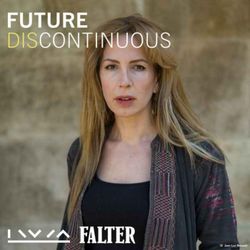
4. What Can We Learn from Genghis Khan, Ayşe Zarakol?
36:49||Season 3, Ep. 4In this episode of Future Discontinuous, hosts Misha Glenny and Eva Konzett are joined by international relations scholar Ayşe Zarakol to rethink where global order comes from—and why it may now be coming apart. Drawing on her book Before the West, Zarakol challenges the familiar story that modern international politics begins with Europe and the Peace of Westphalia. Instead, she traces earlier Eurasian world orders built around empires rather than nation-states, focusing on the Mongol and Chinggisid models of sovereignty that organized power around rulers, households, and fluid realms rather than fixed borders. The discussion explores how these Eastern orders structured political competition across Asia, how their influence reached Europe through rivalry with the Ottomans, and how ideas of centralized authority took hold long before the modern state system. Shifting the conversation to the present, the trio examines how stigma and hierarchy continue to shape the behavior of both rising and declining powers, from China and Russia to Europe and the United States. Are today's turbulences best understood through familiar 20th-century analogies, or do the upheavals of the 17th century—marked by climate stress, technological disruption, and prolonged instability—offer a more unsettling parallel? As strongman politics resurges and the nation-state itself comes under pressure from digital platforms and concentrated private power, the episode asks what kinds of order might emerge next and how long we may have to navigate a world without one. Ayşe Zarakol is a professor of international relations at the University of Cambridge. The main themes of her research are East-West relations and social hierarchies in world politics, problems of modernity and sovereignty, and rising and declining powers. She is the author of Before the West: The Rise and Fall of Eastern World Orders (Cambridge University Press, 2022), which has won six prestigious awards. In 2024, Zarakol was elected to fellowship in the British Academy and the Academia Europaea.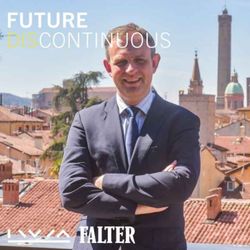
3. Can history explain Putin’s war, Sergey Radchenko?
48:05||Season 3, Ep. 3Few historians illuminate the inner workings of Soviet and Russian foreign policy with the clarity and archival depth of Sergey Radchenko. Drawing on unprecedented access to Communist Party documents, Radchenko has rewritten key chapters of the Cold War, tracing the ambitions, insecurities, and delusions that drove leaders from Stalin to Gorbachev, which still echo in Vladimir Putin’s Russia today. In this episode of Future Discontinuous, hosts Misha Glenny and Eva Konzett explore Stalin’s competing quests for security, resources, and legitimacy, Khrushchev’s nuclear brinkmanship from Berlin to Cuba, and the unraveling of Soviet power in Eastern Europe. Together with their guest, they examine how China emerged as Moscow’s greatest geopolitical nightmare, how misunderstandings shaped the end of the Cold War, and why Russia’s 2022 invasion of Ukraine has become a catastrophic gamble for all involved. They also unpack early, little-known peace negotiations between Kyiv and Moscow—and what recent diplomatic maneuvers reveal about the shifting global balance of power. Sergey Radchenko is a Russian-British historian who currently teaches at the Henry Kissinger Center for Global Affairs at Johns Hopkins University. Radchenko grew up on Sakhalin Island in Russia’s Far East before studying in the United States and the United Kingdom. He is the author of several books about the Cold War and has published extensively on nuclear history and Russian and Chinese foreign and security policies. His latest book, To Run the World (Cambridge University Press, 2024), won the prestigious Lionel Gelber Prize in Canada this year. He regularly writes for publications such as The Guardian.
2. Can we resist the AI empire, Karen Hao?
46:13||Season 3, Ep. 2There is no shortage of critical commentary on the dizzying pace of developments in artificial intelligence. Yet, few do it as astutely as Karen Hao, whose award-winning book, Empire of AI, unveils the inner workings of OpenAI and the tech sector more broadly, shining a light on an industry marked by both grandiose proclamations and notorious secrecy. In this episode of Future Discontinuous, hosts Misha Glenny and Eva Konzett revisit some of Silicon Valley‘s foundational myths and trace the ever-increasing impact of AI on our lives. Together with their guest, they examine how OpenAI has become the multi-billion-dollar empire it is today, discuss the differences between AI doomers and AI boomers, and take stock of the environmental costs of the data centers mushrooming around the globe. Karen Hao is an award-winning journalist and author covering artificial intelligence. Having previously worked as an application engineer for a digital startup, a foreign correspondent for The Wall Street Journal covering American and Chinese tech companies, and a senior AI editor at MIT Technology Review, Hao regularly writes about tech and AI for high-profile publications like The Atlantic. She also leads the AI Spotlight Series, a program that trains journalists to cover AI. Her 2025 book, Empire of AI, was an instant New York Times bestseller.
1. What is the meaning of freedom, Timothy Snyder?
56:37||Season 3, Ep. 1Often considered ‘the value of values,’ freedom is increasingly interpreted in negative terms as the absence of interference, especially by prominent figures on the right. Historian and author Timothy Snyder argues that in order to achieve true freedom, we must ask about the moral and political structures required for human societies to flourish. In this wide-ranging conversation with Snyder, hosts Misha Glenny and Eva Konzett explore topics such as the collapse of the Soviet Union, the many shades of freedom, and the importance of the humanities in helping us navigate the present. Timothy Snyder holds the Chair in Modern European History at the Munk School of Global Affairs & Public Policy at the University of Toronto. Since 2008, he has been a permanent fellow at the Institute for Human Sciences in Vienna, where he leads the Institute's Ukraine programs. Snyder is the author of numerous critically acclaimed books, including Bloodlands: Europe Between Hitler and Stalin (2010), On Tyranny: Twenty Lessons from the Twentieth Century (2017), and, most recently, On Freedom (2024).
6. How new is the new world order, Margaret MacMillan?
39:21||Season 2, Ep. 6We are witnessing changes in the world order which many thought we would never live to see. The US, long a bedrock of democracy, appears to go heading down an anti-democratic path. Traditional alliances are falling apart, while longtime enemies are drawing closer together. Meanwhile Europe, long a central player in geopolitics, seems increasingly sidelined in international negotiations.To make sense of this unfolding new world order, Misha Glenny and Eva Konzett are joined by renowned Canadian historian Margaret MacMillan who has studied great power conflicts, war, and the international order for decades. In this episode, she draws parallels between past and present conflicts and unpacks the historical context and potential consequences of this global power reshuffle. Margaret MacMillan is emeritus Professor of History at the University of Toronto and Professor of International History and the former Warden of St. Antony's College at the University of Oxford. Her books include Women of the Raj (1988, 2007); Paris 1919: Six Months that Changed the World (2001) for which she was the first woman to win the Samuel Johnson Prize and Nixon in China: Six Days that Changed the World (2007). Her most recent book is War: How Conflict Shaped Us (2020) which was in The New York Times’ Ten Best Books of the Year. She is a Fellow of the Royal Society of Literature, the Royal Society of Canada, the Royal Geographical Society of Canada, and Honorary Fellow of the British Academy. MacMillan is also a Trustee of the Imperial War Museum and a Board Member of the IWM.
5. Are the tech bros taking over the White House, Eoin Higgins?
31:02||Season 2, Ep. 5Tech billionaires are exerting an enormous influence on the current Trump administration. It is not just Elon Musk and DOGE who are reshaping the American state. Behind the scenes, figures like Peter Thiel, Marc Andreessen, and David Sacks are pushing an anti-regulation agenda and an anti-democratic entrepreneurial vision of politics.In this conversation with American journalist Eoin Higgins, Misha Glenny and Eva Konzett explore how the relationship between the tech industry and US politics evolved and delve into the ideologies uniting the so-called tech bros and their strategic goals for politics in the US and Europe. Eoin Higgins is an American journalist and historian covering tech, US, and world politics. His work has appeared in The New York Times, The Washington Post, The Intercept, The New Republic, The Nation, and more. He also writes for Morning Brew’s tech newsletter IT Brew. Higgins is the author of Owned: How Tech Billionaires on the Right Bought the Loudest Voices on the Left.