More episodes
View all episodes

The Yellow Wallpaper by Charlotte Perkins Gilman — Is the Cure Worse Than the Illness?
38:47|John is a physician, and he has a plan for his wife. Rest. Fresh air. No visitors who might excite her. Absolutely no writing.He's rented a colonial mansion for the summer and given her the big room at the top, the old nursery, with barred windows and a bed that won't move. She keeps a journal anyway, tucked out of sight whenever he comes up the stairs. In it she writes about the house, the garden, the baby, her husband's kindness.Mostly she writes about the wallpaper.Published in 1892 and still unsettling. Read by Don McDonaldPlease be sure to follow on your podcast service and if you enjoyed the story please leave a five star review or rating.For more short fiction podcasts visit shortstoryverses.com
Below Ten Thousand by Don McDonald — All the Time and No Time
13:17|He has four words. He's had them for forty-two years. He's said them in the car, he's said them in the shower with the water running, and he still can't get the stress to fall where it belongs.Now the seatbelt sign is on, the descent has started, and his brother is running out of days. In his jacket pocket is a voicemail he has never played.There's a rule pilots follow below ten thousand feet. Nothing gets said that doesn't need saying. He always thought that sounded like a good way to live.An original story, written and read by Don McDonald.Please be sure to follow on your podcast service and if you enjoyed the story please leave a five star review or rating.For more short fiction podcasts visit shortstoryverses.com
The Black Cat — A Classic Tale of Human Horror by Edgar Allan Poe
25:50|As a boy he was teased for his tenderness. He kept birds, rabbits, a dog, a small monkey. And a cat, enormous and entirely black, who followed him from room to room and would have followed him into the street. Now he sits in a cell with a pen, determined to set the record down plainly. He is not mad, he tells us. He is not dreaming. Edgar Allan Poe's 1843 tale.WARNING: Contains graphic animal and human violence.Follow FRIGHTLY! and each new story will show up in your library as soon as it's released. No searching, no remembering.This show is one corner of Short Storyverses, a family of fiction podcasts. Some lean literary. Some are funny. Some will keep you up with the lights on, and some belong by the fire in December. There are classics nobody reads anymore and should, and original stories you won't hear anywhere else. They're all read by Don McDonald from his studio booth, and all short enough to finish on a drive, a walk, or a sleepless night.Come explore at shortstoryverses.com. Pick a universe. Stay a while.
Still Water by Don McDonald — Four aircraft carriers in a lake?
44:31|Dr. Nathan Cole measures water for a living. It's quiet work, gauges and spreadsheets, the slow arithmetic of things that don't change much. Then a reservoir gains four inches overnight with no rain, no inflow, no explanation, and gives them back by morning. Everyone blames the sensor. The sensor is fine. What follows is the worst thing a careful man can discover, which is that he's been measuring the right thing all along.If you like short stories, there's a multiverse of them at shortstoryverses.com.And one favor. Hit follow. It costs you nothing, it takes a second, and it helps keep a show like this going.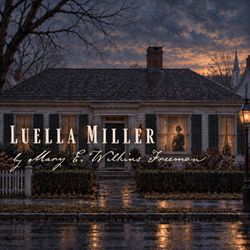
Luella Miller – A Chilling Classic Short Story by Mary E. Wilkins Freeman
35:55|Everyone in town has a story about Luella Miller. She never seems to lift a hand, yet somehow, help is always at her side. And those who give it—well, they never quite look the same afterward. Some tales of horror are loud and bloody. This one is quiet, gentle… and suffocating. Mary E. Wilkins Freeman spins a ghostly puzzle where the most dangerous thing may be a smile too sweet to resist.Mary E. Wilkins Freeman wasn’t known for monsters or gore. She wrote about the quiet corners of New England life—where duty, repression, and superstition sat heavy in the air. But every so often, she let the shadows slip through. “Luella Miller” is one of those rare stories, proof that horror doesn’t always need screams… sometimes it only takes a fragile smile.
Autopay — An Original Short Story by Don McDonald
18:05|There is a job nobody warns you about. After the dying comes the paperwork, the hold music, the strangers in call centers who need proof that she is gone.For two years she was her mother’s caregiver. Now she is her mother’s administrator. She makes lists. She keeps folders. She is very good at this.Then she reaches the bottom of the last statement.An original story, written and read by Don McDonald. Explore our multiverses of short fiction at shortstoryverses.com.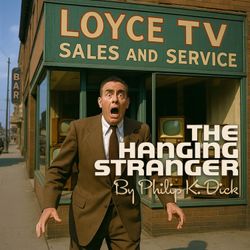
The Hanging Stranger — A Classic Sci-Fi Horror Tale by Philip K. Dick
38:26|Ed Loyce spends his days fixing radios and televisions in a small town where nothing much happens. One evening he climbs out of his basement workroom, walks into the square, and sees something no decent town would put up with.Then he notices how everyone else is taking it.Philip K. Dick wrote "The Hanging Stranger" in 1953, a year when plenty of Americans had started keeping an eye on their neighbors. Seventy years on, it still makes you check who's standing behind you.Philip K. Dick was born in Chicago in 1928 and spent most of his life in California, writing fast, living broke, and asking one question in more than forty novels and over a hundred short stories: what's real? He won the Hugo Award for The Man in the High Castle in 1963, yet for most of his life he was paid like a pulp writer and read like a cult figure. He died in March 1982, a few months before Blade Runner, adapted from his Do Androids Dream of Electric Sheep?, reached theaters. After that the rest of the world caught up. Total Recall, Minority Report, A Scanner Darkly, and The Man in the High Castle all came from his pages. The paranoia turned out to be prophecy.FRIGHTLY! is part of Short Storyverses. If you want more stories like this one, and plenty that are nothing like it, they're all waiting for you at shortstoryverses.com. Go have a look around. Just don't stand under any lampposts on the way there.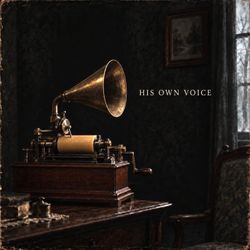
His Own Voice — An Original Story by Don McDonald
12:15|Winter, 1906. A clerk who speaks to no one from Saturday to Monday buys a mahogany graphophone for far less than it’s worth. The widow selling it keeps her eyes on the snow. Her husband, she says, liked to keep his own voice.He carries it home and records his diary each night, and the machine hands him back to himself, the nearest thing to company he has. Then the wax starts holding something he never put there.For more short stories, visit ShortStoryverses.com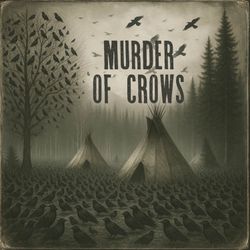
Murder of Crows – an Original Short Story by Don McDonald
26:16|There’s a reason crows gather in cemeteries. They remember. They watch. And sometimes, they wait. Murder of Crows isn’t a tale borrowed from the past—it’s one I wrote for New Tales Told, a series of original stories that echo in the spaces between memory and myth. This one lingers in the cold silence of the American frontier, where the shadows are long and the watchers have wings.Set in Montana Territory, 1868, Murder of Crows is a western—but not the kind you remember from Saturday matinees. The dead don’t rest. The land doesn’t forget. And the crows? They remember everything.Author's NoteThere’s an old belief that crows remember faces. That they mourn their dead. That they never forget a slight.It was early morning when a murder of crows descended on the sycamore outside my bedroom window, their cries so sharp and relentless they pulled me from sleep with a strange sense of dread. I lay there, half-conscious and irritated, staring at the ceiling as their screams echoed through the glass. And in that moment—quietly, almost reflexively—I had a thought I wasn’t proud of: Maybe this murder deserves one of its own.From that flash of anger came something unexpected: a story. Murder of Crows began as a whisper of guilt and folklore. Though it draws faint inspiration from the life and legend of Jeremiah Johnson, this tale is entirely imagined—fiction through and through. But like many stories, its roots are tangled in real emotion: grief, memory, regret… and the uncanny way the natural world sometimes stares back.As for the birds? They haven’t left.They’re still watching.Just outside my window.