Share
Fostering Change
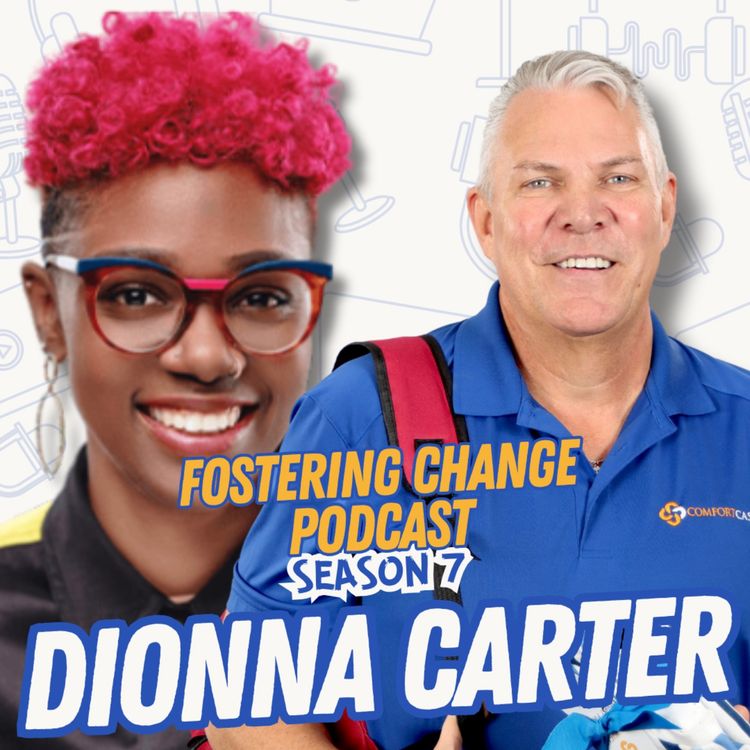
Fostering Hope for the Holidays: Empowering Teens in Care Through Community with Dionna Carter
This week on Fostering Change, Rob Scheer is joined by Dionna Carter, founder of the Foster Teen Christmas Outreach, an initiative that began in 2019 and has now raised more than $1.3 million in gift cards for teens in foster care. As Dionna explains, “Teens are often forgotten during the holidays — everyone wants to buy toys for the little kids, but teens also want to feel included and seen.”
What started with one county has grown into a statewide movement, driven by simple generosity and community partnership. Each year, thousands of youth receive gift cards that offer dignity, autonomy, and a reminder that their community cares.
Dionna also leads the Foster Hope Holiday Fest, happening Sunday, December 7 in Columbus, Ohio — a resource fair designed to support youth preparing to age out of foster care. “We wanted to be a bridge,” Dionna shares, “because so many teens lose support networks as they age out. This event shows them that help is available.”
In this episode, Rob and Dionna discuss:
How a small idea grew into a statewide giving movement
Why gift cards matter for teens in foster care during the holidays
The impact of the Foster Hope Holiday Fest and how the community can participate
How listeners anywhere can start similar outreach efforts in their own counties
Dionna’s message is simple and powerful: “Even if you impact one youth, it is so worth it.”
Learn More & Support:
Foster Hope Holiday Fest – December 7, Columbus, OH
https://onedotchurch.churchcenter.com/registrations/events/3054175
Website: www.dionnacarter.com
Instagram: @FlyAndShyyy
Facebook: Dionna Carter
LinkedIn: Dionna Carter
🎧 After you listen, please like, comment, and share the episode to help spread hope and support to teens who need it most this holiday season.
🎥 Watch the full video episodes on YouTube!
Head over to Comfort Cases on YouTube to catch every inspiring conversation:
More episodes
View all episodes
26. Not Quite Home: When Systems Meant to Help Fall Short
19:34||Season 7, Ep. 26On this episode of Fostering Change Podcast, Rob Scheer is joined by Temple Lentz — nonprofit CEO, local elected official, and debut novelist — for a thoughtful conversation about what happens when the systems designed to protect vulnerable families don’t always work the way they’re supposed to.Temple is the author of the novel Not Quite Home, which explores the cracks in America’s social service safety net. While the book is fiction, its themes are grounded in real-world experience. Having worked both inside nonprofit leadership and as an elected official, Temple brings a rare systems-level perspective to the conversation.Together, Rob and Temple discuss the gap between policy and lived reality, how well-intentioned systems can sometimes cause unintended harm, and why storytelling may be one of the most powerful tools we have to illuminate the need for reform.Episode Highlights• Why systems meant to help families often fall short• The unintended consequences of well-intentioned policies• What people misunderstand about how social service systems actually function• Why fiction can humanize policy failures more effectively than reports and data• How civic engagement and storytelling can open doors to meaningful reformAbout the GuestTemple Lentz is a nonprofit CEO, local elected official, and debut novelist. She earned a BA from the University of Chicago and a master’s degree in Organizational Leadership from Claremont Lincoln University. Her writing has appeared in outlets including the Portland Mercury, Vancouver Business Journal, Live Wire! Radio, New City Chicago, and the Windy City Times.Her first novel, Not Quite Home, examines the human impact of systemic gaps within America’s social safety net.Connect with Temple🌐 Website: templelentzbooks.com📘 Facebook: Temple Lentz📸 Instagram: @gototemple🐦 X/Twitter: @gototemple🧵 Threads: @gototemple🔗 LinkedIn: Temple Lentz
25. Migrating Toward Wholeness: Adult Adoptees, Storytelling, & the Long Arc of Healing - Dr Liz Debtta
19:58||Season 7, Ep. 25On this episode of Fostering Change, Rob Scheer sits down with Dr. Liz DeBetta — an award-winning writer, educator, and solo performance artist whose work explores adoption, trauma, identity, and healing through storytelling.Dr. Liz is the founder of Migrating Toward Wholeness, a trauma-informed, arts-based healing framework, and the author of Adult Adoptees and Writing to Heal. Her work centers on an often-overlooked truth: adoption isn’t a moment — it’s a lifelong identity journey.This conversation is especially meaningful for Rob, who reflects on his own experience adopting his son Alex, who joined the Scheer family at 18 and was formally adopted at 22 — a powerful reminder that belonging and permanency have no age limit.Together, Rob and Dr. Liz explore how adults navigate adoption-related grief and identity, why healing can unfold later in life, and how storytelling becomes a transformative tool for reclaiming voice and wholeness.Episode HighlightsLate and adult adoption as meaningful and transformativeHow writing and embodied storytelling support trauma integrationWhat “wholeness” means for identities shaped by early lossThe role adoptive families play in supporting adult adoptees over timeAbout the GuestDr. Liz DeBetta is an award-winning writer, educator, and solo performance artist whose work focuses on adoption, trauma, and identity through narrative expression. She is the founder of Migrating Toward Wholeness™, the author of Adult Adoptees and Writing to Heal, and the creator of the acclaimed one-woman show Un-M-Othered, which examines adoption and patriarchy through embodied storytelling. Holding a Ph.D. in Interdisciplinary Studies, she blends research, lived experience, and art to support healing and identity integration.Connect with Dr. Liz🌐 Website: www.lizdebetta.com📘 Facebook: Dr. Liz DeBetta📸 Instagram: @dr.liz.debetta🎵 TikTok: @dr.liz.debetta🔗 LinkedIn: Liz DeBetta, Ph.D.
24. Fractured Hope to Reform: One Mother’s Fight for Justice in Child Welfare with Rachel Bruno
28:58||Season 7, Ep. 24This episode of Fostering Change was originally scheduled to air in March — but after recording, Rob Scheer felt the conversation was too important to wait. He personally requested that it be released early so listeners could hear it as soon as possible.Rob is joined by Rachel Bruno, a Nashville-based author, speaker, and advocate whose deeply personal experience with the child welfare system ignited a powerful call for accountability and reform.After her children were unlawfully removed by child protective services, Rachel found herself confronting a system where parental rights, due process, and family integrity are often overlooked. Instead of staying silent, she fought back — ultimately securing a seven-figure civil rights settlement and emerging as a leading national voice for families facing similar injustices.Rachel is the author of Fractured Hope: A Mother’s Fight for Justice and founder of Giver of Light, an organization dedicated to supporting families navigating child welfare involvement. Together, Rob and Rachel discuss hope after trauma, the urgent need for accountability, and why lived experience must guide ethical, child-centered reform.Episode Highlights• How one mother’s fight sparked national conversations about reform• What families experience when due process is ignored• Accountability and justice within child welfare• How Giver of Light supports families in crisis• Why lived experience belongs at the center of policy change📘 Book RecommendationRob strongly recommends Rachel’s book:Fractured Hope: A Mother’s Fight for Justice — a powerful firsthand account that exposes the realities families face inside the child welfare system and why reform is urgently needed.👉 Get the book directly from Rachel:https://rachelbruno.com/book/Purchasing directly supports her advocacy and helps amplify voices too often unheard.About the GuestRachel Bruno is an author, speaker, and advocate for parental rights. Her lived experience navigating the child welfare system made her a national leader in reform. After securing a civil rights settlement for the unlawful removal of her children, she authored Fractured Hope and founded Giver of Light. She continues to serve in leadership and advisory roles, promoting family integrity, accountability, and ethical child welfare practices.Connect with Rachel & Giver of Light🌐 Website: www.thegiveroflight.org📘 Facebook: facebook.com/rachelbrunospeaks📸 Instagram: @rachelbrunospeaks🐦 X/Twitter: @bruno.rachel🔗 LinkedIn: linkedin.com/in/rachelbruno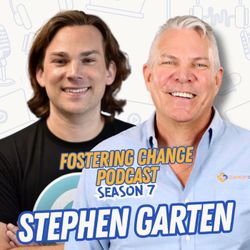
23. Funding the Mission: Stephen Garten on Financial Resilience for Nonprofits
23:54||Season 7, Ep. 23Nonprofits exist to serve people — not paperwork.But too often, outdated financial systems slow growth, strain leadership, and pull focus away from mission-driven work.This week on Fostering Change, Rob Scheer sits down with Stephen Garten, Founder & CEO of Charity Charge, a Public Benefit Corporation built exclusively to support the financial needs of nonprofit organizations.Stephen launched Charity Charge in 2015 after recognizing a widespread problem: nonprofits were forced to rely on banking and financial tools never designed for how they actually operate. Today, Charity Charge serves more than 3,000 nonprofits nationwide, offering nonprofit-specific credit cards, bookkeeping and compliance tools, gift cards, and over $60 million in working capital — empowering leaders to focus on impact instead of infrastructure.Rob and Stephen also reflect on their recent crossover conversation, following Rob’s appearance on Stephen’s podcast, The Charity Charge Nonprofit Spotlight, where they continued discussing leadership, transparency, and sustainability in the social sector.🎧 Watch or listen to Rob’s interview here:https://www.charitycharge.com/nonprofit-resources/rob-scheer-comfort-cases/Episode Highlights• Why traditional banking often fails nonprofit organizations• How Charity Charge was built specifically for mission-driven leaders• The connection between financial transparency and donor trust• Lessons learned from supporting thousands of nonprofits nationwide• What it takes to build long-term sustainability without losing sight of missionAbout the GuestStephen Garten is the Founder and CEO of Charity Charge, a Public Benefit Corporation providing financial infrastructure built exclusively for nonprofits. Since launching in 2015, Charity Charge has supported more than 3,000 organizations, delivered over $60 million in working capital, and granted more than $1 million through the Charity Charge Foundation.His work has been featured by Forbes, Fast Company, and The Today Show, and he hosts The Charity Charge Nonprofit Spotlight, highlighting nonprofit and social impact leaders across the country.Connect with Charity Charge🌐 Website: www.charitycharge.com📘 Facebook: facebook.com/CharityCharge📸 Instagram: @charitycharge🐦 X/Twitter: @charitycharge🔗 LinkedIn: Charity Charge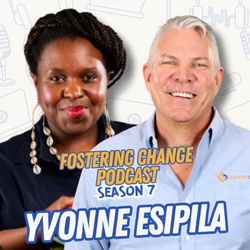
22. Breaking the Silence: Menstrual Health, Dignity, and the Power of Partnership with Yvonne Esipila
23:44||Season 7, Ep. 22As Fostering Change continues through Season 7, this episode dives into an urgent but often unseen issue: menstrual and postpartum poverty, and how it impacts girls in foster care and communities around the world.Rob Scheer sits down with Yvonne Esipila Patron, Co-Founder and CEO of the PATESI Foundation, an organization working globally to ensure women and girls have the dignity, resources, and education they deserve.In 2025, Comfort Cases and PATESI began a powerful partnership to make sure no girl entering foster care faces her first night without essential menstrual supplies. Through this collaboration, PATESI donates up to 10,000 emergency menstrual kits each year, included in Comfort Cases® backpacks for girls ages eight and up — providing dignity, protection, and confidence during moments of deep transition.Together, Rob and Yvonne unpack why menstrual poverty remains invisible, why postpartum poverty continues long after childbirth, and why involving men and boys is key to ending stigma and driving real change.Episode Highlights• The global impact of menstrual poverty and why it’s rarely discussed• How entering foster care can make menstruation even more stressful for young girls• What the Comfort Cases × PATESI partnership delivers each year• Why postpartum poverty deserves national attention• How male allyship strengthens long-term solutionsAbout the GuestYvonne Esipila Patron is the Co-Founder and CEO of the PATESI Foundation, a global nonprofit dedicated to ending menstrual and postpartum poverty. With a background in public health and sustainable development, she has spent her career advancing reproductive health equity, youth empowerment, and community-driven solutions.Connect with PATESI🌐 Website: www.patesifoundation.org📘 Facebook: facebook.com/patesifoundation📸 Instagram: @patesifoundation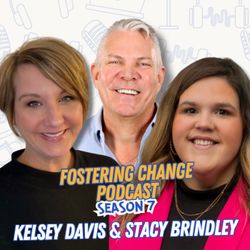
21. Solving the Foster Parent Shortage with StepStone Family & Youth Services
22:20||Season 7, Ep. 21As Fostering Change continues into the new year, this episode tackles one of the most urgent issues facing child welfare today: the national shortage of foster parents and what it means for children who need safe, stable homes.Rob Scheer is joined by Kelsey Davis, National Director of Foster Parent Recruitment, and Stacy Brindley, National Treatment Director at StepStone Family & Youth Services. Together, they explore why fewer families are stepping forward, how misconceptions about fostering hinder progress, and why supporting foster parents is essential to better outcomes for children.With more than 343,000 children in foster care and fewer than 200,000 licensed foster homes nationwide, this conversation goes beyond the numbers. Kelsey and Stacy share how StepStone approaches recruitment differently, centers trauma-informed care, and treats the entire family as part of the healing process.Episode HighlightsThis episode explores why the foster parent shortage continues to grow and how it directly impacts children who need consistency and belonging. The discussion challenges common myths about fostering, explains why recruitment messaging must change, and emphasizes that strong outcomes depend on strong support for foster parents.Listeners also hear why trauma-informed care must include the whole family, not just the child, and how communities can get involved with StepStone through volunteering, respite support, and national initiatives beyond fostering.As Rob notes, “We must get more qualified families to support our youth in foster care.” And as Kelsey reminds us, fostering works best when families know they are not doing it alone.About the GuestsKelsey Davis is the National Director of Foster Parent Recruitment at StepStone Family & Youth Services. A former Title I educator with an MBA in Marketing, she leads national strategies to recruit, train, and retain foster families through people-centered, community-driven outreach.Stacy Brindley is StepStone’s National Treatment Director and a Licensed Clinical Social Worker with nearly 30 years of experience. She has worked across residential treatment, therapeutic foster care, independent living, and in-home services, and now leads trauma-informed and evidence-based practices nationwide.Learn MoreWebsite: https://www.stepstoneyouth.com/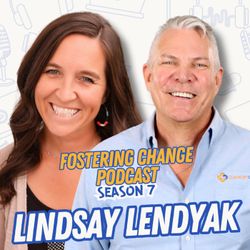
20. A Soft Place to Land: How Isaiah 117 House Is Transforming Removal Day for Children in Crisis
28:48||Season 7, Ep. 20In this powerful episode, Rob Scheer sits down with Lindsay Lendyak, South Carolina State Director for Isaiah 117 House, to talk about one of the most overlooked moments in foster care: Removal Day.Instead of children waiting for hours in government offices, Isaiah 117 House creates a warm, home-like space where kids can exhale, eat a meal, change into clean clothes, and feel safe while caseworkers find placement. Lindsay shares why this model is a true game changer for children, foster families, and social workers alike, and how South Carolina is rapidly expanding its footprint.What You Will Hear in This Episode* What Removal Day really looks like, and why so many youth remember it as the hardest day of their lives* How Isaiah 117 House replaces a cold, adult-centered setting with comfort, dignity, and stability* The heart of the model: trauma-informed volunteers providing steady, calm presence during a chaotic moment* How community support builds a stronger system around children and the professionals serving them* South Carolina growth updates, including York County and new houses coming soonQuotes to Highlight* Lindsay on why this matters: “Nearly all of them recount removal day as the worst day of their lives.”* Lindsay on the mission: “We can fix how foster care begins for our kids.”* Lindsay on what kids experience at Isaiah 117 House: “It’s a yes… For a kid who’s lived a life of nos, that is a game changer.”* Lindsay on why the system needs community: “Every single person should help a child in foster care. Full stop.”South Carolina Updates* York County opened September 2025* Greenville County expected to open early spring 2026* Horry County fundraising begins February 2026* Lexington County kickoff coming early 2026Why This Episode MattersThis conversation is a reminder that children enter foster care because of choices other people made, and that the first hours of care should not add trauma. Isaiah 117 House proves that a better beginning is possible, and it starts with community saying yes to dignity.Links and Ways to ConnectMain Website: https://isaiah117house.com/York County Facebook: https://www.facebook.com/isaiah117houseyorkcoscYork County Instagram: https://www.instagram.com/isaiah117houseyorkcoscLinkTrees:York County: https://linktr.ee/isaiah117houseyorkcoscGreenville County: https://linktr.ee/isaiah117housegreenvillescHorry County: https://linktr.ee/isaiah117househorrycosc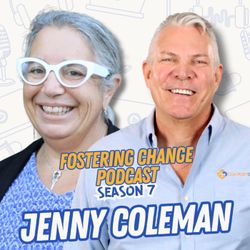
19. What’s OK? Helping Youth Navigate Boundaries, Sexting, and Cyber Safety with Jenny Coleman
27:14||Season 7, Ep. 19As Fostering Change continues into the new year, this episode tackles one of the most urgent — and evolving — challenges facing young people today: staying safe, informed, and supported in a digital world.Rob Scheer is joined by Jenny Coleman, a nationally recognized expert in child welfare and abuse prevention, and a former foster parent whose work is grounded in both professional expertise and lived experience.Jenny serves as Director of Stop It Now!, a national organization focused on preventing child sexual abuse through education and early intervention. She also leads What’s OK?, a first-of-its-kind online platform and free helpline where teens and young adults can anonymously ask questions about relationships, boundaries, sexting, consent, and online behavior — without fear or shame.In this conversation, Jenny helps parents, caregivers, and educators better understand how to talk with young people about tough topics — especially as AI-generated and non-consensual images become an increasing form of peer-driven harm.Episode HighlightsYouth Safety in the Digital AgeHow sexting, cyberbullying, and online exploitation are changing — and what adults need to know.New & Alarming TrendsWhy recent data shows a sharp rise in AI-generated inappropriate images targeting teens, most often created and shared by peers.What’s OK?How this research-backed platform empowers youth ages 14–21 to ask honest questions and get reliable guidance.What Caregivers Can DoPractical steps for parents and caregivers, including how to respond, stay connected, and support youth without judgment.A Foster Care PerspectiveWhy trauma-informed, prevention-focused conversations are especially critical for foster and adopted youth.About Jenny ColemanJenny Coleman, MA, LMHC, has spent more than 30 years working in child welfare as a clinician, educator, and prevention advocate. She is the Director of Stop It Now! and leads What’s OK?, an innovative online resource for youth navigating questions about sexual behavior, consent, and boundaries. A former foster parent and longtime foster care trainer, Jenny brings a compassionate, prevention-centered approach to keeping young people safe.ResourcesStop It Now!: www.stopitnow.orgWhat’s OK?: www.whatsok.org✨ Why This Episode MattersThis episode is a reminder that prevention starts with conversation. When young people have access to trustworthy information — and adults willing to listen without judgment — safety and resilience follow.🎧 Fostering Change continues next week with another powerful conversation.Thank you for being part of a community committed to protecting, educating, and supporting young people — especially when the topics are hard, but the stakes are high.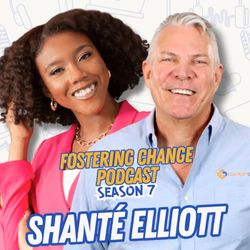
262. Turning Tassels, Changing Futures: Shanté Elliott Is Redefining Education for Kids in Foster Care!
22:49||Season 7, Ep. 262As we continue an exciting new year of Fostering Change, this episode centers on possibility — what happens when lived experience, research, and belief in young people come together to rewrite outcomes.This week, Rob Scheer is joined by Dr. (Candidate) Shanté Elliott, a learning scientist, social innovator, and founder of TasselTurn — an organization reimagining how children in foster care and students experiencing housing insecurity move through school, graduation, and the transition to adulthood.Having experienced foster care herself, Shanté brings rare and powerful insight to her work. She blends academic research, technology, and deep empathy to help children in foster care not only stay in school, but truly see themselves as capable, worthy, and supported.What began in 2020 with a $300 grant has grown into a nationally recognized platform connecting young people with coaching, mentorship, and meaningful incentives tied to educational milestones.Now a PhD candidate at Northwestern University, Shanté has been recognized as a Forbes Changemaker, L’Oréal Paris Woman of Worth, and Echoing Green Fellow, with her work featured in Forbes, The Imprint, and Reader’s Digest. In this conversation, she shares how education — when paired with trust and opportunity — can become a powerful pathway to stability, confidence, and economic mobility for children in foster care.🎧 Episode HighlightsEducation & Foster CareThe real barriers children in foster care face in completing high school and navigating what comes next — and why traditional systems often fall short.The TasselTurn ModelHow personalized coaching, milestone-based incentives, and digital tools keep children in foster care engaged and supported.Tech for GoodUsing technology to track progress, close equity gaps, and create accountability that centers student success.Lived Experience as LeadershipHow Shanté’s own foster care journey informs her research, innovation, and belief in changing — not “beating” — the odds.Why It MattersThe long-term impact of investing in education as a tool to disrupt cycles of poverty and instability for children in foster care.Shanté Elliott is a learning scientist, social entrepreneur, and founder of TasselTurn — a national platform supporting children in foster care and students experiencing housing insecurity through key educational milestones. A former child in foster care and first-generation college graduate, she is currently a PhD candidate at Northwestern University, where her research focuses on educational identity and narrative.Since launching TasselTurn in 2020 with just $300, Shanté has built a nationally recognized organization rooted in the belief that young people deserve more than survival — they deserve systems designed for their success.🔗 Connect with Shanté & TasselTurnWebsite: www.tasselturn.orgInstagram: @tasselturnLinkedIn: TasselTurn✨ Why This Episode MattersThis conversation is a powerful reminder that when we stop asking children in foster care to overcome broken systems — and instead commit to changing those systems — futures shift. Shanté Elliott isn’t just turning tassels; she’s helping young people step into adulthood with confidence, support, and real opportunity.🎧 Fostering Change continues next week with another powerful conversation as Season 7 unfolds. Thank you for listening, believing, and being part of a community that shows up for children in foster care — not just in words, but in action.If you have questions or a guest suggestion, please reach out to our producer at dthalberg@comfortcases.org.