Share
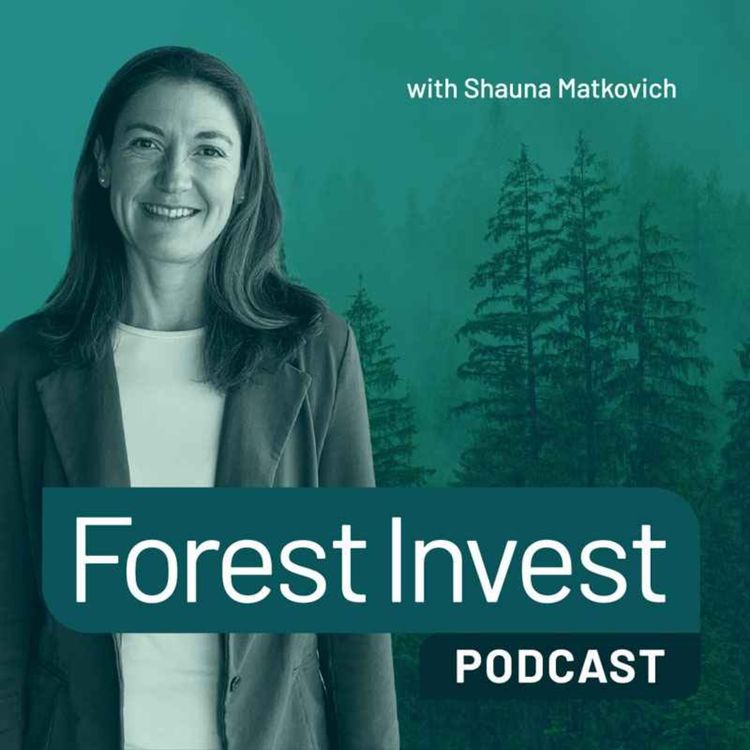
Forest Invest
The EU Climate Law and Timber Harvest Debate with Peter Holmgren
The ForestLink newsletter sign-up
https://holmgrenpeter.substack.com/
https://www.linkedin.com/in/peter-holmgren-ab58319/?
Today, I’m joined by Peter Holmgren, Founder and Senior Advisor at FutureVistas, former Head of Climate Change at the FAO, and former Director General of CIFOR. In this conversation, Peter unpacks the growing debate surrounding the EU’s Land Use, Land Use Change and Forestry (LULUCF) regulation and its implications for forest management, timber production, and climate policy. We discuss the scientific controversies behind forest carbon accounting, the risks of short-term climate targets, and why reducing timber harvests may not deliver the climate benefits policymakers expect. Peter explains concepts such as leakage, substitution, and additionality, and shares his perspective on how current policy frameworks could affect forest owners, processors, and investors. We also explore the role of wood-based products in reducing society’s dependence on fossil-based materials and why production forestry remains central to Europe’s long-term sustainability and competitiveness.
- 0:12 Introduction and guest welcome
- 1:08 Peter Holmgren's forestry career and current work
- 2:18 What LULUCF means and why it matters
- 3:47 Is LULUCF a European or global issue?
- 5:40 Where policymakers have gone wrong
- 7:45 Scientific controversies around forest harvest and carbon neutrality
- 11:04 Short-term climate targets versus long-term forest management
- 13:10 Swedish example of reduced harvest and alternative management
- 16:06 Overview of the EU climate law and LULUCF regulation
- 20:57 Why reducing harvest is seen as the main tool to meet targets
- 22:04 Climate goals versus conservation goals
- 23:41 Which EU member states are struggling with LULUCF targets
- 25:25 Impacts on private forest landowners
- 29:36 Leakage, processing facilities, and competitiveness
- 30:42 What the regulation means for forest investors
- 33:05 Which countries are pushing for production forestry
- 34:46 How stakeholders can influence policy
- 36:43 Forests as a broader economic asset
- 38:24 Peter's current work with industry and policy
- 40:41 Do we have a sustainability problem in European forestry?
- 42:43 Substitution and reducing fossil dependence
- 44:48 Packaging, paper products, and climate benefits
- 46:06 Using every part of the tree and integrated value chains
- 48:01 Bio-based fuels and climate policy incentives
- 50:15 Advice for new forest investors
- 51:44 Where to learn more and closing remarks
Founding Director and Host: Shauna Matkovich - The ForestLink
Producer and Editor: Magdalena Laas - Unscripted Creatives
Nature by MaxKoMusic/Soundcloud
Sopwell Woodlands and Scohaboy Bog SAC, Cloughjordan, Co Tipperary, IRELAND by wild_rumpus/Soundcloud
Ambient Documentary by Sound Guru (Pixabay)
Sign up now for the ForestLink’s newsletter, where you’ll receive technical advice, reflections, and best-practice guidance to support you with your forest-linked investment strategy or business straight to your inbox.
More episodes
View all episodes
98. The Numbers proving that Natural Capital Investment is on the Rise - with Genevieve Bennett
01:01:28||Season 3, Ep. 98The ForestLink newsletter sign-upForest Trends (LinkedIn)Read the reportToday, I’m joined by Genevieve Bennett, Senior Advisor and Interim Director at Forest Trends’ Ecosystem Marketplace. In this conversation, we unpack findings from the State of Private Investment in Nature 2026 report and the numbers behind the rapid growth of natural capital investing. Genevieve explains why private investment in nature has grown five-fold over the past decade, where capital is being deployed, and how institutional participation has evolved. We discuss evidence that the repositioning of Timberland around natural capital is more than a branding exercise, with carbon and other natural capital revenues increasingly incorporated into forest investment strategies and underwriting. We also explore the growing sophistication of investors, why impact measurement and diligence can slow capital deployment, and the role of catalytic capital in building the next generation of nature investment opportunities."Deployed capital in 2025 exceeded $14 billion. And on top of that, we tracked more than ten times that $14 billion figure in publicly announced planned allocations for the next three years. So there is a lot of dry powder.""When you look at the share of forestry deals that are layering carbon revenue or other natural capital revenue onto timber revenue, they have jumped from one in five deals five years ago to half of deals in the last couple of years.”00:00 Introduction 01:09 Genevieve Bennett and Forest Trends 06:05 Who benefits from Ecosystem Marketplace's data? 08:35 Why private investment in nature matters now 13:39 Defining nature finance: the six categories 19:13 Report methodology and data sources 21:41 Private investment in nature grows fivefold 23:08 Which nature finance strategies are growing? 28:44 The impact of large transactions and institutional investors 31:57 Forestry investment: three case studies 34:39 How forestry's share of nature investment has changed 38:47 Is natural capital changing forestry underwriting? 45:34 Investor priorities, impact and due diligence 49:40 Where is nature investment heading? 50:41 Looking ahead to 2036 55:33 The role of catalytic capital 59:19 Advice for new forest investors 01:00:29 Where to find the report and learn more 01:01:13 ClosingFounding Director and Host: Shauna Matkovich - The ForestLinkProducer and Editor: Magdalena Laas - Unscripted CreativesNature by MaxKoMusic/SoundcloudSopwell Woodlands and Scohaboy Bog SAC, Cloughjordan, Co Tipperary, IRELAND by wild_rumpus/SoundcloudAmbient Documentary by Sound Guru (Pixabay)
97. Building an Impact-driven Natural Capital Investment Strategy – with Chris Larson
52:56||Season 3, Ep. 97Forest Invest Connect – What’s happening in carbon markets? With Margaret Morales, Maria Filmanovic and Renat Heuberger. Attendance is limited. REGISTER HEREWhen: Wednesday, September 30th, 16:00-17:00 CETThe ForestLink newsletter sign-upAlder Point Capital on LinkedInToday, I’m joined by Chris Larson, Co-Founder and Managing Partner of Alder Point Capital. In this conversation, Chris shares the journey behind launching Alder Point and its approach to investing across timberland and farmland. We discuss where the team sees opportunities to create value in non-core and sub-institutional timberland markets through land aggregation, conservation transactions, carbon, and hands-on operational improvements. Chris explains Alder Point’s approach to impact investing, including its focus on biodiversity, climate resilience, and rural prosperity, and why intentionality matters when investing for environmental and social outcomes. We also explore the importance of showing up in rural communities, building trust with local stakeholders, and considering aligned exit opportunities with tribes, nonprofits, and community organizations. Finally, Chris reflects on moving from the allocator to the GP side of the table and shares his advice for investors considering their first allocation to forest investment.“We take what we call a ‘listen first’ approach. It’s never a good move to show up and start explaining why you think you’re going to save the day. Learn and understand what the local perspective is and how you might fit into that.”Chapters00:33 – Welcome to Forest Invest00:52 – Chris Larson and Alder Point Capital04:54 – Why Alder Point Was Founded06:15 – Launching a New Investment Strategy09:16 – How Alder Point Creates Value13:23 – Operational Improvements in Forestry15:33 – A Look at a Timberland Investment18:42 – Community Forests and Local Land Ownership20:11 – Who Invests in Alder Point?24:24 – Measuring Impact in Forest Investments26:30 – What Makes Alder Point’s Impact Strategy Different?29:41 – Finding Biodiversity Opportunities30:51 – Where Alder Point Invests33:38 – Managing Climate Risk35:16 – Investing in Climate-Risky Areas37:13 – Working With Rural Communities42:23 – Building Relationships for Successful Exits44:25 – Lessons From the Allocator Side48:04 – What’s Next for Alder Point?50:14 – One Piece of Advice for New Forest Investors52:17 – Where to Learn More52:41 – ClosingFounding Director and Host: Shauna Matkovich - The ForestLinkProducer and Editor: Magdalena Laas - Unscripted CreativesNature by MaxKoMusic/SoundcloudSopwell Woodlands and Scohaboy Bog SAC, Cloughjordan, Co Tipperary, IRELAND by wild_rumpus/SoundcloudAmbient Documentary by Sound Guru (Pixabay)
96. How Salesforce is Investing in Nature as Infrastructure - with Tim Christophersen
55:58||Season 3, Ep. 96The ForestLink newsletter sign-upForest Invest Connect - Virtual Round Table - Register here: https://lnkd.in/ewDKg5bqWhen: Wednesday, September 30th, 16:00-17:00 CETToday, I’m joined by Tim Christophersen, Vice President of Climate Action at Salesforce and author of Generation Restoration. In this conversation, Tim makes the case for seeing nature not simply as a commodity but as our most basic infrastructure – and investing in it accordingly. We discuss Salesforce’s nature-positive strategy and its work to catalyse forest landscape restoration, alongside the role of carbon markets, technology, and public-private partnerships in building a restoration economy at scale. Tim explains why resilience and diversity should be fundamental to forest investment decisions and what investors should look for to distinguish genuine ecological restoration from projects that simply look good in a sustainability report. We also explore the risks of scaling restoration badly, the need for patient capital, and why inaction may now be the biggest investment risk of all.“We need to move beyond the 'charity and nature as a charitable cause' mindset into a mindset of the regenerative, the restoration economy taking off, where you can restore all that degraded land into healthy, productive landscapes.”00:00 – Introduction 01:33 – Tim Christophersen’s journey from forestry to Salesforce 08:00 – Generation Restoration: the relationship crisis with nature 11:28 – Personal action and restoring nature at home 15:12 – Nature as infrastructure and the restoration economy 19:40 – Salesforce’s nature-positive strategy 22:04 – Empowering companies and customers to take action 26:26 – Scaling restoration: lessons from Brazil 29:23 – Investing in nature and the challenge of measuring returns 35:50 – Getting nature onto the corporate agenda 37:33 – What makes a nature-positive forest investment? 39:55 – When should investors reject a forest investment? 41:03 – The risks of scaling restoration badly 43:31 – Identifying genuine ecological restoration 46:05 – The future of forest investment and the cost of inaction 48:13 – The future of carbon markets 49:46 – Lessons learned and avoiding past mistakes 51:20 – Restoration as a social movement 53:16 – Humans as ecosystem engineers 53:48 – Final advice for investors 55:04 – Closing and where to find Tim’s workFounding Director and Host: Shauna Matkovich - The ForestLinkProducer and Editor: Magdalena Laas - Unscripted CreativesNature by MaxKoMusic/SoundcloudSopwell Woodlands and Scohaboy Bog SAC, Cloughjordan, Co Tipperary, IRELAND by wild_rumpus/SoundcloudAmbient Documentary by Sound Guru (Pixabay)
95. Natural Capital Investment: What Happens Beyond Timber and Carbon Objectives with Cakey Worthington
01:00:31||Season 3, Ep. 95The ForestLink newsletter sign-upAurora Sustainable LandsAurora on LinkedInToday, I'm joined by Cakey Worthington, Senior Vice President of Sustainability and Natural Capital at Aurora Sustainable Lands. In this conversation, Cakey explains how Aurora has evolved from a carbon-focused investment strategy into a broader natural capital approach—one that values biodiversity, water, recreation, and other ecosystem services alongside financial returns. We discuss why carbon stewardship is replacing carbon maximization, how active forest management can strengthen both ecological resilience and long-term investment performance, and what investors should look for when evaluating natural capital asset managers. Cakey also shares how Aurora integrates field data, AI, remote sensing, and biodiversity monitoring across 1.65 million acres of forestland and why partnerships, transparency, and measurable outcomes will shape the future of institutional forest investment."Our investors didn't invest in a fund—they invested in Aurora. That gives us the freedom to think beyond short-term returns and make management decisions that improve forest health, carbon outcomes, and ecosystem value for decades."0:00 – Intro & favorite tree (the American white oak) 2:48 – Cakey's background and Aurora's origin story 8:01 – Investor profile and company structure 10:49 – From carbon strategy to natural capital 13:27 – What "natural capital" signals for the industry 16:56 – Harvesting operations and the evolving carbon strategy 19:42 – What to look for in a natural capital asset manager 23:56 – Data collection and operational decision-making 32:03 – Ecosystem services: insurance, communities, and other stakeholders 33:23 – Carbon stewardship vs. carbon maximization 40:08 – Lessons from adaptive, landscape-scale management 42:44 – Combining field data, remote sensing, and AI for monitoring 50:56 – The ISFC Natural Capital Project 53:37 – Balancing commercial returns with ecological outcomes 55:50 – Optimism for the future of natural capital 58:46 – Advice for investors new to forest investment 59:44 – Where to learn more about Aurora Sustainable LandsFounding Director and Host: Shauna Matkovich - The ForestLinkProducer and Editor: Magdalena Laas - Unscripted CreativesNature by MaxKoMusic/SoundcloudSopwell Woodlands and Scohaboy Bog SAC, Cloughjordan, Co Tipperary, IRELAND by wild_rumpus/SoundcloudAmbient Documentary by Sound Guru (Pixabay)
94. Scottish Forestry Investment: Timber Security, Commercial Forestry & the Future of Productive Forests with David Robertson
51:59||Season 3, Ep. 94The ForestLink newsletter sign-upScottish WoodlandsDavid Robertson on LinkedInToday, I'm joined by David Robertson, Director of Investment and Business Development at Scottish Woodlands. In this conversation, David provides an inside look at Scotland's commercial forestry sector, explaining how productive forestry, biodiversity, and climate objectives can work together rather than compete. We discuss Scotland's timber supply, afforestation ambitions, forest investment opportunities, and how the UK remains heavily reliant on imported wood products. David also shares his perspective on balancing timber production with carbon projects, the evolution of modern plantation design, and why productive forests remain critical to long-term climate and economic resilience. We explore the challenges of public perception, community engagement, and the realities of managing forests in Scotland's unique landscape and climate."The best advisors you can get are people who've got muddy boots but clean spreadsheets."00:00 – Introduction and guest welcome03:10 – David Robertson's background and Scottish Woodlands06:07 – Scotland's forests: native vs commercial forestry08:58 – Timber production, imports, and future supply challenges11:15 – Government planting targets and afforestation ambitions15:01 – Who invests in Scottish forestry?17:13 – Timber production vs carbon projects19:14 – Modern forestry: biodiversity and mixed-species planting22:40 – Land ownership, leases, and carbon agreements24:42 – Public access and Scotland's right to roam26:57 – Community concerns and public perception of forestry31:14 – Anti-forestry activism and the challenge of communication32:48 – Why clear-cutting is still necessary in Scotland39:17 – Changing public opinion through engagement40:28 – Continuous cover forestry: opportunities and limitations45:05 – The future of Scottish forestry over the next 20 years48:38 – Advice for new forestry investors50:57 – Where to learn more and closing remarksFounding Director and Host: Shauna Matkovich - The ForestLinkProducer and Editor: Magdalena Laas - Unscripted CreativesNature by MaxKoMusic/SoundcloudSopwell Woodlands and Scohaboy Bog SAC, Cloughjordan, Co Tipperary, IRELAND by wild_rumpus/SoundcloudAmbient Documentary by Sound Guru (Pixabay)
93. The Impact Advantage of Investing in Naturally Regenerating Forests with Jim Hourdequin
53:29||Season 3, Ep. 93The ForestLink newsletter sign-upThe Lyme Timber CompanyToday I'm joined by Jim Hourdequin, CEO and Managing Director of The Lyme Timber Company, one of the pioneers of institutional timberland investing and impact forestry. As the company celebrates its 50th anniversary, Jim reflects on the investment philosophy that has guided Lyme since 1976 and explains why naturally regenerating forests create unique opportunities to deliver both attractive investment returns and meaningful conservation outcomes. We discuss how conservation easements have become a cornerstone of Lyme's strategy, why the firm invests beyond the forest gate into logging businesses and sawmills, and the opportunities and trade-offs presented by forest carbon markets. Finally, Jim shares why evergreen investment structures, patient capital, and investing in people are essential ingredients for building resilient forests—and resilient forest businesses."We have to make logging safer. We can't expect people to work eighty-hour weeks. If we invest in people, pay attractive wages and adopt better technology, we'll recruit outstanding professionals and build stronger forestry businesses over time."00:00 – Introduction and Lyme Timber's 50-year anniversary02:30 – Jim Hourdequin's background and the evolution of Lyme Timber06:30 – Building a long-term investment philosophy in timberland11:30 – Pioneering impact investing through conservation17:00 – Conservation easements: how they work and why they matter29:55 – Carbon markets: opportunities, limitations, and trade-offs36:40 – Investing beyond forests: strengthening the timber supply chain40:55 – Mechanized logging, safety, and innovation on steep terrain45:05 – Addressing labor shortages and the future of forestry operations47:45 – Lyme's new evergreen fund and long-term vision51:45 – Advice for new forest investors and closing remarksFounding Director and Host: Shauna Matkovich - The ForestLinkProducer and Editor: Magdalena Laas - Unscripted CreativesNature by MaxKoMusic/SoundcloudSopwell Woodlands and Scohaboy Bog SAC, Cloughjordan, Co Tipperary, IRELAND by wild_rumpus/SoundcloudAmbient Documentary by Sound Guru (Pixabay)
92. Take-aways from London Climate Action Week 2026 - carbon market demand is strengthening with Jen Stebbing
47:59||Season 3, Ep. 92The ForestLink newsletter sign-upJen Stebbing on LinkedInSotora GlobalAFF's Permanence Trust's preliminary findingsClimate CollectiveSHIFT-CM's Buffer Pools & BeyondRMINature's Echo - Prof. Thomas CrowtherToday, I'm joined once again by Jen Stebbing, CEO and Co-Founder of Sotora Global, to unpack the biggest conversations from London Climate Action Week 2026 and what they mean for forest investors, carbon markets, and nature finance.Jen shares why this year's discussions marked a noticeable shift from questioning whether carbon markets work to focusing on how to scale them with greater integrity. We explore the emerging demand signals from corporate buyers, the evolving role of standards such as SBTi, and why a communications gap—not necessarily a market gap—may be holding back investment confidence.We also take a deep dive into one of the week's most promising developments: the concept of Contracted Durability and the Permanence Trust, an innovative approach that could fundamentally change how reversal risk is managed in forest carbon markets. Along the way, we discuss portfolio approaches to climate investing, REDD+, forest carbon pricing, nature-based removals versus avoided emissions, and why protecting existing forests remains just as critical as planting new ones.If you want a concise overview of where climate finance, forest carbon, and nature markets are heading—and what investors should be watching next—this episode provides an invaluable temperature check from one of the sector's most connected voices"I think there's now a communications gap between where carbon markets actually are and where people think they are. Much of the public narrative is still stuck in 2023, while the market itself has moved forward substantially."00:00 – Introduction and overview of London Climate Action Week01:00 – What London Climate Action Week is really like03:33 – The biggest takeaway: markets and finance are working05:16 – Missed sessions, FOMO, and key workshops on permanence06:28 – Permanence, durability, and the Permanence Trust explained10:04 – Demand-side challenges and signals from carbon buyers12:42 – New standards, policy developments, and future demand drivers16:47 – Reframing carbon market risk for investors18:33 – Why buyers remain cautious despite growing confidence20:27 – Portfolio investing and emerging buyer strategies22:08 – Practical successes and innovations from the field24:23 – REDD+, governance improvements, and social value measurement25:46 – The true cost of high-integrity forest carbon26:56 – Major announcements and promising new initiatives28:00 – Policy discussions and the European outlook30:22 – Investor preferences across forest carbon project types33:28 – Super pollutants as an entry point to carbon markets35:36 – Behind-the-scenes conversations and AI in climate finance37:01 – Frustrations and three key messages from the week38:29 – Looking ahead to London Climate Action Week in 203640:13 – Book recommendation and final reflections40:51 – Revisiting the Permanence Trust and contracted durability46:47 – Investment advice for newcomers to forest finance47:44 – Closing remarks and where to learn moreFounding Director and Host: Shauna Matkovich - The ForestLinkProducer and Editor: Magdalena Laas - Unscripted CreativesNature by MaxKoMusic/SoundcloudSopwell Woodlands and Scohaboy Bog SAC, Cloughjordan, Co Tipperary, IRELAND by wild_rumpus/SoundcloudAmbient Documentary by Sound Guru (Pixabay)
91. From the Vault: Plantation Carbon Forestry in Australia with Andrew Morgan
50:49||Season 3, Ep. 91The ForestLink newsletter sign-upSFM AgribusinessFrom the Asset Vault: In this conversation, I'm joined by Andrew Morgan, Managing Director of SFM Agribusiness, one of Australia’s leading forest management operators - both for traditional timberland management and more recently, in plantation forest carbon projects. We explore the evolution of Australia’s compliance carbon forestry market and the benefits and challenges of the system's standards and methodological approaches for generating Australian Carbon Credit Units (or ACCUs). Andrew explains the mechanism of the market, pricing, and who the main buyers are. He goes on to describe SFM's “ActivAcre” model and how it is enabling landowners to partner with institutional investors for new forest investments. Andrew walks us through the logistic, regulatory, and social factors impacting land aggregation and how carbon credits are reshaping institutional forestry portfolios in Australia."If you'd asked me 3 or 4 years ago, carbon and a carbon strategy weren't even considered by most institutional investors when looking at larger assets. It's now a really important part of the value. Traditionally, it was the land and the tree crop. There's now land, tree crop, and carbon. And it could be forming 20 - 30% of the total valuation."00:12 – Introduction and guest overview00:48 – Andrew Morgan's background and SFM Agribusiness03:17 – History of carbon forestry in Australia06:31 – The four plantation carbon methodologies explained09:06 – Why Australia needs more plantation forests10:46 – How Australia's carbon market works13:48 – Carbon credit buyers and market demand15:20 – Voluntary vs compliance carbon markets16:22 – Strengths and weaknesses of the compliance system20:39 – Future supply and demand for Australian carbon credits21:50 – Lessons from developing plantation carbon projects23:44 – The Active Acre landowner partnership model29:37 – Landowner engagement and scaling plantations30:52 – Landowner concerns and long-term risk35:21 – Institutional investor perspectives38:39 – Evaluating land and building project pipelines40:51 – Why major emitters invest directly in carbon projects42:22 – Unlocking Australia's plantation forestry potential44:34 – Emerging trends in carbon, biomass and biodiversity48:51 – Advice for new forest investors50:11 – Closing remarks and where to learn moreFounding Director and Host: Shauna Matkovich - The ForestLinkProducer and Editor: Magdalena Laas - Unscripted CreativesNature by MaxKoMusic/SoundcloudSopwell Woodlands and Scohaboy Bog SAC, Cloughjordan, Co Tipperary, IRELAND by wild_rumpus/SoundcloudAmbient Documentary by Sound Guru (Pixabay)