Share
Forest Invest
REDD+ Under Pressure – with Michel Schuurman
The ForestLink newsletter signup
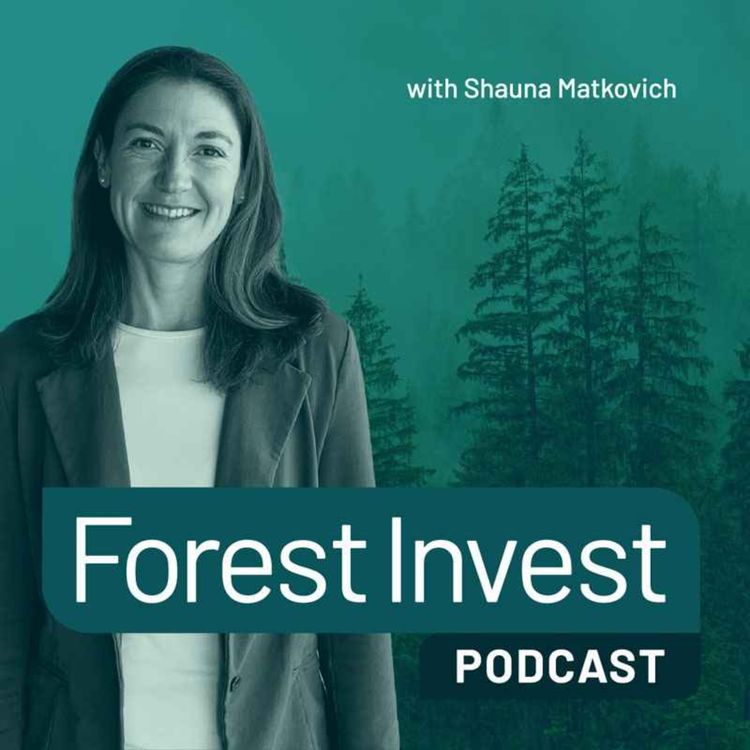
In this episode, Shauna Matkovich speaks with Michel Schuurman, Director of Business Development at TreeVive and Chair of the REDD+ Business Initiative, about the slowdown in corporate demand for avoided deforestation credits and why REDD+ remains the most scalable, cost-effective way to protect tropical forests.
Drawing on two decades in sustainability and climate finance, Michel explains how reputational risks and investment barriers are stalling progress, and why jurisdictional nesting alone won’t move fast enough. He outlines what high-integrity REDD+ looks like — community-driven design, FPIC, shorter MRV cycles, and national alignment — and calls for continued private-sector engagement.
His message: don’t wait for perfection — keep REDD+ in the portfolio, or we lose forests faster than finance flows.
0:23 Guest introduction – Michel Schuurman, TreeVive & REDD+ Business Initiative
1:26 Michel’s professional journey and path into forest carbon finance
5:15 Major shifts in forest carbon and avoided-deforestation markets
6:25 Role of the private sector vs governments and NGOs in forest protection
8:52 Why carbon remains the key measurable value metric
10:54 Challenges with valuing intact forests and improving REDD+ mechanisms
13:17 Overview of REDD+ Business Initiative report and its aims
17:01 Addressing media criticism and project integrity in REDD+
19:26 What’s improving in methodologies and MRV tools
19:27 Three biggest financing gaps in forest protection
21:17 Corporate reputational risk and reluctance to engage
22:39 Policy and Article 6 uncertainty as a major barrier
24:33 Market slowdown and optimism for renewed momentum
26:15 What defines a high-integrity REDD+ project design
27:12 Community engagement, FPIC and benefit-sharing models
29:34 Technical integrity: baselines, MRV cycles, permanence and leakage
31:53 Investor profiles suited to REDD+ projects
33:00 Why institutional capital hesitates and the funding-size gap
35:49 Why capital isn’t flowing despite low ticket sizes
37:06 State of impact and philanthropic investment in REDD+
38:13 Jurisdictional vs private-project approaches and time lags
40:22 How developers can de-risk and protect their projects
41:02 Emerging insurance and policy-risk products
41:40 Blended-finance tools to mobilize private capital
44:13 Final call to action – keep forest protection in portfolios
45:26 Role of media and balanced reporting
48:00 Closing remarks and where to find the REDD+ Business Initiative report
Founding Director and Host: Shauna Matkovich - The ForestLink
Producer and Editor: Magdalena Laas - Unscripted Creatives
Nature by MaxKoMusic/Soundcloud
Sopwell Woodlands and Scohaboy Bog SAC, Cloughjordan, Co Tipperary, IRELAND by wild_rumpus/Soundcloud
Sign up now for the ForestLink’s newsletter, where you’ll receive technical advice, reflections, and best-practice guidance to support you with your forest-linked investment strategy or business straight to your inbox.
More episodes
View all episodes
80. Building Biodiversity Credit Markets from the Ground Up - with Manesh Lacoul
48:51||Season 3, Ep. 80The ForestLink newsletter signupBiodiversity Credit AllianceKratom treeToday, I’m joined by Manesh Lacoul, Global Coordinator of the Biodiversity Credit Alliance. In this conversation, Manesh explains how biodiversity credit markets are taking shape and why credibility must be built in from the start. We discuss the key lessons emerging from carbon markets, including the need to prioritize integrity, inclusion, equity, and innovation rather than treating them as afterthoughts. Manesh shares how the Biodiversity Credit Alliance is bringing together stakeholders across the market to develop principles, assessment tools, and comparability frameworks that can support high-integrity growth. We also talk about buyer integrity, the different use cases for biodiversity credits, the growing role of governments, and what investors and project developers should be paying attention to as this market evolves.“In carbon markets, integrity came more as an afterthought. For biodiversity, integrity must go hand in hand with market development.”0:09 Welcome to Forest Invest with Shauna Matkovich1:14 Manesh Lacoul on his role at the Biodiversity Credit Alliance3:30 The key actors shaping biodiversity credit markets5:58 What success looks like: integrity, inclusion, equity, and innovation7:17 Lessons biodiversity markets should learn from carbon markets12:44 Inclusion and equity across different local contexts15:37 Market readiness on the buy and sell side19:00 Why buyer integrity matters as much as supplier integrity24:47 How current biodiversity credit buyers are approaching the market26:52 Where biodiversity credit activity is emerging globally28:58 The EU roadmap for nature credits31:14 Biodiversity stacked on carbon credits32:31 Biodiversity credits versus payment for ecosystem services35:04 How new buyers, investors, and developers can get started37:58 Why there are so many methodologies and whether consolidation will happen41:01 High-level principles, assessment tools, and comparability frameworks44:10 Why growing government involvement is encouraging46:02 Advice for forest investors and the role of biodiversity credits in production forests48:21 Where to find Biodiversity Credit Alliance resources48:36 Closing remarks with Shauna MatkovichFounding Director and Host: Shauna Matkovich - The ForestLinkProducer and Editor: Magdalena Laas - Unscripted CreativesNature by MaxKoMusic/SoundcloudSopwell Woodlands and Scohaboy Bog SAC, Cloughjordan, Co Tipperary, IRELAND by wild_rumpus/SoundcloudAmbient Documentary by Sound Guru (Pixabay)
79. Tele-operated Forestry Operations with Merritt Jenkins
36:21||Season 3, Ep. 79The ForestLink newsletter signupKodamaToday, I’m joined by Merritt Jenkins, CEO and Co-founder of Kodama Systems. In this conversation, Merritt explains how Kodama is using tele-operation and automation to run forestry equipment remotely, starting with skidders in the southeastern US. We discuss the technology behind the system, including Starlink connectivity, real-time video feeds, LiDAR, GPS, and onboard computing, and what it takes to make that technology reliable in tough forest conditions. Merritt also shares how remote skidding can help address some of the industry’s biggest challenges, from operator shortages and long commutes to physical strain and safety risk. We also explore the practical questions logging contractors ask around productivity, terrain, maintenance, and cost, before looking at what’s next for Kodama as the company expands into new regions and machine types.“It's very challenging for logging business owners to find skidder operators. Whether you're in BC or the Florida panhandle, it's really the same theme—the industry is aging out, and the younger generation just isn’t as motivated to do this type of work.”0:19 Meet Merritt Jenkins of Kodama Systems 0:28 Favorite tree: Southern yellow pine 0:53 Merritt’s background and Kodama origins 1:26 What Kodama does: remote skidding 2:28 Technology stack: Starlink, cameras, LiDAR, GPS 4:17 Ruggedising hardware for forestry conditions 5:17 Compatible skidders and OEM integration 7:43 Addressing the forestry labour shortage 10:23 PS5 controllers for machine operation 11:15 Remote site awareness and mapping 13:55 Key industry pain points solved 15:00 Logger concerns: costs and operations 16:08 Remote operation across locations and time zones 18:11 Cameras, visibility, and maintenance 20:35 Terrain handling and machine feedback 23:02 Business model and day rates 25:48 Ideal operating environments 26:51 Logger reactions and adoption 29:14 Collaboration with logging crews 30:26 Kodama team and skill sets 32:00 Lessons learned in the field 33:15 Future plans and expansion 34:07 Safety systems and fail-safes 35:35 Where to learn more 36:05 OutroFounding Director and Host: Shauna Matkovich - The ForestLinkProducer and Editor: Magdalena Laas - Unscripted CreativesNature by MaxKoMusic/SoundcloudSopwell Woodlands and Scohaboy Bog SAC, Cloughjordan, Co Tipperary, IRELAND by wild_rumpus/SoundcloudAmbient Documentary by Sound Guru (Pixabay)
78. Drone Reforestation at Scale: How Ki Reforestation Is Restoring Burned & Remote Forests in Canada with Trevor Grant
46:51||Season 3, Ep. 78The ForestLink newsletter signupKi ReforestationKi Reforestation (Instagram)This episode is brought to you by Ki Reforestation, a Canadian reforestation technology company restoring difficult landscapes using drone seeding, with a seed-agnostic approach and an Indigenous-aligned ecological restoration model. Today, I’m joined by Trevor Grant, Founder & CEO of Ki, to unpack Canada’s growing reforestation deficit and why new tools are needed to rebuild forests after increasingly severe wildfires — especially in steep, remote terrain where traditional crews face safety and access constraints. We dig into Ki’s system, from heavy-lift autonomous drones and real-time environmental sensing to AI-informed seeding prescriptions and the “magic sauce” behind the work: pharmaceutical-grade seed encapsulation designed to improve soil contact and reduce predation and withstand environmental factors. Trevor also shares where drone seeding is (and isn’t) a fit, early field learnings since 2022, how costs can compare to manual planting, and what Ki is building next through a proposed five-year R&D program with academic, government, industry, and Indigenous partners. Learn more and join Ki on its mission through visiting Ki's website.“We’re able to tailor density down to the number of seeds dispersed per square meter and adjust prescriptions in real time based on slope, soil, vegetation, and microsite conditions observed during flight.”0:10 Introduction to Forest Invest0:20 Sponsor spotlight: Ki Reforestation1:01 Meet Trevor Grant, Founder and CEO of Ki Reforestation1:12 Trevor’s favourite tree and why it stands out 2:21 The origin story behind Ki Reforestation 3:32 Canada’s wildfire crisis and the reforestation deficit 4:36 Restoring forests after wildfire: timing, access, and safety 5:27 How Ki’s drone seeding technology works 7:20 Heavy-lift drones, species mixes, and microsite planting 10:00 Seed encapsulation: the core innovation behind the model 12:53 Can drone seeding compete with manual tree planting? 17:08 Ki’s use cases: harvesting, wildfire recovery, and mine-site rehabilitation 19:44 Where aerial direct seeding is not the right fit 20:56 What Ki knows so far, and what still needs to be proven 22:11 Field trials, early results, and lessons learned since 2022 24:03 Indigenous partnerships and holistic restoration approaches 25:18 Customers, collaborators, and the 5-year research programme 28:39 What governments should ask before choosing an aerial reforestation company 31:08 Addressing scepticism and proving where the technology works 33:00 Seed sourcing, supply bottlenecks, and planning timelines 37:09 Government interest, funding gaps, and public-sector support 38:55 Carbon markets, additionality, and who should benefit 41:19 Why Ki is taking a slower, research-first approach 42:18 What excites Trevor most about Ki’s current stage 43:33 The future of Ki beyond Canada 45:33 Where to learn more and get involvedFounding Director and Host: Shauna Matkovich - The ForestLinkProducer and Editor: Magdalena Laas - Unscripted CreativesNature by MaxKoMusic/SoundcloudSopwell Woodlands and Scohaboy Bog SAC, Cloughjordan, Co Tipperary, IRELAND by wild_rumpus/SoundcloudAmbient Documentary by Sound Guru (Pixabay)
77. Women Leading the Future of Forestry
34:51||Season 3, Ep. 77The ForestLink newsletter signupBettina von HagenCandice TaylorGwen BusbyKatrina AmaralKirstie WhiteMary IgnatiadisRita HiteIn this special International Women’s Day episode, I bring together seven remarkable women working across the forestry sector—from investment and forest economics to sustainability, supply chains, and policy. In no particular order, Bettina von Hagen, Candice Taylor, Gwen Busby, Katrina Amaral, Kirstie White, Mary Ignatiadis, and Rita Hite share the pivotal moments, mentors, and decisions that shaped their leadership journeys. Through personal stories and candid reflections, the conversation explores themes of curiosity, resilience, and the power of mentorship in building a career in forestry. The guests also discuss the realities of working in a sector where women remain underrepresented, sharing experiences that range from subtle bias to moments of opportunity and influence. Together, these voices highlight how diverse perspectives are helping reshape forestry—from community-centered supply chains and natural capital investing to sustainable forest management and climate solutions—and why supporting the next generation of female leaders is essential for the future of the sector.00:00 Introduction – Women Leaders in Forestry00:23 Podcast Welcome & International Women’s Day Special01:56 Women in Forestry – Representation and Industry Statistics04:37 Introducing the Leadership Stories05:01 Bettina von Hagen – Finding Your “True North” in Leadership07:16 Candice Taylor – Continuous Learning and Career Reinvention09:35 Gwen Busby – Economics, Nature, and Timberland Investment Strategy12:05 Katrina Amaral – Community Forestry and Small-Scale Supply Chains14:30 Kirstie White – Stewardship, Sustainability, and Leadership17:13 Mary Ignatius – Forest Economics, Carbon Markets, and Collaboration19:41 Rita Hite – A Leadership Journey to CEO21:51 Gender Experiences in Forestry – Stories from the Field24:08 Candice Taylor – Proving Expertise and Creating Space25:32 Gwen Busby – Navigating Finance and Forestry as a Minority28:06 Katrina Amaral – Logging, Perception, and Gender Bias29:34 Kirstie White – Changing Representation in Forestry31:25 Mary Ignatius – Confronting Gender Bias in Organizations32:39 Rita Hite – Leadership Confidence and Authenticity34:29 Closing Reflections – Celebrating Women in Forestry34:37 Outro – Forest InvestFounding Director and Host: Shauna Matkovich - The ForestLinkProducer and Editor: Magdalena Laas - Unscripted CreativesNature by MaxKoMusic/SoundcloudSopwell Woodlands and Scohaboy Bog SAC, Cloughjordan, Co Tipperary, IRELAND by wild_rumpus/SoundcloudAmbient Documentary by Sound Guru (Pixabay)
76. The EU (Forest) Carbon Market is Coming! - With Asger Strange Olesen
49:53||Season 3, Ep. 76The ForestLink newsletter signupAsger Stragne Olesen (LinkedIn)IWC AM+International Woodland Company (IWC) on LinkedInToday, I’m joined (for the second time) by Asger Strange Olesen, Global Head of Climate and Biodiversity at IWC AM+, and an independent expert deeply embedded in Europe’s forest policy arena. In this conversation, Asger explains why the EU has historically kept forestry out of the EU ETS, why voluntary forest carbon activity in Europe has remained limited, and what’s changing as the Carbon Removal Certification Framework (CRCF) builds the market infrastructure for EU carbon removals. We unpack the EU’s “declining sink” problem, the complexity of forest ownership across member states, and why Mario Draghi’s competitiveness agenda is pushing Europe toward leaner regulation—and clearer signals for investment. Finally, we explore what the CRCF is designed to enable (and what it still doesn’t solve), how it compares to existing standards, and why country-by-country implementation will determine where EU forest carbon markets—and forest investment—move first."The mechanics and infrastructure are being made available. The CRCF gives you the toolbox. But whether that toolbox gets used depends on each individual country. If governments allow the framework to play and recognize downstream corporate demand for removals, then private capital will step in. If they continue to rely primarily on state-driven support schemes, investment will remain limited. So it’s not the EU framework alone—it’s national implementation that will determine where real forest investment opportunities emerge.”00:09 — Welcome to Forest Invest00:11 — Host intro: Shauna Matkovich (The Forest Link)00:19 — Guest intro: Asgar Strange Olesen (IWCAM Plus)00:40 — Favourite tree: European beech01:29 — Asgar’s EU policy roles (CRCF, EU Taxonomy review, FSC, SBTi)05:27 — Why EU forest policy is complex (no direct EU forest mandate)08:21 — EU forest diversity + ownership differences11:45 — Draghi, competitiveness & climate targets14:52 — The “declining sink” challenge20:41 — Why forestry is excluded from the EU ETS27:46 — The missing piece: lack of demand29:13 — What is the Carbon Removal Certification Framework (CRCF)?31:37 — How CRCF differs from existing standards37:37 — Built-in revision + piloting phase40:00 — Performance certificates vs tradable credits41:41 — GHG Protocol uncertainty & EU reporting shift44:45 — Investment outlook: country-by-country reality47:58 — Actionable advice for investors49:37 — Closing remarksFounding Director and Host: Shauna Matkovich - The ForestLinkProducer and Editor: Magdalena Laas - Unscripted CreativesNature by MaxKoMusic/SoundcloudSopwell Woodlands and Scohaboy Bog SAC, Cloughjordan, Co Tipperary, IRELAND by wild_rumpus/SoundcloudAmbient Documentary by Sound Guru (Pixabay)
75. Science-Backed Forest Carbon Investing with Susan Cook-Patton
50:28||Season 3, Ep. 75The ForestLink newsletter signupThe Nature ConservancySusan Cook-Patten on LinkedInToday I’m joined by Susan Cook-Patton, Lead Reforestation Scientist at The Nature Conservancy, to get into the weeds on applying science to forest carbon investment decision making. In this conversation, Susan breaks down what “durability” really means in practice—how risks vary by location, project type, and species, and why investors should be assessing likelihood, severity, and the probability of regrowth. She shares how her team is developing tools and maps to help investors quickly identify higher- and lower-risk landscapes, bringing greater certainty to carbon outcomes under future climate conditions. We talk project design choices that can reduce wildfire impacts, the role (and limitations) of buffer pools, and emerging alternatives like permanence trust funds and storage years. Susan also shares where remote sensing is improving fast—and why data sharing may be the biggest unlock for better, cheaper carbon accounting.“It’s not about eliminating all risks. It’s about understanding them so you can plan appropriately and put compensation mechanisms in place if disturbances do occur.”00:10 — Welcome to Forest Invest + today’s guest 00:30 — Icebreaker: Susan’s favourite tree (and why caterpillars matter) 01:16 — Who Susan is + her role at The Nature Conservancy (TNC) 02:27 — What “reforestation” really means (working forests, conservation, agroforestry) 03:05 — Applying science to forest carbon investment decisions 04:43 — Durability 101: why risk varies by place, species, and project type 06:36 — Mapping risk: likelihood, severity, and probability of regrowth 09:00 — Social context: designing projects communities actually want 10:12 — Project design for resilience: species choice, density, thinning, prescribed fire 11:55 — Buffer pools: minimums vs risk-based contributions 13:08 — Beyond buffer pools: trust funds, stacking strategies, “ton-year” approaches 15:54 — Monitoring innovation: shifting from field plots to remote monitoring 16:53 — Remote sensing challenges: uncertainty, benchmarks, and inconsistent methods 20:08 — Terrestrial laser scanning: better carbon estimates (and how to use it wisely) 22:08 — Data sharing as the big unlock (and reducing duplicated fieldwork) 23:42 — Standards are evolving: learning fast without “throwing the baby out” 26:44 — “Permanent” vs “durability”: making rules fit how forests really work 29:40 — Portfolio thinking: balancing approaches across climate action 32:21 — Output vs durability: designing for short-term volume or long-term resilience 34:37 — Investor time horizons vs climate timescales (why storage years help) 40:06 — Science in policy: how Susan’s work spans local to global decision-making 42:19 — Carbon insurance: what it can teach us about actuarial risk in forests 44:26 — What’s next: durability risk maps + Susan’s “magic wand” wishlist 47:44 — Final takeaway: the greatest risk is inaction 48:42 — One actionable advice for new forest investors 49:28 — Where to learn more (LinkedIn + nature.org) + closing remarks 50:12 — Outro: see you next time on Forest InvestFounding Director and Host: Shauna Matkovich - The ForestLinkProducer and Editor: Magdalena Laas - Unscripted CreativesNature by MaxKoMusic/SoundcloudSopwell Woodlands and Scohaboy Bog SAC, Cloughjordan, Co Tipperary, IRELAND by wild_rumpus/SoundcloudAmbient Documentary by Sound Guru (Pixabay)
74. Geopolitics, Nature Markets, and the Future of Sustainable Forestry — with Ross Hampton
50:33||Season 3, Ep. 74The ForestLink newsletter signupISFCToday, I’m joined by Ross Hampton, CEO of the International Sustainable Forestry Coalition (ISFC). In this conversation, Ross shares what he’s hearing from forest businesses and institutional capital as geopolitical volatility collides with the accelerating push toward a circular bioeconomy. We unpack why nature and climate are now inseparable on the global stage, what COP-level discussions are signaling for forestry, and why “a thousand flowers blooming” in biodiversity schemes is hindering a scalable market. Ross also walks through ISFC’s work with TNFD and the Capitals Coalition to standardize ecosystem services measurement—laying groundwork for investable nature markets—and offers practical advice for governments who have an important enabling role, and investors who want to be early movers in natural capital.“Philanthropy plays a role, governments play a role, concessional finance plays a role — but these are minuscule compared to the scale of the challenge. The only real answer is the markets. It’s the $250 trillion sitting in pension, insurance and superannuation funds that is looking for a good return and increasingly wants to be nature and climate smart.” 1:29 – Ross’ background: politics/journalism → forestry, and why ISFC was created 2:35 – ISFC scope: member footprint, countries covered, and why scale matters 3:15 – Who ISFC represents: ownership structures across regions (investors, REITs, trading houses, integrated firms, quasi-government agencies) 4:47 – ISFC mission: accelerating a climate- and nature-smart circular bioeconomy 6:02 – The policy–finance disconnect: why capital isn’t linking to on-the-ground forestry needs 7:31 – The four funding streams (philanthropy, government, concessional finance, markets) and why markets are the only scalable answer 9:24 – Setting the stage: geopolitics and its impact on forest business/investment 10:09 – Global signals from recent events: COP momentum and “climate + nature” convergence 12:20 – The big project: working with TNFD + Capitals Coalition to measure ecosystem services 13:46 – “A gazillion initiatives” problem: why fragmentation prevents real markets 15:37 – What the project aims to prove: consistent measurement across global forest estates (7 ecosystem services) 17:09 – Timeline and milestones: outputs aimed for COP 17 (Armenia) and COP 31 (Turkey) 18:24 – Member sentiment (within limits): timberlands as a long-game, “stable island” asset class 22:08 – Whole-forest value vs “back to basics”: why the shift beyond timber isn’t slowing 23:41 – The “diamond in the rough”: externalising ecosystem services to unlock restoration at scale 26:02 – Policy fragmentation: why nature markets don’t scale when governments go it alone 27:08 – The hardest leap: paying for what used to be “free” (nature services) 28:51 – Shadow pricing: nature value already showing up in estate pricing above stump value 31:02 – Beyond measurement: enabling conditions governments must create (tech, incentives, stacking) 33:43 – A counterintuitive principle: don’t only pay for “uplift” (avoid penalising good stewards) 39:13 – Global South vs Global North: differing contexts, shared opportunity, where growth may happen 43:38 – Where policy conversations get stuck: finance vs industry vs forestry/agriculture vs environment 45:29 – Davos/WEF touchpoint: reception and momentum 45:42 – Crystal ball: what’s next, and key 2026 moments (Japan, Climate Week NYC, COPs) 48:10 – One actionable takeaway for new investors: lean into natural capital and nature markets early 49:39 – Where to learn more: ISFC website + natural capital reportFounding Director and Host: Shauna Matkovich - The ForestLinkProducer and Editor: Magdalena Laas - Unscripted CreativesNature by MaxKoMusic/SoundcloudSopwell Woodlands and Scohaboy Bog SAC, Cloughjordan, Co Tipperary, IRELAND by wild_rumpus/SoundcloudAmbient Documentary by Sound Guru (Pixabay)
73. From the vault: Sustainable Forest Management in Production Forests – with Marcos Wichert
39:07||Season 3, Ep. 73The ForestLink newsletter signupMarcos on LinkedInIndicators - Biodiversity | Stora EnsoBiodiversity indicators for plantations - Biodiversity | Stora EnsoSpecies Threat Abatement and Restoration (STAR) metricInvestor News: Stora Enso partners with IUCN to advance positive impacts on biodiversityFrom the vault 🎙️In this rerun, Marcos Wichert, Vice President of Plantation Forest and Sustainability Management at Stora Enso, shares lessons from his global career across Brazil, China, New Zealand, and Finland. We explore how sustainable forestry must adapt to local ecosystems, regulations, and communities, from catchment-based planning and biodiversity KPIs to the realities of Eucalyptus. A practical, boardroom-level conversation on aligning forestry investments with climate, nature, and long-term value.“Sustainable forestry means managing commercial forests at a landscape level, with the catchment area as the key management unit to monitor and guide the impacts of forestry activities.”Harvest less than the forest grows each year, and that’s a basic principle of sustainable forestry."0:00 From the vault: sustainable forest management in production forestry0:40 Navigating ecosystem services, standards, and new tools in forest finance1:13 Marcos Wichert joins + “favourite tree” icebreaker (Araucaria angustifolia)1:44 Marcos’ career journey: Brazil → China → New Zealand → Brazil → Indonesia → Finland4:29 Defining sustainable forestry: core principles + landscape-level responsibility5:15 Catchment-based planning and hydrology as a sustainability foundation6:13 How sustainability differs by jurisdiction: Brazil vs China vs the Nordics10:07 Plantation vs semi-natural forests, certification realities, and investor considerations12:50 What investors should assess: FSC/PEFC, KPIs, monitoring, and traceable data16:15 Eucalyptus: myths, risks, and best practice (right species, right place)18:03 Water stability through age-class mosaics across a catchment22:14 Spatial vs temporal scales: compartments, estates, landscapes, and planning units24:01 EU Deforestation Regulation (EUDR): traceability down to compartment level25:15 Why catchments matter for sustainability (especially for fast-growing species)29:08 Boardroom sustainability: clients, regulation, traceability, and “nature-positive” products31:11 The premium problem: paying for biodiversity and beyond-compliance actions32:30 Nature Positive Impact (NPI): targets, science partnerships, and biodiversity KPIs34:24 Public equities: what to look for in sustainability reporting + red flags37:06 Wrap-up: forestry’s role in climate + biodiversity solutions38:02 Where to find Marcos: LinkedIn + EUFRO work on automation and robotics38:51 Closing from Shauna Matkovich (Forest Invest)Founding Director and Host: Shauna Matkovich - The ForestLinkProducer and Editor: Magdalena Laas - Unscripted CreativesNature by MaxKoMusic/SoundcloudSopwell Woodlands and Scohaboy Bog SAC, Cloughjordan, Co Tipperary, IRELAND by wild_rumpus/SoundcloudAmbient Documentary by Sound Guru (Pixabay)
72. US Southeast Timberland Markets in Transition — A University Perspective with Erin Lincoln
40:17||Season 3, Ep. 72The ForestLink newsletter sign-upHarley Langdale Jr. Center for Forest BusinessToday, I’m joined by Erin Lincoln, Director of the Harley Langdale Jr. Center for Forest Business at the University of Georgia, for an academic, data-driven look at what’s happening across timberland markets in the U.S. Southeast. Erin breaks down how hurricane impacts, permanent pulp and paper mill closures, and soft housing starts are reshaping demand for small-diameter wood—and what that means for landowners, communities, and investors. We explore where opportunity may emerge next, from bioenergy, carbon capture and storage, biochar, sustainable aviation fuel and natural capital themes, alongside the growing role of higher-and-better-use (HBU) revenue streams. Erin also explains how investor expectations differ across the U.S., Europe, and Asia, why reporting requirements are pinching TIMOs, and where AI could unlock new efficiency across forestry operations, compliance, and decision-making.Forestry is extremely data intensive, and AI has the potential to fundamentally change how we manage forests—from thinning decisions to trucking efficiency and compliance.00:00 Welcome to Forest Invest00:32 Erin Lincoln’s favorite tree (and why oaks matter)01:02 Erin’s career path and role at the Center for Forest Business02:10 Education, outreach, and research at UGA03:19 Why the program is known for forest finance and economics04:48 Setting the scene: the state of the US forest industry05:00 Mill closures in the Southeast and hurricane impacts07:12 Housing starts, inflation, and pressure on sawmills08:04 Declining paper demand and global competition09:09 Permanent mill closures and real estate constraints10:05 Downturns create opportunity: bioenergy, biochar, SAF11:39 Public perception of forestry and sustainable harvesting14:43 What investors should know right now14:56 Real estate, HBUs, and diversified revenue streams16:16 ESG, natural capital, and return expectations17:24 US vs European investor priorities18:41 Reporting burdens and pressure on TMOs20:06 Specialisation in a maturing timber investment market22:01 What future forest investment professionals care about23:52 Generational shifts in forestry careers25:56 Research priorities: natural capital and bioeconomy27:42 Measuring the full economic impact of forestry28:42 Key knowledge gaps in carbon and forest products30:04 The role of investors in shaping innovation31:04 Advice for young foresters choosing a specialty32:34 Why Erin is optimistic about the sector’s future33:31 Artificial intelligence in forestry and timber investment36:32 Where AI is already improving efficiency38:08 One actionable piece of advice for new investors39:18 Where to learn more about the Center for Forest Business40:01 Closing remarksProduction teamFounding Director and Host: Shauna Matkovich - The ForestLinkProducer and Editor: Magdalena Laas - Unscripted CreativesSound libraryNature by MaxKoMusic/SoundcloudSopwell Woodlands and Scohaboy Bog SAC, Cloughjordan, Co Tipperary, IRELAND by wild_rumpus/Soundcloud