Share
FolknHell
Matthew Hopkins: Witchfinder General
Witchfinder General finally gets its turn under the FolknHell microscope and immediately starts causing problems. It turns up with a big reputation a lot of baggage and the confidence of a film that has been told for decades that it belongs in the folk horror big leagues. The trouble is once you actually sit down and watch it that claim starts wobbling almost immediately.
The set up is simple and relentlessly grim. Matthew Hopkins a self appointed witchfinder rides from village to village across East Anglia turning petty grudges fear and sexual repression into a very profitable little business. People accuse their neighbours not because they genuinely believe in witchcraft but because it is useful. Hopkins is not uncovering ancient evils or dark rituals. He is just a horrible man spotting an opportunity and taking it.
This is where the argument really kicks off around the table. There is no sense of shared belief. No community bound together by folklore. No land that feels cursed or alive or pushing back. Compared with The Wicker Man or Blood on Satan’s Claw where belief itself becomes the monster Witchfinder General feels hollow. The countryside looks lovely but does absolutely nothing except provide somewhere for people to be tortured.
That does not mean it is toothless. Far from it. This is a late 1960s British exploitation film and it is not shy about it. The violence is blunt nasty and often mean spirited. There are hangings burnings stabbings and a lot of deeply uncomfortable sexual menace. Watching it now feels less like being scared and more like being slowly worn down which depending on your mood may or may not be your idea of a good evening.
Vincent Price is doing a lot of the heavy lifting. His accent belongs exclusively to Vincent Price and nobody else but his presence is undeniable. One of us was all in calling this one of his best performances. The other two were less convinced but still admitted that without him the whole thing would collapse in a heap of mud wigs and bad decisions.
At one point the film gets described as a 15th century John Wick which is both surprisingly accurate and probably kinder than it deserves. Strip away the period trappings and what you have is a revenge story about abuse of power with no interest at all in the supernatural. Which brings us neatly back to the big question. Why does this keep getting called folk horror.
By the time the scores were handed out the damage was done. A combined 12 out of 30 says it all. One FolknHeller respected the rawness and Price’s performance. The other two mostly wanted it to be over and were still baffled by its genre credentials.
Witchfinder General is important. It is influential. It is also a slog and about as folk horror as a bloke in a big hat being awful to everyone he meets. Worth watching once for context and conversation. Just do not expect ancient gods cursed fields or anything lurking in the hedgerows apart from another reason to argue.
Enjoyed this episode? Follow FolknHell for fresh folk-horror deep dives. Leave us a rating, share your favourite nightmare, and join the cult on Instagram @FolknHell.
Full transcripts, show notes folkandhell.com.
More episodes
View all episodes
12. Exhuma
38:48||Season 1, Ep. 12A wealthy Korean American family hires a team of spiritual specialists after their daughter starts screaming the house down thanks to a furious ancestor. Andy, Dave, and David follow the trail as the Scooby Doo crew of geomancers, shamans, and funeral whisperers are flown in to sort out the cursed feng shui. It begins simply enough. Move granddad to a nicer bit of land, make his afterlife more pleasant, try not to set anything on fire. Then they open the coffin and a snake with a woman’s head slides out. Things go downhill from there.Granddad turns out to be a collaborator from the Japanese occupation, buried on poisoned land, and very keen on terrorising his own descendants. His ghost pops up in mirrors, squeezes hearts, and generally behaves like the world’s worst patriarch. Once he is dealt with, the film cheerfully announces that there is an enormous coffin hidden underneath his grave. Of course there is. Inside is a giant samurai, pinned upright through the chest with a sword and absolutely not in the mood for reconciliation.From there it all escalates. Exploding pig sheds. Monks being flung about. A fireball streaking across the sky that looks suspiciously like Monkey from Monkey Magic. The shamans work overtime. The geomancer questions every life choice that led him here. And the three of us attempt to keep up with the folklore, the history, and the subtitles, which sometimes appear to have been written by a cheerful intern with Google Translate.The big argument comes when we try to decide if Exhuma counts as folk horror. Andy swears it does because the whole story is steeped in Korean folklore, national wounds, and the idea of land holding centuries of rage. Dave sees it more as a straight horror film with history glued on top. David goes in thinking it is folk horror, then changes his mind halfway through, then changes it again. Which is very on brand for David.What we do all agree on is that the Scooby Doo crew are brilliant. They feel like real people with real skills, not just exposition machines, and the film wisely keeps them alive. For a two and a quarter hour horror film, it rips along with barely a moment to breathe, and even when we have no idea what is happening we are having a great time.Exhuma shocked us with how spectacular it is. Massive in scale, rich in folklore, packed with ideas, and somehow still funny in places where it should not be. It also made ninety four million dollars and became the sixth biggest South Korean film ever, so clearly the rest of the world had as much fun as we did.A wild, baffling, folklore soaked ride that we happily dropped a score of twenty two out of thirty on
11. Enys Men
38:12||Season 1, Ep. 11Mark Jenkin’s Enys Men gives the trio one of their most intricate puzzles yet, a film that marries Cornish landscape, ritual repetition, and fractured time into something hypnotic and quietly unsettling. Set on a remote stone island off the Cornish coast, the story follows an unnamed volunteer who spends her days observing a cluster of flowers, maintaining a failing generator, and dropping stones into an abandoned tin mine. Her routine appears simple, but the repetition reveals changes that cannot be explained by ordinary time. Lichen grows on the flowers at the same moment it begins to creep across the scar on her own body, a scar tied to a long buried trauma. The date is the first of May, the anniversary of a maritime tragedy that haunts both her and the island.The conversation explores how the film treats time as a fluid and circular force rather than a linear path. Ghostly miners, drowned sailors, children from a vanished school, and folk singers appear and disappear as if the past is pushing its way into the present. The group unpack how the film’s heavy grain, radio static, and repeated imagery create a sense of permanence that exceeds any human scale. Andy, who grew up near the filming locations, recognises home in the standing stones and cliff paths, deepening the discussion around place and memory.FolknHell consider the volunteer not simply as a character but as a living extension of the island itself. Her stillness, her red coat, her lack of dialogue, and her connection to both the stone and the earth below all imply that she is the vessel through which the island remembers its own history. Every ritual drop of a stone into the mine becomes an act that links present moments with the island’s centuries of labour, loss, and buried stories. The lichen on the flowers and on her body suggests a slow merging of human and landscape.When the question of folk horror arises, the boys find an unusually clear answer. The threat comes directly from the land. The isolated community exists in fragments of memory. The connection to an older world is woven into every frame. The horror is not found in monsters or sudden frights but in the overwhelming sense of an island that has existed far longer than any of the people who walk across it. This makes Enys Men a refined example of the genre, one that replaces shock with atmosphere and uses silence as its primary tool.The trio debate how the film rewards patience while offering very little in the way of conventional narrative comfort. For Dave it is demanding and at times opaque, though artistically compelling. David admires its depth but finds it less emotionally gripping on a second viewing. Andy is captivated by its artistry and by its deep roots in Cornish culture and geography. Their combined score of twenty five point five out of thirty reflects a film that is challenging, visually striking, and rich with ideas. It evokes isolation, the passage of time, and the eerie sense that the ground beneath your feet is alive with memory.Wikipedia: linkIMBD: linkRotten Tomatos: linkFolknHell: www.folknhell.com
10. Rabbit Trap & Starve Acre - Halloween Double Bill
57:48||Season 1, Ep. 10In the Welsh Valleys and Yorkshire fields, something stirs. Two couples, two hauntings; one whispered through fairy rings, the other screamed through roots and ritual. Rabbit Trap offers tenderness in the face of loss; Starve Acre finds horror in what the land remembers.Our Halloween special, a double helping of ritual, grief, and mycelial menace, pairs Bryn Chainey’s dreamlike Rabbit Trap with Daniel Kokotajlo’s devastating Starve Acre.Different tones, same soil. One heals, the other devours.🐇 Rabbit Trap – The Poetic RitualA sound engineer (Dev Patel) and his composer wife (Rose McEwen) retreat to the Welsh Valleys to rediscover inspiration. Instead, they find a mysterious child in the woods, and the faint pull of the fairy realm.Blurring the line between healing and haunting, Rabbit Trap weaves changeling myth, fairy-ring folklore, and electronic soundscapes into a story of grief transfigured.Its intimacy is hypnotic: a film where sound carries half the story, and the unseen hums just beneath the soil.“It’s not a film about fear. It’s about finally meaning it.” — Andy DavidsonScore: 28/30Verdict: A beautiful, immersive folk horror, poetic, unsettling, and quietly redemptive.🌾 Starve Acre – The Brutal RiteMatt Smith and Morfydd Clark play a grieving couple drawn into an ancient ritual tied to the land beneath their Yorkshire home.Here, loss becomes obsession and the soil answers back with cruelty. Starve Acre takes the folklore of sacrifice and drags it into raw, contemporary grief — a story of necromancy, love, and the terrible cost of devotion.Where Rabbit Trap whispers, this one roars. Wide landscapes, heavy silences, and the suffocating inevitability of myth.“Where Rabbit Trap gives your life back, Starve Acre asks what you’ll give up to get it.” — David HallScore: 24/30Verdict: Traditional and brutal. The Wicker Man’s darker cousin, steeped in earth and loss.🌒 Themes that BindRitual & Sacrifice: In one story, ritual heals; in the other, it devours.Loss & Renewal: Rabbit Trap mourns the child never born; Starve Acre the one buried too soon.Sound & Silence: The former is composed in close-mic whispers; the latter in wind and soil.Fungi & Folklore: Mycelium as metaphor and menace. Rot, rebirth, and everything between.The Land as Consciousness: Both films remind us the ground remembers, even when we try to forget.🔊 Sound, Style & AtmosphereIn Rabbit Trap, sound is not background, it’s the bloodstream. Recording equipment, field tapes, and the hiss of the landscape shape every emotional turn.In Starve Acre, the sound is absence, the breath before a scream, the creak of a root giving way.Together they form a conversation between microphones and ghosts.💀 Folk ’n’ Hell VerdictTwo sides of the same ritual. Rabbit Trap offers poetic rebirth; Starve Acre drags you through the mud and makes you pay for it.Together they form a perfect Halloween pairing, proof that British folk horror is alive, growing, and quietly colonising your subconscious.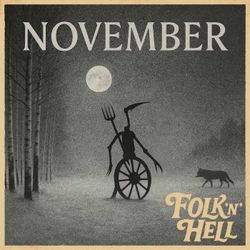
9. November
43:21||Season 1, Ep. 9A starving village, a lovesick girl, and a devil with a taste for mischief.This week on Folk ’n’ Hell enters the snow-caked world of November (2017), Rainer Sarnet’s monochrome masterpiece of Estonian folklore and unrequited love. Adapted from Andrus Kivirähk’s novel, it is part fairy tale, part fever dream, and, depending on your tolerance for mud and magic, possibly the most beautiful film ever made about utter poverty.The trio sink their boots into the film’s strange logic and haunting tone. In this medieval village, peasants barter their souls to the devil to build Kratts, creatures cobbled together from tools and bones that do their bidding. The dead dine with the living on All Souls’ Night, wolves roam the woods, and love becomes the cruellest magic of all. At its heart lies Lena, who adores Hans, who in turn is besotted with the Baron’s unnamed daughter. The result is a love triangle soaked in soot and longing, filmed in stark black and white that turns every frame into a living etching.The hosts revel in the film’s rich mix of absurdity and allegory: peasants eating bark and soap, nobles decaying in empty grandeur, and the devil himself arriving like an Estonian Brian Blessed. Beneath the filth and humour lies a sharp reflection on faith, class, and survival. For all its surreal touches, talking snowmen, flying cows, and trousers worn on heads to ward off plague, November feels deeply human. Its horror is not in monsters or blood but in the endless grind of existence and the futility of desire.Is it folk horror? The gang debate the question with uncharacteristic earnestness. While it may lack jump scares or creeping dread, November is steeped in folklore, environmental menace, and spiritual decay. It earns a unanimous 9 out of 10, the highest rating in Folk ’n’ Hell history, and a heartfelt recommendation even for those who usually avoid horror altogether. Shot through with humour, sorrow, and snowy beauty, November proves that folk horror can be tender, tragic, and strangely uplifting all at once.Watch the film, listen to the chatter, and decide for yourself whether this tale of love, magic, and mud deserves its place among the genre’s finest.🎬 Film: November (2017)🎥 Director: Rainer Sarnet📚 Based on: Rehepapp ehk November by Andrus Kivirähk🔗 Wikipedia | IMDb | Rotten Tomatoes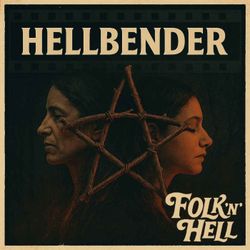
8. Hellbender
46:19||Season 1, Ep. 8A mother and daughter rock band film themselves into witchcraft legend. Hellbender (2021) is the Adams family’s lockdown-born tale of spells, riffs, and rebellion, brewed in the forests of upstate New York. FolknHell dives into its homemade horror, punk-fuelled ambition, and questionable folk credentials, asking what really happens when cabin fever meets black magic.Shot at the family home during the pandemic, Hellbender is a curious mix of family therapy, DIY filmmaking, and teenage witch fantasy. Mum Toby Poser, dad John Adams, and daughters Zelda and Lulu share writing, directing, editing, and acting duties, creating a home-spun brew of coming-of-age angst and occult awakening. The result is part music video, part family art project, and part fanged parable about isolation, appetite, and inherited power.The story follows Izzy, a teenage girl kept away from civilisation by her mother, who insists she is ill. In reality, both are witches, members of a near-extinct line called Hellbenders who feed on fear to grow stronger. When Izzy meets a local girl and tastes her first worm, the magic takes hold, triggering a gory self-discovery that sets her against her protective, equally dangerous mother. What begins as a bond between two outsiders becomes a slow collision of maternal control and adolescent rebellion, shot through with buzzing guitars and pine-forest mysticism.As always, the trio pull the film apart to test whether it truly belongs in the folk horror coven. Andy admires the ambition and momentum despite rough edges. Dave Houghton recognises the charm but points out the uneven tone that comes from four directors working on alternate days. David Hall argues that while witchcraft lies at the genre’s heart, Hellbender lacks the rural community and ancestral dread that define true folk horror. Instead, it is a modern fairy tale about power, parenting, and punk spirit, more Sabrina than The Wicker Man.They discuss the film’s resourceful but patchy visual effects, improvised dialogue, and lighting that sometimes turns homemade into half-haunted. With only two main characters, the supposed isolation feels more like lockdown necessity than mythic setting. The music, provided by the family’s own band, adds drive but not always menace, leading to a film that fascinates more than it frightens.Scoring the film out of 30, the panel agree on its good intentions but modest success. Andy gives it five, David Hall three and a half, and Dave Houghton three, for a total of eleven and a half. All agree that the Adams family’s spirit and imagination outstrip their resources, but that Hellbender’s claim to folk horror status relies more on marketing than merit.Still, there is admiration for the effort. Making a feature film from scratch during lockdown deserves respect, even if the cauldron bubbles over. The trio conclude that Hellbender might be more of a family diary in disguise, a story about creativity and confinement rather than ancient rites or rural terror.Join in and raise a glass (and an eyebrow) to the Adams family’s DIY witchery, ponder whether feeding on fear ever pays off, and debate once more the immortal question: Is it really folk horror?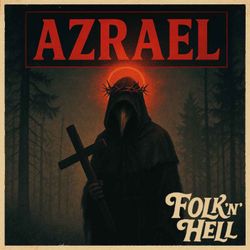
7. Azrael
29:25||Season 1, Ep. 7In this episode of FolknHell, Andy, Dave, and David take on Azrael (2024), Simon Barrett and E.L. Katz’s tense, wordless horror starring Samara Weaving. Set after the Rapture, the film drops us into a mute Christian fundamentalist cult who have severed their vocal cords in pursuit of purity, and the fiery “burned ones” who stalk the forests around them. Azrael herself is caught in a relentless cycle of capture, escape, and pursuit, with blood rituals, underground tunnels, and a climactic birth scene that veers into the demonic.The trio weigh up the film’s survivalist atmosphere, its biblical overtones, and the striking choice to dispense almost entirely with dialogue. They explore whether the film’s rustling woods, mute cult, and sacrificial rites amount to genuine folk horror or whether these are merely borrowed tropes designed to ride the current wave of folk horror popularity.Discussion ranges from the unexplained “mysterious winds” that herald the burned ones, to comparisons with The Descent and Mad Max, to the confusing symbolism of Azrael’s apparent satisfaction at a demonic child’s birth. While the group acknowledge the film’s tense pacing and some striking imagery, they find its folk horror credentials thin, its theology muddled, and its climax more frustrating than fulfilling.In the end, the panel agree that Azrael is a lean, often gripping chase horror, but one that fails to root itself in the earthy authenticity that defines the folk horror tradition. Their final score of 11 out of 30 marks the lowest yet on the podcast, with Andy defending its visceral thrills while Dave and David knock it down for cheapness, repetition, and lack of genuine folk resonance.For those curious, Azrael is worth a watch for its atmosphere, unusual silence, and brisk 86-minute runtim, just don’t expect the folkloric depths its marketing suggests.IMDB: https://www.imdb.com/title/tt22173666/?ref_=nv_sr_srsg_1_tt_6_nm_2_in_0_q_AzrealRotten Tomatoes: https://www.rottentomatoes.com/m/azraelWikipedia: https://en.wikipedia.org/wiki/Azrael_(film)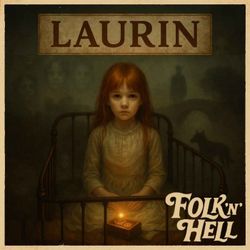
6. Laurin
29:13||Season 1, Ep. 6In this episode of Folk ’n’ Hell, Andy, David, and Dave dive into Laurin (1989), Robert Sigl’s German oddity that blurs the line between fairy tale, Hammer horror homage, and supernatural thriller. Set in a rural village where children begin to vanish, the film follows nine-year-old Laurin as she receives visions from spirits, guiding her towards the unsettling truth: the schoolmaster, returned from military service, is a predatory murderer.The trio wrestle with the film’s esoteric storytelling and oblique structure, noting how its dreamlike quality lends it a fairy-tale atmosphere. From the heavily saturated reds and 1960s Hammer-inspired visuals to the claustrophobic compression of the village setting, Laurin dazzles visually even as its narrative proves difficult to pin down. The group debate whether it truly counts as folk horror, weighing it against their three criteria: isolated rural community (yes), threat from the environment (no), and menace rooted in folklore (no). While Andy makes a case for including it in the wider folk horror canon alongside films like The Anchoress and Flower of Evil, Dave and David see it more as a supernatural coming-of-age story with horror-adjacent leanings.The discussion touches on gender roles, psychological trauma, and the protective presence of Laurin’s mother’s spirit, symbolised by a haunting musical box. The trio also find humour in the hard-drinking grandmother and the mercifully short runtime, which keeps the film from becoming too heavy. Ultimately, Laurin scores 14 out of 30, the lowest rating so far, admired for its atmosphere but criticised for its lack of narrative clarity and folk horror credentials.If you’re curious about obscure Euro-horror curiosities, artistic Hammer-style visuals, or cult supernatural tales that sit awkwardly on the folk horror shelf, Laurin may well be worth your time. But be warned: it is as baffling as it is beautiful.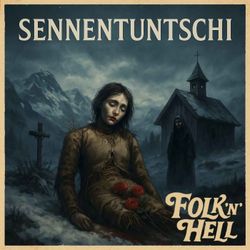
5. Sennentuntschi
39:37||Season 1, Ep. 5This week the FolknHell trio trek into the Swiss Alps with Sennentuntschi (2010), Michael Steiner’s strange and unsettling take on an Alpine legend. The story begins with three isolated goatherds who, in a drunken haze of absinthe, fashion a woman out of broomsticks, rags, and paint. To their horror and ours, she comes to life. What follows is not a fairy tale but a grim spiral of abuse, revenge, and a blurred line between folklore and crime thriller.Andy, Dave, and David wrestle with the film’s slippery timeline that lurches between 1975 and the present day without warning. The result is confusion, compounded by technical slip-ups like modern fences in period scenes, a policeman dressed like he raided C&A, and a soundtrack that veers wildly from orchestral bombast to Serge Gainsbourg and ropey T-Rex covers.The trio dissect the dual narrative at the film’s heart: on one hand, the folkloric myth of the Sennentuntschi, a woman conjured to serve and then destroy men; on the other, a grim true crime tale of a corrupt priest, a hidden dungeon, and an illegitimate daughter seeking revenge. It is a story so densely packed with contradictions and abrupt shifts that the three hosts spend more time piecing it together than the filmmakers seemingly did.Is it folk horror? Andy argues that the grotesque finale, with skinned bodies and straw-filled effigies, tips it into the supernatural. Dave and David counter that beneath the Alpine trappings lies only a muddled crime drama dressed in folk horror fancy dress. Whatever the answer, all agree the film lacks the uncanny atmosphere and creeping sense of isolation that make the best folk horror so effective.The trio break from their usual format and score the film on three fronts; enjoyment, construction, and horror effectiveness. Unfortunately, Sennentuntschi barely staggers to 21 out of 90, one of the lowest scores to date.Expect bafflement, inappropriate laughter, and more references to Nigel Farage than you would ever want in a Swiss folk tale. If you are after a true taste of mountain dread, the team suggest saving your time for something like Sator or Luz: The Flower of Evil.🔗 Sennentuntschi on Wikipedia🔗 Sennentuntschi on Rotten Tomatoes