Share

Financial Planning For Canadian Business Owners
Maximizing Enterprise Value with David Prowse | E066
Ep. 66
•
In this episode host, Jason Pereira talks with David Prowse of Velorum Business Advisory. Today Jason and David are going to talk about “How to make the most of your business valuation.”
Episode Highlights:
- 1.15: David says that his business is centered around an exit planning business that does a little bit of valuation and corporate financing.
- 1.34: David is a Canadian CPA, most of his early career days revolved around general CA works. Later in 2015, he got involved with corporate finance and valuation works.
- 04.00: David shares examples of Personal, Business, and Financial Readiness.
- 5.15: In-order to plan an exit for a business, it is important to figure out the valuation, says David. Most people overestimate the value of their business so figuring out the potential valuation is extremely important.
- 06.18: David talks about the tools and diagnostic techniques they use to determine the value of a business.
- 07.05: Jason talks about personal readiness and the importance of planning about it.
- 08.00: Jason is curious to know from David that “How does he convince or prepare his clients for personal readiness?”
- 08.54: David talks about the approach that he takes for exit planning and implementation.
- 12.09: Business valuation and readiness is all tied-in, says David
- 13.07: David stresses the importance of holistic exit planning. He says it is crucial to have a proper plan for Personal Readiness, Business Readiness, and Financial Readiness.
- 15.59: David shares how a value driven assessment can help business owners know the actual value of their businesses. The evaluation also allows business owners to understand what they can do to improve their business performance.
- 17.17: Once the business assessment is done, it is essential to prioritize and figure out ways to improve the business performance.
- 17.36: As per David, prioritization of business improvement depends on the owner’s preferences.
- 19.52: When it comes to business readiness, one key factor that one should evaluate is - “Is the owner actively involved in the business?”; the second aspect to that is – “Is there documentation of those processes?”
- 20.32: From an organization perspective, it is essential to figure out “To what degree does the top-down communication and bottom-up communication works?”
- 22.58: “If you really want to grow your business, getting a strong understanding of the metrics is very important”, says David
3 Key Points:
- David talks about the importance of introducing holistic business plans for business owners.
- David and Jason talk about the importance of Financial Readiness and what is its significance?
- Jason and David talk about the qualitative and quantitative aspects of what people need to do in order to sell a business.
Tweetable Quotes:
- “Most people overestimate the value of their business so figuring out the potential valuation is extremely important.” - David Prowse
- “If you don’t have a financial planner, go find one; if you do have a planner, then discuss and have a retirement plan in place.” - David Prowse
- “Prioritization of business improvement depends on the owner’s preferences.” - David Prowse
- “If you are not measuring your business matrices, then you are really not accomplishing too much of anything.” - David Prowse
Resources Mentioned
- Facebook – Jason Pereira’s Facebook
- LinkedIn – Jason Pereira’s LinkedIn
- Woodgate.com – Sponsor
- LinkedIn – Jason Pereira’s LinkedIn
- Podcast Editing
- David Prowse: LinkedIn | Website
Transcript
More episodes
View all episodes

135. Dividends vs Salary in Canada | FPCBO 135
06:38||Ep. 135Are dividends always the best way to pay yourself from your corporation? Think again. In this video, we'll explore whether dividends truly offer tax benefits compared to salary. We'll break down the numbers using real examples and explore the implications for your taxes and retirement planning. Learn about the hidden costs and benefits of both options and discover why a mix of salary and dividends might be the best choice for you. Don't let conventional wisdom steer you wrong—watch now to make an informed decision for your financial future.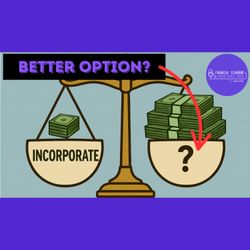
134. Should I Incorporate My Business? | FPCBO 134
06:16||Ep. 134Thinking about incorporating your small business in Canada? Hold on! This video breaks down why staying a sole proprietorship could save you thousands of dollars and even let you deduct your mortgage interest. We'll cover what a sole proprietorship is, its advantages and disadvantages, and reveal two tax planning strategies that are exclusive to sole proprietors. Discover how to deduct business losses and utilize the cashflow-damming strategy to maximize your tax savings. Start smart and learn why sole proprietorship might be the right choice for you.*FPCBO 131 - Is Your Share Structure Making Your Business Sale Taxable?https://youtu.be/hjLmFJAV-CU
133. The Realities of Selling to Private Equity | FPCBO 133
38:05||Ep. 133Join Jason Pereira and business lawyer Rachel Wasserman on this week's episode of Financial Planning for Canadian Business Owners as they delve into the intricacies of private equity. Learn about the different segments of private equity, the motivations behind selling your business to a private equity firm, and the potential long-term impacts on your business. Rachel shares her unique career journey and valuable insights on business transitions, succession planning, and the realities of private equity acquisitions. Whether you're contemplating selling your business or curious about private equity, this episode offers critical perspectives and practical advice.
132. Tax & Legal Implications Of Selling Your Business | 132
29:09||Ep. 132In this informative episode, Jason Pereira, a senior partner and financial planner, provides a detailed breakdown of the two main approaches for selling or exiting a business: share sales and asset sales. He compares these approaches to selling a house versus selling the furniture inside. Key points addressed include tax implications, legal liabilities, and the overall sale process for each method. Key takeaways include how share sales can offer tax advantages like the lifetime capital gains exemption and simpler transaction mechanics, while asset sales can result in a more complex and paperwork-heavy process but allow the buyer to cherry-pick desired assets. This comprehensive guide aims to help Canadian small business owners make informed decisions when planning their business exit.
131. Is Your Share Structure Making Your Business Sale Taxable? | 131
10:33||Ep. 131Wondering if selling your Canadian business will incur significant taxes? Learn about the Lifetime Capital Gains Exemption (LCGE) and how it can save you up to $1.25 million in tax-free capital gains as of 2025. Jason Pereira, senior partner and financial planner at Woodgate Financial, breaks down the eligibility criteria and tests your business “must meet” to qualify, and how improper planning can lead to costly tax liabilities. Discover actionable steps for structuring your business to maximize tax savings and multiply exemptions across family members.Tune in to ensure your hard-earned success isn't overshadowed by unexpected tax surprises. Don't forget to like, subscribe, and leave a comment!
130. Wait, What's My Capital Gains Tax Rate? | 130
08:59||Ep. 130In this episode, Jason delves into the tumultuous developments in capital gains taxation in Canada over the past year. From initial changes announced by the Trudeau government to the ensuing financial planning frenzy, and culminating in the resignation of the Prime Minister and a subsequent lawsuit, this video clarifies what capital gains are and how they are taxed. We examine the impact of proposed changes on investors, including those involving corporate and personal tax rates, and discuss the ultimate resolution with the election of Mark Carney as Liberal leader. Finally, we consider new proposals from opposition leaders that could affect future taxation. Stay informed on this rollercoaster of tax policy changes and their implications for Canadian investors.
129. What To Look For When Onboarding | 129
33:05||Ep. 129In this episode of Financial Planning for Canadian Business Owners, host Jason Pereira and guest Harold Geller discuss critical aspects of onboarding with a financial advisor. They delve into the importance of financial planning, understanding client-focused reforms, and distinguishing between competent advisors and salespeople. Learn about the significance of plain language communication, proper risk assessments, and the pitfalls of high-fee products. Get insights on how thorough information gathering and educational discussions set the foundation for a long-term professional relationship with your advisor.
128. Treasury Services | 128
21:07||Ep. 128In this episode of Financial Planning for Canadian Business Owners, host Jason welcomes John Pelley, Co-founder and CEO of Colibri Financial Services Agents. John explains how Colibri offers fractional treasury manager services, diving into the intricacies of optimizing banking fees, loan structures, and merchant services for small businesses. They discuss why typical banking relationships are suboptimal and how Colibri provides a tailored review to unlock potential savings. John shares insights on how often businesses should revisit their financial structures and provides advice for small businesses on working effectively with banks. Tune in to understand the importance of competitive banking and the benefits of outsourcing treasury services.
127. The Institute of Advanced Financial Planners | E127
20:23||Ep. 127Choosing Qualified Financial Planners: Insights from Aaron Hector, President of the IAFPIn this episode of Financial Planning for Canadian Business Owners, host Jason speaks with Aaron Hector, president of the Institute of Advanced Financial Planners (IAFP), about the importance of finding qualified financial advisors in Canada. They discuss the Registered Financial Planner (RFP) designation, the IAFP's role in credentialing and supporting financial planners, and the rigorous process required to become an RFP. The conversation also covers the benefits of working with an RFP, the IAFP's symposiums, ongoing discussions among member financial planners, and tips for selecting the right financial planner. The episode aims to guide business owners and other individuals seeking reliable financial advice.00:00 Introduction to Financial Planning for Canadian Business Owners00:22 Overview of the Institute of Advanced Financial Planners (IFP)00:45 Understanding the Registered Financial Planner (RFP) Designation02:15 Qualifications and Process to Become an RFP03:50 The Importance of Peer Review and Feedback05:57 The Role of the IFP in Supporting RFPs08:43 Benefits of Working with an RFP13:21 Tips for Selecting the Right Financial Planner19:14 Conclusion and Final Thoughts