Share

Financial Planning For Canadian Business Owners
Creditor Insurance with Matthew Inglis | E071
Ep. 71
•
On this episode of Financial Planning For Canadian Business Owners, Jason Pereira talks to Matthew Inglis. He is the founder of Creditor Insurance Watchdogs, which is division of Mobile Advisors. Matthew specializes in educating people and providing tools for people to get better rates and better coverage on their various forms of creditor insurance.
Episode Highlights:
- 01.38: Matthew is a life and health insurance advisor. He has been in the industry for a long period of time that just has bones to pick with specific industries. He finds the best way to express myself through Insurtech Technology.
- 01.53: Matthew explains - creditor insurance - in a nutshell, is a product that is offered by financial institutions to make sure that your loans are taken care of and paid off in the event of a death. It is typically sold through all types of different financial lenders and institutions within Canada.
- 03.20: Depending on what financial institution or mortgage broker or mortgage organization you are borrowing from you will run into products like creditor life, creditor critical illness and creditor disability insurance.
- 05.27: Most Canadians don't know when they are purchasing greater insurance products when rates are blended. This means that male and female blended smoker nonsmoker translates into is that non-smoking female who is paying the same mortgage as a male who smokes in packet day.
- 06.11: Matthew says that creditor disability insurance is blended so male female smoker, non-smoker it is blended but what is even worse is that all of all clauses are blended as well.
- 6.43 Jason explains that a female accountant that's in office all day is going to be paying the same to protect her mortgage payment from disability as a guy that is swinging a pipe wrench with a smoking as well standing on the rig floor as a roughneck.
- 7.42 Jason points out that, when you go and apply for an insurance policy through a licensed insurance agent, you basically have to go through the underwriting process that can mean medical questions.
- 9.09: Matthew says underwriting is black and white. If you get it right, it's good, but it's not about whether or not we get it right in front of professionals that help me get it right now and the seriousness of the simplified questions that these people are answered.
- 10.38: Referring to the strengths and weaknesses to the contractual insurance strengths and weaknesses so it could be 99% of the consumers out there are going to make a switch based on saving money, not contractual obligations.
- 11.42: Matthew says some mortgage creditor products are portable, most aren't. You switch your mortgage and upon time of application for your creditor insurance on your first mortgage you were insurable, but you aren't moving forward as you switch mortgage carriers.
- 12.25: Jason talks about the bottom line of paying less. If anybody decides to move their financial situations because they are getting a better deal, he is back to square one.
- 15.35: The first opportunity that a Canadian consumer has to learn anything about life, critical illness, or disability insurance is being taught to them by a banker who knows nothing about it, says Matthew
- 16.01 The real big problem is that people will often go to their banker, mortgage broker, automotive dealership, whatever, and be offered life and health insurance products prior to a Canadian consumer actually understanding what the process is.
- 18.14: A person needs to take into consideration the traditional criticalness insurance side, carriers are constantly evolving their definitions so that they are more competitive and more attractive, says Mathew.
- 21.55 Matthew explains how Canadian consumers, all they know is their credit or insurance. They know absolutely nothing about traditional life and health insurance space. Because their bankers and lenders, which doesn't make any sense at all about, says Matthew
- 22.52 Matthew points out about the rule of thumb - the more your debt, the older you are, the more you're going to be spending on creditor insurance problems.
- 24.04 Matt suggests identifying the primary product and then when you have identified the primary product that you want to replace your client, go start digging up the secondary stuff so likelihood of them having primary or creditor insurance on a primary loan is going to be a skill off.
- 25.24: Matthew suggests, when we are comparing traditional disability creditor disability insurance were actually using a product that takes all class into consideration, which means your disability insurance is priced on the risk of your occupation.
- 26.45 Matthew says that the creditor critical illness insurance only covers three illnesses and at age 55 it would be increasing in price every year.
- 27.45: The policy along time of claim pays you, not the bank. You can determine how much or how little of that goes to paying off said loan based on the factors of your life, says Jason.
3 Key Points:
- In today’s episode Matthew is going to explain the concept of creditor insurance, where the flaws and gaps are in the current normal credit insurance people get daily basis is and how to do something better and actually protect yourself with a high degree of certainty.
- CUMIS creditor insurance certificate states that if you have not made your critical illness claim given in a specific number of days from the date of your critical illness, they could literally say it right there contractually declined, says Matthew.
- Jason inquires, how does disability differ from a typical disability policy we get from an advisor or even the group insurance policy plan?”
Tweetable Quotes:
- “Underwriting is black and white. If you get it right, it is good” - Matthew Inglis
- “If you're clean, healthy, you've never had a problem you check those underwriting question boxes and you got no problem whatsoever, but these are very loosely open to interpretation.” – Jason
- “The big things other than beating up the price are those portability, declining balance and conversion option.” - Matthew Inglis
- “There comes a point in time in everyone's life where it is no longer about renting insurance and protecting debt. it is about buying insurance and protecting its stated legacy.” - Matthew Inglis
Resources Mentioned
- Facebook – Jason Pereira’s Facebook
- LinkedIn – Jason Pereira’s LinkedIn’
- Woodgate.com – Sponsor
- LinkedIn – Jason Pereira’s LinkedIn
- Matthew Inglis: LinkedIn | Website
- Podcast Editing
More episodes
View all episodes

135. Dividends vs Salary in Canada | FPCBO 135
06:38||Ep. 135Are dividends always the best way to pay yourself from your corporation? Think again. In this video, we'll explore whether dividends truly offer tax benefits compared to salary. We'll break down the numbers using real examples and explore the implications for your taxes and retirement planning. Learn about the hidden costs and benefits of both options and discover why a mix of salary and dividends might be the best choice for you. Don't let conventional wisdom steer you wrong—watch now to make an informed decision for your financial future.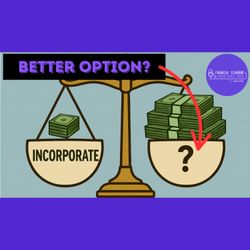
134. Should I Incorporate My Business? | FPCBO 134
06:16||Ep. 134Thinking about incorporating your small business in Canada? Hold on! This video breaks down why staying a sole proprietorship could save you thousands of dollars and even let you deduct your mortgage interest. We'll cover what a sole proprietorship is, its advantages and disadvantages, and reveal two tax planning strategies that are exclusive to sole proprietors. Discover how to deduct business losses and utilize the cashflow-damming strategy to maximize your tax savings. Start smart and learn why sole proprietorship might be the right choice for you.*FPCBO 131 - Is Your Share Structure Making Your Business Sale Taxable?https://youtu.be/hjLmFJAV-CU
133. The Realities of Selling to Private Equity | FPCBO 133
38:05||Ep. 133Join Jason Pereira and business lawyer Rachel Wasserman on this week's episode of Financial Planning for Canadian Business Owners as they delve into the intricacies of private equity. Learn about the different segments of private equity, the motivations behind selling your business to a private equity firm, and the potential long-term impacts on your business. Rachel shares her unique career journey and valuable insights on business transitions, succession planning, and the realities of private equity acquisitions. Whether you're contemplating selling your business or curious about private equity, this episode offers critical perspectives and practical advice.
132. Tax & Legal Implications Of Selling Your Business | 132
29:09||Ep. 132In this informative episode, Jason Pereira, a senior partner and financial planner, provides a detailed breakdown of the two main approaches for selling or exiting a business: share sales and asset sales. He compares these approaches to selling a house versus selling the furniture inside. Key points addressed include tax implications, legal liabilities, and the overall sale process for each method. Key takeaways include how share sales can offer tax advantages like the lifetime capital gains exemption and simpler transaction mechanics, while asset sales can result in a more complex and paperwork-heavy process but allow the buyer to cherry-pick desired assets. This comprehensive guide aims to help Canadian small business owners make informed decisions when planning their business exit.
131. Is Your Share Structure Making Your Business Sale Taxable? | 131
10:33||Ep. 131Wondering if selling your Canadian business will incur significant taxes? Learn about the Lifetime Capital Gains Exemption (LCGE) and how it can save you up to $1.25 million in tax-free capital gains as of 2025. Jason Pereira, senior partner and financial planner at Woodgate Financial, breaks down the eligibility criteria and tests your business “must meet” to qualify, and how improper planning can lead to costly tax liabilities. Discover actionable steps for structuring your business to maximize tax savings and multiply exemptions across family members.Tune in to ensure your hard-earned success isn't overshadowed by unexpected tax surprises. Don't forget to like, subscribe, and leave a comment!
130. Wait, What's My Capital Gains Tax Rate? | 130
08:59||Ep. 130In this episode, Jason delves into the tumultuous developments in capital gains taxation in Canada over the past year. From initial changes announced by the Trudeau government to the ensuing financial planning frenzy, and culminating in the resignation of the Prime Minister and a subsequent lawsuit, this video clarifies what capital gains are and how they are taxed. We examine the impact of proposed changes on investors, including those involving corporate and personal tax rates, and discuss the ultimate resolution with the election of Mark Carney as Liberal leader. Finally, we consider new proposals from opposition leaders that could affect future taxation. Stay informed on this rollercoaster of tax policy changes and their implications for Canadian investors.
129. What To Look For When Onboarding | 129
33:05||Ep. 129In this episode of Financial Planning for Canadian Business Owners, host Jason Pereira and guest Harold Geller discuss critical aspects of onboarding with a financial advisor. They delve into the importance of financial planning, understanding client-focused reforms, and distinguishing between competent advisors and salespeople. Learn about the significance of plain language communication, proper risk assessments, and the pitfalls of high-fee products. Get insights on how thorough information gathering and educational discussions set the foundation for a long-term professional relationship with your advisor.
128. Treasury Services | 128
21:07||Ep. 128In this episode of Financial Planning for Canadian Business Owners, host Jason welcomes John Pelley, Co-founder and CEO of Colibri Financial Services Agents. John explains how Colibri offers fractional treasury manager services, diving into the intricacies of optimizing banking fees, loan structures, and merchant services for small businesses. They discuss why typical banking relationships are suboptimal and how Colibri provides a tailored review to unlock potential savings. John shares insights on how often businesses should revisit their financial structures and provides advice for small businesses on working effectively with banks. Tune in to understand the importance of competitive banking and the benefits of outsourcing treasury services.
127. The Institute of Advanced Financial Planners | E127
20:23||Ep. 127Choosing Qualified Financial Planners: Insights from Aaron Hector, President of the IAFPIn this episode of Financial Planning for Canadian Business Owners, host Jason speaks with Aaron Hector, president of the Institute of Advanced Financial Planners (IAFP), about the importance of finding qualified financial advisors in Canada. They discuss the Registered Financial Planner (RFP) designation, the IAFP's role in credentialing and supporting financial planners, and the rigorous process required to become an RFP. The conversation also covers the benefits of working with an RFP, the IAFP's symposiums, ongoing discussions among member financial planners, and tips for selecting the right financial planner. The episode aims to guide business owners and other individuals seeking reliable financial advice.00:00 Introduction to Financial Planning for Canadian Business Owners00:22 Overview of the Institute of Advanced Financial Planners (IFP)00:45 Understanding the Registered Financial Planner (RFP) Designation02:15 Qualifications and Process to Become an RFP03:50 The Importance of Peer Review and Feedback05:57 The Role of the IFP in Supporting RFPs08:43 Benefits of Working with an RFP13:21 Tips for Selecting the Right Financial Planner19:14 Conclusion and Final Thoughts